Original Biltong vs Peri Peri Biltong: Which Flavor to Try First
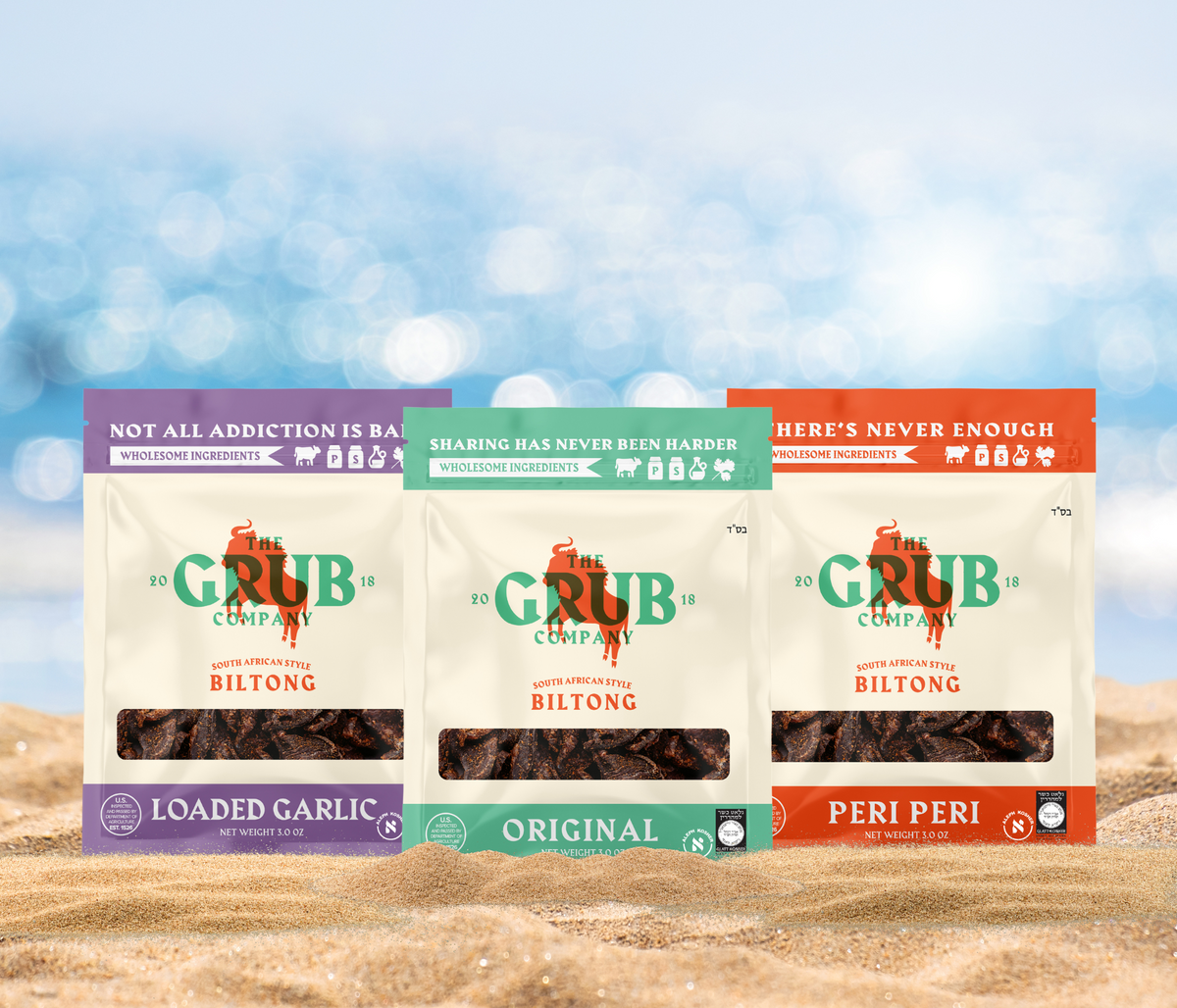
| Defining flavor | Coriander seed and black pepper, savory and clean | Peri peri chili layered over the same coriander base |
| Best for | First-timers, heat-sensitive eaters, purists | Chili lovers, experienced biltong eaters wanting variety |
| Crowd friendliness | High, works for almost everyone | Lower, chili is divisive |
| Texture | Tender, air-dried, no heat applied | Same cure and dry process, spice profile differs |
| First order pick | Yes, for most buyers | Yes, if you are certain you want heat |
Original Biltong: What You Are Actually Tasting
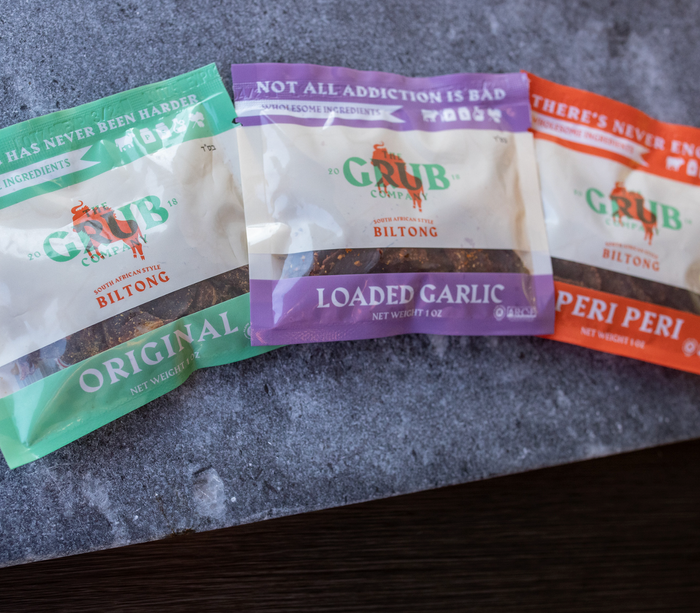
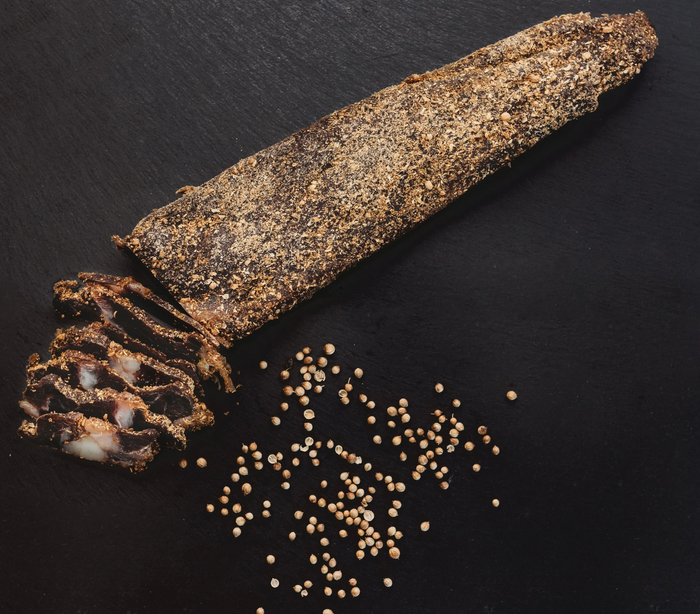
Biltong is a cured, air-dried beef snack. It never sees heat the way jerky does. The beef is salted, spiced, and hung to dry over several days, and the result is tender and deeply savory in a way that a dehydrated or smoked snack cannot replicate. Original biltong is where that process is most visible, because nothing competes with it.
The flavor that makes biltong instantly recognizable is coriander seed. Toasting the seeds before they go on the meat releases the oils, and those oils carry a warm, slightly citrusy note that is distinctive enough to be the signature of the whole category. Black pepper and salt round it out. Some recipes add a small amount of Worcestershire sauce, which adds a background depth without announcing itself. That is largely the whole spice list, and it is enough.
If you have never eaten biltong before, Original is how you learn what the thing actually is. The coriander comes through stronger than the pepper, and the cure itself has a clean, slightly tangy finish from the vinegar used in preparation. You are tasting the beef, the spice, and the dry-cure method together, without anything masking any part of it.
Original is also the flavor that works for a crowd. Bring a bag to share and you are unlikely to have anyone sit it out because of heat sensitivity, dietary sensitivity to nightshade peppers, or general spice aversion. That is a practical advantage if you are buying for more than yourself.
The real concession worth making here is this: Original is not a bold or exciting choice on paper. If you came to biltong because you love big, punchy flavors and you are already a confident chili eater, Original might land as understated. It is not bland, but it is restrained by design, and some people want more than that from a snack. If that is you, Peri Peri exists for a reason.
One more thing to flag plainly. Because Original strips away any added heat, it leaves coriander as the dominant note, and coriander is polarizing for a small number of people. If you already know you dislike the spice, the flavored varieties will not save you because they all share the same base. That is not a reason to avoid Original, it is just a reason to know what you are getting into.
For a true first order, Original is the call. It teaches you the thing before you start modifying it.
If you already eat chili-forward snacks regularly and you know you want heat in your biltong, Peri Peri is not a stretch. The flavor is coherent because the peri peri works with the existing savory cure rather than fighting it. You get the depth of the beef and the coriander base with a chili finish that lingers. It is a more assertive eating experience than Original, and that is the point of it.
Where Peri Peri earns its own clear win is with anyone who finds Original too quiet. Some snackers want a product that keeps their attention through the whole bag, and heat does that job. The chili also cuts some of the richness of the beef fat, which means Peri Peri can feel lighter on the palate for people who find full-fat cured beef a bit heavy in large quantities.
Peri Peri is also the wrong pick if you are sharing with a group of mixed heat tolerances. Chili is the fastest way to split a snack bowl in half. One person loves it, another taps out after two pieces, and you end up with an uneven crowd experience.
Choose Peri Peri if you are not a first-timer to biltong, or if you are a first-timer who is a confident, enthusiastic chili eater and you are buying just for yourself. In that specific situation, it delivers exactly what it promises.
The Two Things That Actually Decide This
Do you know what biltong tastes like yet?
This is the question that settles most of the comparison. Biltong has a specific flavor profile built around air-dried beef and coriander seed, and that profile is new to a lot of people who grew up eating jerky or other dried meats. Original gives you that profile unobscured. Peri Peri puts a chili layer on top of it, which means a first-timer cannot cleanly separate what biltong tastes like from what peri peri tastes like. That is not a problem if you do not care about the distinction. It matters a lot if you want to understand what you are eating before you start adding variables.
If you have had biltong before and you know you like it, pick whichever flavor sounds good to you. The decision tree is simple for returning buyers. For a genuine first order, Original wins on clarity alone.
Are you buying for yourself or for a group?
Solo buyers can follow their own taste without worrying about anyone else. If you love chili and you are buying a bag that is going into your own desk drawer or gym bag, Peri Peri is a completely reasonable pick even on a first order. The crowd question only matters when the snack is shared. In a group setting, Original works for almost everyone. Peri Peri will always exclude at least a few people, because heat tolerance is genuinely variable and peri peri pepper is assertive enough to be a dealbreaker for sensitive palates. If you are buying for an office, a watch party, or any shared situation, Original is the safer and more useful choice.
Which One Should You Actually Buy?
Choose Original Biltong when you are trying biltong for the first time, when you are buying for a group with mixed heat preferences, or when you want to understand what the category actually tastes like before you start layering in flavors. It is the baseline, and starting with the baseline is not playing it safe, it is the correct order of operations.
Frequently Asked Questions
Is Original biltong actually flavorful, or is it bland?
It is flavorful, but in a restrained way. The coriander seed is the dominant note and it is distinctive enough that most people recognize it as something specific, not something absent. Toasting the coriander before it goes on the meat releases the seed's oils, which carry a warm, slightly citrusy character. Black pepper and salt fill out the profile. It is not a punch-you-in-the-face snack. If you want loud, Peri Peri is your pick. If you want to actually taste the beef and the cure, Original delivers that cleanly.
Can I start with Peri Peri if I have never had biltong before?
Do both flavors use the same cure and drying process?
Which flavor is better for sharing at a party or office?
Original, without much question. Heat is the fastest way to divide a snack into two camps, and peri peri chili is assertive enough to exclude people with lower heat tolerance or sensitivity to nightshade peppers. Original works for almost every eater. If you are buying biltong to introduce a group of people to the category for the first time, Original gives you the widest possible reach and lets the flavor of the biltong itself make the case, rather than the chili doing the heavy lifting.