Is Biltong Raw? Cooked, Cured and Safe — Answered Properly
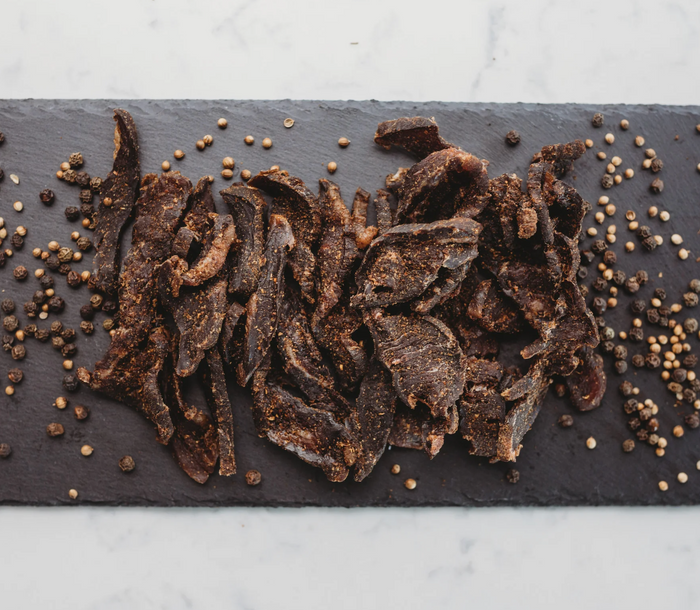
Biltong is not cooked, and it is not raw. It is cured. Three barriers make it safe without heat: acid from the vinegar, salt, and — the one that actually carries the product — low water activity. This guide explains each, and answers the safety questions people actually ask, including the ones about pregnancy, mold and children.
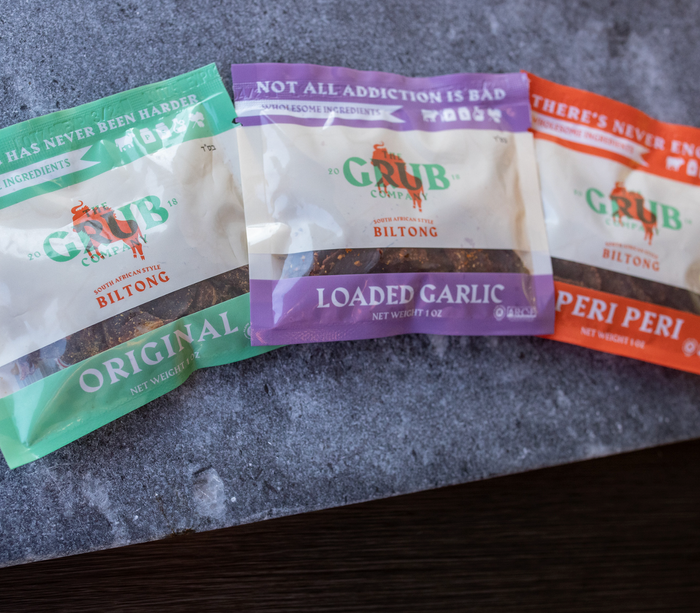
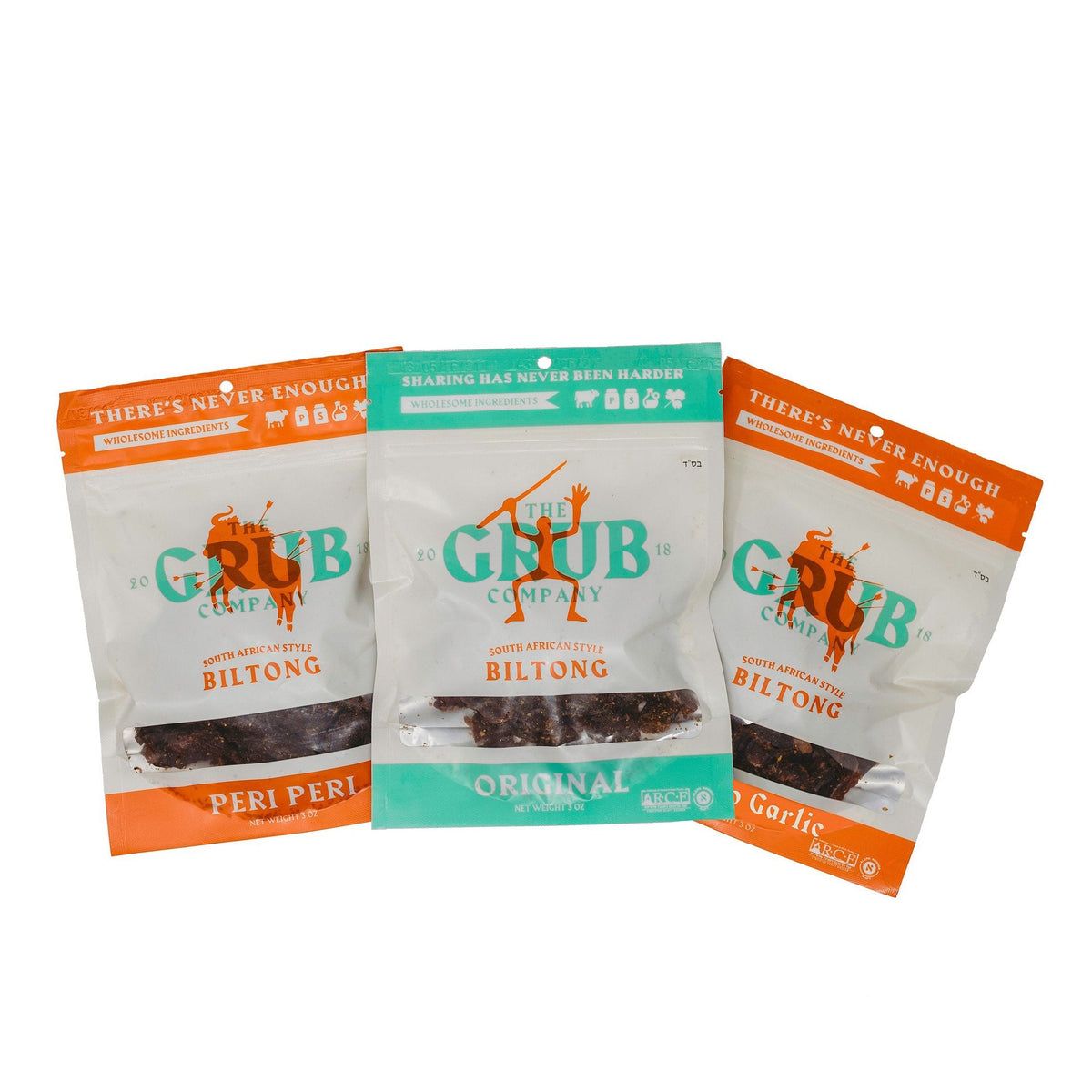
Shop the real thing: buy biltong online, Glatt Kosher and made in Florida. US orders over $50 ship free.
Related: How Biltong Is Made, and Why Kosher Biltong Is Hard to Make at Home
The short answer
Biltong sits in the same category as prosciutto, bresaola, coppa and country ham: uncooked cured meats that are safe to eat because of what curing and drying do, not because of heat. Nobody worries about prosciutto. Biltong works on exactly the same principle, and gets asked about more only because it is sold in a snack bag rather than sliced at a deli counter.
How curing makes uncooked meat safe
Barrier 1: acid
Biltong begins with a vinegar wash or soak. This drops the pH on the surface of the meat at the exact moment it is most vulnerable — before drying has begun and while there is still plenty of available water. Most spoilage and pathogenic bacteria are poorly suited to acidic conditions, so the vinegar step buys the drying process time to work.
This is unique to biltong among the major dried-meat traditions, and it is one of the reasons the method survived in a hot climate without refrigeration.
Barrier 2: salt
Salt draws water out of the meat by osmosis, and it does the same thing to any bacteria present. It also begins the drying process before the meat is even hung. Salt is the oldest preservative there is, and in biltong it is doing preservation work, not seasoning work — which is why biltong is a salty food and cannot really be made otherwise.
Barrier 3: water activity — the one that matters
This is the real mechanism, and it is worth understanding because it explains everything else.
Bacteria need water they can use. Not water that is present, but water that is free — unbound to proteins or salts. The measure of this is water activity, on a scale from 0 to 1, where pure water is 1.0.
| Water activity | What can grow | Example foods |
|---|---|---|
| 0.98–1.00 | Effectively everything | Fresh meat, fresh produce |
| 0.91–0.97 | Most bacteria, including pathogens | Cured but moist meats |
| 0.86–0.90 | Staphylococcus aureus; most others stop | Some fermented sausage |
| 0.80–0.85 | Most molds and yeasts only | Dry-cured hams, aged cheese |
| Below 0.80 | Very little; product is shelf-stable | Properly dried biltong, jerky |
Properly made biltong is dried into the bottom band. At that point there is not enough free water to support bacterial growth regardless of temperature, which is why a sealed bag does not need a fridge.
An important distinction: water activity is not the same as moisture percentage. Two pieces with identical moisture content can have different water activity depending on how that water is bound. This is why "moist" biltong is not automatically unsafe and why a piece that feels dry is not automatically safe. Makers measure water activity; consumers can only rely on the maker having done so.
Is biltong raw meat?
No. "Raw" means untreated — meat as it came from the animal. Biltong has been acidified, salted, spiced and dried until roughly half to two thirds of its water is gone. It has been transformed in ways heat is not required to accomplish.
The confusion is understandable, because we are taught that meat safety equals cooking temperature. That is true for fresh meat. It is not the only route to safety, and it never has been — every cured meat tradition in the world predates the thermometer.
Is biltong cooked?
No, and it should not be. Heat during production is exactly what makes jerky jerky: the proteins set, the texture becomes tough and short, and the character of the meat changes. Biltong's tenderness comes from never having been heated.
If a product marketed as biltong was made in a dehydrator at 160°F, it is a jerky process wearing a biltong name.
Safety questions people actually ask
Can pregnant people eat biltong?
This is a question for a doctor or midwife, not a food website, and the honest answer is that guidance on uncooked cured meats during pregnancy varies by country and by practitioner. Some guidance treats commercially produced, shelf-stable dried meats differently from deli-sliced cured meats; some does not distinguish. Ask your own clinician, and tell them specifically that it is an uncooked, dried, shelf-stable cured meat — that is the detail that changes the answer.
Can children eat biltong?
Generally yes, with two practical caveats. First, sodium — biltong is salty, and children need less of it, so portion accordingly. Second, and more importantly for young children, texture: firm dried meat is a choking risk for toddlers. Softer, wetter biltong cut small is the sensible form, and very young children should be supervised as with any firm food.
What about mold?
Mold on biltong is a real possibility once a bag has been opened in a humid environment, because the meat will pull moisture out of the air and water activity climbs back up.
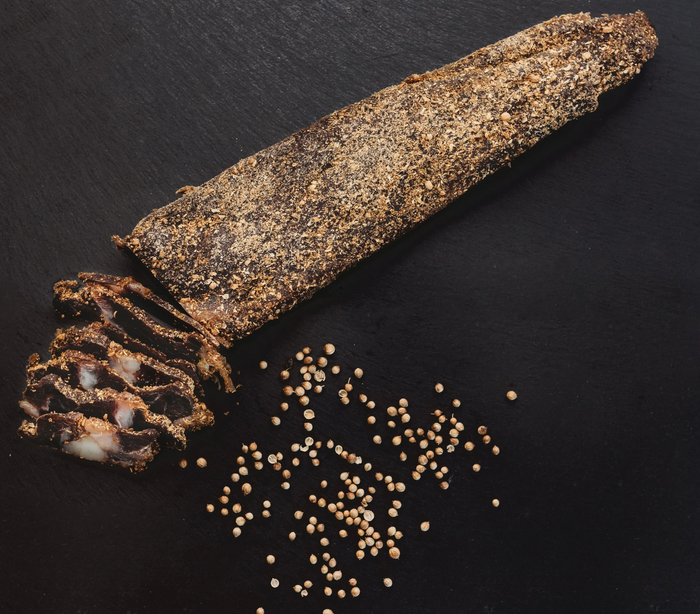
Distinguish carefully between mold and salt bloom. Salt bloom is a flat white crystalline dusting that brushes off — it is salt or spice that has migrated to the surface, and it is harmless. Mold is raised, fuzzy, and has visible texture, usually white, green or blue-green.
If you find mold, discard the whole bag rather than the affected piece. What is visible on one piece indicates conditions the rest of the bag shared. This is the standard advice for any cured meat, and it is not excessive caution.
Does biltong contain nitrates?
Properly made biltong does not need them. Vinegar, salt and drying do the work. If you see sodium nitrite on a biltong label, ask why the process required it.
Can biltong make you sick?
Properly produced and properly stored, it is a low-risk food. The realistic risks are all about handling after purchase: a bag left open in a humid room, a piece with visible mold eaten anyway, or home-made biltong that was not dried far enough. Commercial biltong from a maker who describes their process and packages with an oxygen absorber is a well-controlled product.
Is home-made biltong as safe?
It can be, but the margin is thinner. Home drying has no water activity measurement, no controlled environment, and no packaging barrier. The two most common home failures are drying in a humid space and stopping too early because the outside looks done while the inside is not. If you make your own, err toward drying further, refrigerate it, and eat it within a week or two.
How to tell if a piece is safe to eat
| Observation | Meaning | Eat it? |
|---|---|---|
| Firm, dry, shreds along the grain | Normal, possibly over-dried | Yes |
| Flat white crystalline dust | Salt or spice bloom | Yes |
| Darkened surface | Oxidation, cosmetic | Yes |
| Soft red center, firm edge | Correct structure for medium-dried biltong | Yes |
| Fuzzy raised growth | Mold | No |
| Tacky or slimy surface | Bacterial growth | No |
| Sour, ammonia or off smell | Spoilage | No |
| Rancid, paint-like smell | Fat oxidation | No |
The comparison that settles it
| Biltong | Prosciutto | Bresaola | Jerky | |
|---|---|---|---|---|
| Cooked? | No | No | No | Yes |
| Acid step | Vinegar | None | Wine | None |
| Salt cure | Yes | Yes | Yes | In marinade |
| Dried to low water activity | Yes | Yes | Yes | Yes |
| Nitrates typically used | No | Usually | Usually | Usually |
| Widely considered safe uncooked | Yes | Yes | Yes | n/a |
Biltong is the only one in that table with an acid step and no nitrates, which is to say it relies on the oldest and simplest barriers of the group.
The three barriers, and how they hand off to each other
The reason biltong is safe is not one mechanism but a relay. Each barrier covers a different period, and the sequence is what makes the method work in a hot climate.
| Barrier | When it acts | What it does | What happens without it |
|---|---|---|---|
| Vinegar (acid) | Hours 0–24, immediately | Drops surface pH while the meat is wettest and most exposed | An unprotected window before anything else has taken hold |
| Salt | Hours 1–48, then continuously | Draws water out of the meat and out of any organisms present | Drying starts from a wetter, undefended baseline |
| Water activity | Days 2 onward, permanently | Removes the free water microbes need to function | Nothing carries the product past the first week |
Read the middle column. The vulnerable period for any no-heat method is the beginning — freshly cut meat, room temperature, full of available water, nothing dried yet. Cooking gets through that by killing what is present. Air-drying cannot, so it uses acid, and the acid buys the slower barriers the days they need.
Remove any one and there is a period where nothing is holding the line. That is why the order is fixed and why makers who skip the vinegar are not making a lightly different product — they are running the method without its first defense.
Water activity, explained properly
This is the barrier that carries biltong long-term, and it is the one most people have never heard of.
Bacteria and molds need water they can use — free water, not water bound up in proteins and dissolved salt. The measure is water activity, on a scale where pure water is 1.0 and a completely dry solid is 0.
| Water activity | What can grow | Example foods |
|---|---|---|
| 0.98–1.00 | Effectively everything | Fresh meat, fresh produce |
| 0.91–0.97 | Most bacteria, including pathogens | Cured but still moist meats |
| 0.86–0.90 | Staphylococcus aureus; most others stop | Some fermented sausage |
| 0.80–0.85 | Molds and yeasts only | Dry-cured ham, aged cheese |
| Below 0.80 | Very little | Properly dried biltong, jerky |
Two things follow, and both matter practically.
Water activity is not moisture content. Two pieces holding identical amounts of water can behave completely differently depending on how tightly that water is held. Only free water counts. This is why "it looks quite moist" tells you almost nothing, and why makers measure with an instrument rather than by eye.
It is a state, not a permanent property. A piece is stable at the water activity it currently has. Leave it in humid air and the number rises, because biltong is hygroscopic and takes moisture back until it balances with the room. Nothing has gone wrong with the meat — its environment changed. That is the mechanism behind every storage rule on this page.
How this compares to foods nobody worries about
| Biltong | Prosciutto | Bresaola | Aged cheddar | |
|---|---|---|---|---|
| Cooked | No | No | No | No |
| Acid step | Vinegar | None | Wine | Bacterial acidification |
| Salt cure | Yes | Yes | Yes | Yes |
| Dried to low water activity | Yes | Yes | Yes | Yes |
| Nitrates typically used | No | Usually | Usually | n/a |
| Eaten uncooked, routinely | Yes | Yes | Yes | Yes |
| Considered alarming | Often | No | No | No |
Read the last two rows together. Biltong sits in exactly the same safety category as three foods nobody questions, and it is the only one of the four that routinely needs no nitrates — the acid start does chemically what curing salts do elsewhere.
The reason it gets questioned and prosciutto does not is entirely presentational. Prosciutto is sliced at a deli counter and served on a plate. Biltong comes in a snack bag next to jerky, and jerky is cooked — so people assume this one should be too.
What actually makes a piece unsafe
Three things, and all of them are visible or smellable.
Under-drying
The most common real failure, and almost entirely a homemade problem. A piece pulled too early looks and feels finished on the outside while the middle is still wet. Sealed into a bag, that trapped moisture redistributes, water activity rises, and mold appears three or four days later on meat that seemed perfect.
This is also what case hardening produces — dried too fast, so the outside forms a shell the inner water cannot cross. The piece passes every hand test and is wet inside.
Rehydration after opening
The most common failure with commercial biltong, and it is a storage problem rather than a production one. An opened bag in a humid room pulls moisture from the air until water activity climbs back into the range where mold can grow.
Fat oxidation
Not a microbial problem but a quality one, and it makes meat inedible. Fat exposed to air and light over days goes rancid, with a distinct paint-like or crayon smell. It is why lean cuts are used and why trimming matters.
Mold against salt bloom — the distinction that matters most
| Salt bloom (harmless) | Mold (discard) | |
|---|---|---|
| Appearance | Flat, crystalline dusting | Raised, fuzzy, with visible texture |
| Color | White | White, green, blue-green, occasionally black |
| Under an angled light | No shadow — it is flat | Casts a texture |
| To the touch | Brushes off | Attached, sometimes slightly furry |
| What it is | Salt or spice migrated to the surface | Fungal growth |
| What to do | Eat it | Discard the whole bag |
The angled-light test is the quickest reliable check. Salt is flat and reflects evenly; mold has structure and casts shadow.
And the standing rule with any cured meat: if one piece has mold, discard the whole bag, not that piece. What is visible on one indicates conditions the rest of the bag shared, and mold networks extend further than the visible growth.
Why "raw" is the wrong word
The word does a lot of damage here, and it is worth taking apart.
Raw means untreated — meat as it came off the animal, with nothing done to it. By that definition biltong is obviously not raw: it has been acidified, salted, spiced, and had half to two thirds of its water removed over days. More has happened to it than happens to a steak in a pan.
What people usually mean by "raw" is uncooked, and that is accurate. But uncooked and unsafe are not the same claim, and conflating them is a modern habit rather than a fact about food. Every curing tradition on earth predates the thermometer, and most of them are still in daily use.
The precise word is cured. It means preserved by means other than heat — salt, acid, drying, smoke, time, or some combination. Biltong is cured by acid, salt and drying. Prosciutto is cured by salt and time. Both are uncooked; neither is raw.
Pregnancy, children and older adults
These are the questions worth answering carefully rather than confidently, because the honest answer involves someone other than a food website.
Pregnancy
This is a question for a doctor or midwife. Guidance on uncooked cured meats during pregnancy varies by country and by practitioner — some distinguishes commercially produced, shelf-stable dried meat from deli-sliced cured meats, and some does not.
If you ask, give them the specifics rather than the word "biltong", which most clinicians outside South Africa will not know: an uncooked, vinegar-cured, air-dried, shelf-stable beef product with a water activity below the level supporting bacterial growth. That description is what changes the answer, and it is what lets them apply their own guidance properly.
Children
Generally fine, with two practical caveats that have nothing to do with the curing.
Sodium. Biltong is salty by design — salt is a preservative here rather than a seasoning. Children need less of it, so portion accordingly: an ounce is a serving, not a handful.
Texture, for toddlers. Firm dried meat is a choking risk in the same way any firm food is. Buy on the wetter side, cut it small, and supervise. This is a physical concern rather than a food-safety one, and it applies equally to hard cheese and raw carrot.
Older adults and anyone immunocompromised
The general guidance around uncooked cured meats applies, and it is a conversation with a clinician rather than a decision to make from a product page. The same caution that applies to prosciutto, soft cheese and smoked fish applies here, for the same reasons.
Commercial against homemade, honestly compared
| Commercial | Homemade | |
|---|---|---|
| Water activity | Measured with an instrument | Not measurable at home — weight loss is the only proxy |
| Drying environment | Controlled humidity and airflow | Whatever your house is doing that week |
| Packaging barrier | Sealed bag plus oxygen absorber | None |
| Batch traceability | Usually | No |
| Realistic shelf life | 3–6 months sealed | 1–2 weeks refrigerated |
| Main risk | Handling after opening | Under-drying, and humidity during drying |
None of this means homemade biltong is unsafe. It means the margin is thinner and the responsibility is yours. If you make your own: weigh before hanging, aim for at least 50% weight loss, err toward drying further than feels necessary, refrigerate what you make, and eat it within a couple of weeks.
The single most useful discipline is the scale. Without a starting weight there is no way to know how far you have gone, and "it looks done" is exactly the judgment that produces a piece that is dry outside and wet inside.
What to do if you are unsure about a piece
- Look at it in good light, from an angle. Mold casts a texture; salt bloom does not.
- Smell it. Beef, vinegar, coriander is right. Sour, ammoniac, or paint-like is not.
- Feel the surface. Dry or firm is fine. Tacky or slimy is not.
- Check the rest of the bag, not just that piece.
- When genuinely unsure, throw it out. A bag of biltong is worth less than a bad evening.
That last point is worth saying plainly, because guides like this one can accidentally encourage people to talk themselves into eating something. The barriers described here are excellent when the process was followed. Nothing on this page tells you whether it was followed for the piece in your hand — only your own eyes and nose can, and if they are uncertain, that is the answer.
Why properly made biltong needs no nitrates
Sodium nitrite appears on most cured-meat labels and on very few biltong labels, and the reason is worth understanding because its presence on a biltong bag is a genuine signal.
Nitrites do several jobs in traditional curing: they inhibit certain bacteria, they fix the pink color of cured meat, and they contribute a characteristic flavor. In products cured slowly at low temperature — ham, salami, bacon — they cover a long period during which water activity is still falling.
Biltong does not have that long exposed period. The vinegar covers the first hours, the salt covers the first days, and the drying is comparatively fast and deep. By the time a piece is finished it sits below the water activity that supports growth, and there is nothing left for a nitrite to protect against.
So when nitrites do appear on a biltong label, the reasonable question is what they are doing there. Usually the answer is that the drying is shorter than traditional — the product is being preserved chemically because it was not dried far enough to preserve itself. That is a legitimate manufacturing choice and a different product from what this page describes.
The colors, and what each one means
| Color | What it means | Eat it? |
|---|---|---|
| Deep red-brown, darker at the edges | Correct. Slow drying, outside in | Yes |
| Very dark, almost black at the rim | Dried further, or a heavy coriander coat | Yes |
| Uniform pale brown | Suggests heat was used | Safe, but it is jerky |
| Bright pink throughout | Nitrites, or very lightly dried | Check the label |
| Gray or dull | Poor airflow, or meat that was not fresh going in | Not a safety verdict, but a quality warning |
| Green or blue-green patches | Mold | No — discard the bag |
| Iridescent sheen on a cut face | Light diffracting off cut muscle fibers | Yes — harmless and normal |
That last row surprises people regularly. A faint rainbow sheen on sliced meat is an optical effect from the regular structure of cut muscle fiber, not spoilage. It appears on roast beef and ham too, and it is one of the more common reasons a perfectly good bag gets thrown out.
The short version, for anyone who scrolled
Biltong is not raw and it is not cooked. It is cured — preserved by acid, salt and the removal of water rather than by heat. That is the same category as prosciutto, bresaola and country ham, none of which anyone worries about.
It is safe because three barriers hand off to each other: vinegar covers the first hours, salt covers the first days, and low water activity carries it indefinitely afterward. Remove any one and there is a gap; keep all three and there is not.
The realistic risks are all about what happens after you buy it. An opened bag in a humid room takes moisture back and can grow mold. Homemade biltong that was pulled too early is wet inside and will fail in the bag. Neither is a problem with the method.
And the practical rules are short: keep it sealed until you want it, press the air out when you reseal, refrigerate if your house is humid or you will not finish it in two or three days, and judge a piece by smell and surface rather than by how hard it has become. Hard is fine. Fuzzy or tacky is not.
Quick answers
Is biltong raw? No — cured, not cooked, not raw.
Is biltong cooked? No. Heat would make it jerky.
Is it safe to eat straight from the bag? Yes, that is how it is meant to be eaten.
Does it need refrigeration? Not while sealed. After opening, refrigerate if you will not finish it in two or three days.
Is the red center undercooked? There is nothing to undercook. A softer, redder center is the correct structure for medium-dried biltong.
Why the vinegar step matters more than it looks
Of the three barriers, the vinegar is the one that gets least attention and does the most unglamorous work.
Timing is everything. In the first hours after cutting, the meat is at its most vulnerable — full of available water, at room temperature, with freshly exposed surfaces. Salt has begun drawing water out but has not yet made much difference, and drying has barely started. That window is where a problem would establish itself if one were going to.
The vinegar closes that window. Acid on the surface at exactly the moment the surface is most exposed buys the slower barriers time to do their work. It is the reason the biltong method survived in a hot climate without refrigeration where drying alone would have been marginal.
It is also why "biltong" made without a vinegar step is a different and less well-protected product, whatever the label says.
Commercial versus homemade, honestly compared
| Commercial | Homemade | |
|---|---|---|
| Water activity measured | Yes, with instruments | No — weight loss is the only proxy |
| Drying environment | Controlled humidity and airflow | Whatever your house is doing |
| Packaging barrier | Sealed, oxygen absorber | None |
| Batch traceability | Usually | No |
| Realistic shelf life | 3–6 months sealed | 1–2 weeks refrigerated |
| Main risk | Handling after opening | Under-drying, and humidity during drying |
None of this means homemade biltong is unsafe. It means the margin is thinner and the responsibility is yours. Dry it further than feels necessary, refrigerate it, and eat it within a couple of weeks.
See how ours is made — vinegar-cured, air-dried in small batches, no nitrates, sealed with an oxygen absorber.
Satisfied it is safe? Where to start.