Kosher Turkey Jerky vs Kosher Beef Jerky
Kosher turkey jerky and kosher beef jerky follow the same kashrut rules, with two differences: "glatt" has no literal meaning on poultry, and turkey jerky usually leans harder on marinade. Turkey is leaner and milder; beef is richer and holds flavor better. Here is how they compare.
Related: Chicken Jerky vs Beef Jerky: Texture, Protein and Which to Buy
Kashrut: what is the same
- The animal must be kosher-slaughtered and inspected.
- Every marinade ingredient must be certified.
- The facility must be supervised, dedicated or kashered.
- Both are meat (poultry counts as meat under rabbinic law), never pareve.
Kashrut: what differs
| Turkey jerky | Beef jerky | |
|---|---|---|
| "Glatt" | No literal meaning; lung adhesions are a ruminant question | Lungs inspected and found smooth |
| Porging | Not an issue in the same way | Hindquarter must be porged, so most kosher beef is forequarter |
| Marinade | Often heavier (teriyaki, sweet sauces), so more to certify | Varies |
If you see "glatt" on a turkey jerky, it is being used loosely to signal a stricter standard. Read the certification, not the adjective. More on what glatt means.
Taste and nutrition
| Turkey jerky | Beef jerky or biltong | |
|---|---|---|
| Flavor | Mild; the marinade carries it | Beefy; holds its own |
| Texture | Softer, can be dry | Chewy (jerky) or tender (biltong) |
| Fat | Very lean | Lean |
| Sugar | Often higher, from heavier marinades | None added in our Original biltong |
Which to choose
- Do not eat red meat? Certified kosher turkey jerky.
- Want the most flavor? Beef.
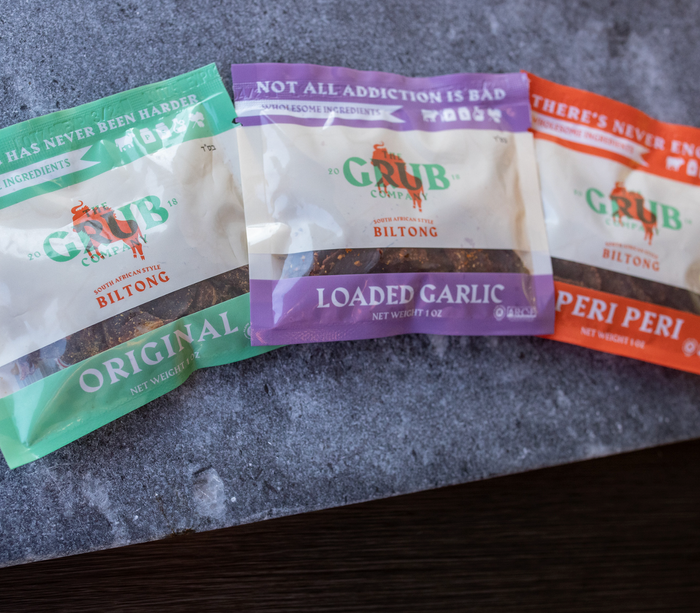
- Want the fewest ingredients? Biltong, Original: six ingredients, no sauce.
- Want sweet? Meat Candy.
We make beef jerky and biltong, not turkey. See our certified Glatt Kosher kosher beef jerky, and what to check on any jerky bag.
Try it: Is This Jerky Kosher? Label Checker. Answer five questions about the bag in your hand.