Hanukkah Food Beyond Latkes: Meat Dishes and Snacks for Eight Nights
Traditional Hanukkah food is anything cooked in oil, because the holiday remembers the oil that lasted eight days. Latkes and sufganiyot are the famous two, but a full Hanukkah table also has brisket, fried chicken cutlets, roasted vegetables and snacks that need no stove at all. We make certified Glatt Kosher biltong and jerky, so this guide covers the meat side of the holiday: what to cook, what to set out, and how to get through eight nights without eating the same dinner twice.
Related: Chanukah Menu: Planning a Hanukkah Party With Meat
Everything we make is certified Glatt Kosher. That matters on Hanukkah more than people expect, because the holiday is full of guests, gift bags and kids with free time, and you want a snack you never have to second-guess.
Why Hanukkah food is built around oil
The food tradition follows the story. The Temple menorah had enough oil for one day and burned for eight. So the foods that carry the holiday are the ones cooked in oil. That is the whole reason latkes (potato pancakes) and sufganiyot (jelly doughnuts) are on every list.
It also means you have more room than the lists suggest. Anything fried or roasted in oil fits the idea. A chicken cutlet pan-fried in oil is as much a Hanukkah dish as a latke. So is a tray of potatoes roasted in oil.
Many families also eat dairy foods on Hanukkah, such as cheese latkes or blintzes. Customs differ from family to family, so follow yours. If you serve both meat and dairy over the holiday, keep them at separate meals, and wait between meat and dairy according to your family's custom. The rest of this guide is meat, because that is where most home cooks need ideas.
The meat dishes that earn a spot on the table
Brisket, the Hanukkah main course
Brisket is the dish most families reach for. It is forgiving, it feeds a crowd and it tastes better the day after you make it. That last point is the real reason it works on a busy holiday: you cook it once, store it, and reheat it on a night when you have no time.
Braised brisket for 8 to 10 people
- 1 brisket, 4 to 5 pounds, trimmed of the thickest fat cap
- 2 tablespoons oil
- 2 large onions, sliced
- 4 carrots, cut in chunks
- 4 cloves garlic, smashed
- 2 tablespoons tomato paste
- 1 tablespoon paprika
- 2 teaspoons salt and 1 teaspoon black pepper
- 1/2 cup red wine
- 1 cup beef broth
Heat the oven to 325°F. Rub the brisket with the paprika, salt and pepper. Sear it in the oil in a heavy roasting pan or Dutch oven, about 4 minutes a side, then lift it out. Cook the onions in the same pan until soft. Stir in the garlic and tomato paste for one minute, then add the wine and scrape up the brown bits.
Put the brisket back on top of the onions, add the carrots and broth, and cover tightly with a lid or foil. Braise for 3 to 3 1/2 hours, until a fork slides in with no resistance. Cool it in its liquid, chill overnight, then slice it against the grain and reheat the slices in the sauce. Slicing cold is far easier than slicing hot, and it is the difference between neat slices and shreds.
Brisket is the wrong pick if you want dinner in under an hour. It is a plan-ahead dish. If you only have 45 minutes, make cutlets instead.
Chicken cutlets fried in oil
Schnitzel is the fastest way to make a real Hanukkah meat dish. Pound boneless chicken breasts to about 1/2 inch thick. Dip each in flour, then beaten egg, then breadcrumbs. Pan-fry in about 1/4 inch of oil over medium-high heat, 3 to 4 minutes a side, until deep golden and cooked through. Drain on a rack, not paper towels, so the underside stays crisp.
Cutlets are the dish kids actually eat. They also reheat well in a hot oven, and a tray of them can sit out on a Hanukkah buffet while the candles burn.
Roasted vegetables in oil
Toss potatoes, carrots and onions with 3 tablespoons of oil, salt and pepper. Roast at 425°F for 35 to 40 minutes, turning once. It is the same idea as a latke with none of the standing at the stove.
Latkes, if you are making them
You are probably making latkes. Here is a plain version that works, and a meat-friendly way to dress it.
Potato latkes, about 16 three-inch pancakes
- 2 pounds russet potatoes (about 4 large)
- 1 medium onion
- 2 eggs
- 1/4 cup flour or matzo meal
- 1 1/2 teaspoons salt and 1/2 teaspoon pepper
- Oil for frying, about 1/2 inch deep in the pan
Grate the potatoes and onion, then squeeze them hard in a clean towel. Wet potatoes make soggy latkes, and this one step decides the result. Mix with the eggs, flour, salt and pepper. Fry spoonfuls in hot oil over medium-high heat for 3 to 4 minutes a side, until the edges are dark gold. Drain and salt again while hot.
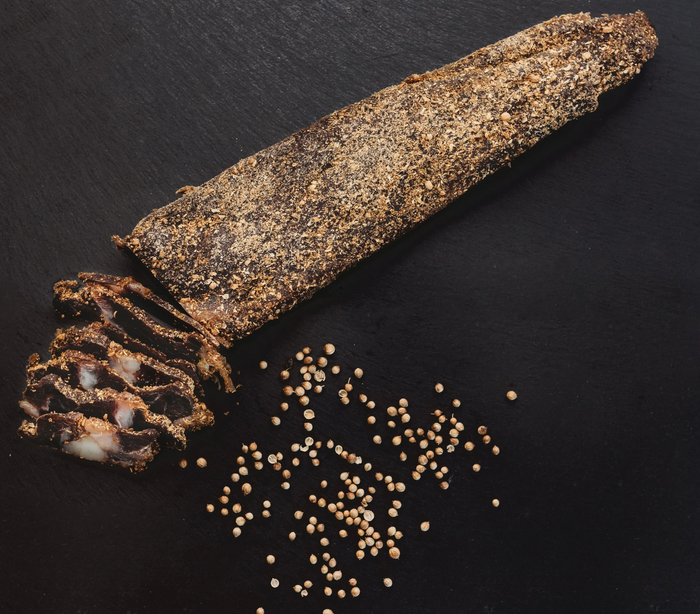
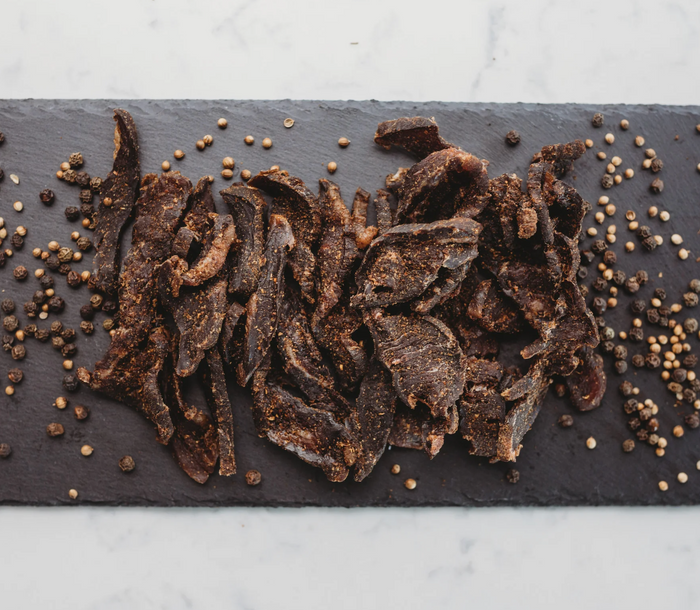
Here is the meat-meal twist. Skip the sour cream, which is dairy, and top each latke with a spoonful of applesauce and a few pieces of crumbled biltong. The coriander and pepper in Sliced Biltong sit well against the sweet apple and the fried potato. Biltong is already cured and ready to eat, so it goes on cold. Do not cook it. A latke with a salty, savory topping is a better bite than a latke with nothing on it.
Snacks and nibbles for eight nights
The holiday is eight evenings of candles, guests and children who want something to eat before dinner. Cooking every night is not realistic. This is where a shelf-stable snack earns its place.
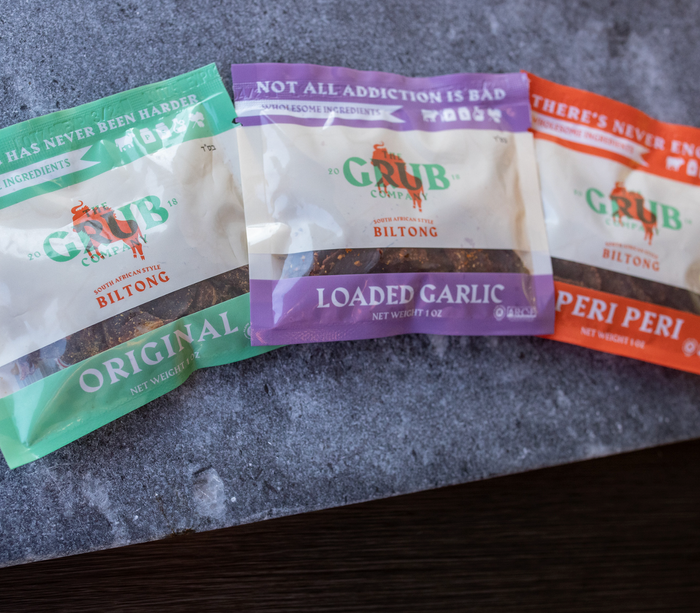
Sliced Biltong comes in three-ounce bags of Original, Peri Peri or Loaded Garlic. It is sliced, ready to eat and needs no refrigeration. Original is beef first, then a warm coriander note, and it suits everyone. Peri Peri has real heat and divides a room. Set Original out for a mixed crowd.
Meat Candy is our jerky, and it is the sweeter side of the shelf. It is cooked, glazed and made from whole sliced beef. Hickory Kickory Dock is smoky hickory with the sweetness behind it. Baa-Baa BBQ Sheep is Korean BBQ, sweet and savory together. Children tend to reach for it first. If you are choosing between the two styles, our guide to Meat Candy vs. biltong explains the difference.
Biltong is the wrong pick if you want a hot, plated dish to serve with a fork. It is a snack and a topping, not a main course. Use it for what it does well: it travels, it keeps, and it needs no cooking, which is a gift on a night when you are already frying.
You can see every flavor and size on Buy Biltong Online, and our full line of kosher beef jerky sits in one place if you are stocking up for the whole week.
A simple plan for eight nights
You do not need eight different dinners. Pick a few anchors and repeat the sides. Here is one way to do it.
- Night 1: The big meal. Brisket, latkes and roasted vegetables, with guests.
- Night 2: Leftover brisket, reheated in its sauce, with fresh latkes.
- Night 3: Chicken cutlets and a green salad.
- Night 4: A dairy night, if your family keeps that custom. Cheese latkes or blintzes.
- Night 5: Soup and a snack board with biltong, pickles, olives and crackers.
- Night 6: Cutlets again, this time as sandwiches.
- Night 7: Roasted chicken and potatoes, one pan.
- Night 8: A party night. Doughnuts, a board and whatever the family wants.
If a night falls on Shabbat, the usual Shabbat rules apply to what you cook and when. Ask your rabbi for the details of your family's practice.
The snack board on Night 5 is the easiest night of the week. Lay out sliced biltong, a bowl of olives, pickles, mustard and a few crackers. Nothing on it needs a stove. For more on putting one together, see our guide to kosher beef jerky as a Chanukah gift, which covers the gift side of the holiday too.
Bottom line
Hanukkah food is about oil, and oil is not limited to latkes. Make one brisket ahead, fry a tray of cutlets, roast a pan of vegetables, and keep a few bags of biltong and Meat Candy on the counter for the nights you do not want to cook. Keep meat and dairy at separate meals, follow your family's custom, and ask your rabbi about anything you are unsure of. US orders over $50 ship free.
Frequently Asked Questions
What is traditional Hanukkah food?
Foods cooked in oil, because the holiday remembers the oil that burned for eight days. Latkes and sufganiyot are the best known. Brisket, fried chicken cutlets and oil-roasted vegetables fit the same idea, and many families add dairy dishes as a custom.
What should I serve for a Hanukkah meal?
A common menu is brisket, potato latkes, a roasted vegetable and a green salad, with doughnuts for dessert. If you need something faster, chicken cutlets fried in oil replace the brisket in under an hour.
Can I serve meat and dairy at the same Hanukkah meal?
No. Keep meat and dairy separate. If you serve both during the holiday, put them at different meals, and wait between meat and dairy according to your family's custom. That is why a meat meal calls for applesauce on the latkes instead of sour cream.
Is biltong a good Hanukkah snack?
Yes, for the snack table and as a topping. Our biltong is certified Glatt Kosher, ready to eat and needs no refrigeration. It is not a hot dish and it is not fried in oil, so treat it as the easy side of the meal, not the main event.
Do I cook biltong before serving it?
No. Biltong is air-dried and cured, and it is ready to eat from the bag. Serve it as it is, or crumble it over a hot latke just before serving.
How far ahead can I make brisket?
Up to two days ahead. Cool it in its liquid, chill it, slice it cold and reheat the slices in the sauce. Most cooks find the flavor is better on the second day.
Can I order kosher snacks to be delivered for Hanukkah?
Yes, within the US. We ship across the United States only, and orders over $50 ship free. Order early in the week of the holiday if you want the bags on hand before the first candle.