How Long Does Kosher Biltong Last? Shelf Life Explained
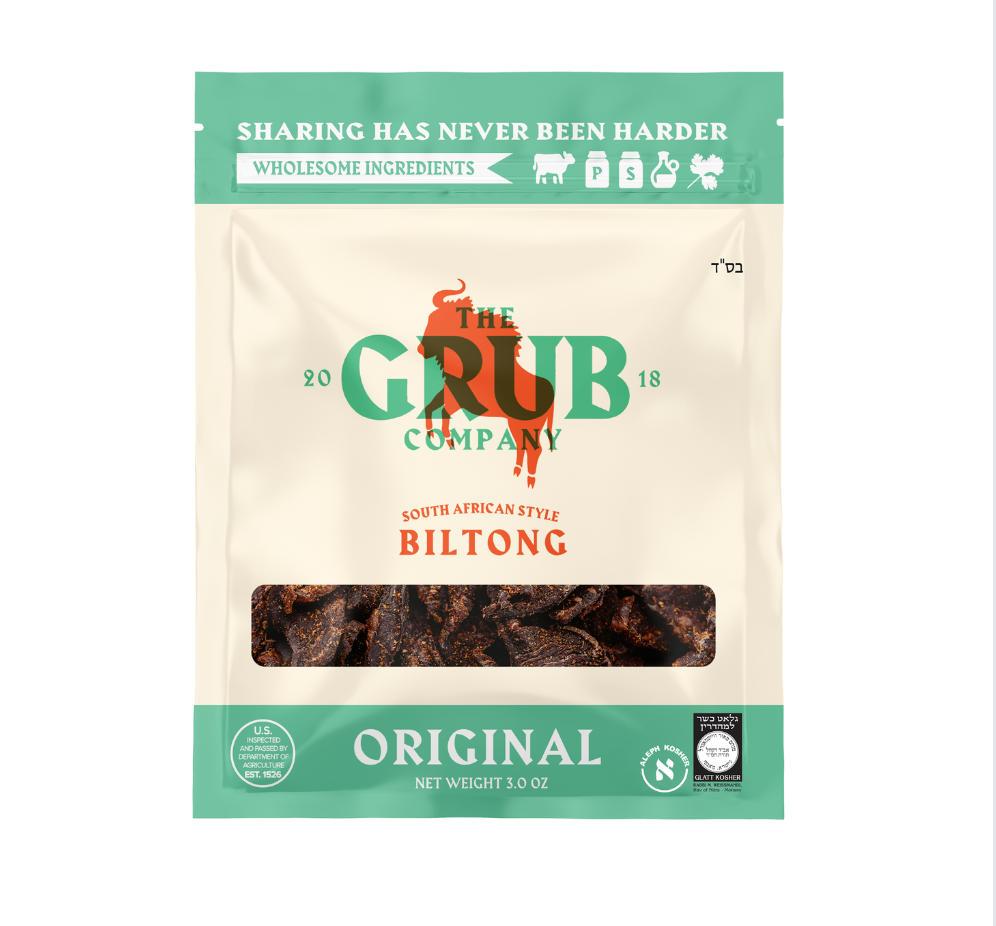
Kosher certification does not add or subtract a single day from how long biltong keeps. It is a statement about sourcing, handling and supervision, not about drying, salt levels or packaging, and any page that implies a kosher mark makes a dried meat last longer is selling you something. What certification does change is what is known about the product, who watched it being made, what was recorded along the way, and what a household that keeps kosher has to do with the bag once it gets home.
Want some on hand? Order biltong online: Glatt Kosher, air-dried in Florida, free US shipping over $50.
That is the honest shape of this subject, and it is why this page exists separately from our general shelf-life article. The mechanism of how a dried meat keeps, water activity, salt, acidity and format, applies identically to certified and uncertified biltong. Everything below is the part that does not.
What the mark on the pack is actually certifying
A kosher symbol is a certifying agency's statement that it has examined a specific product made at a specific facility under a specific set of conditions, and found it to conform. It is not a general endorsement of a company, and it is not transferable between products. This is the first thing worth understanding, because it explains why the mark appears on the package rather than on the storefront.
For a meat product the certification covers a chain that starts well before anyone thinks about drying. The species, the animal's condition, the method of slaughter, the inspection that follows it, the removal of certain fats and blood, and then everything that happens to that meat downstream in handling, storage and processing. Any break in that chain ends the certification for that batch. Nothing about it speaks to how long the finished product keeps, and no certifying agency claims otherwise.
Glatt, and what the word means
Glatt is a term people see on packs and rarely have explained. It refers to the condition of the animal's lungs at inspection, with glatt meaning smooth, in other words free of the adhesions that would otherwise require closer examination. It is a stricter standard within kosher meat rather than a different category of food, and it is a sourcing standard specifically.
Our biltong carries kosher certification, and buyers who look for the glatt standard will find that reflected on the pack. What it tells you is about the animal and the inspection. What it does not tell you is anything about the drying room, and it is a reasonable thing to want both, from two different lines of evidence.
The koshering process happens before the biltong process
Here is where kosher handling and dried meat genuinely intersect, and it is the most interesting part of this subject. Kosher meat undergoes soaking and salting, known as melichah, to draw out blood before it can be used. The meat is soaked, then covered in coarse salt, left for a period so the salt draws moisture and blood out, then rinsed thoroughly.
Read that as a food process rather than a religious one and it is a salt cure followed by a rinse. Which means kosher meat arriving at a biltong maker has already been through a salting and moisture-drawing step that non-kosher meat has not. That does not make the finished biltong keep longer, because the rinse removes the salt again and the biltong cure that follows is what sets the final salt level and the final water activity. What it does mean is that the meat has been handled to a documented standard, by people whose job was to follow that standard exactly, before the first vinegar wash ever happens.
Separation, and why it changes how a run is scheduled
Kosher production requires separation from non-kosher production and from dairy. In practice that means dedicated equipment, or equipment that has been through a supervised process to make it usable for a kosher run, and it means the kosher run cannot simply be slotted in between other work on shared machinery.
The consequence for a buyer is scheduling. A certified product tends to be made in defined runs rather than continuously, because the conditions have to be established and supervised each time. That is one of the real reasons certified products often come from smaller, more clearly delineated batches, and batch definition is exactly what makes traceability possible later. The trade-off is honest enough to state plainly. Separation adds cost and rigidity to production. It also produces a cleaner record.
Supervision, and what a supervisor's presence produces
Certification is not a one-time inspection followed by a logo. It involves ongoing supervision, with a supervisor present for the parts of production that require it, and periodic unannounced visits by the agency. That person is not a quality inspector in the food-safety sense and it would be wrong to describe them as one. Their brief is conformance to Jewish dietary law.
The side effect is documentation. Supervised production generates records of who was present, what was run, when, and on what equipment. A buyer who cares about certification is, without necessarily intending to, buying into a supply chain where more of the steps are written down than is normal for a food product of this kind. That is a genuine difference from an uncertified equivalent, and it is a difference in the paperwork rather than in the meat.
Sealed shipments and the chain of custody
One practice within kosher supervision has no counterpart in ordinary food logistics and is worth knowing about. When certified meat moves between facilities without a supervisor traveling with it, it typically moves under seal, with tamper-evident closures applied by the supervising authority at the origin and checked at the destination. A broken or missing seal is not a paperwork inconvenience. It ends the certification of that shipment.
What that means for a buyer is that the custody chain between the slaughterhouse and the drying room is not a matter of trust and invoices alone. It is physically evidenced at each handoff. Almost nothing in ordinary meat retail works that way, and it is one of the few places where the kosher framework produces something a non-religious buyer might straightforwardly want.
Lot records and what you can actually trace
Because certified runs are defined batches with supervision records attached, the lot code on a certified pack tends to lead somewhere more specific than a lot code generally does. The agency has a record of the run. The producer has a record of the run. Both are expected to be able to answer for it if asked.
The practical value shows up when there is a question about a particular pack. A buyer with a lot code and a date is asking about an identified batch rather than about a product line, and that is a materially different conversation. It is also why holding on to the packaging until you have finished the contents is a small habit worth having with any certified product.
Certification is time-limited and renewed
A certification is not permanent. Agencies issue certificates for defined periods and renew them after review, which means a mark on a pack is a statement tied to a moment. For anything with a long shelf life, and dried meat qualifies, that produces an odd little fact. A pack sitting in a cupboard carries a mark that reflected the state of the facility when it was made.
That is not a reason for concern about an old pack, since the certification was valid for the run in question and stays valid for it. It is a reason to be careful about reasoning in the other direction. A mark on a package you bought two years ago is not evidence that anything is certified today, and if certification matters to you enough to check, check the current listing on the agency's own register rather than the printed symbol on old packaging.
Passover, which is the calendar constraint nobody mentions
This is the genuinely kosher-specific keeping question, and it has nothing to do with the meat at all. It has to do with the vinegar. Biltong is traditionally vinegar-washed, and vinegar can be derived from grain. Grain-derived vinegar is chametz, which a household observing Passover must not own or consume during the holiday.
A product certified kosher year-round is not automatically certified for Passover, and the two are separate certifications with separate marks. For a household that clears chametz, that turns into a real deadline on a bag of biltong, and it is a deadline set by the calendar rather than by the product. If the bag will not be finished before the holiday, the options are the ordinary ones for chametz, which is to finish it, give it away, or include it in the sale of chametz arranged through your rabbi. What you should not do is assume that a kosher mark answers the Passover question, because it does not.
If Passover matters to your household, look for Passover certification specifically, ask the agency rather than the seller, and plan your buying around the calendar. A pound bag bought two weeks before the holiday is a different decision from the same bag bought in October.
Storing it in a kosher kitchen
Biltong is meat, which decides a great deal about where it lives once it comes through the door. In a kitchen that keeps meat and dairy separate, biltong belongs in meat-designated storage, cut on a meat board with a meat knife, and served on meat dishes. None of that is exotic to a household that already runs this way, but it is worth spelling out because dried meat sits in a mental category near snacks and crackers, and snacks tend to end up wherever there is room.
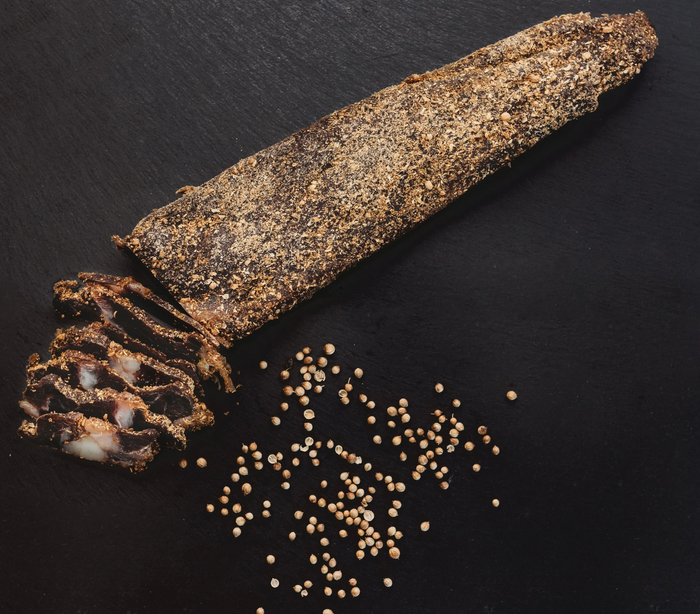
The practical failure mode is the shared container and the shared board. A cotton storage bag that has held cheese is not a bag for biltong. A cutting board used for both is the classic error with a slab, since cutting a slab is the one biltong task that involves a knife and a board rather than just a hand and a bag. Give a slab its own board and its own knife and the problem disappears.
The refrigerator question, specifically
Cold storage of an opened bag runs into the same separation question in a different room. Sealed packaging changes the picture in a kosher kitchen, and an opened container of meat sitting uncovered on a shelf above dairy is the arrangement most households would rather avoid. Keeping biltong in a closed meat-designated container in the fridge handles it, and it happens to be good practice for the meat as well, since it keeps the surface from picking up moisture and smells from everything else in there.
Where the rules get more specific than a general article should go, the answer is your rabbi rather than a merchant's blog. We can tell you what the product is. What your household does with it is a question with a proper address, and it is not this one.
What to check before you buy
- The symbol is on the product package, not just on a website. Certification attaches to products, not to companies.
- If glatt matters to you, the pack should say so rather than leaving you to infer it.
- Year-round certification and Passover certification are separate. Do not read one as the other.
- The agency's own register is the authority on whether a certification is current, not the printed mark on an old bag.
- Keep the packaging with the lot code until the contents are gone, because a lot code is what turns a question into an answerable one.
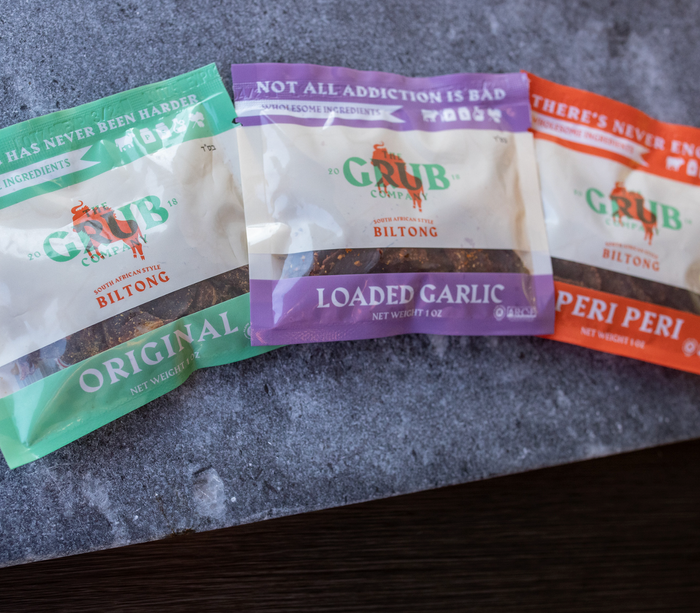
Our own range is straightforward on format. Sliced Biltong Mini's at $4.99, Sliced Biltong at $11.99, the Biltong Sampler Pack at $12.99, Biltong Slabs at $58.00 and Bulk Biltong, 1LB of Sliced Biltong at $58.00, plus Meat Candy at $7.99, which is our jerky. The certification question applies to the pack in front of you, so read the pack.
What this page deliberately does not cover
How long biltong keeps, and why, is a subject with real substance to it and none of that substance is religious. Water activity, the balance between salt and drying, the vinegar wash and acidity, what fat does on its own schedule, and how a slab compares with sliced biltong in a bag are all covered properly in our general article on how long biltong lasts. Read that one for the mechanism.
Read this one if you buy certified products and want to know what you are actually buying beyond a symbol. The two questions genuinely are different, which is the only reason to write two pages about them.
Bottom line
Certification tells you about the animal, the slaughter, the separation of the production run, the supervision that watched it and the seals that traveled with it. It tells you nothing about shelf life, and the mechanism that keeps a dried meat stable is identical either way. Anyone who tells you a kosher mark makes biltong last longer has confused two subjects.
What it does give a buyer is a documented chain, a defined batch and a lot code that leads somewhere. What it asks of a buyer is attention to two things a general article would never mention. That Passover is a separate certification and a real deadline on a bag you already own, and that biltong in a kosher kitchen is meat, with everything that follows about containers, boards and knives.
Frequently Asked Questions
Does kosher certification make biltong last longer?
No. Certification is a statement about sourcing, handling and supervision, and it says nothing about drying time, salt levels, packaging or how a dried meat keeps. The mechanism that keeps biltong stable is water activity, achieved through salt and controlled drying, together with the acidity of the vinegar wash. That mechanism works identically whether the meat is certified or not. Anyone implying a kosher mark extends shelf life has confused two separate subjects. What certification does change is what is known and recorded about the product, which is a different kind of value and worth having on its own terms.
What does the glatt standard actually refer to?
The condition of the animal's lungs at inspection. Glatt means smooth, in the sense of free from the adhesions that would otherwise require closer examination before the animal could be declared acceptable. It is a stricter standard within kosher meat rather than a separate category of food, and it applies at the sourcing end of the chain. That is worth being clear about because the word appears on packaging with no explanation and people reasonably assume it describes the finished product or its handling. It describes the animal and the inspection. Everything downstream, including how the meat is dried, is governed by other parts of the certification.
How does kosher salting relate to the biltong process?
Kosher meat goes through soaking and salting, known as melichah, to draw out blood before the meat can be used. Described as a food process rather than a religious one, that is a coarse salt cure followed by a thorough rinse. So kosher meat arriving at a biltong maker has already been through a salting and moisture-drawing step that other meat has not. It does not make the finished biltong keep longer, since the rinse removes that salt and the biltong cure that follows sets the final salt level and water activity. What it means is that the meat was handled to a documented standard before the first vinegar wash.
Is kosher biltong automatically kosher for Passover?
No, and this is the point most often missed. Year-round certification and Passover certification are separate, with separate marks. Biltong is traditionally vinegar-washed, and vinegar can be derived from grain, which makes it chametz. A household observing Passover must not own or consume chametz during the holiday, so a bag of biltong that will not be finished by then becomes a real deadline set by the calendar rather than by the product. The options are the ordinary ones, which is to finish it, give it away, or include it in the sale of chametz arranged through your rabbi. Look for Passover certification specifically and ask the agency rather than the seller.
Why does certified production come in defined batches?
Because separation has to be established rather than assumed. Kosher production requires separation from non-kosher production and from dairy, which means dedicated equipment or equipment taken through a supervised process before a run. That cannot be slotted casually between other work on shared machinery, so certified products tend to be made in defined runs with the conditions set up and supervised each time. The trade-off is real in both directions. Separation adds cost and takes flexibility out of scheduling. It also produces clearly bounded batches, and batch definition is what makes lot-level traceability possible afterward.
What is the point of sealed shipments in kosher supervision?
It keeps the custody chain physically evidenced rather than merely documented. When certified meat moves between facilities without a supervisor traveling with it, it generally moves under tamper-evident seals applied by the supervising authority at the origin and checked on arrival. A broken or missing seal is not a paperwork problem to be resolved later. It ends the certification of that shipment. Very little in ordinary meat logistics works that way, where custody between the slaughterhouse and the processor is a matter of trust and invoices. It is one of the places where the kosher framework produces something a buyer with no religious interest might still want.
How should biltong be stored in a kosher kitchen?
As meat, which decides most of it. Biltong belongs in meat-designated storage, cut on a meat board with a meat knife and served on meat dishes. That sounds obvious stated plainly, and the reason it is worth stating is that dried meat sits in a mental category near snacks and crackers, so it tends to end up wherever there is room. The two common slips are a shared storage bag and a shared cutting board, and the board matters most with a slab, since cutting a slab is the one biltong task that actually involves a knife and a board. Give a slab its own board and its own knife.
Does a kosher symbol on an old package prove the product is still certified?
It proves the run was certified when it was made, which is what it was ever meant to prove. Certifications are issued for defined periods and renewed after review, so a mark on a pack is a statement tied to a moment. That is not a reason for concern about a pack you already own, because the certification was valid for that batch and stays valid for it. It is a reason not to reason backward. A symbol on packaging you bought some time ago is not evidence about the facility today. If it matters enough to check, check the certifying agency's own current register rather than the printed symbol.
Shelf life starts with how a bag was sealed. Ours go out sealed with an oxygen absorber, which is what makes the months-long figure honest rather than optimistic.