Biltong Use Cases: When and How to Eat It
Biltong works as trail food, desk snack, gym bag protein, pantry backup and a slow eating alternative to jerky, and it covers all of those roles for one reason: it is shelf stable, dense with protein and needs no refrigeration. That is not marketing. That is what curing and air drying meat with salt does to its portability and its keeping.
Ready to try it? Buy Glatt Kosher biltong online. Made in Florida, free US shipping on orders over $50.
What follows is every use we actually see, along with which format suits each one and where biltong is the wrong answer. The formats matter more than people expect. A pocket sized pack and an uncut slab are the same meat behaving completely differently once they leave the kitchen.
The core use cases
- Portable travel and outdoor food. This is where biltong started. Hunters and travelers in Southern Africa relied on it because it did not need cold storage and could survive long journeys. That has not changed. Hiking, road tripping or flying somewhere without a cooler, it belongs in your bag the same way it belonged in a saddlebag.
- Sustained snacking. Biltong is cut in thick pieces and meant to be chewed slowly rather than popped in one bite. Jerky is a quick consumption shelf snack. Biltong is something you work through over time, which means a modest amount lasts longer than the same weight of most snacks.
- High protein food alongside a meal. A slab or a handful of sliced biltong next to a meal adds protein with no preparation. No cooking, no heating, no mess. It is not a replacement for a full meal, but it fills the gap between meals or rounds out a light lunch.
- Long term pantry staple. Because the salt cure and low available moisture make it shelf stable, it stores well. Keep a bulk pack on hand and there is protein in the house when the fridge is bare or when you are stocking up ahead of a trip.
- Low effort entertaining. Put a plate of sliced biltong out at a gathering and it handles itself. No dip, no utensils, no heating. People keep coming back to it without anyone making a fuss.
At a desk, where most of it actually gets eaten
The single most common use we hear about is unglamorous. Someone keeps a pack in a drawer and works through it during the afternoon. It suits that setting because it is dry to handle, leaves nothing on a keyboard, and does not need a plate or a break. The slow chew is an advantage here rather than a chore, since a couple of pieces occupy the same stretch of time that half a bag of something else would.
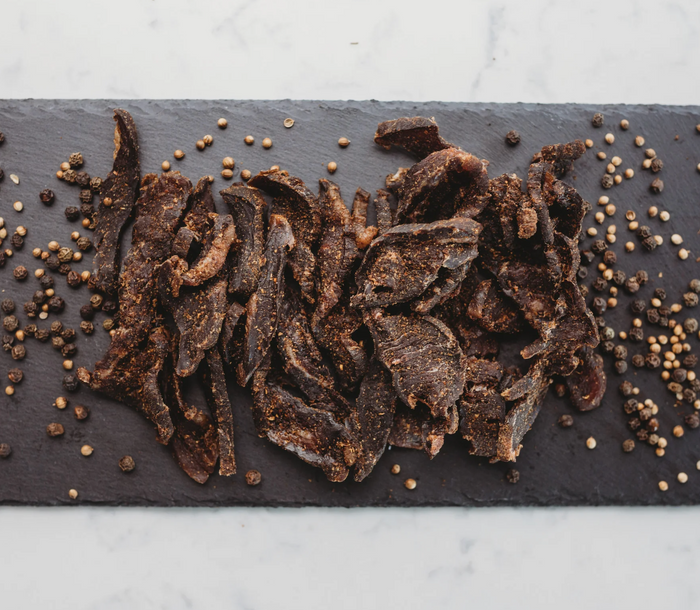
Sliced Biltong at $11.99 is the format for this. Mini's at $4.99 work if you would rather the decision about when to stop be made for you by the size of the pack.
In a bag on the road
Dried meat travels better than almost anything else with protein in it. It does not need cooling, it does not crush, it does not leak, and it survives being forgotten in a bag for a week. For domestic trips in the United States, commercially packaged dried meat is ordinarily an easy thing to carry. International travel is a different matter entirely, because meat products are restricted at many borders regardless of packaging, and checking the rules for your destination before you pack is the traveler's job rather than the seller's.
For a car, the pound is the sensible buy. Bulk Biltong at $58.00 sits in a door pocket and outlasts the drive.
Hiking, camping and anything measured in days
Weight and volume decide what goes in a pack, and dried meat is efficient on both because the water has already been taken out. No cooking, no fuel, no cleanup, and no cold chain to maintain. It also survives temperature swings that would finish most protein sources in a pack.
One practical note for multi day trips. Once a bag is open, humidity starts working on the contents, and a very humid environment will soften biltong over several days. Repack into something sealed and it holds its condition. A slab holds up better than sliced in these conditions because there is less cut surface exposed.
Around training
People carry it in a gym bag for the plain reason that it is protein dense food that requires no preparation and does not need a cooler. A 100 gram serving of finished biltong contains roughly 30 to 35 grams of protein. That is the composition, plainly stated, and what anyone makes of it is their own business. It is a protein dense food that fits in a side pocket and survives being left there.
Salt content is worth knowing about here too, since a cured meat carries meaningfully more sodium than fresh meat does. Whether that is a plus or a minus depends entirely on your own circumstances.
Lunchboxes and school runs
It packs flat, needs no cooling and does not go soggy against anything else in the box, which is more than can be said for most protein you can pack at eight in the morning. The mini format at $4.99 is the right size for this, and the fact that it is a fixed portion is part of the appeal.
The honest caveat is chewiness. Biltong asks something of your teeth. It is not the right food for a very young child, for anyone with dental work that is giving them trouble, or for a situation where nobody is watching. That is a real limitation rather than a disclaimer.
On a board, with other things
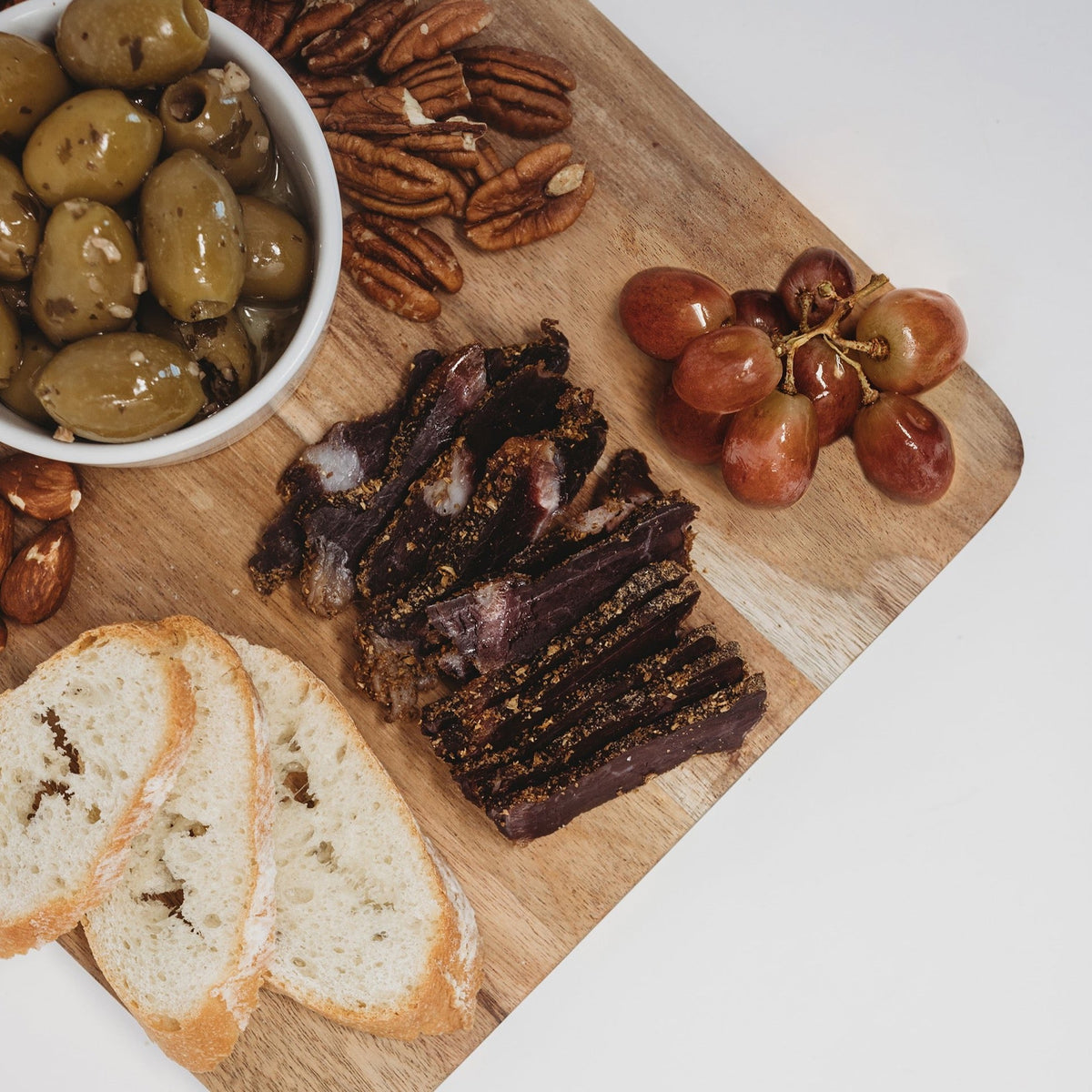
Sliced biltong sits happily alongside cheese, pickles, olives, mustard and dark bread, and it does the job a cured sausage would do on the same board while tasting quite different. It needs no preparation beyond opening a bag, which makes it the least demanding item on any board you build.
If you are cutting from a slab for a board, cut thin and across the grain. Thin slices from a slab look better on a plate than anything pre cut and let people take a small amount without committing.
As an ingredient rather than a snack
This is the use most Americans have never considered, and it is completely standard in South African kitchens. Dried meat grated or finely chopped becomes a seasoning with body. Grated over scrambled eggs. Stirred through a potato soup near the end. Scattered on a green salad instead of bacon. Folded into muffin batter or a savory bread. Chopped small into a pasta dish where you would otherwise reach for cured pork.
Two rules make this work. Add it late, because it does not need cooking and heat will only toughen it. And cut back the salt elsewhere in the dish, because biltong brings its own and it brings plenty. A drier piece grates more cleanly than a wet one, which is one of the few situations where the dry preference has a clear practical edge.
Long car journeys with other people in the car
Shared food in a car has particular requirements. It cannot be greasy, it cannot need utensils, it cannot make a noise, and it has to be passable from hand to hand without ceremony. Sliced biltong meets all four, which is why it disappears faster on a road trip than in any other setting we know of. Buy more than you think, because the arithmetic of shared snacks is unforgiving.
Stocking up, and what happens when you do
Keeping a pound in the house means always having protein available, and that is a genuine argument for buying the bulk format at $58.00. The trade-off is time, since biltong is at its best in the weeks after it is made and a large open bag drifts drier and firmer in a warm dry kitchen. Portion it into sealed containers rather than leaving one bag open, and buy the amount that matches how fast you actually eat it.
People who eat biltong occasionally are usually better served buying the $11.99 pack more often than the $58.00 pound once.
Gifting
The sampler at $12.99 makes a good gift because it presents as a decision rather than a purchase, and because it lets someone who has never eaten biltong find out what they like without anyone guessing on their behalf. Slabs at $58.00 read as a serious gift for someone who already knows the food, particularly for anyone who enjoys cutting it themselves.
Long days outside, hunting and fishing
Anyone who spends a day somewhere with no kitchen and no interest in leaving has the same problem, which is that most portable food is either sweet, crushable or needs cooling. Dried meat solves all three at once. It also has the advantage of being quiet and taking no attention to eat, which matters more than it sounds if you are sitting still and waiting for something.
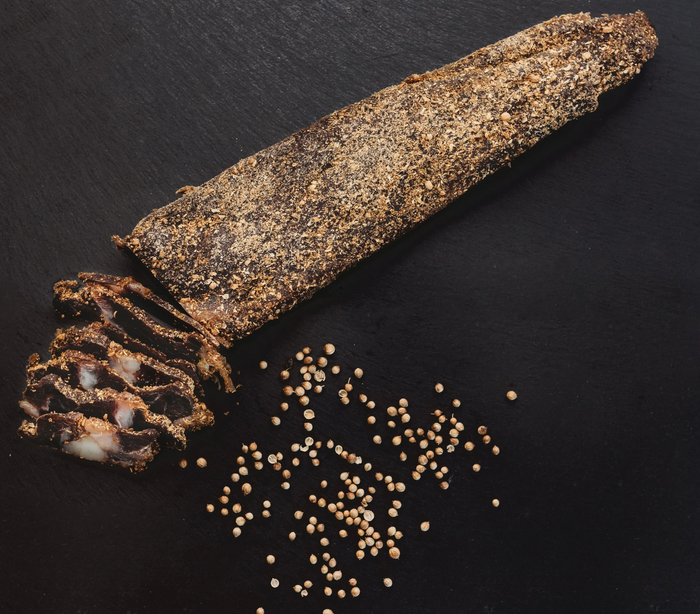
A slab suits this better than most people expect. It survives being carried loose in a pocket, it does not shed crumbs, and you cut off what you want with whatever knife you already have on you.
Serving it to someone for the first time
The mistake is handing someone a thick dry piece and watching them work at it. Start them on a thinner slice from the middle of the cure range, where the outside is firm and the center still gives. Say what the coriander is before they taste it, because people notice the note and cannot place it. And mention that it is not sweet, since anyone whose reference point is American dried meat will otherwise spend the first mouthful looking for sugar that is not there.
The sampler at $12.99 is built for exactly this situation. Let someone try more than one thing and they will tell you what they like rather than deciding they do not like biltong on the strength of a single unlucky piece.
Keeping it stocked without waste
The households that eat the most biltong are the ones that never think about ordering it, and that comes down to cadence rather than quantity. Work out roughly how long a pack lasts you, then order on that rhythm instead of ordering when you run out. Running out is what turns a habit into an occasional purchase.
The other half of this is storage. Do not keep one large bag open for weeks. Split a pound into sealed portions when it arrives, open one at a time, and the last of it eats close to the way the first of it did. That single habit does more for the experience of buying in bulk than any storage product you could buy.
Matching format to use, in one place
- Pocket, lunchbox, single portion. Sliced Biltong Mini's, $4.99.
- Everyday bag at a desk or in a car. Sliced Biltong, $11.99.
- Finding out what you like. Biltong Sampler Pack, $12.99.
- Cutting your own, boards, longer keeping after opening. Biltong Slabs, $58.00.
- Households, road trips, regular eaters. Bulk Biltong, 1LB of Sliced Biltong, $58.00.
- When you want the sweeter, softer, jerky style instead. Meat Candy, $7.99.
Where biltong is the wrong choice
It is not a food to eat quickly, so it is poor company for anyone who wants something finished in two minutes. It is not soft, which rules it out in several situations already mentioned. It carries real salt, so it is not a neutral background food. It is more expensive per pound than most snacks, which matters if volume rather than quality is the point. And it is not sweet, which some people simply want from a dried meat, in which case Meat Candy at $7.99 is the honest answer rather than a lesser biltong.
Bottom line
Biltong earns its place anywhere you need protein without a fridge, a plate or a pause: a desk drawer, a glove box, a pack, a lunchbox, a board or a pantry shelf. Match the format to the setting and it works far better. Minis at $4.99 for portions, sliced at $11.99 for everyday, slabs at $58.00 when you want to cut it yourself, the pound at $58.00 when it has become a habit, and the sampler at $12.99 to find out which of those you are.
Frequently Asked Questions
What is biltong actually used for?
Most of it gets eaten as an everyday snack at a desk or in a car, because it is dry to handle, needs no plate and leaves nothing behind. Beyond that it travels well in a bag or a pack since it needs no cooling, it keeps on a pantry shelf as a protein source that does not depend on the fridge, it works on a board alongside cheese and pickles with no preparation at all, and in South African kitchens it is regularly grated or chopped into cooking as a seasoning with body.
Can you cook with biltong?
Yes, and it is completely standard in South Africa. Grate or finely chop it over scrambled eggs, stir it through a potato soup near the end, scatter it on a salad in place of bacon, fold it into muffin batter or savory bread, or chop it into a pasta dish where you would otherwise use cured pork. Two rules make it work. Add it late, since it needs no cooking and heat only toughens it. And cut the salt elsewhere in the dish, because biltong brings plenty of its own.
Which biltong format is best for travel?
Sliced Biltong at $11.99 or Sliced Biltong Mini's at $4.99 for anything you carry on your person, since both are ready to eat and need no cutting. For a car journey the bulk pound at $58.00 makes more sense, because shared snacks disappear faster than anyone plans for. On multi day trips in humid conditions, repack into something sealed once the original bag is open. A slab holds its condition better than sliced in that setting because it has less cut surface exposed.
Can I take biltong on a plane?
Commercially packaged dried meat is ordinarily straightforward to carry on domestic flights within the United States. International travel is an entirely different question, because many countries restrict meat products at the border regardless of how they are packaged, and penalties for undeclared items can be significant. Check the rules for your destination and for any country you transit before you pack, since those rules change and they are the traveler's responsibility rather than the seller's.
How much biltong is a normal amount to eat?
There is no standard portion, but the thick cut and slow chew mean a modest amount goes further than the same weight of most snacks. People tend to eat biltong by the piece rather than by the handful. If you want the decision made for you, Sliced Biltong Mini's at $4.99 is a fixed small pack rather than an open bag. If you would rather control it yourself, cutting from a slab lets you take exactly as much as you intended to.
Is biltong good for entertaining?
It is one of the least demanding things you can put on a table. No dip, no utensils, no heating and no timing. Sliced biltong sits well next to cheese, pickles, olives, mustard and dark bread, and it fills the role a cured sausage would while tasting quite different. If you are cutting from a slab for a board, cut thin and across the grain, which both looks better on a plate and lets people take a small amount without committing to a whole piece.
When is biltong the wrong choice?
When you want something eaten in two minutes, because it is built to be chewed slowly. When softness matters, which rules it out for very young children and for anyone whose teeth or dental work would rather not deal with it. When you are watching sodium closely, since a cured meat carries meaningfully more salt than fresh meat. When volume rather than quality is the point, because it costs more per pound than most snacks. And when you actually want sweet, in which case Meat Candy at $7.99 is the honest answer.