Is Venison Jerky Kosher? Deer, Hunting and Kosher Slaughter Explained
Venison jerky from a store, a hunter or a roadside stand is not kosher unless it was slaughtered by a trained shochet and carries a reliable kosher certification. Deer is a kosher species, but shooting it is not kosher slaughter. Our own biltong and beef jerky are certified Glatt Kosher, made in Florida.
Related: Gifts for Hunters: Food for the Blind, the Truck and Camp
We make certified Glatt Kosher biltong and beef jerky, so we get this question from people who love game meat and keep kosher. They want to know if "deer jerky" or "deer meat jerky" can be on their table. The short version is that the animal is not the problem. The way it dies, and everything that happens afterward, is. This guide walks through each step, then points you to a beef snack that does the same job and is certified. Everything we sell is certified Glatt Kosher.
Deer is a kosher species, so why isn't venison jerky kosher?
Kosher meat has to clear two separate tests. The first is the species. The second is the process. Venison passes the first test and, in almost every real-world case, fails the second.
The species test. A kosher land animal has split hooves and chews its cud. Deer do both. Deer is also named in the Torah as a permitted animal. So there is nothing wrong with the animal itself. If you have ever heard that venison is "automatically not kosher," that is not accurate.
The process test. A kosher animal still has to be slaughtered by shechita. That means a trained, observant shochet uses a perfectly smooth, sharp blade to make one continuous cut across the throat. Then the animal is inspected. Meat from an animal that was not slaughtered this way is neveilah, and it is not kosher no matter what species it came from.
That is where venison runs into trouble. Almost all venison comes from one of two places:
- Hunting. A deer that is shot, whether with a rifle, a bow or a shotgun, has not been through shechita. That is the end of the question for a hunted deer. Field dressing it carefully does not change this.
- Commercial game processing. Farmed and processed venison is slaughtered the way ordinary commercial meat is, without a shochet. The meat goes into the general supply, and the processor has no reason to keep it kosher.
So the label on a bag of venison jerky is not the issue. The issue is that the deer never had a kosher slaughter to begin with.
What would have to be true for venison to be kosher
It is possible in principle. In practice it is rare, because every one of these has to line up:
- The animal is slaughtered by a qualified shochet, using shechita, not shot.
- The animal is inspected after slaughter, as every kosher animal is.
- Forbidden fats and the sciatic nerve are removed. This step, called nikkur or porging, is slow and skilled work. We cover why it matters in our porging guide, "What Is Porging, and Why Does It Matter for Kosher Jerky?"
- The meat is soaked and salted to draw out the blood, unless it is broiled instead, which is a different process.
- Everything after that stays kosher. The knives, the grinders, the drying equipment, the marinade and the spices all have to be kosher too.
- A reliable kosher certification covers the finished product.
A deer that goes through all of that is, in the abstract, kosher venison. What is the chance that the jerky in your hand did? Very low. A person who says "this is kosher venison jerky" should be able to show you the certification and name the shochet or the supervising authority. If they cannot, it is not kosher.
The gray areas: which deer, and which game
Here is where we stop and send you to your rabbi, because this part is not simple and different communities handle it differently.
"Venison" is a loose word. In the United States it can mean white-tail deer, mule deer, elk, moose, antelope or imported farmed deer. Not all of these are treated the same way. Some communities follow a firm tradition about which species they will eat. Others are more cautious about animals they have no tradition of eating at all. A species being named in the Torah and a community having a living practice of eating it are not always the same thing.
That means a question like "is this particular animal a kosher species" and "is this the kind of meat my family eats" can get different answers from different rabbis. If you are asking either one, ask your own rabbi. Do not rely on a website, ours included, to settle it.
What is not in dispute: a deer killed by shooting is not kosher, and deer jerky from a general store is not kosher.
What kosher-certified venison jerky would look like
Because of everything above, you will almost never find it on a shelf. If you do, here is what to look for.
- A named kosher certification on the package. A plain symbol with no agency behind it is not a hechsher. A photo of a rifle and the words "kosher style" mean nothing. "Kosher-style" is a marketing phrase, not a certification.
- A clear statement that the animal was slaughtered by shechita. Not "hunted," not "wild-harvested," not "humanely taken."
- A supervisor you can reach. If a certification is real, you can call the office and confirm it.
Be careful with phrases like "natural," "clean" and "no additives." They tell you about ingredients. They tell you nothing about kashrus.
Even non-kosher venison jerky has a catch for kosher buyers
Suppose a bag of venison jerky somehow came from a kosher animal. It could still fail on the other ingredients. Jerky is made with marinades, and marinades hide problems. Worcestershire sauce, soy sauce and some liquid smoke are common trouble spots. Each one needs its own kosher certification, and most jerky makers do not use certified versions.
And the factory matters. A plant that makes venison jerky is often making pork, wild boar or other non-kosher products on the same equipment. Kosher meat cannot share equipment with those, at least not without a rabbi's supervision and special procedures.
What if someone gifts you venison jerky?
This comes up around hunting season, usually from a friendly neighbor or coworker who means well. The kind thing is also the honest thing. Thank them, and say you keep kosher, so you cannot eat it. Do not taste it "just to be polite." Most people understand, and many appreciate that you told them.
Do not put it in a kosher kitchen to save it for someone else. Ask your rabbi if you are unsure what to do with it, especially if it has touched your dishes.
What does venison jerky taste like, and what is the kosher swap?
People who like venison jerky usually like three things. It is lean. It has a stronger, earthier taste than beef. And it feels wild, a little rustic, a little bit of the woods. Those are real qualities, and we are not going to pretend beef is identical.
It is also an honest trade-off. If what you want is that specific gamey flavor, no beef snack will give it to you. Biltong is the wrong pick if you want something that tastes like a deer. We do not sell venison, and we will not suggest that a beef product is a substitute for it in flavor.
What you can get, with a kosher certification, is a lean-tasting, savory dried meat that is high in protein and needs no refrigeration. Two options:
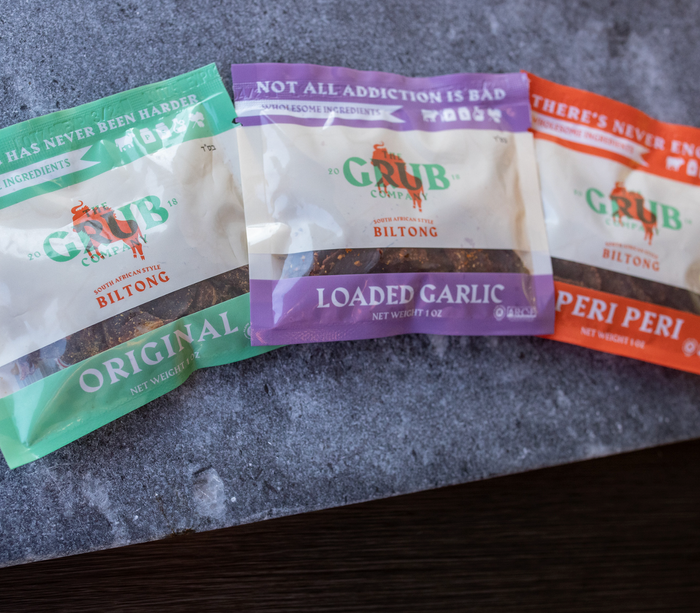
- Sliced Biltong is air-dried grass-fed beef, savory and spiced rather than sweet. It comes in three-ounce bags of Original, Peri Peri and Loaded Garlic. Original is beef first, then the warm citrus note of coriander. Peri Peri has real heat that builds. Loaded Garlic is roasted garlic, rounder and sweeter, savory rather than hot. Our Original biltong lists no sugar in its ingredients: grass-fed kosher beef, coriander, black pepper, salt, garlic and vinegar.
- Meat Candy is our beef jerky: cooked, glazed and sweeter. Hickory Kickory Dock is smoky hickory. Baa-Baa BBQ Sheep is Korean BBQ, sweet and savory together. Meat Candy uses a glaze, so check the label if you have a dietary restriction.
Our full lineup of kosher beef jerky is on one page, and the biltong range is at Buy Biltong Online. If you want to know how the two styles compare before you pick, our biltong vs beef jerky comparison goes through it.
A fair warning for the venison fan. Beef biltong is milder than game. If you are someone who hunts and eats deer every fall, expect a different snack, not the same one. It is still a good one, and it is one you can serve at your table with no questions.
Bottom line
Deer is a kosher species. Deer jerky is not kosher in practice, because a shot deer is not slaughtered by shechita and commercial venison has no kosher supervision. If a product claims otherwise, ask for the certification and the name of the supervising authority, and ask your rabbi about the species. If you want a kosher dried-meat snack that you never have to second-guess, choose a certified beef one.
Frequently Asked Questions
Is venison kosher?
Deer is a kosher species, so venison can be kosher in principle. It has to come from a deer slaughtered by a trained shochet through shechita, then inspected, porged and salted properly. Hunted venison and ordinary commercial venison do not meet that standard.
Is deer jerky kosher if the deer was hunted?
No. A deer killed by a bullet or arrow has not had shechita, so the meat is neveilah and not kosher. Field dressing, careful butchering and home drying do not change that.
Can I buy kosher-certified venison jerky?
It is very rare. If you find a product that claims to be kosher venison jerky, look for a named kosher certification on the package and a statement that the animal was slaughtered by shechita. If either is missing, treat it as not kosher. Ask your rabbi about the particular species and the certifying authority.
Is elk, moose or antelope jerky kosher?
Those are separate questions from deer, and communities treat them differently. Some follow a firm tradition about which species they eat, and others are more cautious. Ask your rabbi. In every case, the animal still needs shechita and kosher certification, so a hunted one is out.
My neighbor gave me homemade deer jerky. What should I do?
Thank them and say you keep kosher, so you cannot eat it. Do not taste it to be polite. If it has already touched your dishes, ask your rabbi what to do.
What is the closest kosher alternative to venison jerky?
A certified beef product. Our Sliced Biltong is savory and air-dried, and our Meat Candy is the sweeter, cooked option. Neither tastes like game, because beef is milder, but both are high in protein and are certified Glatt Kosher. See the Is Beef Jerky Kosher? guide for what to check on any jerky label.
Does Grub sell venison, bison or other game?
No. We make beef only. Our biltong and Meat Candy are made from grass-fed beef, in small batches in Florida. US orders over $50 ship free.