How to Buy Kosher Meat Online
Buying kosher meat online works well for some things and badly for others. Shelf-stable products ship beautifully. Fresh and frozen meat depends entirely on the cold chain, and that is where orders go wrong. This guide covers what to buy online, what to buy in person, how to check a seller's certification before you spend anything, and what the real costs are.
Related: What Makes Meat Kosher: Species, Shechita, Glatt and Salting · No Kosher Store Near You? How to Get Kosher Meat and Snacks Anyway
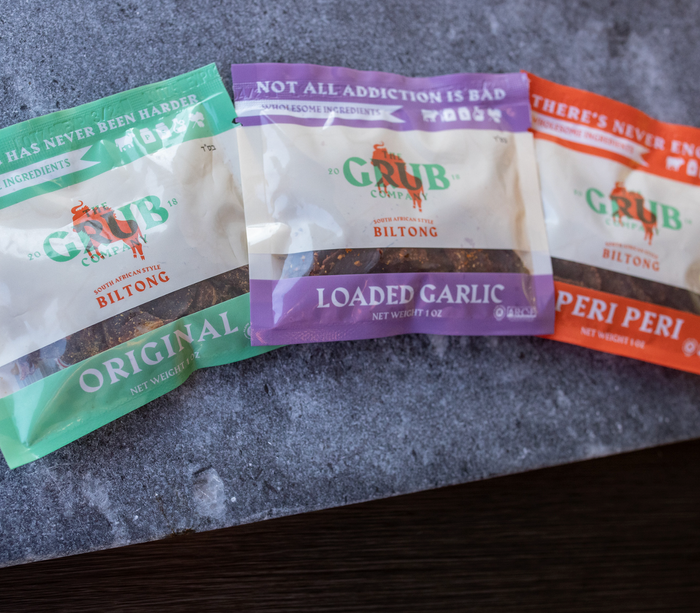
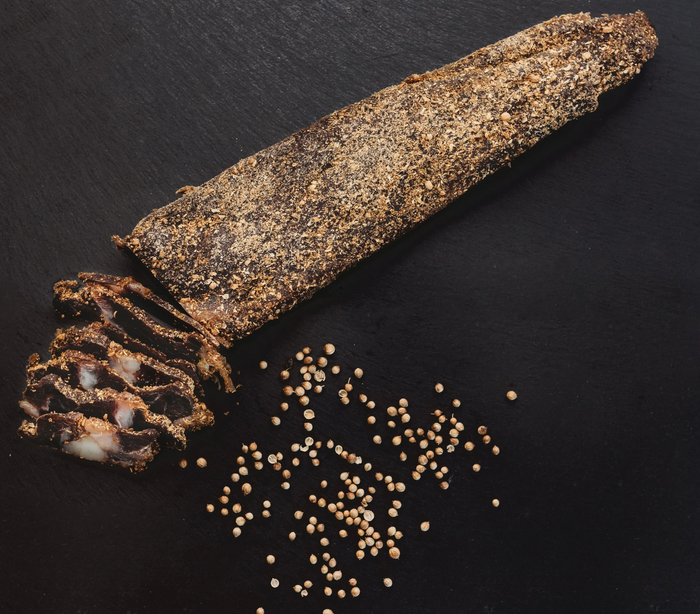
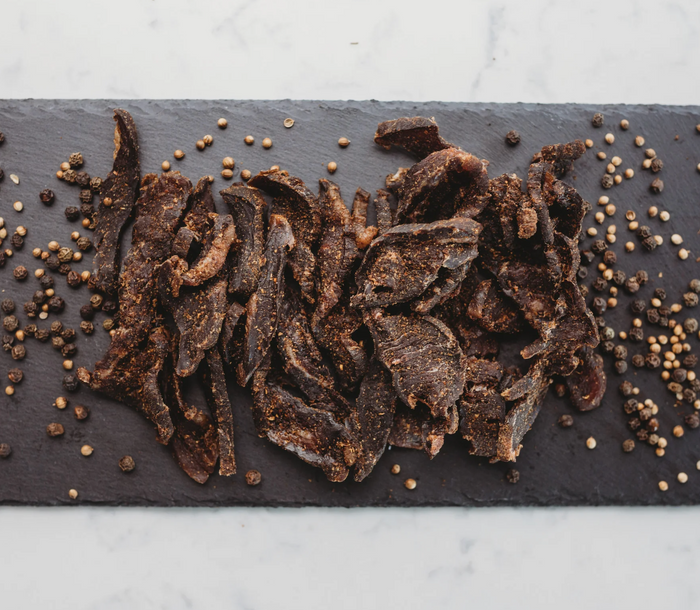
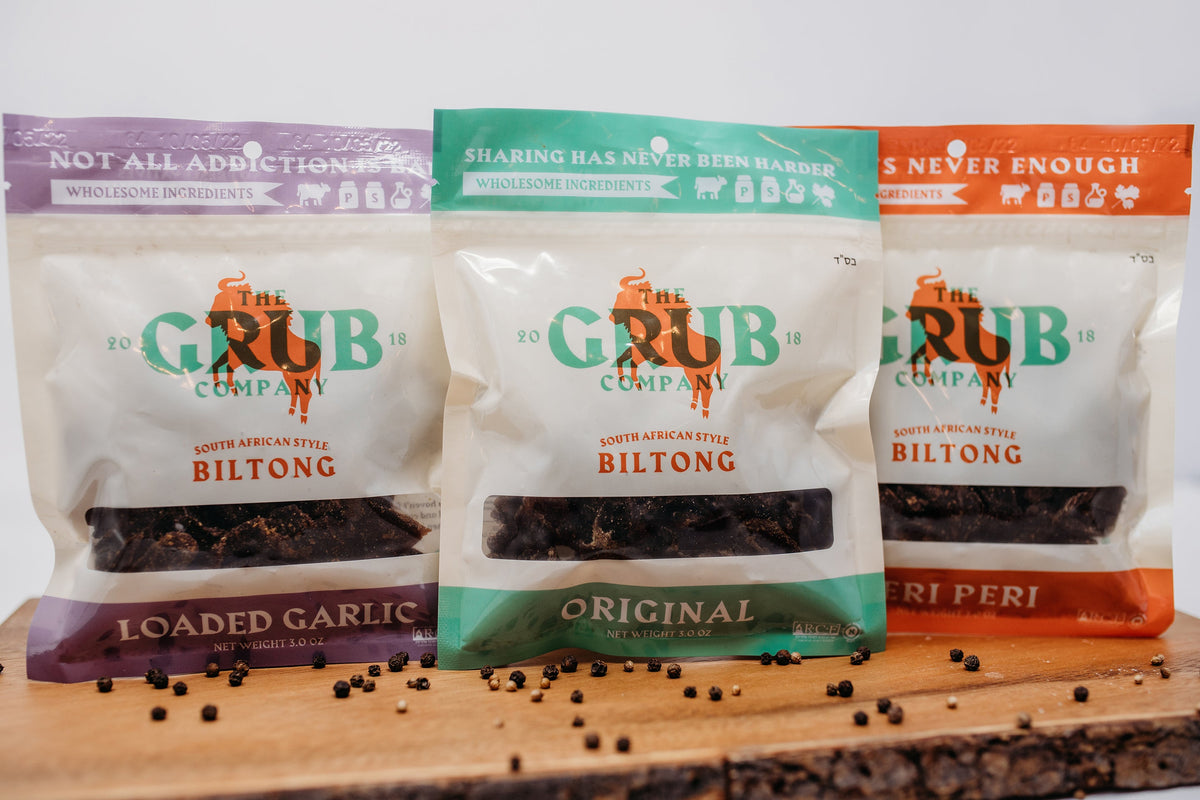
Ready to try it? Buy Glatt Kosher biltong online. Made in Florida, free US shipping on orders over $50.
What ships well, and what does not
| Product | Ships well? | Why |
|---|---|---|
| Biltong, jerky, dried meat | Excellent | Shelf-stable; no cold chain; arrives as it left |
| Cured salami and sausage | Good | Stable, though warmth affects texture |
| Frozen raw meat | Workable | Needs overnight or two-day shipping with dry ice or gel packs |
| Fresh raw meat | Risky | Cold chain is fragile; a delayed weekend delivery is the usual failure |
| Deli slices | Risky | Short shelf life once opened; sensitive to transit temperature |
| Prepared and cooked dishes | Varies | Depends entirely on packaging and speed |
The pattern is simple: the less a product depends on temperature, the better it does in a box. Dried meat is at the easy end, which is why it is the category most kosher shoppers can safely buy from anywhere in the country.
Checking certification before you spend anything
This is the part to do first, and it takes about two minutes.
- Find a named agency. Not the word "kosher" in a product description — an agency, named.
- Find a viewable certificate. Certificates carry expiry dates. A seller confident in its supervision publishes them rather than referring to them.
- Check what the certificate covers. Certified meat processed in an uncertified facility is not a certified product. The certificate should name the finished item.
- Check it is current. A certificate from three years ago is a question, not an answer.
- Check your community accepts that hechsher. Standards differ, and this is a question for your rabbi rather than for a website.
- For a reseller, ask who actually makes it. A shop selling twenty brands is passing on someone else's certification. That is fine — but ask, so you know whose.
The single phrase that should end a purchase is "kosher-style." It is not a standard and there is no supervision behind it.
What the shipping actually costs
Shipping is usually what decides whether an order was good value, and it is easy to get wrong by a wide margin. Convert everything to cost per ounce, including shipping.
| Order | Product | Shipping | Total | Per ounce |
|---|---|---|---|---|
| One 3 oz bag | $11.99 | $3.99 | $15.98 | $5.33 |
| Four 3 oz bags | $47.96 | $3.99 | $51.95 | $4.33 |
| Five 3 oz bags | $59.95 | Free | $59.95 | $4.00 |
| One 1 lb bulk | $58.00 | Free | $58.00 | $3.63 |
Two things fall out of that. A single bag with paid shipping is the worst value available — worse per ounce than buying single-serve. And the awkward zone is just under a free-shipping threshold, where adding one more item can cost less in total than not adding it.
Our threshold is $50 within the US; below it, $2.99–$3.99. We also ship to Canada, Israel and the UK on a buyer-paid basis, where VAT or duty may apply.
Shipping kosher food internationally
Meat import rules vary sharply by country and change without much notice. A few practical points that hold generally:
- Check the destination's rules before you order, not after. Many countries restrict or prohibit meat imports outright.
- Label customs forms honestly. Mislabeling is how a package gets destroyed rather than delayed.
- Send fewer, larger shipments. Every parcel is a separate customs event and a separate delay.
- Send sealed product only. Never repackage into your own container — you lose the seal and the oxygen absorber, which is the entire preservation system.
- Expect duty or VAT on the receiving end in most of Europe and Israel.
Online versus your local kosher grocer
| Online | Local grocer | |
|---|---|---|
| Range | Every flavor and format | Usually one or two SKUs |
| Freshness on dried meat | Often better — shipped days after drying | Depends how fast the shop turns it |
| Inspection before buying | Not possible | You can see it |
| Price per ounce | Better, especially in bulk | Retail markup |
| Immediacy | Days | Today |
| Fresh and frozen meat | Cold-chain risk | Straightforward |
| Supporting the shop you rely on | No | Yes, and that matters |
The split most regular buyers land on: fresh and frozen from the local grocer, shelf-stable and specialty from online. And if your grocer does not carry something you want, ask them to — that is how most stockist lists grow.
Ordering timing around Shabbos and Yom Tov
An avoidable failure worth naming. A shipment that leaves on Thursday and hits a delay is a package sitting in a facility over Shabbos, and for anything temperature-sensitive that is two extra days of warmth. For fresh or frozen, order early in the week. For shelf-stable dried meat it does not matter — which is another reason it is the easy category.
Yom Tov compounds it. A two-day festival adjacent to Shabbos means a three-day gap in deliveries, and carriers do not plan around the Jewish calendar. Order the week before.
The cold chain, and why it decides everything
Every difference between "ships beautifully" and "risky" comes down to one question: does this product need to stay cold from the producer to your door?
A cold chain is a sequence — cold storage, a cold vehicle, a cold facility, a cold vehicle again, your fridge — and it is only as good as its weakest link. A single warm afternoon in a sorting facility undoes the whole thing, and neither you nor the seller can see it happen.
| Product | Cold chain needed? | What can go wrong |
|---|---|---|
| Biltong, jerky, dried meat | None | Essentially nothing. Sealed and shelf-stable |
| Cured salami, hard sausage | Minimal | Warmth affects texture rather than safety |
| Frozen raw meat | Yes, but forgiving | Partial thawing; needs dry ice or gel packs and speed |
| Fresh raw meat | Yes, and fragile | A delayed weekend delivery is the usual failure |
| Deli slices | Yes | Short shelf life once opened; transit temperature matters |
| Prepared dishes | Varies | Depends entirely on packaging and speed |
The pattern is simple: the less a product depends on temperature, the better it does in a box. Dried meat sits at the easy end, which is why it is the category anyone anywhere in the country can order without thinking about it.
Verifying certification before you spend anything
Do this first, because it eliminates most of the market in about two minutes and there is no point evaluating anything else on a product you cannot use.
- Find a named agency. Not the word "kosher" in a product description — an agency, named.
- Find a viewable certificate. Certificates carry expiry dates. A seller confident in their supervision publishes them rather than referring to them.
- Check what the certificate covers. Certified meat processed in an uncertified facility is not a certified product. The certificate should name the finished item.
- Check it is current. A certificate from three years ago is a question, not an answer.
- Check your community accepts that hechsher. Standards differ, and this belongs with your rabbi rather than a website.
- For a reseller, ask who actually makes it. A shop selling twenty brands is passing on someone else's certification. That is fine — but ask whose.
The single phrase that should end a purchase is "kosher-style." There is no such standard and no supervision behind it.
Reading a website like an inspector
Beyond certification, the site tells you whether you are dealing with a maker or a middleman — which decides who can answer you when something is wrong.
| Signal | Maker | Reseller |
|---|---|---|
| Process described | Cut, method, drying time in days | Heritage language, no specifics |
| Photography | Their own racks and product | Stock images |
| Batch or pack dates | Published or available on request | Neither |
| Flavor range | A few, done properly | Twenty, from a small operation |
| Certificate | On the site, current, readable | Referenced, or a logo only |
| Response to a direct question | A sentence, same day | Days, or a different answer |
Neither is disqualifying. Plenty of resellers sell excellent product made by someone competent. But small-batch food occasionally has a bad batch, and that is the day the difference matters.
What shipping actually costs, per ounce
Shipping usually decides whether an order was good value, and it is easy to get wrong by a wide margin. Convert everything, including postage.
| Order | Product | Shipping | Total | Per ounce |
|---|---|---|---|---|
| One 3 oz bag | $11.99 | $3.99 | $15.98 | $5.33 |
| Two 3 oz bags | $23.98 | $3.99 | $27.97 | $4.66 |
| Four 3 oz bags | $47.96 | $3.99 | $51.95 | $4.33 |
| Five 3 oz bags | $59.95 | Free | $59.95 | $4.00 |
| One 1 lb bulk | $58.00 | Free | $58.00 | $3.63 |
Two things fall out. A single bag with paid shipping is the worst value available — worse per ounce than single-serve. And the awkward zone is just under a free-shipping threshold, where adding one more item genuinely costs less in total than not adding it.
The general rule for any seller: find the free-shipping threshold, then build your order to clear it or stay deliberately well under it. Landing at $47 is the one outcome to avoid.
Shipping kosher food internationally
Meat import rules vary sharply by country and change without much notice. A few points hold generally:
- Check the destination's rules before you order, not after. Many countries restrict or prohibit meat imports outright.
- Label customs forms honestly. Mislabeling is how a package gets destroyed rather than delayed, and it puts the recipient in an awkward position.
- Send fewer, larger shipments. Every parcel is a separate customs event and a separate delay.
- Send sealed commercial packaging only. Never repackage — you lose the seal and the oxygen absorber, and original labeling is treated better at inspection.
- Expect duty or VAT on the receiving end in most of Europe and in Israel. Warn the recipient rather than surprising them.
- Do not carry it home in luggage. Bringing meat into the United States from abroad is restricted regardless of packaging, and a bag of dried meat is exactly what agricultural inspection looks for.
Timing an order around Shabbos and Yom Tov
An avoidable failure worth naming, because it catches people every year.
A shipment that leaves on Thursday and hits a delay is a package sitting in a facility over Shabbos — and for anything temperature-sensitive, that is two extra days of warmth with nobody able to act on it. For fresh or frozen, order early in the week. For shelf-stable dried meat it does not matter, which is another reason it is the easy category.
Yom Tov compounds it. A two-day festival adjacent to Shabbos means a three-day gap in deliveries, and carriers do not plan around the Jewish calendar. Order the week before.
And for anything in quantity — a simcha, a kiddush, a Yom Tov season — order two to three weeks ahead. Small makers dry to order in batches, so a large quantity is a production question rather than a stock question. Since sealed dried meat keeps three to six months, buying early costs nothing.
Online against your local kosher grocer
| Online | Local grocer | |
|---|---|---|
| Range | Every flavor and format | Usually one or two SKUs |
| Freshness on dried meat | Often better — shipped days after drying | Depends how fast the shop turns it |
| Inspection before buying | Not possible | You can see it |
| Price per ounce | Better, especially in bulk | Retail markup |
| Immediacy | Days | Today |
| Fresh and frozen meat | Cold-chain risk | Straightforward |
| Certificate access | Usually published on the site | Read the pack, or ask |
| Supporting the shop you rely on | No | Yes, and it matters |
That last row is not sentiment. Kosher grocers operate on thin margins and slow-turning specialty stock, and they are the reason a community has access to anything at all. The split most people settle on: fresh and frozen from the grocer, shelf-stable and specialty online — and if your grocer does not carry something you want, ask them to. That is how most stockist lists grow.
Questions worth asking before a first order
- Who actually makes this? If they are reselling, whose certification am I relying on?
- Which agency certifies the finished product, and can I see the current certificate?
- What cut is it, and where does the meat come from? "Premium beef" is not an answer.
- When was this batch made? For dried meat, freshness matters more than buyers expect.
- Is it packed with an oxygen absorber? That decides whether a months-long shelf-life claim is credible.
- What is the shelf life from the pack date, not the ship date?
- What is the dispatch window? Not the shipping speed — how long before it leaves.
You do not need all seven. Asking any two and reading how they answer tells you most of what you need — a maker replies in a sentence, a reseller has to go and find out.
When the box arrives
- Check the seal is intact, with the oxygen-absorber sachet inside. A compromised seal is worth an email rather than a shrug.
- Look for a pack or batch date. More useful than a best-before, because it tells you when the meat was made rather than someone's estimate of when it stops being good.
- Check the hechsher on the package matches what the website said. They should agree; occasionally they do not, and that is a real question.
- Smell it on opening. For biltong: beef, vinegar, coriander. Sour or ammoniac means contact the seller.
- Look at a cut face. A gradient — firm dark rim, softer redder center — is the record of slow drying. Uniform color suggests heat.
- Portion a bulk order immediately. The single habit that decides whether buying in bulk was worth anything.
Subscriptions
Most makers now offer recurring delivery, and for dried meat it deserves a moment rather than a reflex no.
The case for it is freshness. Dried meat is at its best within weeks of production, so a fresh sealed bag every week or two means you are never eating the tail end of a pound that has been opened eleven times. The per-ounce price usually sits between single bags and bulk.
The case against is that you will eat what arrives. If that is the point, good. If you are moderating, a subscription removes the natural friction of having to reorder.
The practical test: if you buy more than once a month anyway, a subscription is almost certainly better product at a similar price. It also removes the portioning discipline that bulk demands, which for a lot of households is the deciding factor.
What to buy online and what to buy in person
| Buy online | Buy in person |
|---|---|
| Biltong, jerky and dried meat | Fresh meat and poultry |
| Cured salami and hard sausage | Deli slices |
| Bulk and slabs | Anything for tonight |
| Specific flavors and formats a shop will not stock | Anything you want to inspect first |
| Gifts and care packages | Prepared foods |
| Anything where the certificate matters and you want to read it | Anything frozen you would rather not risk in transit |
The rule underneath that table: buy online what does not care about temperature, and buy in person what does. Nearly every online kosher meat order that goes wrong is a cold-chain order that should have been a shop trip.
Why the certified market is small, and why that matters online
Understanding the supply side changes how you read a website.
Certified dried meat is made by a small number of producers, for reasons that stack: kosher beef costs more, cut restrictions narrow the supply further, every ingredient needs its own certification, and the facility must be supervised and either dedicated or kashered between runs. That is a lot of fixed cost for a specialty product.
The consequence online is that many sites selling certified dried meat are selling the same handful of producers' output under different names. That is not deceptive in itself, and it is worth knowing for two reasons. You may be paying a markup for something available direct. And when you find a product you like, the useful thing to identify is the maker, not the shop — because that is what you can then buy from anywhere.
Asking "who makes this?" is therefore not an aggressive question. It is the single most useful thing you can learn from a reseller, and a good one will tell you.
Price, and what the tiers mean
| Per ounce | What you are usually getting |
|---|---|
| Under $2.50 | Heavily under-dried, or not what it claims to be |
| $2.50–$3.50 | Commodity cuts, shorter drying, often sweetened |
| $3.50–$4.50 | The working range for properly made dried meat |
| $4.50–$5.50 | Certified, grass-fed, small-batch, or single-serve packaging |
| Over $5.50 | Specialty, or you are paying for the box |
Certified product sits at the upper end of that scale by construction. It takes two to three pounds of beef to make a finished pound, a batch occupies a controlled room for days, and every stage of kosher production adds cost.
Which means a certified product priced well below the band is a question rather than a bargain. Something upstream changed — a cheaper cut, a shorter dry leaving water weight you are paying for, or sugar carrying a weaker product — and it is entirely reasonable to ask which.
The short version
Buy shelf-stable products online and temperature-sensitive ones in person. Verify certification before you evaluate anything else: a named agency, a current viewable certificate, covering the finished product. Convert prices to dollars per ounce including shipping, and clear the free-shipping threshold or stay well under it.
Ask who makes it. Ask when the batch was made. Order the week before Shabbos or Yom Tov rather than into them, and order two to three weeks ahead for quantity. And when the box arrives, check the seal, the date, the hechsher and a cut face before you decide anything.
Dried meat is the easiest thing in this whole category to buy at distance — no cold chain, no fragility, months of shelf life. If you are new to ordering kosher meat online, it is the sensible place to start.
Storing what arrives
| Condition | How long | What to do |
|---|---|---|
| Unopened, sealed with an absorber | 3–6 months | Cupboard, cool and dark |
| Opened, room temperature | 2–3 days | Press the air out and reseal |
| Opened, refrigerated | 1–2 weeks | Sealed container, not the open bag |
| Humid climate, opened | 1–2 days | Refrigerate from the start |
| Frozen, portioned | 6 months+ | Wrap tight; thaw in the fridge |
Dried meat is hygroscopic — it pulls moisture out of humid air, which raises its water activity and partially undoes the drying. That is the mechanism behind every number above, and the reason an opened bag behaves so differently in Phoenix and in Miami.
The single most useful habit costs nothing: press the air out before you reseal. And if you ordered in bulk, portion it into week-size sealed bags on the day it arrives — opening one bag thirty times is far worse for the meat than opening four bags seven times each.
Buying for an occasion
Ordering for a simcha, a kiddush or a Yom Tov season is a different exercise from ordering for the week, and three things change.
Lead time becomes the constraint rather than shipping. Small certified makers dry to order in batches, so a large quantity is a production question. Two to three weeks is normal and is a sign they actually make the product rather than warehousing it. Ask about lead time before you ask about price.
Buying early costs nothing. Sealed dried meat keeps three to six months, so an order placed a month out is in exactly the same condition on the day. That is a genuine advantage over almost everything else you will order for an event.
Quantity is usually underestimated. Budget roughly 2 oz per person if dried meat is one of several things on the table, and 4 oz if it is what people are actually eating. It goes faster than sweet food because there is no point at which people stop.
| Event | People | Order | Lead time |
|---|---|---|---|
| Small kiddush | 20 | 2–3 lb, sliced | 1 week |
| Bar mitzvah kiddush | 75 | 6–9 lb | 2–3 weeks |
| Shalosh seudos | 25 | 1–2 lb | 1 week |
| Yom Tov, extended family | 15 | 1 lb | Order in advance of the season |
| Shalach manos, per basket | — | 1–2 oz each | 3–4 weeks for quantity |
One practical note for shalach manos in particular: single-serve minis are worth the per-ounce premium, because they are already portioned and sealed. Splitting a bulk order into baskets by hand means opening the seal, which is the one thing that shortens shelf life.
Quick answers
Is it safe to buy kosher meat online? For shelf-stable products, yes and easily. For fresh and frozen, only from a seller with a real cold-chain process.
How do I verify a seller is genuinely kosher? A named agency and a viewable, current certificate covering the finished product.
Does kosher meat cost more online? Usually less per ounce than a specialty grocer, once you clear a free-shipping threshold.
What is the easiest thing to start with? Dried meat. No cold chain, no risk, and you can judge the producer from the ingredient list before you buy.
Questions worth asking a seller before a first order
The fastest way to tell a maker from a rebagger is to ask. A maker answers in a couple of sentences; anyone else deflects or takes days.
- Who actually makes this? If they are reselling, whose certification am I relying on?
- What cut is it, and where does the meat come from? "Premium beef" is not an answer.
- When was this batch made? For dried meat, freshness matters more than most buyers expect.
- Is it packed with an oxygen absorber? That decides whether a months-long shelf-life claim is credible.
- What is the shelf life from the pack date, not the ship date?
- Can I see the current certificate? Not a logo — the document.
- What is the dispatch window? Not the shipping speed — how long before it leaves.
You do not need all seven. Asking any two and reading how they answer tells you most of what you need.
When the box arrives
- Check the seal is intact, with the oxygen-absorber sachet inside. A compromised seal is worth an email, not a shrug.
- Look for a pack or batch date. More useful than a best-before.
- Smell it on opening. For biltong: beef, vinegar, coriander. Sour or ammonia means contact the seller rather than eating it.
- Portion a bulk order immediately. This is the single habit that decides whether buying in bulk was worth anything.
- Check the hechsher on the actual package matches what the website said. They should agree; occasionally they do not, and that is a real question.
Subscriptions
Most makers now offer recurring delivery, and for dried meat it is worth a moment's thought rather than a reflex no. The case for it is freshness: a fresh sealed bag every week or two means you are never eating the tail end of a pound that has been opened eleven times. The per-ounce price usually sits between single bags and bulk.
The case against is that you will eat what arrives. If that is the point, good. If you are trying to moderate, a subscription removes the natural friction of having to reorder. The test: if you buy more than once a month anyway, a subscription is better product at a similar price.
See our certified Glatt Kosher range →
For a worked example of what a certified listing should tell you before you order, here is ours — named agency, viewable certificate, full ingredients, honest stock.
Buying ahead for a Yom Tov season? The Purim shelf, and why to order the week before rather than the week of.