How Long Slab Biltong Lasts, and How to Store It Right
A slab of biltong keeps better than the same weight of sliced biltong, and the reason is surface area rather than anything in the spice or the cure. A whole dried piece exposes a small fraction of the meat that the identical weight in slices does. Every cut you make opens two new faces for air to work on, and air is what changes dried meat over time in both directions. How long your slab lasts is decided almost entirely by how you keep it, and that is the part you control.
Where to get it: Glatt Kosher biltong for sale, made in Florida and shipped anywhere in the US (free over $50).
The idea that makes all of this make sense is water activity. It is not the same as the moisture percentage a label might carry, and confusing the two is why people store dried meat badly with total confidence. We sell Biltong Slabs at $58.00 and Bulk Biltong, 1LB of Sliced Biltong at $58.00, both large enough that you will not finish them in one sitting, so this is worth getting right once.
Water activity, in plain terms
Moisture content is how much water is in the meat. Water activity is how much of that water is chemically free to do anything. Those are different questions and only the second one matters to a bacterium or a mold spore.
Water inside a dried meat is not sitting around in droplets. Much of it is bound up with proteins, with salt, with the dissolved compounds that drying concentrated. Bound water is unavailable. An organism cannot use it, so from the point of view of spoilage it may as well not be there.
This is why two pieces of meat with the same moisture reading can behave completely differently on a shelf. The salted, cured, air-dried one has locked much of its water away. The other one has not. The number on a lab sheet is identical and the outcome is not.
Every real decision about storing biltong is a decision about water activity, even when nobody uses the phrase. Where you put the bag, how tightly you close it, what the room is doing, whether the piece is whole or cut. All of it moves the same underlying variable.
What actually spoils a dried meat
Three things go wrong with biltong, and they are not the same thing. Molds grow on the surface when there is enough available water at that surface. Bacteria need more available water still, which is why properly dried and cured meat is a hard place for them to live. And fats oxidize, which needs no organism at all, only oxygen and time.
The first two are governed by water activity. The third is governed by exposure to air, light and heat. A storage method that solves one can make another worse, and that is the whole tension in this subject.
Rancidity is the quiet one because nothing looks wrong. The piece is not fuzzy, it is not sticky, it simply tastes flat or faintly of old oil. People blame the batch. Usually they should blame the cupboard above the stove.
Why a slab and a sliced product age on different clocks
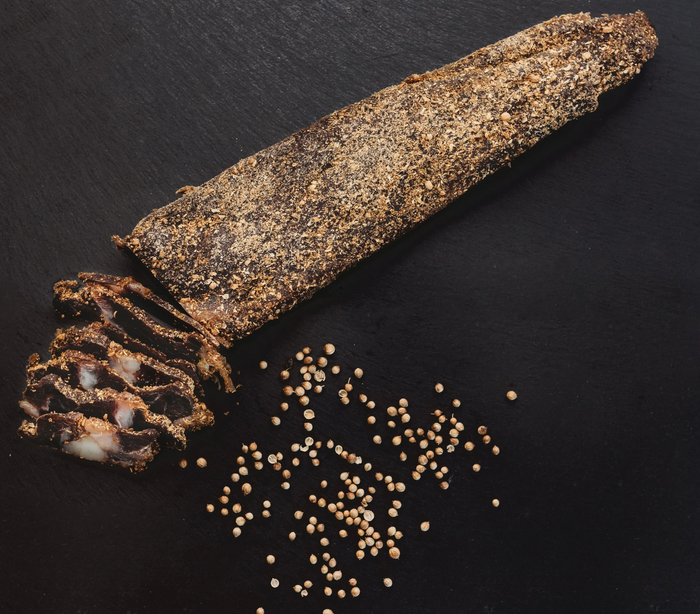
A slab is dried whole and cut later. Its interior has never met room air. The dried outer layer is doing a job, acting as a skin that slows the exchange between the wet middle and the dry room.
Slice that same slab and you have replaced one protective surface with many raw ones. The interior meat that was sitting at a higher moisture level is now open to the room. It dries further, and it dries fast, because thin cross sections have almost no distance for water to travel.
That is why sliced biltong changes texture in days while a slab of the same batch can sit and behave itself. The slices are not worse product. They have simply started their exposure clock, and yours started when you opened the bag.
The practical consequence is straightforward. Cut what you are about to eat, not what you might eat later. A slab is a storage format as much as it is an eating format, and treating it like a loaf rather than a bag of chips is the single biggest improvement most people can make.
The sealed bag is not automatically right
Sealing dried meat in an airtight bag stops it drying further, stops it picking up smells from the fridge, and slows oxidation by limiting oxygen. Those are real benefits and for a fully dried, well cured product a sealed bag is often the correct answer.
The failure mode is moisture with nowhere to go. If the piece is not fully dried, or if the middle is wetter than the outside, sealing it traps that water inside the bag. It leaves the meat, hits the plastic, and comes back as condensation. Now there is free water sitting on the surface, which is the one condition surface mold is waiting for.
A sealed bag also holds any warmth you sealed in with it. Bagging a piece straight from a warm room and putting it somewhere warm is how people manage to produce a fuzzy slab out of a product that had been perfectly stable in open air.
The paper bag does the opposite job
Paper breathes. Moisture moves out through it instead of pooling, and the meat keeps losing water slowly to the room. For a wetter piece, or for the first days after you get a slab that was cut on the softer side, that is exactly what you want.
What paper does not do is protect. Oxygen reaches the meat freely, so fat oxidation continues at full speed. Nothing stops the piece drying past the texture you liked. Leave a slab in paper long enough in a dry room and you will end up with something closer to a stone than a snack.
So the two methods are not competing for the same job. Paper manages moisture. Plastic manages exposure. Which one is right depends on whether your problem today is too much available water or too much air, and that changes over the life of the same piece.
The rule that follows from all of it
Wetter and softer, breathe it. Drier and firmer, seal it. That is the entire decision, and it is a judgment you make by looking at what you actually have rather than by following a rule printed on something.
A middle path works well for a large slab in an ordinary kitchen. Keep it in paper or a cloth inside a container that is closed but not sealed airtight. The paper takes up surface moisture, the container slows the air exchange, and neither one is allowed to run away with the piece.
Your kitchen humidity is not a constant
Dried meat and the air around it are always trying to reach an agreement. If the room is drier than the meat, the meat loses water. If the room is wetter, the meat gains it. That second direction is the one people forget is possible.
A humid summer kitchen, a room with a kettle running, a cupboard next to a dishwasher, a coastal house in August. All of these can push moisture back into a dried surface. Water activity at that surface climbs, and the piece that had been stable for weeks starts to look different.
Winter is the reverse. Heated indoor air is dry, and a slab left out will harden faster than the same slab did in July. Same meat, same house, different season, different result. Nothing has gone wrong with the biltong.
Temperature does more than you think
Heat speeds up everything. Chemical reactions, including the fat oxidation that makes a piece taste stale, roughly accelerate as temperature rises. Warmth also raises how much water the surrounding air can hold, which changes the exchange happening at the surface.
The worst spots in a normal kitchen are the ones people pick first for convenience. Above the stove. On a sunny counter. Next to the refrigerator's exhaust, which is warmer than the rest of the room and blowing air. A cool, dark, still cupboard beats every one of them.
Light matters for the same reason it matters to cooking oil. It drives oxidation of fats directly. If the piece is in a clear bag on an open shelf, you are running a slow reaction on purpose.
The refrigerator is a trap, not a solution
Cold slows biological growth, so refrigeration sounds like the safe answer. For biltong it usually is not, and the reason is condensation.
A refrigerator is a cold, relatively damp box. Take a piece out, and its surface immediately drops below the dew point of the warm room air, so water condenses on it. Put it back in still damp and you have created exactly the free surface water that dried meat is designed to avoid. Do that daily and you have engineered a mold problem.
The other cost is texture. Cold firms the fat and dulls the taste, and biltong that has been chilled needs time back at room temperature before it tastes like itself again. If you do refrigerate, keep the piece sealed, take out only what you will eat, and let it come back up before you open the bag rather than after.
Freezing, and the honest version of it
Freezing genuinely stops the clock on biological spoilage and slows oxidation a great deal. For a large slab you know you will not get through in a reasonable time, it is a legitimate move.
The cost is at the boundaries. Ice crystals disrupt the meat structure, and the thaw is where surface moisture appears. Freeze the piece sealed and well wrapped, thaw it sealed, and let it reach room temperature before opening so the condensation forms on the wrapping rather than on the meat.
What freezing cannot do is rescue a piece that was already going. It preserves the state it found. A slab put in the freezer with surface mold comes out with surface mold.
Fat is the part that gives up first
Lean muscle and fat behave differently during drying and they keep behaving differently afterward. Lean meat sheds water and firms up. Fat holds much less water to begin with, does not dry in the same sense, and stays soft.
That means the fat is the piece's clock. Long after the lean is stable, the fat is still exposed to oxygen and still reacting. A fattier biltong tastes richer and rewards you for buying it, and it is also the version that asks you to be more careful about heat, light and air.
If a piece has gone off in the flat, faintly oily way rather than the visible way, the fat is where it happened. That is an argument for sealing, for cool storage, and for not buying more than you will use if you like the fattier style.
Reading your own biltong
Trust what is in front of you over any date. Dried meat gives clear signals if you know which ones mean something.
- Firmer and darker than when you bought it means it has dried further. That is a texture change, not a problem, and slicing thinner fixes it.
- A slightly damp or tacky surface where there was none means available water has risen. Get it into paper and into moving air.
- Fuzzy growth on the surface is not a texture question and it is not something to cut around casually. That piece is a judgment call, and if you are unsure, it goes.
- A flat, oily or cardboard note in the taste is oxidized fat, and no storage change will bring it back.
- Any sour or off smell that was not there when you opened the bag is a reason to stop.
The one thing we will not do is give you a shelf life in days for our products, because we have not measured that for you here and a number invented for a blog post is worse than no number. What we can tell you is which direction each of your choices pushes the meat.
Why format is a storage decision
Buying in bulk only saves you anything if the product is still good when you get to the end of it, and format decides that more than quantity does.
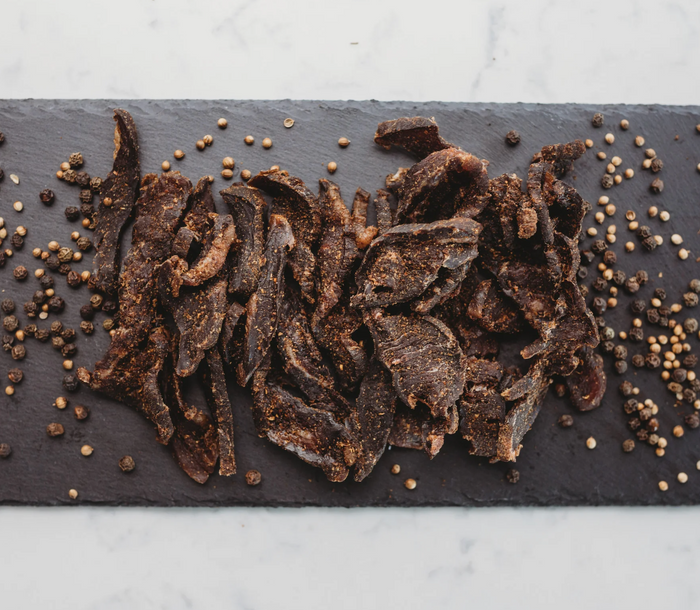
Biltong Slabs at $58.00 arrive as whole dried pieces, which means the meat is carrying its own protection and you decide when to open it up by cutting. Bulk Biltong, 1LB of Sliced Biltong at $58.00 is the same commitment in a form that is ready to eat and already has all its surfaces exposed. Neither is better. They ask for different handling.
With the slab, keep it whole, cut across it as you go, and store the remaining piece cut face down against a clean dry surface or wrapped so that face is not sitting in open air. With the sliced pound, portion it out on arrival into smaller sealed amounts and open one at a time, because the enemy there is opening the same large bag twenty times.
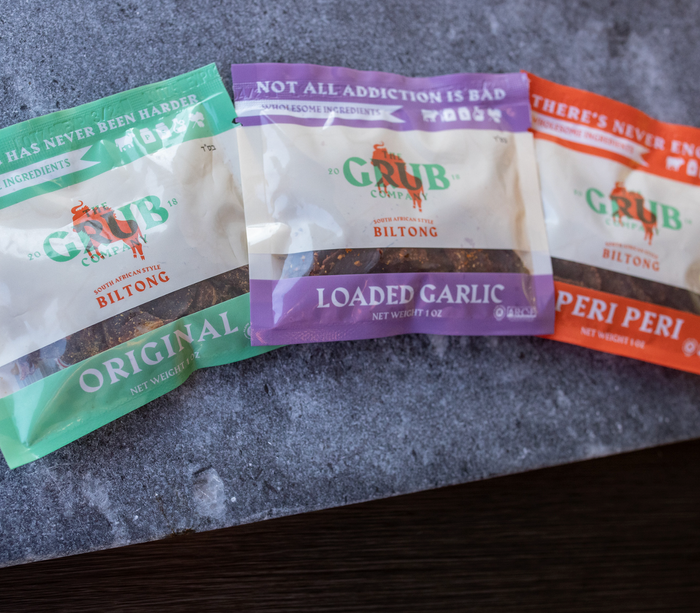
Smaller formats exist for the opposite reason. Sliced Biltong Mini's at $4.99 and the Biltong Sampler Pack at $12.99 are sized so storage never becomes your problem. If you know your kitchen runs warm and humid and you are not going to be disciplined about any of this, buying smaller is a real answer rather than a lesser one.
Bottom line
Storage is a fight over water activity, and you have three levers. Keep it cool, keep it dark, and match your wrapping to the state the meat is actually in rather than to a habit. Seal a dry piece, breathe a wetter one, and never put a warm piece into a sealed bag.
Keep a slab whole for as long as you can, because the surface you have not cut is the best packaging the meat will ever have. Cut what you are eating now. If you buy a pound already sliced, split it into small sealed portions the day it arrives instead of reopening one large bag over and over. Do that and you will be judging our biltong at its best, which is the only version worth judging.
Frequently Asked Questions
Does biltong go bad?
Biltong changes rather than simply expiring, and it can go bad in three separate ways. Surface mold grows when there is enough available water at the surface, which usually means humidity, condensation or a sealed bag holding moisture in. Fat oxidizes with exposure to oxygen, heat and light, which gives a flat or faintly oily taste with nothing visible to see. And a piece can simply dry past the texture you wanted, which is not spoilage at all. Judge the piece in front of you by look, smell and taste rather than by a date, and treat fuzzy growth or a sour smell as a stop.
Should I keep biltong in the fridge?
Usually no. A refrigerator is cold and relatively damp, and the real problem is condensation every time the piece moves between cold and room temperature. That puts free water on the surface, which is the exact condition surface mold needs. Cold also firms the fat and dulls the taste. If you do refrigerate, keep the meat sealed, take out only what you plan to eat, and let the sealed bag come back to room temperature before you open it so the condensation forms on the plastic instead of on the meat.
Is a sealed bag or a paper bag better for biltong?
They do opposite jobs and the right one depends on the piece. A sealed bag stops further drying and limits oxygen, which suits a fully dried, firm product. It also traps any moisture that is still leaving the meat, and trapped moisture becomes condensation and then a mold risk. Paper breathes, letting surface moisture escape, which suits a softer or wetter piece, but it gives no protection from oxygen so fat keeps oxidizing. A large slab in an ordinary kitchen often does best in paper inside a closed but not airtight container.
Why does sliced biltong seem to change faster than a slab?
Surface area. A slab is dried whole, so its interior has never met room air and the dried outer layer acts as a skin that slows exchange with the room. Every slice you cut replaces that one protective surface with many open ones, and thin cross sections lose water very quickly because there is almost no distance for moisture to travel. The slices are not lower quality, they have simply started their exposure clock. Cutting only what you are about to eat is the simplest way to slow it down.
What is water activity and why does it matter more than moisture content?
Moisture content is how much water is in the meat. Water activity is how much of that water is chemically free rather than bound up with salt, protein and the other compounds drying has concentrated. Spoilage organisms can only use free water, so bound water may as well not be there. Two pieces can show the same moisture reading and behave completely differently, because one has locked its water away and the other has not. Every storage choice you make, from the room to the wrapping, is really a decision about water activity.
Can I freeze biltong?
Yes, and for a large piece you will not finish soon it is a reasonable move. Freezing halts biological spoilage and slows fat oxidation considerably. The care is at the boundaries, since ice crystals disturb the meat structure and thawing is where surface moisture appears. Freeze it sealed and well wrapped, thaw it still sealed, and let it come fully to room temperature before opening so any condensation lands on the wrapping. Freezing preserves whatever state it found, so it will not rescue a piece that had already started to turn.
How should I store a full pound of sliced biltong?
Split it on the day it arrives. The main risk with a large bag of sliced product is not time, it is the twenty separate openings, each of which exchanges the air inside for whatever your kitchen is doing that day. Portion it into smaller sealed amounts, keep them somewhere cool and dark and away from the stove or a sunny counter, and open one portion at a time. The unopened portions then stay in the condition they arrived in rather than aging alongside the one you are eating from.