How Biltong Became A High-Protein Snack Staple In America
Biltong became a high-protein snack staple in America because it delivers clean protein without the added sugars and preservatives that dominate mass-market beef jerky, a distinction fitness consumers recognized before mainstream snack brands caught on. Its South African air-drying method, no smoking, no heat, produces a texture American jerky eaters experience as genuinely novel. And its short ingredient list, grass-fed beef plus traditional spice blends, meets the clean-label demand that has reshaped the snack aisle since the 2010s.
Want some on hand? Order biltong online: Glatt Kosher, air-dried in Florida, free US shipping over $50.
What most people miss is that taste alone did not drive the breakthrough. Format did.
The Slab Changed Everything
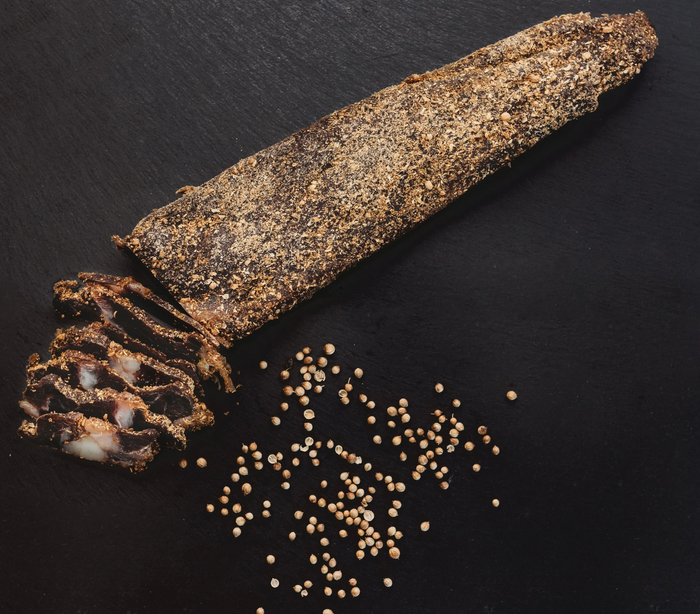
Pre-sliced jerky pouches give you no choices. The texture is decided before you open the bag. Biltong arrived in America in pouches too, and it sold fine, but it did not take off as a category until whole slabs started reaching consumers directly.
A whole slab lets you control slice thickness. Thin slices give you something almost tender, with concentrated spice on every edge. Thick slices push the chew further and let the beef flavor come forward. That tactile control is something no pre-sliced jerky bag has ever offered, and it changed how people related to the product. It went from snack to craft protein.
There is a practical side to this that does not get talked about enough. The thickness of your cut also changes how the vinegar note comes through. A thin slice has more cut surface relative to its mass, so the cured edge flavor is more present in every bite. A thick slab cut mostly gives you interior beef, with the cured edge flavor arriving at the end. Neither is better. They are genuinely different eating experiences from the same piece of meat, and that variability is part of why people who get into biltong tend to stay in it. The product keeps offering something new.
Knowing where to cut also matters. The drying process is not perfectly uniform across a whole slab. The thinner tapered ends of a cut will be drier and more concentrated in flavor. The thicker center tends to retain a little more moisture and produces a heavier chew. Experienced biltong buyers work through a slab starting with the ends and finishing with the center, or they slice everything at once and let the thicker cuts continue to air-dry loosely wrapped in the fridge. That is not something a product manual tells you. It is knowledge that comes from handling the product over time, and it is part of why a slab purchase has a learning curve that a pre-sliced pouch simply does not.
We sell our Biltong Slabs in intentionally limited batch quantities, and that creates real wait times, typically two to three weeks. That is not a supply chain problem we are trying to solve. It reflects how the product is made. Each batch gets its own drying time, its own seasoning, and we do not rush that to hit volume. The scarcity is a side effect of doing it right, not a marketing angle.
The bulk 1LB wholesale format tells a different story about where the category has gone. When people started buying biltong by the pound, that was the signal that it had graduated from curiosity to staple. A 1LB bag is not a solo snack. It goes on a charcuterie board, it comes out at a watch party, it gets portioned into a week of post-gym snacks. That is a different use case than a gas station jerky stick, and it required the slab format to get there.
Why Fitness Consumers Picked It Up First
Biltong did not need a marketing campaign in the fitness space. The ingredient panel did the work.
Mass-market jerky carries added sugars because sugar helps with preservation and palatability when you are drying meat fast with heat. Biltong skips the heat entirely. The curing tradition uses vinegar, salt, and spice. The beef air-dries slowly. There is no reason to add sugar to that process, so the product does not have it. Fitness consumers reading labels noticed that difference well before lifestyle media covered it.
The protein density is worth spelling out plainly. Because biltong loses a significant amount of its starting weight during the air-drying process, around 50 percent or more depending on how long it hangs and how dry the finished product is meant to be, the protein per ounce in the finished product is considerably higher than in fresh beef. A typical finished biltong runs somewhere around 16 to 18 grams of protein per ounce, depending on the cut and the drying duration. That is competitive with any protein snack on the market, and it arrives with no added sugar, no nitrates, and no artificial preservatives. For someone tracking macros seriously, that ratio matters.
There is also a satiety argument. Because biltong is dense and dry, people tend to eat it slowly and deliberately rather than grazing through a bag without noticing. That mechanical difference, the time it takes to chew a thick slice properly, tends to produce a feeling of having actually eaten something, which processed snacks often fail to do even when the calorie count is comparable. It is not a clinical claim. It is just something people report consistently, and it fits with what we know about chew time and satiety signaling.
Grass-fed beef is the other piece. It is not window dressing on the packaging. It is the actual starting material, and it affects the fat profile and the flavor in ways that carry through to the finished product. When you are eating something this simple, four or five ingredients, the quality of the beef matters more than it does in a heavily seasoned, smoke-processed product. We have seen customers who bought the sampler once and switched their entire protein snack rotation. That is not something you see often with jerky.
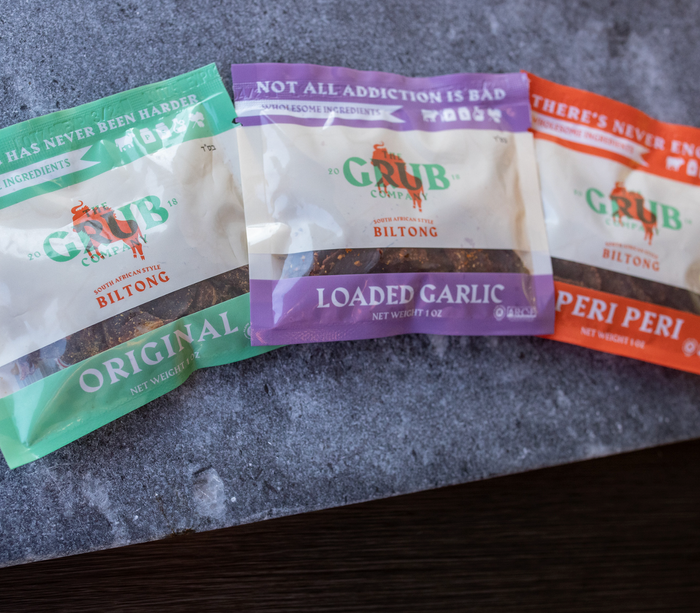
The sampler pack exists for a specific reason. At $12.99 with all three flavors, Original, Peri Peri, and Loaded Garlic, it is designed to remove the barrier that comes with buying a slab of something unfamiliar. Most people buying biltong for the first time have a real question about whether they will like the texture. The sampler answers that without asking someone to commit to a full slab price. It is the entry point, and it works because the product holds up on its own once people try it.
How Biltong Is Actually Made, and Why the Details Matter
The process sounds straightforward when you summarize it: cure the beef, hang it, let it dry. What that summary skips is how much the individual decisions along the way shape the final product.
The vinegar is not just a flavor agent. It lowers the surface pH of the meat, which creates an environment that inhibits bacterial growth during the early stages of drying before water activity drops low enough to do that work on its own. The type of vinegar matters. Apple cider vinegar and brown malt vinegar produce meaningfully different flavor backgrounds, and traditional South African recipes tend toward malt vinegar for the slightly darker, more rounded acidity it contributes. That acid note mostly dissipates during drying, but it leaves a character in the finished meat that you can taste without being able to name it.
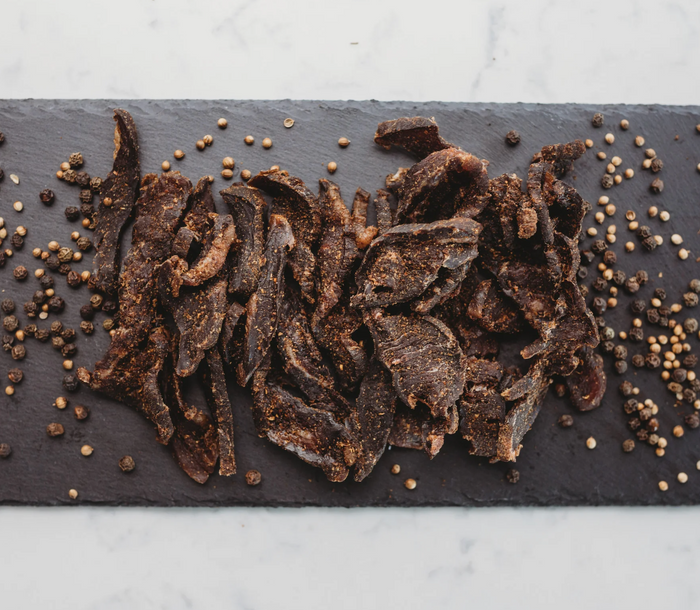
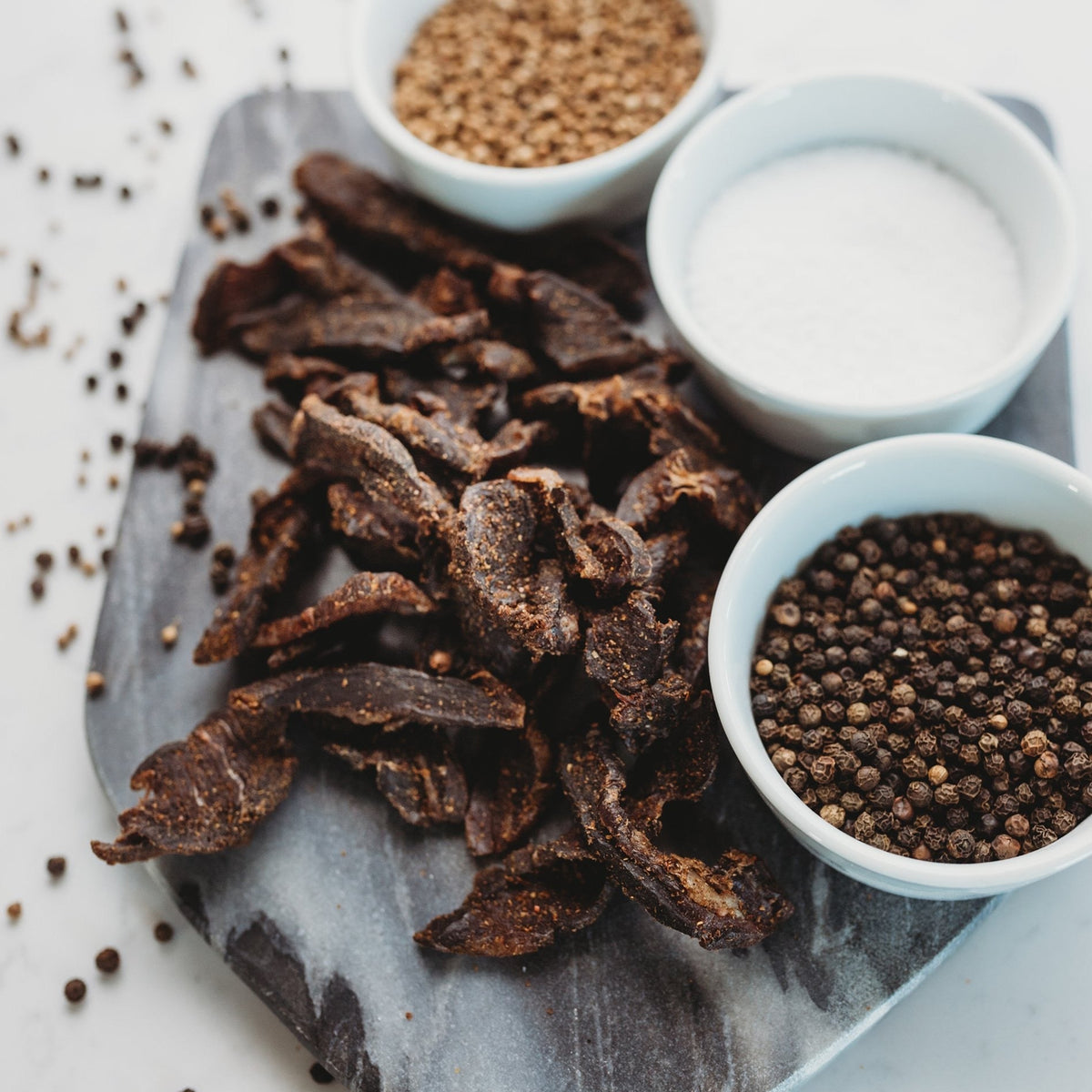
The spice blend applied before hanging is not decorative. Salt is the primary preservative. Coriander, whole and toasted rather than ground, is the traditional biltong spice and gives the product its characteristic aromatic quality. Black pepper is common. Some recipes add a small amount of brown sugar not for sweetness in the finished product, since it mostly cooks off and binds during curing, but to help the crust formation on the exterior during early drying. When a product is labeled no added sugar, that usually means the recipe does not use sugar in any form, which is a stricter standard than it might initially appear.
The drying environment has to stay controlled. Traditional biltong is hung in a well-ventilated space at low humidity, ideally with a fan moving air across the meat without blowing directly on it, which can case-harden the exterior and trap moisture inside. Case hardening is a real failure mode: the outside dries and firms faster than the interior, and the meat ends up with an unpleasant texture gradient and a higher risk of spoilage in the wet center. Avoiding it requires patience, consistent airflow, and not rushing the timeline. That is exactly what the two-to-three week slab window is about.
Flavor Was the Cultural Bridge, Not the Compromise
American jerky tends to play it safe with flavor: sweet and smoky, teriyaki, peppered. Biltong went the other direction. Peri Peri brings actual heat with a chili profile that has no domestic jerky equivalent. Loaded Garlic is bold in a way that reads as savory and intentional rather than novelty seasoning. These are not flavors softened for an American market. They are the real profiles from the South African curing tradition, and that is exactly why they landed.
Peri Peri is worth a specific note for people who think they know what spicy snack food tastes like. Most spicy jerky on American shelves uses cayenne or a generic hot seasoning blend, and the heat peaks quickly and fades. Peri Peri chili has a different heat profile, one that builds more gradually and sits further back on the palate, which means it layers with the beef flavor rather than overriding it. The first bite from a Peri Peri slab often underwhelms people who are braced for a face-slap of heat. By the fifth bite, they understand it. That delayed response is characteristic of the chili variety and is one reason the flavor tends to generate repeat buyers more than the other options.
Fitness consumers had already trained themselves to read labels and seek out real ingredients. When they found a snack that tasted like it came from a real kitchen rather than a food manufacturing plant, they responded to it. The flavor variety reinforced the craft positioning rather than undermining it.
The Kosher Biltong range follows the same logic at every price tier. The Sliced Biltong Mini's at $4.99 serve as a single-serve entry point. The mid-tier Sliced Biltong sits at $11.99. The full Kosher Biltong Slabs run to $58. That is a full tiered strategy, not an afterthought, and it reflects how seriously the product is taken across different buying contexts.
What Goes Wrong, and When Biltong Is the Wrong Choice
Every honest product category has cases where it is the wrong answer. Biltong has a few.
If you are buying for kids or for anyone who finds dense, chewy textures difficult, biltong is going to be a problem. The texture is not negotiable in the way jerky sometimes can be. A thin slice of biltong from a well-dried slab requires real chewing. That is a feature for the target audience and a genuine issue for anyone who wants something softer. Pre-sliced formats tend to be a little more forgiving than the slab because commercial slicing is more consistent than hand-cutting, but biltong is still biltong and the density is always there.
Storage is another place where people make mistakes. Biltong is shelf-stable, but it is not immortal. At room temperature in a dry environment, a whole slab will keep for several weeks. Once you start cutting into it, the exposed interior surfaces begin to interact with ambient humidity, and the clock speeds up. The practical approach is to cut only what you plan to eat within a day or two and keep the remainder loosely wrapped or in a paper bag rather than an airtight container. Airtight storage traps humidity against the meat surface, which can soften the crust and, in worst cases, encourage surface mold on cuts that were not fully dried before sealing. A paper bag in a cool pantry is better than a zip-lock at room temperature. The fridge works well for sliced portions, though cold storage slightly mutes the flavor until the meat comes back to room temperature.
The other honest limitation is price. Biltong costs more per ounce than mass-market jerky, and it should. The drying process removes significant weight from the starting beef, which means you are buying a more concentrated product, but the per-unit sticker price can still create sticker shock for someone accustomed to gas station jerky pricing. The 1LB bulk format brings the per-ounce cost down meaningfully compared to individual packs, and for regular buyers it is the format that makes the most economic sense.
If you want to understand the full range before committing, the biltong collection shows every format and price point in one place. That is the most useful starting point if you are still deciding between a sampler and a slab.
One honest caveat: biltong is not for everyone. If you genuinely prefer a sweet-smoky profile and a consistent chewy texture across every bite, traditional jerky probably suits you better. Biltong has a drier, denser chew that some people love immediately and others need a few tries to appreciate. The sampler is the honest way to find out which side you land on.
The bottom line is simple. Biltong won in America because it solved a real problem: clean protein with no added sugar, real beef, and a format that gave consumers something to interact with instead of just consume. The slab created the category. The flavors made it stick.
These are the questions we get most often from people who are still on the fence.
Frequently Asked Questions
What is the difference between biltong and beef jerky in terms of how they are made?
Beef jerky is typically smoked or heat-dried, which speeds up the process and often requires added sugars for palatability and preservation. Biltong uses a traditional South African air-drying method. The beef is cured with vinegar, salt, and spices, then hung to dry slowly with no heat source. That difference in process is why biltong has no added sugars and why the texture is denser and drier than most jerky styles.
Why does biltong have a different texture than jerky I am used to?
The air-drying process produces a denser, drier bite than heat-processed jerky. How dense depends on slice thickness. That is the point of buying a whole slab: you control the cut. Thin slices are closer to what jerky eaters expect. Thick slices push into a heavier chew that carries the spice differently. If you are new to biltong, the sampler pack is the lowest-risk way to experience the texture before buying a full slab.
Why does the Biltong Slab have a two-to-three week wait time?
Each batch is made in limited quantities and given its own drying time. We do not accelerate that to meet demand. The wait is a function of how the product is made, not a stock management issue. If you want biltong sooner, the pre-sliced formats are typically available without a wait. The slab is worth planning ahead for if texture control matters to you.
Which flavor should someone new to biltong try first?
Original is the honest starting point because it shows you the pure beef and spice profile without distraction. If you already eat spicy food regularly, Peri Peri is genuinely hot and is the flavor that most surprises people coming from domestic jerky. Loaded Garlic is the most savory of the three and tends to win over people who cook with garlic and want that profile in a snack. The sampler pack at $12.99 includes all three, which is the most direct answer to this question.
Is the 1LB bulk format just a bigger bag, or is it actually different from the slabs?
The 1LB wholesale format is pre-sliced biltong sold by weight, designed for higher-volume use: meal prep, group snacking, charcuterie boards, or anyone going through biltong fast enough that individual packs become inefficient. The slab is unsliced, which gives you control over thickness. If slice thickness matters to you, buy the slab. If volume and convenience matter more, the 1LB format is the practical choice.
What makes Kosher Biltong different from the standard range?
Kosher Biltong is produced under kosher certification, which affects sourcing, handling, and production oversight. The flavor profiles and air-drying method are the same as the standard range. The Kosher range spans three price tiers: Sliced Biltong Mini's at $4.99 for a single-serve entry point, Sliced Biltong at $11.99 for a standard portion, and Biltong Slabs at $58 for the full slab experience. The tiering exists so people can try before committing to the larger format.
Is biltong actually lower in sugar than jerky, or is that a marketing claim?
It is a function of the process, not a marketing decision. Heat-drying jerky typically requires added sugars to achieve the right texture and shelf life at speed. Biltong is air-dried using vinegar and salt as the primary curing agents. There is no step in that process where sugar is needed. The result is a product with no added sugars. That is why fitness consumers found it through label-reading rather than advertising.