Backpacking Food Ideas: Light, Dense and Shelf-Stable
The best backpacking food is dense, shelf-stable and needs no fridge: nut butter, tortillas, oats, dried fruit, nuts and dried meat. Pick foods that give you a lot of energy for their weight, and pack a savory option, because sweet-only trail food gets old by day two. Our own biltong and beef jerky are certified Glatt Kosher, made in Florida.
Related: Camping Food Ideas: What to Pack When the Cooler Is Full
Every ounce in your pack gets carried uphill. That one fact decides what is good backpacking food. We are a small kosher meat-snack maker, and our certified Glatt Kosher biltong goes into a lot of packs, so we have thought hard about what earns its weight on a trail. This guide covers the rules, the foods, a day-by-day plan and the mistakes that cost people the most. It is written for kosher-keeping hikers too, and we flag where that changes the answer.
The four tests every trail food has to pass
Forget the long lists for a moment. Any food you are considering should pass four tests.
- It is light for the energy it gives you. Dry food beats wet food. Fat carries more than twice the calories per gram that protein or carbohydrate does, which is why nuts, nut butter and olive oil punch above their weight.
- It survives heat, squashing and days of neglect. No fridge, no ice, no careful handling. A bag that turns to paste in a hot pack is not trail food.
- It needs little or no cooking. Fuel and a stove are weight too. Food you can eat cold from the bag is the most reliable food you own.
- You still want to eat it on day four. This is the test people skip. Appetite changes on a long trip. Food you like at home can become impossible to face. Pack variety, and pack salt.
Almost everything good on a trail passes the first three tests. The fourth is where trips are won or lost.
Backpacking food ideas that earn their weight
Here is how the usual suspects stack up, grouped by the job they do.
Energy that keeps: fats and carbs
- Nut butter in squeeze packs or a small jar. The classic. Dense, calorie-rich and good on almost anything.
- Tortillas. Flat tortillas outlast bread, which crushes and molds. They are your sandwich, your wrap and your plate.
- Oats. Instant or quick oats with hot or cold water make a breakfast. Add nuts and dried fruit and it is a full meal.
- Nuts and seeds. Heavy on energy, easy to portion into daily bags.
- Dried fruit. Light sweetness, quick sugar when you are flagging. Eat it with something salty so it does not become your whole diet.
- Instant couscous or ramen-style noodles. Cheap, light and ready in minutes with hot water. Check the seasoning packet for kosher certification, since many are not certified.
Protein that does not need a fridge
Protein is where backpackers struggle, because fresh meat and fish are out. Your options are packaged tuna or salmon pouches, nuts, nut butter, protein bars, and dried meat. Dried meat is the one most people underrate. It is savory when everything else is sweet, it is high in protein, and it weighs almost nothing next to the meal it replaces.
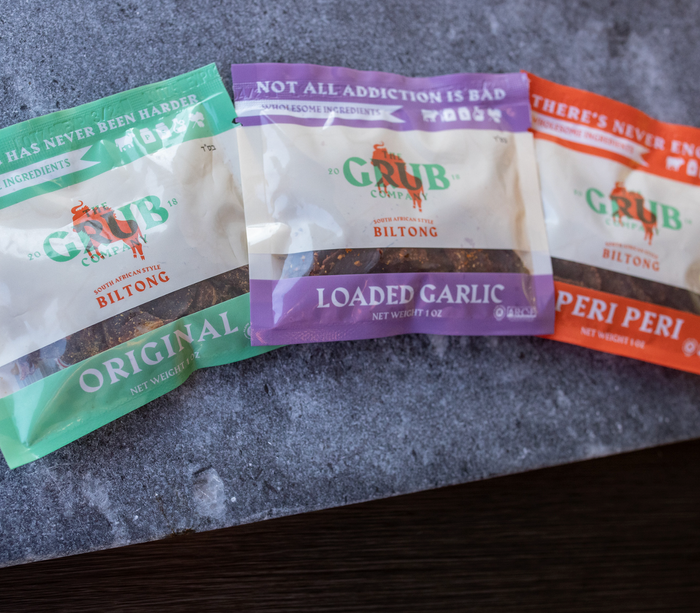
That is the whole case for biltong on a trail. It is beef with the water air-dried out of it, so you are carrying protein instead of water. Sliced Biltong comes in a three-ounce bag in Original, Peri Peri and Loaded Garlic. There is nothing to cut and nothing to prepare, no refrigeration and no utensils. You tear the bag and eat.
Quick fixes: the snacks you reach for mid-climb
These are the foods you eat without stopping or unpacking: dried fruit, a handful of nuts, a bar, a few strips of dried meat. Keep them in a hip-belt pocket or the top of the pack. The best rule on a hard day is to eat small amounts often, rather than one big meal at a rest stop. Waiting until you are hungry usually means you are already behind.
Jerky or biltong for the trail?
Both are dried beef and both are high in protein. They are not the same food, and the difference matters when you are carrying it for days.
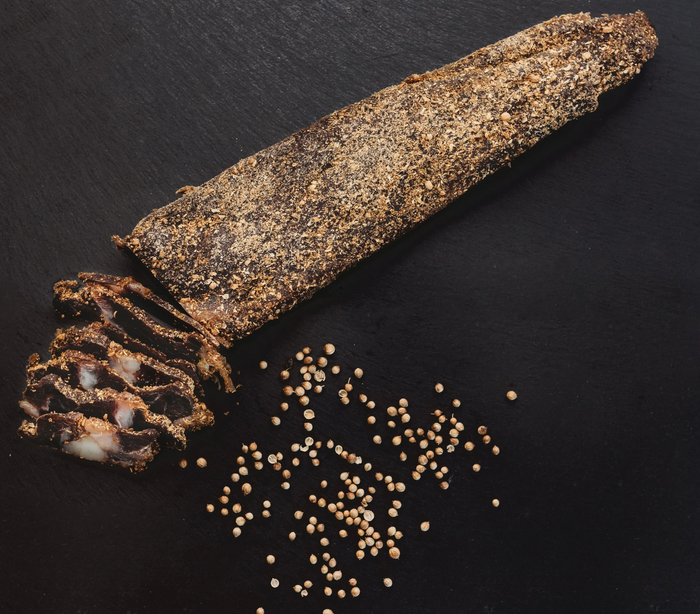
Biltong is air-dried, not cooked, and it is savory: salt, vinegar, coriander and pepper. There is no sugar glaze in our Original or Loaded Garlic, and it is tender enough to eat quickly even when you are tired. It is the better pick if you want something salty to balance a sweet-heavy food bag. Our guide to biltong for travel covers what holds up across a long trip and what does not.
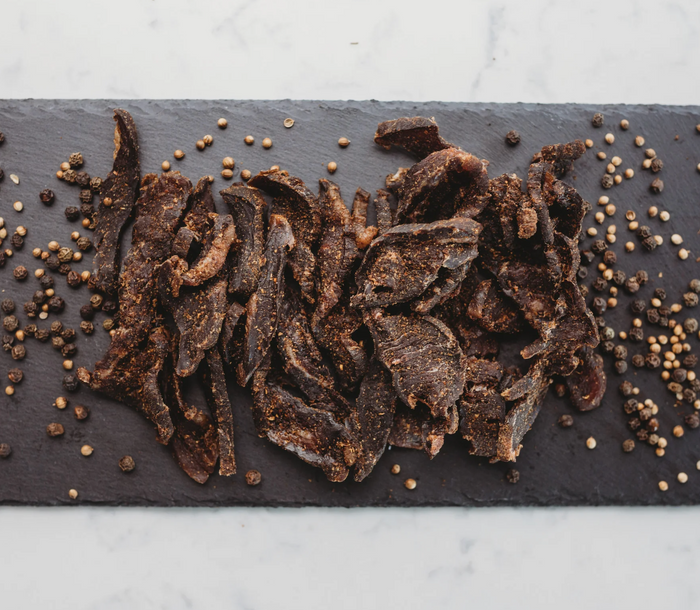
Jerky is cooked, marinated and sweeter. Meat Candy comes in Hickory Kickory Dock and Baa-Baa BBQ Sheep, and it chews longer than biltong. Some hikers like exactly that, because a long chew keeps their mouth busy on a climb. If you are looking for kosher jerky, our kosher beef jerky collection has the full range.
Our honest take: bring both on a longer trip. Sweet jerky for the morning, salty biltong for the afternoon. Neither wins every day.
Biltong is the wrong pick if you want a sweet chew or a candy-like treat. It is salty and savory by design, and that is the point of it.
A sample three-day plan
Use this as a template, not a prescription. Portions depend on your body, the terrain and the weather, and we are not going to hand you made-up calorie targets. Eat to appetite, and bring a little extra.
Breakfast
Instant oats with a spoonful of nut butter stirred in, a handful of dried fruit and a few nuts on top. Hot water if you have a stove, cold water and a longer soak if you do not. Add salt.
Lunch, eaten on the move
A tortilla spread with nut butter, with a few strips of sliced biltong on the side. Dried fruit and a handful of nuts. No stove, no cleanup, no stopping for long.
If you are keeping kosher, note that this lunch is deliberately free of dairy. Biltong is meat, so keep cheese out of the wrap. A trail wrap with hard cheese and dried meat is common advice elsewhere, but meat and dairy are kept separate, and how long to wait between them is a matter of family custom. If you are not sure what your family does, ask your rabbi. Nut butter, olive oil and a little salt work just as well.
Snacks through the afternoon
A one-ounce bag from Sliced Biltong Mini's is sized for exactly this. It is a single sealed portion you finish in one sitting, with no half-open bag leaking into your pack. They are the most expensive way to buy biltong per ounce, a portioning premium, so for a long trip where you know your flavor, the three-ounce bag is better value.
Dinner
Instant couscous or noodles with hot water, a drizzle of olive oil, and a bag of Peri Peri biltong torn in at the end for protein and heat. Add it off the heat, since it is already cured and ready to eat. Never cook it through. A warm bowl at the end of the day does more for morale than almost anything else in your pack.
What goes wrong, and how to avoid it
- Packing for the person you wish you were. Do not carry food that needs a recipe, a long simmer or a pile of dishes. Tired people eat the easy thing or nothing.
- All sweet, no salt. Trail mix, bars and dried fruit add up to a very sweet food bag. Add something savory every day. Salty food also helps when you are sweating.
- Heat in the pack. Chocolate melts. Soft cheese turns. Anything with moisture spoils faster in a warm pack. Dried foods hold up best. Biltong, being dry and cured, copes with warmth far better than most foods, but keep it out of direct sun.
- Bulky packaging. Repackage everything into light bags before you leave and drop the cardboard boxes at home. Squeeze the air out. Fewer, flatter bags pack better.
- No plan for smell. In bear country, all food and anything scented goes in a canister or a hang, per local rules. Dried meat is no exception. Check the rules for the area you are walking in.
- Not enough food. The most common mistake. Hard days burn more than you expect. Bring an extra day of easy snacks you can eat without cooking.
Keeping kosher on the trail
Backpacking and keeping kosher are easier together than most people think, because the best trail foods are plain. Nuts, dried fruit, oats, nut butter and tortillas are simple to check. The hard part is anything with a flavor packet, a seasoning or a processed ingredient list. Look for a kosher symbol on the package, and when in doubt, leave it out.
Meat is where it gets harder, because you cannot pick up a kosher sandwich at a trailhead. This is the reason dried kosher meat matters for hikers. All of our biltong and jerky is certified Glatt Kosher, so a bag in your pack is a real source of protein you do not have to second-guess.
For more on planning a longer outing, see our guide to kosher jerky for hiking and camping. If you want to see every size and flavor, browse Buy Biltong Online. US orders over $50 ship free.
The bottom line
Good backpacking food is simple. Carry dense, dry, shelf-stable food. Cover energy with nut butter, tortillas and oats, cover protein with dried meat, and cover your morale with something salty and something warm. Bring a little more than you think you need. If you want one savory, high-protein item that needs no prep, a bag of biltong does the job.
Frequently Asked Questions
What is the best food to take backpacking?
The best food is dry, dense in energy and shelf-stable. Nut butter, tortillas, oats, nuts, dried fruit and dried meat cover almost every need. Add a savory item for variety, because sweet-only food bags get hard to face after a few days.
How much food should I bring for a backpacking trip?
It depends on your body, the terrain and the weather, so we will not give you a one-size number. Plan your meals, then add an extra day of easy snacks you can eat cold. Running short is worse than carrying a little extra weight.
Is biltong good for backpacking?
Yes, for the right hiker. It is high in protein, light, needs no refrigeration and is ready to eat straight from the bag. It is savory, so it balances a sweet food bag. It is the wrong pick if you want something sweet or candy-like.
Does biltong need to be kept cold on the trail?
No. Biltong is air-dried and does not need refrigeration in the bag. Keep it sealed, out of direct heat and away from moisture. An opened bag should be finished sooner, which is why single-serve one-ounce bags suit trips.
Is kosher jerky or biltong good for backpacking?
Yes. Our biltong and jerky are certified Glatt Kosher, ready to eat and need no cooking, so they work well when you cannot get kosher meat on the trail. For other items in your pack, such as noodles or bars, check for a kosher symbol on the package.
Can I eat meat and cheese together on the trail if I keep kosher?
No. Meat and dairy are kept separate, and how long to wait between them depends on your family's custom. If you are unsure, ask your rabbi. Nut butter, olive oil and hummus pair well with biltong without any dairy.
Is jerky or biltong lighter to carry?
Both are dried beef and both are light for the protein they give you. The better choice is about taste and texture rather than weight. Biltong is savory and tender, jerky is sweeter and chewier. Many hikers pack both.