Hiking Snacks: What to Pack for a Day on the Trail
The best hiking snacks are dense, dry and sealed: dried meat, nuts, whole fruit, tortillas and something sweet that does not melt. We make certified Glatt Kosher biltong and jerky, so protein is where we start, and this guide covers the rest of the pack too.
Food on the trail has one job. It has to keep you moving for hours without being heavy, messy or ruined by a warm backpack. Everything we make is certified Glatt Kosher, which matters when you are miles from any store and want to know what you are eating. This is how we pack for a day hike, and what we would leave at home.
What makes a snack work on the trail
Run every snack through five tests before it goes in the pack.
- It needs no cooler. A backpack in the sun is not a refrigerator. If it has to stay cold, it stays home.
- It is dense for its weight. You carry everything you pack, uphill. Food that is mostly water, like a fresh cucumber or a yogurt cup, is heavy for what it gives you.
- It survives being squashed. Your pack gets dropped, sat on and shaken for hours. Soft bread and ripe fruit lose that fight.
- It eats in a minute, standing up. No utensils, no cooking, no sitting down for a proper lunch. Hungry hikers who stop for too long get cold, then stiff.
- It does not make a mess or attract attention. Sticky, crumbly or very smelly food ends up on your hands, your map and, in some places, interesting to animals.
Most of what people grab on the way out the door fails at least one of these. Dried meat, nuts, whole fruit and plain crackers pass all five. That is the whole idea behind the list.
Protein: dried meat that needs no refrigeration
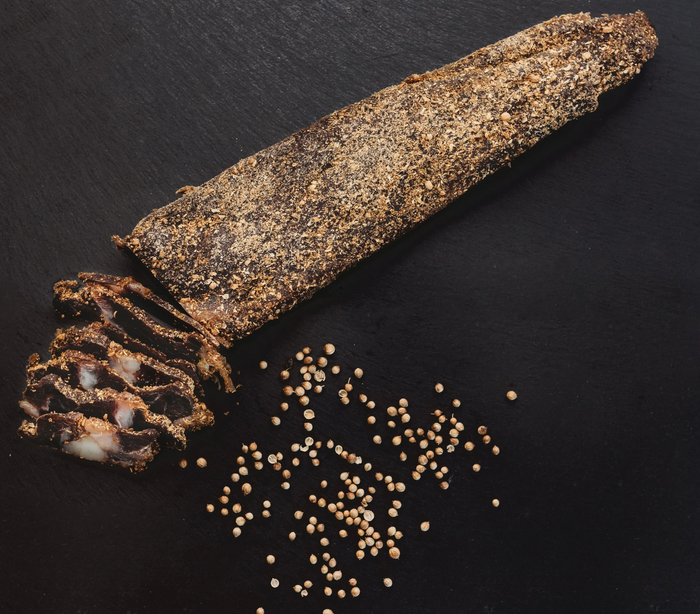
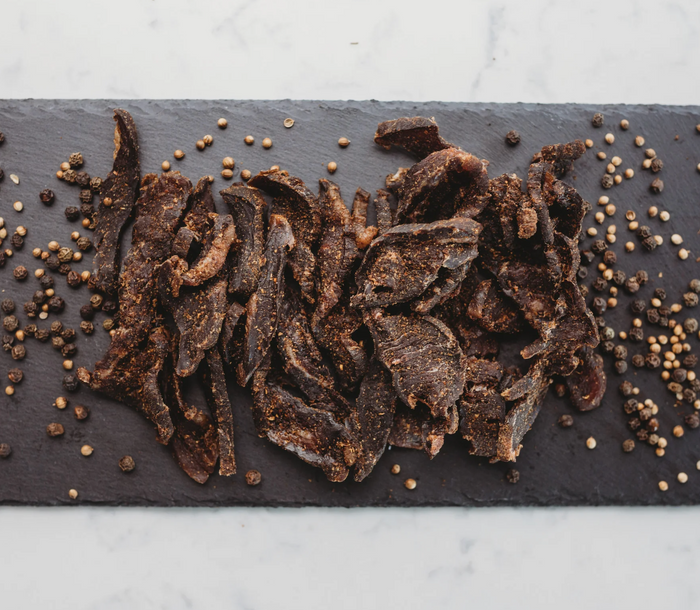
Dried beef is the strongest trail snack we know, and not only because it is our business. It is high in protein, it comes sealed, and it was built to be carried. Biltong came out of a traveling tradition, and a long day outdoors is exactly the job it was made for.
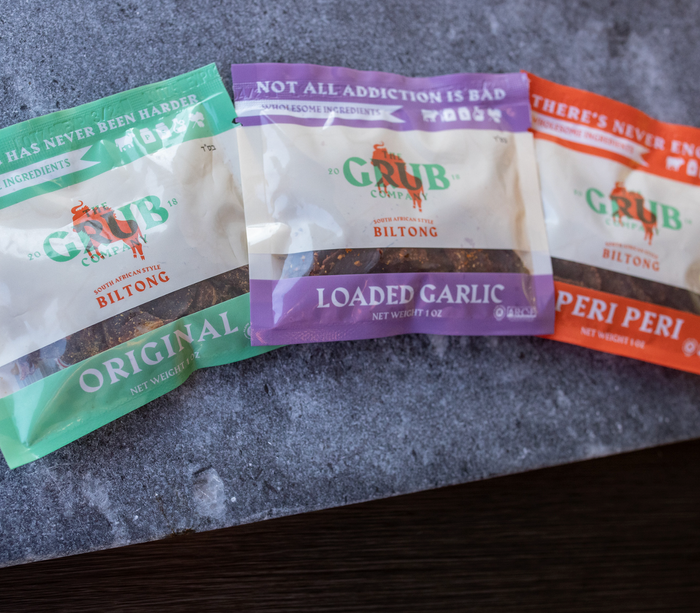
Our Sliced Biltong is the everyday bag. It comes in three-ounce bags of Original, Peri Peri or Loaded Garlic. It is already sliced, so there is nothing to cut, nothing to prepare and no refrigeration. You reach in, take a piece and keep walking. Original is the safe choice for a mixed group. It is beef first, then a warm coriander note. Peri Peri has real heat that builds, which some of your friends will love and others will not forgive you for. Loaded Garlic is savory and round rather than hot.
For a single hike, the smaller bag is often the smarter pick. Sliced Biltong Minis are one ounce, sealed, and that is about what one person finishes in a sitting. They go in a hip-belt pocket or the lid of the pack, and you never open a big bag and then wonder what to do with the rest. If you are not sure which flavor you like, start with Original and judge the others against it.
If you want the sweeter side, Meat Candy is our jerky. It is sliced beef, cooked and glazed. Hickory Kickory Dock is smoky with the sweetness behind it. Baa-Baa BBQ Sheep is Korean BBQ, sweet and savory together. If you are comparing options for the trail, our kosher beef jerky collection shows the whole line in one place.
Here is the honest trade-off. Dried beef is salty, and a few hours of it makes you thirsty. Carry more water than you think you need, and do not treat salty snacks as a substitute for drinking. It is also a snack for people who want protein, not a quick-sugar hit. If you are stopping at the top of a steep climb and need something sweet right now, meat is not the whole answer. Build around it, not on it.
Our day-hike pack, built by category
Do not pack twelve of one thing. Pack one or two from each group and the day stays interesting.
Protein and fat
- Sliced biltong or jerky, sealed in the bag it came in.
- Almonds, cashews or peanuts, if no one in the group has a nut allergy. Check first, because a shared snack with a hidden allergen is a real problem a long way from help.
- Sunflower or pumpkin seeds, which are light and travel well.
- Nut butter in a squeeze pouch, if you like it. It is dense and needs nothing else.
Carbohydrates for steady energy
- Tortillas or flatbreads. They flatten in a pack without falling apart, and you can wrap almost anything in them.
- Plain crackers or pretzels. Boring, light and exactly right when you are tired of everything else.
- Granola or a simple oat bar. Read the label. Some bars are mostly candy in disguise, and some are not certified kosher.
- Dried fruit such as dates, apricots or raisins. It is dense, sweet and sticks to nothing.
Fresh and light
- Apples and clementines. Whole fruit carries its own wrapper. Apples bruise less than most, and a clementine peels in a few seconds.
- Carrots or snap peas for the first half of the day, when they are still crisp.
Something to look forward to
- One small treat that does not melt, saved for the last third of the hike. Hard candy or a wrapped cookie works. Chocolate does not, unless it is a cold morning.
The treat is not a joke. A long climb needs small rewards, and it is easier to ration one planned treat than to eat everything you brought by noon.
How much to bring
There is no exact number, and anyone who gives you one is guessing. How much you eat depends on how hard the trail is, how heavy you are carrying, the weather and how your body works. These rules hold up in practice.
- Bring more than you think you need. You will almost never regret a spare snack, and you will absolutely regret running out on the way down.
- Eat before you are starving. A small snack every hour or so beats one big stop. Waiting until you are shaky means you are already behind.
- Split the food into daily portions. Put each hike's food in its own bag. It makes it obvious when you are eating faster than planned.
- Treat a long or strenuous day differently. A short, flat walk needs a snack or two. An all-day climb needs real food, including a proper lunch you carry and eat sitting down.
If you are thinking about longer efforts, we wrote a separate piece on biltong for endurance athletes that goes deeper on how it fits around long runs and rides.
Keeping food good in a hot pack
Heat is the real enemy of trail food. Our guide on what happens to biltong in a hot car, a fridge and a sealed bag explains what the meat does in warmth. The short version is that sealed, dried biltong copes with a day in a pack far better than most foods. Keep these habits anyway.
- Keep food in its sealed bag until you eat it. Once a bag is open, finish it that day and do not carry the remainder home in a warm pack for a week.
- Pack food in the shade of your pack. Put it in the middle or against your back, away from the top and the sun-facing side.
- Do not carry perishables. Cheese, cooked meat, eggs, dairy spreads and sandwiches with mayo are not trail food on a warm day.
- Carry out all your trash. Wrappers, bags and peels all go back in the pack. Peels are not litter that rots away fast, and animals learn quickly where food comes from.
What to leave at home
Some foods look right and fail on the trail.
- Chocolate bars, in warm weather. They melt, then set into a lump in the wrapper.
- Soft fruit. Ripe bananas, peaches and berries turn to mush by the second mile.
- Anything fried and greasy. It sits heavy in the stomach, and heavy is the last thing you want on a climb.
- Big bags of candy. Quick sugar then a crash. You will be hungrier an hour later than if you had eaten nothing.
- Anything dairy if you plan to eat meat. If you keep kosher, keep meat and dairy foods separate in the pack and do not mix their wrappers or utensils. Wait between meat and dairy according to your family's custom.
For anyone keeping kosher on the trail, the useful rule is to pack what you can verify. Sealed products with a clear certification on the package are easy. Homemade trail mix with mixed ingredients is only as kosher as every item in it, so check each one. That is a good reason to keep it simple.
Where biltong is the wrong pick
We would not pretend it fits every trail. Biltong is the wrong choice if you want a soft, sweet snack for small children, if you are on a low-sodium plan, or if you will not have enough water to go with it. It is also not a replacement for a real meal on an all-day effort. Use it as the protein piece of the pack, next to carbohydrates and fruit.
If you are shopping for a trip and want to see sizes, flavors and samplers in one place, browse Buy Biltong Online. Orders over $50 ship free in the US.
Bottom line
Pack light, dry and sealed food. Make protein the center of it with sliced biltong or jerky, add nuts, a tortilla, whole fruit and one treat, and carry more water than feels necessary. Keep it simple, and eat before you are hungry.
Frequently Asked Questions
What are the best snacks to bring on a hike?
Dense, dry foods that survive a warm pack: dried meat such as biltong or jerky, nuts, seeds, whole fruit, tortillas, crackers and dried fruit. Pick one or two from each group so you have protein, steady carbohydrates and something sweet.
Is biltong good for hiking?
Yes, for most people. It is high in protein, light, sealed and needs no refrigeration. It is salty, so carry plenty of water. It is not a quick-sugar snack, so pair it with fruit or something sweet.
What food should I bring on a day hike?
Bring a few small snacks to eat every hour or so, plus a proper lunch you can eat sitting down if the hike runs all day. A good lunch is a tortilla with nut butter, plus fruit. Bring more than you think you need.
How do I keep snacks from spoiling in a hot backpack?
Keep them sealed and dry, and leave perishables at home. Dried meat, nuts, crackers and whole fruit all handle a day in a pack. Cheese, eggs, cooked meat and mayo sandwiches do not.
What kosher snacks can I take hiking?
Anything sealed with a clear kosher certification on the package. Our biltong and jerky are certified Glatt Kosher and meat, so keep them apart from dairy foods in the pack. Check the label of every other item, especially granola bars and mixed trail mix.
Should I eat salty snacks while hiking?
Some salt is normal on a long, sweaty day, and salty snacks like biltong, pretzels and nuts are popular for that reason. But salty food makes you thirstier, so drink water with it. If you have a medical reason to limit sodium, ask your doctor and choose accordingly.
How much food should I bring for a hike?
There is no fixed number, because it depends on the trail, the weather and your body. A reliable rule is to bring more than you think you will eat, snack a little every hour, and carry a real lunch on any hike that lasts most of a day.