How Long Does Biltong Last? The Complete Storage and Shelf-Life Guide
Unopened, in a sealed bag with an oxygen absorber, in a cool dry place: three to six months. Opened: two to three days at room temperature, or a week or so in the fridge. Everything else in this guide is the detail behind those two numbers — why they are what they are, how to stretch them, and how to tell when biltong has actually gone bad rather than just gone hard.
Related: Emergency Food Supply: Shelf Stable Protein for Hurricanes and Outages
Ready to try it? Buy Glatt Kosher biltong online. Made in Florida, free US shipping on orders over $50.
The short table
| Condition | How long it keeps | What happens over time |
|---|---|---|
| Sealed bag with oxygen absorber, cool dry place | 3–6 months | Essentially nothing. This is the design case. |
| Sealed bag, hot car or humid room | Weeks, unpredictable | Heat and humidity work against the seal. Not recommended. |
| Opened, resealed, room temperature | 2–3 days | Continues drying; flavor concentrates, texture hardens |
| Opened, resealed, refrigerated | 1–2 weeks | Dries more slowly; risk is condensation, not spoilage |
| Opened, left in open air | Indefinitely, as a different product | Dries out completely; becomes very hard. Safe, but not what you bought. |
| Frozen, wrapped tightly | 6+ months | Texture holds well. Thaw fully before eating. |
| Homemade, no oxygen absorber | 1–2 weeks refrigerated | No packaging barrier, so all bets are on your drying |
Why sealed biltong keeps for months without refrigeration
This surprises people, because biltong is not cooked. The mechanism is not heat — it is water.
Bacteria and molds need water they can actually use. Drying meat removes most of the water, and the water that remains is largely bound up in the proteins rather than free. The measure for this is water activity, and it is the number that matters, not moisture percentage. Two pieces of biltong with identical moisture content can behave completely differently depending on how much of that water is available.
Get a piece dry enough and there is simply not enough free water to support growth. That is the same principle behind prosciutto, country ham and hard cheese, none of which live in a fridge.
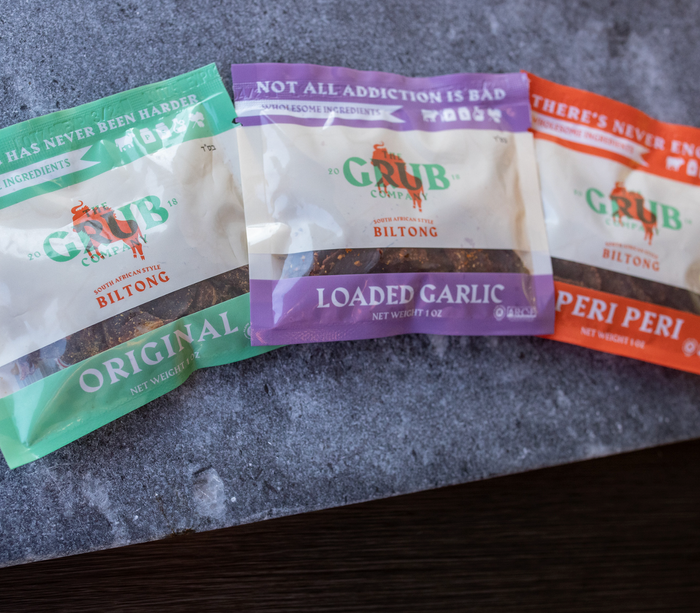
The second half of the answer is oxygen. Even at low water activity, mold spores can establish if there is oxygen and any surface moisture. That is what the small sachet in a good bag of biltong is for — it scavenges the oxygen out of the sealed headspace. Sealed bag plus oxygen absorber is what turns "a few weeks" into three to six months.
Why opened biltong changes so fast
The moment the seal breaks, both barriers are gone. Air is back in the bag, and ambient humidity starts to matter.
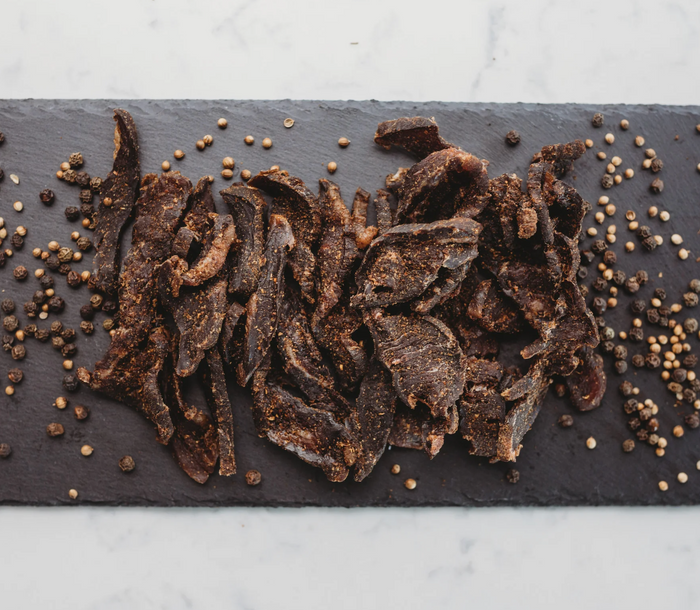
In a dry room, opened biltong keeps drying. It does not spoil — it hardens. Some people deliberately leave the bag open overnight to get a firmer, chewier product, and that is a legitimate preference rather than a mistake.
In a humid room, the opposite happens, and this is the risk. Biltong is hygroscopic: it will pull moisture out of humid air. Water activity climbs back up, and once it crosses the threshold, mold becomes possible on the surface. This is why the same bag behaves differently in Arizona and in Florida in August.
Storing it properly, by situation
You will finish it this week
Reseal the bag, press the air out, leave it in a cupboard away from the stove and out of sunlight. Two to three days is the comfortable window at room temperature.
You will not finish it this week
Refrigerate it. Use a sealed container or a zip bag with the air pressed out — not the open bag on a shelf, because a fridge is a moist environment and condensation is the enemy. Let it come back to room temperature before eating, or it will taste flat and feel waxy.
You bought in bulk
Portion it. This is the single most useful habit for anyone buying a pound at a time. Split it into week-size portions in separate sealed bags, keep one out and refrigerate or freeze the rest. Opening one bag six times is much worse for the product than opening six bags once each.
You want to keep it for months
Freeze it. Wrap tightly, exclude as much air as you can, and freeze. Biltong freezes better than most people expect because there is so little free water in it to form damaging ice crystals. Thaw in the fridge, then bring to room temperature.
You are traveling with it
Sealed bags travel fine. The two things to avoid are a hot car — where the interior can reach temperatures that push moisture around inside the bag — and a checked bag in a humid climate. Carry it, keep it sealed, and it will be fine for days.
Can you freeze biltong? Yes — here is how
- Portion into amounts you will actually eat at once. Refreezing is what damages texture.
- Wrap tightly, then bag. Two layers beat one.
- Press the air out. Freezer burn is dehydration, and biltong is already dry.
- Label with the date.
- Thaw in the fridge overnight, then leave it out for 30 minutes before eating.
Frozen biltong holds well for six months and longer. The thing that suffers is not safety but the eating experience — cold biltong tastes muted, because the fat and the spice aromatics need a little warmth to read properly.
How to tell if biltong has gone bad
Most "bad" biltong is actually just dry biltong. Here is how to tell the difference.
| What you see | What it means | Eat it? |
|---|---|---|
| Very hard, shreds instead of yielding | Over-dried. Normal. | Yes |
| White crystalline dusting | Salt or spice migration to the surface | Yes |
| Darker than when you bought it | Surface oxidation. Cosmetic. | Yes |
| Fuzzy white or green growth | Mold. Not the same as salt bloom — it is raised and fuzzy. | No — discard |
| Slimy or tacky surface | Bacterial growth from moisture | No — discard |
| Sour, ammonia or off smell | Spoilage | No — discard |
| Rancid, paint-like smell | Fat oxidation | No — discard |
The salt bloom versus mold distinction catches people out. Salt bloom is flat, crystalline and brushes off. Mold is raised, fuzzy and has structure. If you are genuinely unsure, look at it in good light from an angle — mold casts a texture, salt does not.
And the standing rule with any cured meat: if a piece has visible mold, discard the whole bag, not just the piece. What you can see on one piece indicates conditions the rest of the bag shared.
Does biltong need to be refrigerated?
Not while sealed. That is the entire point of the method — it was invented to keep meat without refrigeration.
Once opened, refrigeration becomes the safest default rather than a requirement, especially if you live somewhere humid or you will not finish it within a couple of days. When in doubt, the fridge.
How to make an open bag last longer
- Press the air out before resealing. The biggest single improvement, and it costs nothing.
- Do not store it in the original bag if it does not reseal properly. Move it to a zip bag or a container.
- Keep it away from heat. Above the stove and on top of the fridge are both worse than they look.
- Keep it out of sunlight. Light accelerates fat oxidation, which is what produces the rancid smell.
- Do not add a damp paper towel. A trick that works for some foods and is actively harmful here — you are raising water activity on purpose.
- Buy the size you will eat. Cheaper per ounce in bulk only pays if you portion it on arrival.
Shelf life of homemade biltong
Shorter, and less predictable, for one reason: you have no packaging barrier. Home-dried biltong in a paper bag or a jar has neither a vacuum seal nor an oxygen absorber, so it is entirely dependent on how far you dried it.
Refrigerated in a sealed container, one to two weeks is a reasonable expectation. Frozen, several months. At room temperature in an open container, treat it as a few days and check it before eating. If you dried it in a humid house, assume the low end of every range.
Why the sealed number is months and the opened number is days
The gap between "three to six months" and "two to three days" is the single most confusing thing about storing biltong, and it is not a safety margin or a legal hedge. It is two different physical situations.
A sealed bag has two barriers working at once. The seal keeps ambient humidity out, so the meat's water activity cannot climb. The oxygen absorber — that small sachet — scavenges the oxygen out of the headspace, so even if surface moisture did appear, mold would have nothing to breathe.
Open the bag and you remove both at the same moment. Air returns, humidity returns, and the meat starts exchanging moisture with the room. That is why the number collapses from months to days in one action.
It also explains something people find counterintuitive: an opened bag in a dry room is safer than an opened bag in a humid one, even though both look identical. The clock is not really counting days. It is counting how fast the surrounding air is pushing moisture back into the meat.
Humidity is the variable that decides everything
| Where the opened bag is | Realistic window | What is happening |
|---|---|---|
| Air-conditioned house | 3–4 days | The air is dry; the meat keeps drying slowly |
| Average indoor, temperate | 2–3 days | Roughly in balance |
| Humid summer room, no air conditioning | 1–2 days | The meat is absorbing moisture from the air |
| Coastal or tropical | Same day, or refrigerate | Water activity climbs fast enough for mold to become possible |
| Refrigerated, sealed container | 1–2 weeks | Cold slows everything; the container blocks fridge humidity |
| Refrigerated, open bag | Days, and condensation risk | A fridge is a moist environment |
The mechanism is that biltong is hygroscopic — it will pull water out of humid air until it reaches equilibrium with its surroundings. That is not a defect; it is what any dried food does. It simply means the room is part of the storage system, and a rule that works in Arizona is wrong in Florida.
Freezing, in detail
Biltong freezes far better than most people expect, and the reason is the same physics that makes it shelf-stable in the first place.
Freezer damage comes from ice crystals forming inside the food and rupturing its structure. Ice crystals need free water. Biltong has very little free water left — that is the entire point of the drying — so there is not much available to freeze, and what does freeze does relatively little harm.
- Portion first. Refreezing is what damages texture, so freeze amounts you will finish in one go.
- Wrap tightly, then bag. Two layers beat one.
- Press the air out. Freezer burn is dehydration, and biltong is already dry — it has little to spare.
- Label with the date. Six months passes quickly.
- Thaw in the fridge overnight, then leave it out for half an hour before eating.
That last step matters more than it sounds. Cold biltong tastes muted and feels waxy, because the fat and the spice aromatics need a little warmth to read properly. People who conclude that freezing ruined it have usually eaten it straight from the fridge.
Buying in bulk: the five minutes that decide everything
Bulk buying either saves you money or wastes a third of a pound, and the difference is a habit rather than a technique.
The failure mode: a pound arrives in one bag. It gets opened on day one and then opened again every day for a month. By week three the remaining meat has been exposed to air thirty times and is noticeably harder than what you bought. By week four the last of it goes in the bin.
The fix, on arrival:
- Split the pound into week-size portions — four for one person, two for a household.
- Seal each separately. Vacuum bags if you have them; zip bags with the air pressed out if not.
- Keep one out. Refrigerate or freeze the rest, unopened.
- Do not open the next portion until the current one is finished.
Opening one bag thirty times is far worse for the meat than opening four bags seven times each, because every opening restarts the exchange with room air for the entire remaining quantity. Five minutes on the day it arrives is the whole difference.
If you know you will not do this — and plenty of people know that about themselves — a subscription of small bags gives you fresher meat at a similar effective price and removes the discipline problem entirely.
Slab against sliced, for keeping
Format changes shelf life more than most buyers realize, and it is entirely about exposed surface.
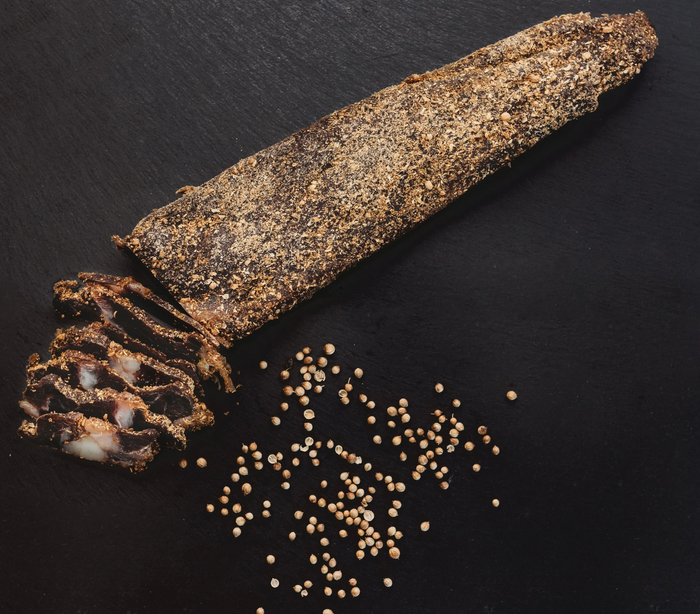
A whole slab has a small surface area relative to its mass: most of the meat sits behind an outer layer that acts as its own barrier. Sliced biltong has been cut into many pieces, each with fresh faces open to the air. The same drying, the same bag, very different behavior once opened.
| Slab | Sliced | |
|---|---|---|
| Opened, room temperature | A week or more, gradually firming | 2–3 days before it noticeably hardens |
| What changes first | The outer surface only | Every piece, evenly |
| Best for | Slow eating, hosting, travel | Finishing within the week |
| Cost | A knife and thirty seconds | Nothing |
If a bag is going to live on your counter for two weeks, buy a slab. If you want to eat it in the car, buy sliced. That is the whole decision.
Traveling with it
Biltong is one of the better foods to take anywhere, and the reasons are all storage reasons.
| Situation | How it holds up | What to do |
|---|---|---|
| Carry-on flight | Fine — sealed, no liquid, no smell issue | Keep it sealed until you land |
| Checked bag, humid destination | Fine sealed; risky once opened | Do not open until you have somewhere cool |
| Road trip, hot car | An hour is fine; an afternoon is not | Take it inside at stops |
| Camping, several days | Excellent — this is what it was invented for | Take a slab; it survives repeated opening |
| Hiking, a day | Ideal — dense, no prep, no waste | Any format |
| International, in luggage | Depends entirely on import rules | Check the destination before you pack it |
The hot-car warning is worth taking seriously and is frequently misunderstood. The bag will not spoil in an afternoon. What happens is that heat drives moisture around inside the sealed bag, and it can condense on the surface of the meat when things cool down again — which is exactly the surface moisture that mold needs. The damage is done to the storage conditions, not immediately to the meat.
Homemade biltong keeps differently
Shorter, and less predictably, for one structural reason: there is no packaging barrier.
Commercial biltong goes into a sealed bag with an oxygen absorber. Home-dried biltong in a paper bag, a jar or a zip bag has neither a vacuum seal nor oxygen scavenging, so everything rests on how far you actually dried it — and at home you have no way to measure water activity.
| Homemade, stored as… | Realistic window |
|---|---|
| Refrigerated, sealed container | 1–2 weeks |
| Frozen, wrapped tight | Several months |
| Room temperature, open container | A few days — check before eating |
| Room temperature, sealed while not fully dry | Days, and this is how most home batches fail |
That last row is the common one. A piece pulled too early looks and feels finished on the outside while the middle is still wet. Sealed into a bag, that trapped moisture redistributes, water activity rises, and mold appears three or four days later on meat that seemed perfect. If you make your own: weigh before hanging, aim for at least 50% weight loss, err toward drying further, and refrigerate what you make.
Reading a best-before date, and why a pack date is better
A best-before date is the maker's estimate of when the product stops being at its best under ideal storage. It is not a safety cliff and it is not a measurement of your bag.
A pack or batch date tells you something more useful: when the meat actually came out of the drying room. Biltong is at its best within weeks of drying, so a bag packed three weeks ago and a bag packed four months ago can share a best-before date and be quite different products.
If a producer prints both, read the pack date. If they print only a best-before, it is a fair question to ask them — and how readily they answer tells you whether they track batches at all.
What actually kills a bag, ranked
- Opening it in a humid room and leaving it out. By a wide margin the most common. Water activity climbs, mold follows.
- Not pressing the air out when resealing. Costs nothing to fix and does more than anything else.
- Buying a pound and never portioning it. Turns a month of good biltong into two weeks of good biltong and two weeks of jaw exercise.
- Storing it above the stove or in sunlight. Heat and light both accelerate fat oxidation, which is what produces the rancid, paint-like smell.
- Adding a damp paper towel to "keep it fresh". A trick that works for some foods and is actively harmful here — you are deliberately raising water activity.
- Refrigerating in the open bag. A fridge is moist. Use a sealed container.
- Freezing without portioning. Forces repeated thaw-refreeze cycles, which is the one thing that genuinely damages texture.
Notice that six of the seven are about moisture rather than time. Biltong does not really have a shelf life in the way a fresh food does — it has a set of conditions, and it lasts as long as they hold.
The short version
Sealed and cool: months. Opened: days, or a week or two in the fridge. Frozen: half a year. Hard is fine; fuzzy or slimy is not. And portioning a bulk buy on the day it arrives will do more for your biltong than any other single habit.
Humidity is the variable nobody accounts for
Every shelf-life figure in this guide assumes a cool, dry storage environment. Change that assumption and the numbers move substantially, which is why the same bag behaves differently in Phoenix and in Miami.
| Environment | Opened biltong at room temperature | What to do instead |
|---|---|---|
| Dry, air conditioned | 3–4 days comfortably | Cupboard is fine |
| Average indoor | 2–3 days | Cupboard, resealed, air pressed out |
| Humid summer, no air conditioning | 1–2 days | Refrigerate from the start |
| Coastal or tropical | Same day | Refrigerate, in a sealed container |
The mechanism is straightforward: biltong is hygroscopic, so it will pull moisture out of humid air. Water activity climbs back up toward the level where mold becomes possible. In a dry room the opposite happens and the biltong simply hardens, which is a preference problem rather than a safety one.
Practical rule for anyone in a humid climate: skip the cupboard entirely and refrigerate the moment a bag is opened.
Why the fridge is not automatically the safest place
A refrigerator is cold, which helps, and moist, which does not. The failure mode is condensation — biltong moved between a cold fridge and a warm room repeatedly will pick up surface moisture each time.
Two habits fix it. Keep refrigerated biltong in a properly sealed container rather than an open bag, so the humidity of the fridge never reaches it. And take out only what you are going to eat rather than bringing the whole container to the table and back.
What "shelf-stable" actually means
The phrase gets used loosely, and for biltong it has a precise meaning worth understanding, because it explains every number on this page.
A food is shelf-stable when nothing that could spoil it has what it needs to grow. For dried meat, the limiting resource is available water — measured as water activity, on a scale where pure water is 1.0. Below roughly 0.80, almost nothing can grow at any temperature.
| Water activity | What can still grow | Where this sits |
|---|---|---|
| 0.98–1.00 | Effectively everything | Fresh meat |
| 0.91–0.97 | Most bacteria, including pathogens | Under-dried meat — the danger zone |
| 0.86–0.90 | A few hardy bacteria; most stop | Some fermented sausage |
| 0.80–0.85 | Molds and yeasts only | Aged cheese, dry-cured ham |
| Below 0.80 | Very little | Properly dried biltong |
Two consequences follow, and they are the whole of practical biltong storage.
Shelf stability is a state, not a property. A piece is stable at the water activity it currently has. Leave it in humid air and that number rises — the meat absorbs moisture until it balances with the room — and it can climb back into the range where mold becomes possible. Nothing has gone wrong with the meat; its environment changed.
Moisture content and water activity are different things. Two pieces holding identical amounts of water can behave completely differently depending on how tightly that water is bound by proteins and dissolved salt. Only free water feeds microbes. This is why "how moist does it look" tells you very little, and why a maker's control of the drying matters more than anything you can assess by eye.
Which is also why the honest answer to "how long does it keep" is a set of conditions rather than a number — and why the seal, the sachet and the humidity of your kitchen do more work than the date printed on the bag.
Common questions
How long does biltong last? Three to six months sealed in a cool dry place. Two to three days once opened at room temperature, or one to two weeks refrigerated in a sealed container.
Does biltong need to be refrigerated? Not while sealed — that is the entire point of the method. After opening, refrigeration becomes the safest default rather than a requirement, especially in a humid climate.
Can you freeze biltong? Yes, and it holds up better than most foods because there is so little free water left to form damaging ice crystals. Portion first, wrap tightly, thaw in the fridge, then bring to room temperature.
My biltong went hard. Is it bad? No — it kept drying. Hard biltong is safe and some people prefer it. Only fuzzy, tacky or off-smelling biltong should be discarded.
There is white stuff on it. Flat, crystalline and brushes off is salt or spice bloom, and it is harmless. Raised, fuzzy and with visible texture is mold — discard the whole bag, not just that piece.
How long does it last in the fridge? One to two weeks in a sealed container. Not the open bag: a fridge is a moist environment and condensation is the risk.
How long at room temperature once opened? Two to three days in an average room, three or four in a dry air-conditioned one, one or two in a humid room in summer.
Can I leave it out on purpose? Yes. It will keep drying and get firmer and more intense. That is a legitimate preference, not a mistake.
Why does the bag have a little sachet in it? It is an oxygen absorber. It removes the oxygen from the sealed space, which is half of why an unopened bag lasts months.
Is it still good after the best-before date? Usually, if the bag is sealed and has been stored cool and dry. Judge it by smell and surface rather than by the date, and when in doubt throw it out.
What is the best way to store an opened bag? Press the air out, reseal, keep it cool and dark. If you will not finish it within two or three days, refrigerate it in a sealed container.
Our biltong ships in sealed bags with an oxygen absorber — three to six months unopened, and rarely a problem to test in practice.
For anything that leaves the house, the sealed travel formats are the ones that hold.