Friendsgiving Food Ideas: What to Bring When Someone Keeps Kosher
The best Friendsgiving food ideas are dishes people can pass around, make ahead and eat with no fuss, and when one guest keeps kosher, the easiest fix is to bring sealed, certified food that sits on the table next to everything else. Think a sealed meat snack board, a pareve side in its own dish and a dessert in the original package. Certified Glatt Kosher biltong is the one we know best, because we make it.
Related: Thanksgiving Snacks: Holding Off Hunger Before the Turkey
We make certified Glatt Kosher biltong and beef snacks in small batches in Florida, so we hear from both sides of this problem. Hosts ask what to cook when a friend keeps kosher. Guests ask what to bring so they can actually eat at the party. This page answers both. Our kosher biltong page explains how our meat is certified.
Friendsgiving is a potluck at heart. Everyone brings something, nobody follows a script, and the table ends up a mix of family recipes and store-bought shortcuts. That is exactly why it works for a kosher guest, if you plan one or two things on purpose.
First, decide which side of the table you are on
The right food depends on who you are in this story.
- You keep kosher and you are a guest. Bring a dish that is yours, sealed and certified, and that other people will happily share. Then nobody has to guess what you can eat.
- You are hosting and one friend keeps kosher. Ask them directly what works. Some people eat only sealed, certified food at a non-kosher table. Others will eat certain things from a home kitchen. That varies by person and by family custom, so ask, and do not assume.
- You are a guest and you do not keep kosher, but the host does. Follow the host's rules. Meat and dairy are kept separate in a kosher home, so check before you bring a cheese plate or a buttery dessert.
Whichever one you are, one habit saves the most awkwardness: say it early. A text a week ahead beats a surprise at the door.
What to bring: ideas that survive a crowded table
A good Friendsgiving dish has four qualities. It travels well. It does not need an oven or a fridge slot. It is fine at room temperature for hours. And it is easy for strangers to take a piece of without a serving spoon and a conversation.
A meat snack board that needs no cooking
This is our favorite answer, and it is not a dairy-style charcuterie board. There is no cheese on it. It is a meat board built around cured and dried beef, with pareve things to eat alongside.
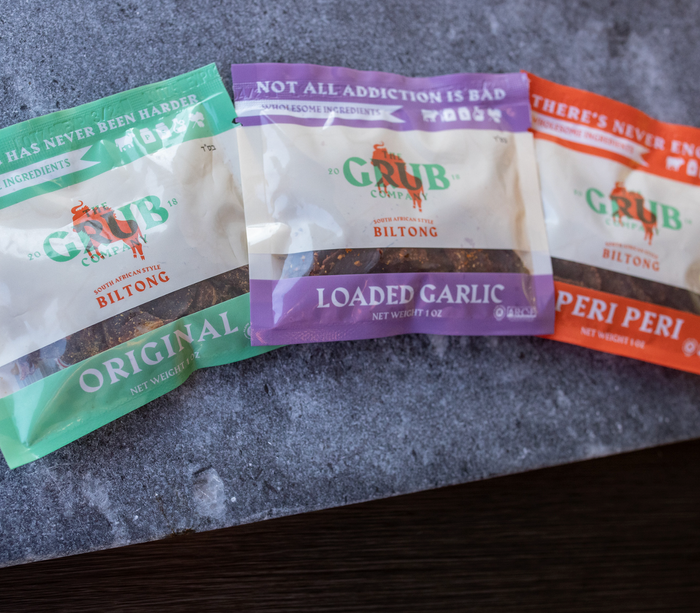
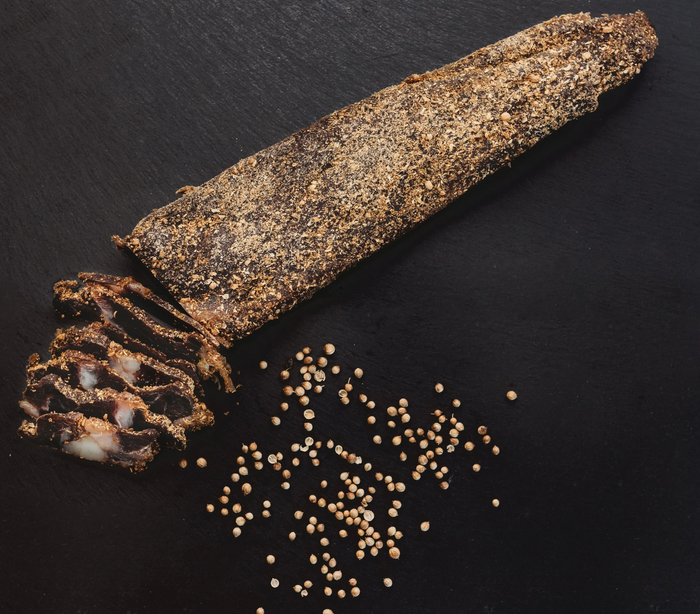
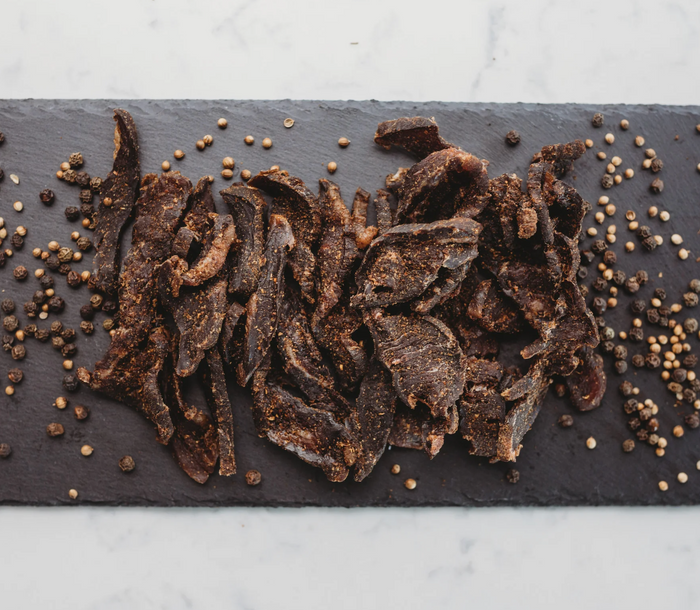
Start with Sliced Biltong. It is air-dried, already sliced and ready to eat. Nothing to cut, nothing to cook, no refrigeration. Original is the one that suits every guest: beef first, then the warm citrus note of coriander. Peri Peri has real heat, and Loaded Garlic is rounder and savory. If you are feeding a mixed table, put Original out in volume and a smaller bowl of the others.
Add the sweet side with Meat Candy, our beef jerky. It comes in Hickory Kickory Dock, smoky and sweet, and Baa-Baa BBQ Sheep, a Korean-style glaze. Biltong is savory and salty. Meat Candy is cooked, glazed and sweeter. Both on one board gives people a real choice.
Then fill the gaps with things that contrast:
- Something sharp: pickles, olives or pickled onions.
- Something crunchy: roasted nuts, or crackers you have checked for a pareve mark.
- Something creamy: hummus or tahini instead of cheese.
- Something fresh: apple slices, grapes or sliced radishes.
We wrote a full walkthrough in Building a Biltong Charcuterie Board. It covers layout and portions in detail.
One honest trade-off: biltong is the wrong centerpiece if your table is full of people who dislike chewy, dried meat or strong spice. It is a texture people either love or need a minute with. If that sounds like your crowd, bring a flavor sampler rather than one big bag, and let guests find their own.
A pareve side in its own dish
Pareve means neither meat nor dairy. A pareve side is the most flexible thing you can bring, because it fits next to a turkey or next to a cheese plate. Some good ones:
- Roasted root vegetables with olive oil, salt and a little maple.
- Cranberry sauce made with fruit, sugar and orange zest. It takes ten minutes and keeps for days.
- A big grain salad with rice or farro, roasted squash, herbs and a lemon dressing.
- Sweet potatoes mashed with olive oil instead of butter.
For a kosher guest, the dish matters less than the kitchen it came from. A side made in a kosher kitchen from kosher ingredients is a different thing from the same recipe made in a kitchen that is not. That is why a sealed, certified item is often the easiest route at a non-kosher home.
Dessert in its original package
Dessert is where milk and butter hide. Pies, cookies and cakes often contain dairy even when they look plain. If you want a dessert that works for everyone, buy one with a clear pareve symbol and leave it in its wrapper until it hits the table. Or bake at home with oil instead of butter and non-dairy milk, using ingredients you have checked yourself.
If you are hosting: how to make a kosher guest comfortable
You do not need a second kitchen. You need a few small decisions made ahead of time.
- Ask what they eat, not what they cannot. "What would feel good to have on the table?" gets a better answer than "What are the rules?"
- Offer to leave a sealed item alone. If your guest brings a certified dish, put it on the table in its own container, with its own serving utensil. Do not move it to your plate or your pan.
- Do not substitute. Swapping in a different brand of crackers because you ran out is the kind of small change that makes a guest unable to eat something they planned on.
- Keep meat and dairy apart. If your menu has a turkey, skip the cheese course on the same table. This is plainly accepted practice in kosher homes, and it also makes your menu simpler.
- Leave the big questions to them. Whether a particular dish is acceptable at your table, or how long to wait between a meat meal and dairy, is a personal and family matter. If something is unclear, they can ask their rabbi, and so can you.
Make-ahead Friendsgiving ideas that scale
The biggest Friendsgiving mistake is bringing something that needs the oven in the last hour. Everyone else is fighting over the same rack. Bring dishes that arrive finished.
- Dips and spreads: hummus, baba ghanoush or a roasted red pepper dip. Make them the day before. Flavor improves overnight.
- Cold salads: shaved Brussels sprouts with apple and a mustard dressing, or a big bowl of cabbage slaw with oil and vinegar.
- Stuffing, made pareve: use oil, vegetable stock, celery, onion and herbs. Assemble the night before and bake at the party if there is oven room, or bake at home and rewarm.
- A snack table: nuts, olives, pickles, dried fruit, and a bowl of biltong. This is the part of the meal people actually graze through for three hours.
That last one is worth repeating. Friendsgiving food runs on a schedule that is half-meal, half-nibbling. The snack table does a surprising amount of the feeding. Our bags fit that role well because they are sealed, shelf-stable and finished the moment you tear them open. If you are wondering how much to put out, our article on how much biltong to buy for a party does the math by headcount.
Where jerky and biltong fit, and where they do not
We make this food, so let us be clear about what it is and is not.
It is a very good snack-table item. It is high in protein, it needs no utensils, and it does not wilt on a counter. A sealed bag is also the easiest way to feed a kosher guest without asking a host to change anything.
It is not a replacement for the main meal. Nobody should arrive at Friendsgiving with a bag of biltong as their only contribution and expect it to stand in for dinner. It is a part of the spread, next to a hot dish and a side. Treat it like a strong opening act.
If you want a straight answer on which to bring, we say this: for a mixed crowd, Buy Biltong Online has the Original sliced bags and the Biltong Sampler Pack, which has one mini bag each of Original, Peri Peri and Loaded Garlic. For guests who want something sweeter, our kosher beef jerky collection is where Meat Candy lives. US orders over $50 ship free. Shipping is US only.
Meat Candy uses a glaze, so if anyone at the table has an ingredient concern, check the label first. You can also ask us.
Bottom line
Friendsgiving is forgiving. A kosher guest needs one thing sorted out in advance, and the rest follows. Ask early, bring sealed certified food, keep meat and dairy apart and let the snack table carry the afternoon. Biltong and jerky are good at that job. They are a supporting act, and a very good one.
Frequently Asked Questions
What should I bring to Friendsgiving if I keep kosher?
Bring something you can eat that others will want too. A sealed, certified item like a bag of biltong, a pareve side in its own dish or a packaged pareve dessert all work. Tell the host ahead of time so they can leave room on the table.
What can I serve at Friendsgiving for a friend who keeps kosher?
Ask first, because practice varies from person to person. Many people are comfortable with sealed, certified packaged food even at a non-kosher table. Fresh produce, pareve sides made without dairy and a meat snack board with certified biltong are common choices. If you are unsure whether something is acceptable, your friend can ask their rabbi.
Can you put cheese on a board with biltong or jerky?
Not if you want it to be kosher. Meat and dairy are not served together. Build a meat board with pareve extras like hummus, olives, pickles, nuts and fruit instead. How long to wait between meat and dairy is a matter of your family's custom.
Does biltong need to be cooked or refrigerated for a party?
No. Biltong is already cured and air-dried, so it is ready to eat from the bag. Our sliced bags need no refrigeration, which is why they work at a crowded table where fridge space is scarce. Once opened, keep a bag sealed between servings so the edges do not dry out.
What is the difference between biltong and jerky for a snack table?
Biltong is air-dried, savory and salty, with a softer bite. Jerky, like our Meat Candy, is cooked, marinated and glazed, so it is sweeter and chewier. Many people put out both so guests can choose.
What are some easy Friendsgiving food ideas that need no oven?
Dips like hummus, cold salads, cranberry sauce, a fruit platter, a nut and pickle snack table, and a meat board with biltong all travel well and need no oven time. Make them the day before and bring them finished.
Is the Grub Company's biltong certified kosher?
Yes. Our biltong and beef snacks are certified Glatt Kosher. You can read how on our kosher biltong page.