Kiddush Lunch: What to Serve When the Whole Shul Is Hungry
A good kiddush lunch is a few hot dishes made before Shabbos, a few cold dishes that sit out happily, and one thing people can eat standing up with a cup in the other hand. Build it that way and a hungry shul will be fed in the first ten minutes. Our own biltong and beef jerky are certified Glatt Kosher, made in Florida.
Related: Kosher Catering: Adding a Meat Board Without Adding Work
We are a kosher meat-snack maker, not a caterer. But we make certified Glatt Kosher biltong and beef snacks, and we hear a lot from the people who run kiddushes: the gabbai, the sisterhood, the family sponsoring this week. They all ask the same thing. What do we put out so nobody goes home hungry and nobody is stuck in the kitchen? This guide answers that with a plan, three recipes with real quantities, and an honest note about where our own product fits.
What a Kiddush Lunch Actually Is
The word covers a lot. In some shuls "kiddush" means wine, cake and herring. In others it is a full buffet that people treat as lunch. A "kiddush lunch" is the second kind: enough real food that families can skip cooking at home.
Kiddush itself is recited over wine or grape juice, and what must be eaten and where is a matter of detail that varies by community. If your shul has a custom, follow it. If you are sponsoring for the first time, ask the gabbai or your rabbi. This guide is about the food on the table, not the halacha of the blessing.
Two things shape every kiddush lunch, and both come before you pick a single dish.
It all has to be ready before Shabbos. Nobody is cooking on the day. Everything is made on Thursday or Friday, and what you serve is either cold, room temperature, or reheated according to your shul's practice for keeping food warm. Rules for warming and holding food on Shabbos are detailed and differ between communities, so ask your rabbi what your shul allows.
Meat and dairy stay separate. Decide at the start whether this is a meat kiddush, a dairy kiddush or a pareve one, and keep every dish, dip and cracker in line with that. Most shul kitchens have a clear rule about which side they run. Follow it, and label the platters.
Plan the Table in Layers
The mistake most sponsors make is serving ten dishes of the same type. The table fills up with kugels and nothing for the person who wants a light bite. Plan in four layers instead and pick one or two items for each.
- Something hot and hearty. Cholent is the classic for a reason. It is made before Shabbos, it holds, and it feels like lunch.
- Something starchy. Kugel, either potato or noodle, or rolls and challah.
- Something cold and fresh. Salads, pickles, dips, cut vegetables. This is what people reach for first.
- Something savory you can eat by hand. Deli roll, cold cuts, or meat snacks that need no plate and no fork.
That last layer is the one that is usually missing. Look at what happens at a kiddush. People hold a cup, they are talking, and they have a child on one hip. A dish that needs a plate, a fork and a seat is a dish that sits there. A dish people can grab with one hand gets finished.
How Much to Make
This is rule-of-thumb planning, not a formula, and your own shul's habits matter more than any rule. Still, a few principles hold almost everywhere.
Count heads, then add. Kiddush draws more than the people who prayed, because families, guests and children show up for the food. Plan for a number a little above your usual attendance, and more if it is a bar mitzvah, an aufruf or a big Shabbos.
Plan on more variety, not more of each dish. A small amount of five items beats a huge amount of two. People take a little of everything.
Cold and shelf-stable items are the safe place to overbuy. A leftover bag of biltong goes home with somebody and keeps. A leftover tray of cut salad does not. Put your extra budget into things that keep.
Three Dishes Worth Making
Beef Cholent for a Crowd
This makes enough for roughly 20 small servings, which is how cholent is eaten at kiddush. Double it for a bigger crowd and use two pots.
- 3 lb beef flanken or chuck, cut into big chunks
- 2 cups dried kidney or navy beans, soaked overnight and drained
- 1 cup pearl barley, rinsed
- 6 medium potatoes, peeled and quartered
- 2 large onions, roughly chopped
- 6 cloves garlic, smashed
- 1/4 cup ketchup
- 2 tablespoons brown sugar
- 1 tablespoon paprika
- 1 tablespoon salt
- 1 teaspoon black pepper
- Water to cover, about 8 to 10 cups
Layer the onions, then the meat, beans, barley, garlic and potatoes in a large pot or slow cooker. Stir the ketchup, sugar, paprika, salt and pepper into the water and pour it over everything until the ingredients are just covered. Bring to a boil on the stove, then move it to your Shabbos-ready setup. How and when you set it up and keep it warm depends on your practice and your shul's, so ask your rabbi.
The trade-off: cholent is the dish people love and the dish that takes the longest. If your kitchen is small or your crew is thin, a kugel is the better use of your effort.
Everyday Potato Kugel
This fills a 9x13-inch pan and cuts into about 24 squares.
- 5 lb potatoes, peeled
- 2 large onions
- 5 eggs
- 1/2 cup oil, plus more for the pan
- 2 teaspoons salt
- 1 teaspoon black pepper
- 1/4 cup flour or potato starch
Heat the oven to 400°F and put an oiled pan inside to get hot. Grate the potatoes and onions finely, drain off the liquid, and stir in the eggs, oil, salt, pepper and flour. Pour into the hot pan, and the sizzle is what gives you a crisp edge. Bake for 60 to 75 minutes, until deep golden on top. Cool, cover, and reheat according to your practice.
Kugel dries out if it is overbaked or held too hot. Err on the side of golden, not dark.
Cucumber and Tomato Salad
Fresh and cold, and gone first. This serves about 15 as a side.
- 6 firm cucumbers, diced
- 6 ripe tomatoes, diced
- 1 small red onion, thinly sliced
- 1/4 cup olive oil
- 3 tablespoons lemon juice
- 1 teaspoon salt
- 1/2 cup chopped parsley
Mix the vegetables and parsley. Whisk the oil, lemon juice and salt, and dress the salad close to serving. Salad dressed too early goes watery. If you are making it on Friday, keep the dressing in a jar and toss it in before you leave for shul.
The Hand-Held Layer: Where Biltong Fits
We make biltong, so we have a bias. Here is the honest version of where it helps and where it does not.
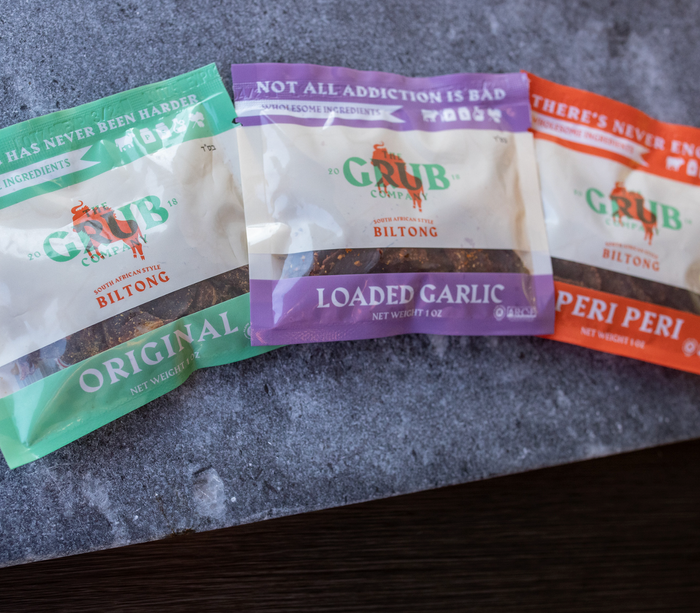
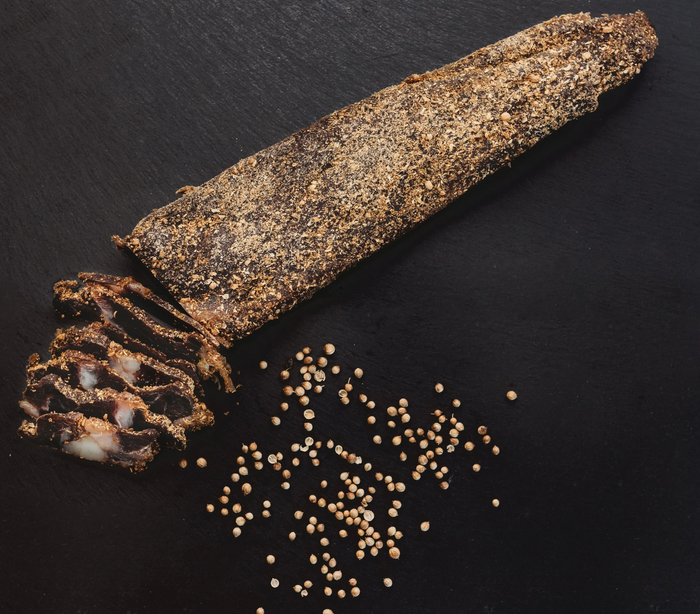
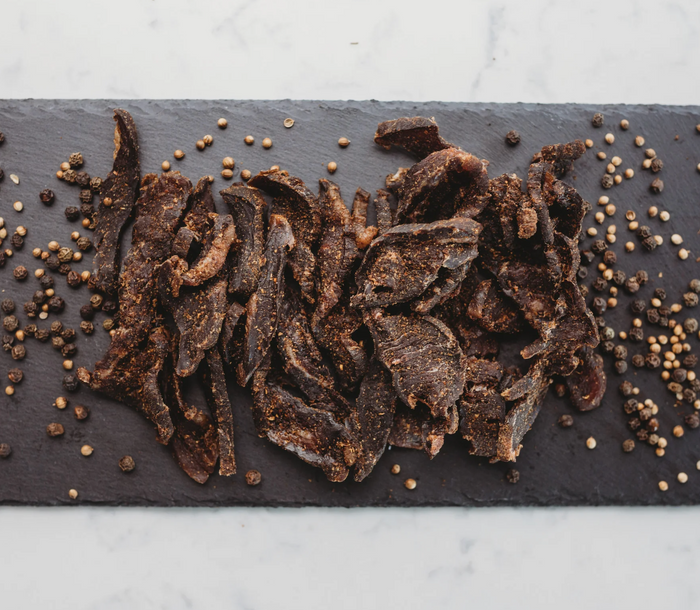
Biltong is South African air-dried beef. It is already cured and ready to eat, so there is nothing to cook, heat or slice, and it keeps without refrigeration. Our Sliced Biltong comes in three flavors: Original, Peri Peri and Loaded Garlic. Put a bowl of it out beside the salads and people will graze on it all through kiddush. It is high in protein, and it is the one item on the table that no one needs a plate for.
If you are serving a whole shul, choose Original. It suits everyone. Peri Peri has real heat and divides a room, which is fun at home and awkward at a kiddush with children and guests who did not sign up for it. If you want some heat on the table, put out a small separate bowl and label it.
For a larger crowd, the Bulk Biltong, a full pound of sliced biltong, is the practical choice. It is the same meat and the same three flavors with no slicing required, and a pound goes into several bowls. For a long kiddush, set out a bowl at a time and refill, so the biltong stays fresh and does not dry out at the edges.
If you want something sweeter beside it, our Meat Candy is a cooked, glazed jerky in two flavors, Hickory Kickory Dock and Baa-Baa BBQ Sheep. Children go for it. Together the two give you a savory bowl and a sweet bowl, which is more than most tables have. We wrote a separate piece on kosher jerky and biltong on a kiddush table, and another on how much biltong to buy for a party, which covers the quantity question properly.
Biltong is the wrong pick in a few situations. It will not replace the hot dish, and a kiddush with only snacks is a snack kiddush, not a lunch. It is not a dairy-side item, so if your shul is running a dairy kiddush, leave it for another week. If anyone at your table has an allergy, check ingredients first. The Original bag contains grass-fed kosher beef, coriander, black pepper, salt, garlic and vinegar. And if you are planning a Pesach kiddush, check for a Pesach certification on anything you buy, and ask your rabbi about anything you are unsure of.
If you are looking for a wider range of meat snacks, browse our kosher beef jerky collection. For sizes, samplers and everything else we make, see Buy Biltong Online. US orders over $50 ship free.
A Simple Timeline for the Week
- Sunday to Tuesday: Confirm the headcount with the gabbai. Decide meat, dairy or pareve. Order anything that ships, including biltong, so it is on your doorstep well before Friday.
- Wednesday or Thursday: Soak the beans. Shop for fresh produce. Bake and freeze anything that freezes.
- Thursday night: Assemble the cholent and bake the kugels. Cool, cover and refrigerate the kugels.
- Friday morning: Chop the salad vegetables and store them dry. Portion the biltong into bowls or bags so the shul crew only has to open and pour.
- Friday afternoon: Set up the cholent for Shabbos as your practice requires. Label every platter as meat, dairy or pareve. Drop everything off at shul, or leave it organized for the volunteers.
Write the list down and give a copy to whoever sets up on Shabbos morning. The most common kiddush failure is not the food. It is the person who knew where everything was and is not there to say so.
Bottom Line
Pick one hot dish, one starch, one cold salad and one thing people can eat by hand. Make it all before Shabbos, label everything, and put your spare effort into items that keep. A bowl of certified Glatt Kosher biltong covers the hand-held layer without a single minute in the kitchen.
Frequently Asked Questions
What should I serve at a kiddush lunch?
Aim for four layers: a hot dish such as cholent, a starch such as kugel, a cold salad or dip, and something people can eat by hand, such as deli roll or biltong. Everything must be made before Shabbos.
Can I serve dairy and meat at the same kiddush?
They are kept separate. Decide in advance whether the kiddush is meat, dairy or pareve, and keep every dish, dip and cracker consistent with that. Check your shul's kitchen rules, and ask your rabbi if you are not sure.
How far ahead can I prepare a kiddush lunch?
Most of it can be made one to two days ahead. Cholent is assembled on Thursday or Friday. Kugels can be baked and refrigerated. Fresh salads are best chopped on Friday and dressed right before serving.
Is biltong ready to eat at a kiddush?
Yes. Biltong is cured and air-dried, so there is nothing to cook. Open the bag and put it in a bowl. It keeps without refrigeration, so it can sit out through a long kiddush.
How much food do I need per person?
There is no exact number, because it depends on your shul and whether people treat kiddush as lunch. Plan for more people than usually pray, favor variety over volume, and overbuy only things that keep, such as biltong, not salads or cooked dishes.
Can I keep food warm on Shabbos at shul?
That depends on your community's practice and on what your shul's setup allows. The rules on warming and holding food are detailed. Ask your rabbi what your shul permits before you plan hot dishes.
Can I use these ideas on Pesach?
Not as written. The cholent uses barley and the kugel uses flour or starch, which need adjusting for Pesach. On Pesach, check every ingredient for a Pesach certification, and ask your rabbi about anything you are unsure of.