How to Tell If Biltong Has Gone Bad
Most people throw out biltong they didn't need to throw out. White powder on the surface, a slightly different smell, a color that looks darker than expected. These things can be completely normal. Knowing what to look for saves you money and prevents you from pitching a bag of perfectly good meat. That said, biltong can go bad, and when it does, the signs are real. Here's how to read them correctly.
Where to get it: Glatt Kosher biltong for sale, made in Florida and shipped anywhere in the US (free over $50).
White Powder or Coating on the Surface
This is the most common source of confusion, and it has a straightforward answer. White powdery residue on biltong is almost always salt crystallization. It's a byproduct of the curing process. As moisture leaves the meat during drying, salt migrates toward the surface and crystallizes there. It's not spoilage. It's preservation doing its job.
Salt crystals look chalky and dry. They sit on the surface evenly and wipe off with a finger. They don't smell like anything except faintly of the spice blend.
Mold looks different. It's fuzzy or filamentous, not powdery. It tends to appear in patches rather than spread evenly across the surface. It's often green, black, or blue-gray, occasionally white, but with a texture that's clearly not crystalline. If you're not sure, touch it. Salt crystals feel dry and gritty. Mold feels soft or slick, even at the surface.
If you see fuzzy white growth with any green or gray tint, that's mold. Don't eat it. The rest of the piece may look fine, but mold can spread through meat faster than the surface shows, and it's not worth the risk.
Color Changes and What They Actually Mean
Fresh biltong is typically a deep red-brown on the interior and darker, almost mahogany on the outside. As biltong ages, the color continues to deepen. This is normal oxidation. It doesn't mean the meat has spoiled.
What's not normal is a color that shifts toward gray or green, especially on the interior of a freshly cut piece. Healthy biltong, even older biltong, should show red or dark red when you cut into it. Gray interior meat is a sign something went wrong during drying or storage. Usually too much moisture was retained, or it was stored in conditions that didn't allow proper airflow.
Our biltong is made from grass-fed beef, and grass-fed beef tends to oxidize at a slightly different rate than grain-fed alternatives. The exterior darkens more quickly. That can look alarming if you're used to commodity beef jerky, which is often treated with preservatives that slow oxidation. Darker exterior color on quality grass-fed biltong is not a red flag. Gray-green interior is.
Smell: The Most Reliable Test
Trust your nose. It's the single most reliable indicator for any cured meat, and biltong is no exception.
Good biltong smells savory and spiced. There's a vinegar note from the curing, a warm coriander and pepper presence, and underneath it, clean dried beef. The smell is strong, but it's appetizing.
Bad biltong smells sour in a way that isn't the vinegar cure. It smells rancid, which is a specific fatty, almost chemical odor that's hard to mistake once you've encountered it. It can also smell musty or putrid, the kind of smell that makes you pull away rather than lean in.
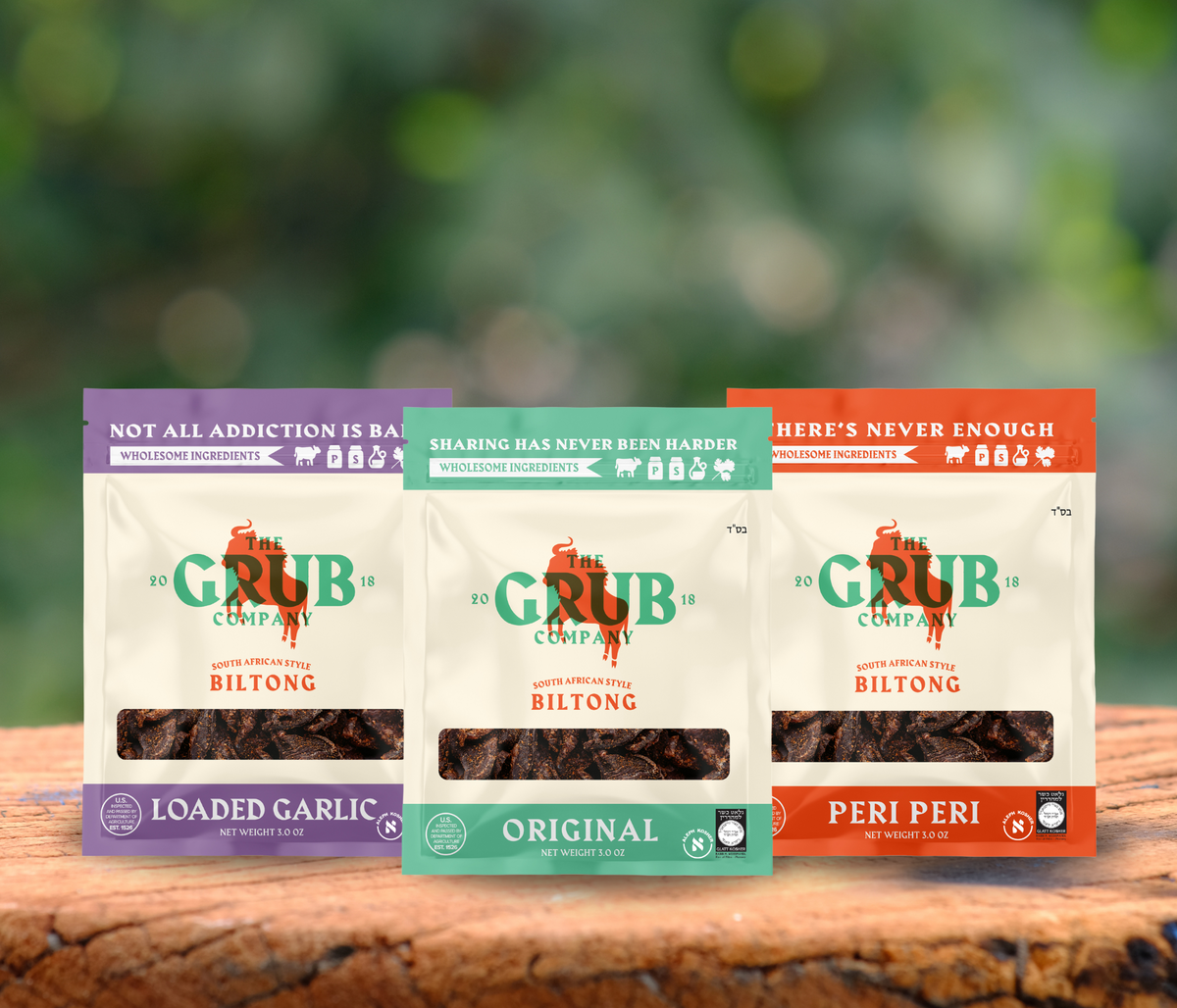
One honest complication: flavored varieties mask early spoilage signs longer than plain biltong does. Our Peri Peri and Loaded Garlic flavors are bold enough that a subtle off-smell can get lost behind the seasoning in the early stages. If your flavored biltong has been stored for a while and you're not sure, cut into a thick piece and smell the interior, not just the surface. The interior tells you more.
Texture Problems to Watch For
Biltong texture varies by design. Wetter biltong is softer and more tender. Drier biltong is firmer and can get quite hard toward the end of the range. Neither of those is a spoilage sign on its own.
What is a spoilage sign: sliminess. If the surface of your biltong feels slick or sticky in a wet way, not just slightly tacky from humidity, but genuinely slimy, that's bacterial activity. Don't eat it.
Tackiness is different from sliminess. If your biltong feels slightly soft and a little sticky on the surface after being stored in a humid environment, it may have just absorbed ambient moisture. Move it to a breathable container in the fridge. If the tackiness resolves and the smell is still good, it's probably fine. If the slick feeling stays or gets worse, that's your answer.
Biltong that's gone too dry, crumbly, powdering when you bite it, hasn't spoiled. It's just over-dried. Still safe to eat, though the texture won't be what you wanted. Use it as biltong dust over eggs or mixed into a sauce rather than tossing it.
How Storage Affects the Timeline
Most biltong that goes bad does so because of how it was stored after opening, not because of anything wrong with the product itself. A sealed bag at room temperature in a humid kitchen is the fastest route to mold. An open bag left near a heat source dries the biltong out faster than intended and accelerates oxidation.
Once you've opened a bag, the storage window depends on the format. Sliced biltong exposes more surface area to air than whole slabs, which means it moves toward spoilage or over-drying faster. Our 1LB bulk bag of sliced biltong, once opened, should be stored in a breathable container in the fridge and eaten within two to three weeks. Slabs hold longer because the uncut surface acts as a natural barrier. Once you've cut into a slab, treat the remaining piece the same way.
Freezing extends everything. Portion before freezing, thaw in the fridge overnight, and don't refreeze a thawed piece. That's the practical playbook for a bulk order you're not going to finish quickly.
The Bottom Line
White powder is salt. Dark color is oxidation. A strong smell is the cure working. None of those are reasons to throw biltong out. The real signs of spoilage are fuzzy mold growth, a rancid or putrid smell, and genuine sliminess on the surface. When those show up, trust what you're detecting and don't eat it. The rest of the time, trust the product.
A few questions we get asked regularly about spoilage and safety:
Frequently Asked Questions
Is white powder on biltong safe to eat?
In almost every case, yes. White powder on biltong is salt crystallization, a normal byproduct of the curing process where salt migrates to the surface as the meat dries. It's dry, chalky, and wipes off easily. It has no smell or a faint spice smell. Mold, by contrast, is fuzzy and often has a green, gray, or blue tint. If the white coating is powdery and dry, it's salt. If it's fuzzy or has any color to it, treat it as mold.
How long does biltong last after opening?
Stored properly in a breathable container in the fridge, sliced biltong typically holds well for two to three weeks. Whole slabs last longer because the uncut surface limits moisture loss and oxidation. At room temperature in a cool, dry environment with airflow, a few days is the safe window. Humidity is the main variable, the higher the humidity in your storage environment, the shorter the window.
Can you eat biltong that has turned dark?
Dark exterior color is normal, especially on grass-fed beef biltong, which oxidizes faster than grain-fed alternatives treated with preservatives. The interior of a freshly cut piece should still be red or dark red. If the interior is gray or green, that's a sign something went wrong during drying or storage and the biltong should be discarded. Color alone on the outside is not a reliable spoilage indicator.
What does bad biltong smell like?
Bad biltong smells rancid, a fatty, almost chemical odor, or putrid and musty in a way that makes you pull back. Good biltong smells strong but appetizing: savory, spiced, with a vinegar note from the cure. The distinction between "strong" and "off" is usually obvious once you're close to it. If you're uncertain, cut into a thick piece and smell the interior. The interior smell is more reliable than the surface, especially on heavily spiced varieties.
Can biltong make you sick if it smells a little off?
Biltong that has genuinely spoiled, real mold growth, rancid smell, slimy surface, can make you sick and should not be eaten. Biltong that just smells strong, looks dark, or has white salt crystals is not spoiled and won't make you sick. The risk is misreading the normal signs of a cured meat as spoilage and either throwing out good product or, in the other direction, convincing yourself something truly off is fine. Use all three tests: look, smell, and touch.
Why does my biltong feel sticky after being in the fridge?
Surface tackiness usually means the biltong absorbed ambient moisture, either from humidity in the storage environment or from condensation in a sealed container. Move it to a breathable container and leave it in the fridge uncovered for a few hours. If the tackiness resolves and the smell is still good, the biltong is fine. If the surface feels genuinely slimy rather than just slightly sticky, that's a different problem and the biltong should be discarded.
Should I throw out biltong if I see one moldy piece?
If you find mold on one piece in a bag, check every other piece carefully rather than assuming the rest is fine. Mold spreads through contact and shared humidity. If other pieces look, smell, and feel normal, they're likely fine. But use your judgment based on how long the bag has been open and how it was stored. When in doubt, the safer call is to discard the bag. The cost of a bag of biltong is not worth a food safety gamble.