Why Your Biltong Tastes Gamey or Off: How to Spot Mechanically Separated Meat and Low-Grade Cuts
If you bit into a piece of biltong and thought "something's off," you're not imagining it. That gamey, bitter, or oddly sour flavor has a cause, and most of the time it comes down to two things: the cut of beef that went in, and what else got mixed in along the way. This article breaks down exactly why bad biltong tastes bad, how to identify it before you buy, and what to look for if you want the real thing.
Want some on hand? Order biltong online: Glatt Kosher, air-dried in Florida, free US shipping over $50.
What "Gamey" Actually Means in Dried Beef
The word gamey gets thrown around loosely, but it describes something specific. It's that mineral-heavy, slightly funky, almost metallic flavor that coats the back of your tongue. In wild game meat, it comes from the animal's diet and muscle chemistry. In beef products, including biltong, it usually comes from one of a few sources.
- Secondary or trim cuts: Cuts like the shank, neck, or flank have more connective tissue and a higher concentration of myoglobin, the protein that gives meat its color. When dried, these cuts can produce an intensely metallic, livery flavor.
- Poor handling before drying: If the beef wasn't properly chilled or aged before processing, lactic acid buildup in the muscle tissue can produce a sour, almost rancid edge.
- Oxidized fat: Low-quality fat left on certain cuts goes rancid during the drying process. You'll know it by a waxy, crayon-like smell and a slightly bitter finish.
- Mechanically separated meat: More on this below, because it deserves its own section.
The tricky part is that these problems don't always announce themselves immediately. Sometimes the first bite seems fine and the off-note hits you on the second chew. Sometimes the smell gives it away before you even taste it. Pay attention to both.
The Mechanically Separated Meat Problem
Most people who eat processed meat snacks have no idea what mechanically separated meat is. The name sounds technical and neutral, which is probably intentional.
Here's what actually happens. When a carcass has been broken down and the prime cuts removed, there's still soft tissue left clinging to the bones. Mechanically separated meat is produced by forcing that carcass remnant through a machine under high pressure, which pushes the remaining muscle and connective tissue through a sieve. The result is a paste-like slurry that gets used as filler in processed products.
It shows up most often in chicken and pork products, but it isn't limited to them. The reason it matters for biltong buyers is this: some manufacturers use blended or formed meat products as their base rather than whole-muscle cuts. When you dry that, you don't get biltong. You get a pressed, dried brick of miscellaneous animal tissue with spices on top. It tastes wrong because it is wrong.
How to Spot It on a Label
Ingredient labels are your first filter. Look for these phrases as red flags:
- "Mechanically separated chicken" or "mechanically separated pork"
- "Ground beef" listed as the base without any indication of cut or grade
- "Beef product" rather than simply "beef"
- Long ingredient lists with binders, fillers, or starches
- Sodium nitrate or sodium nitrite high up in the ingredient list, which can indicate a heavily processed base that needs chemical preservation
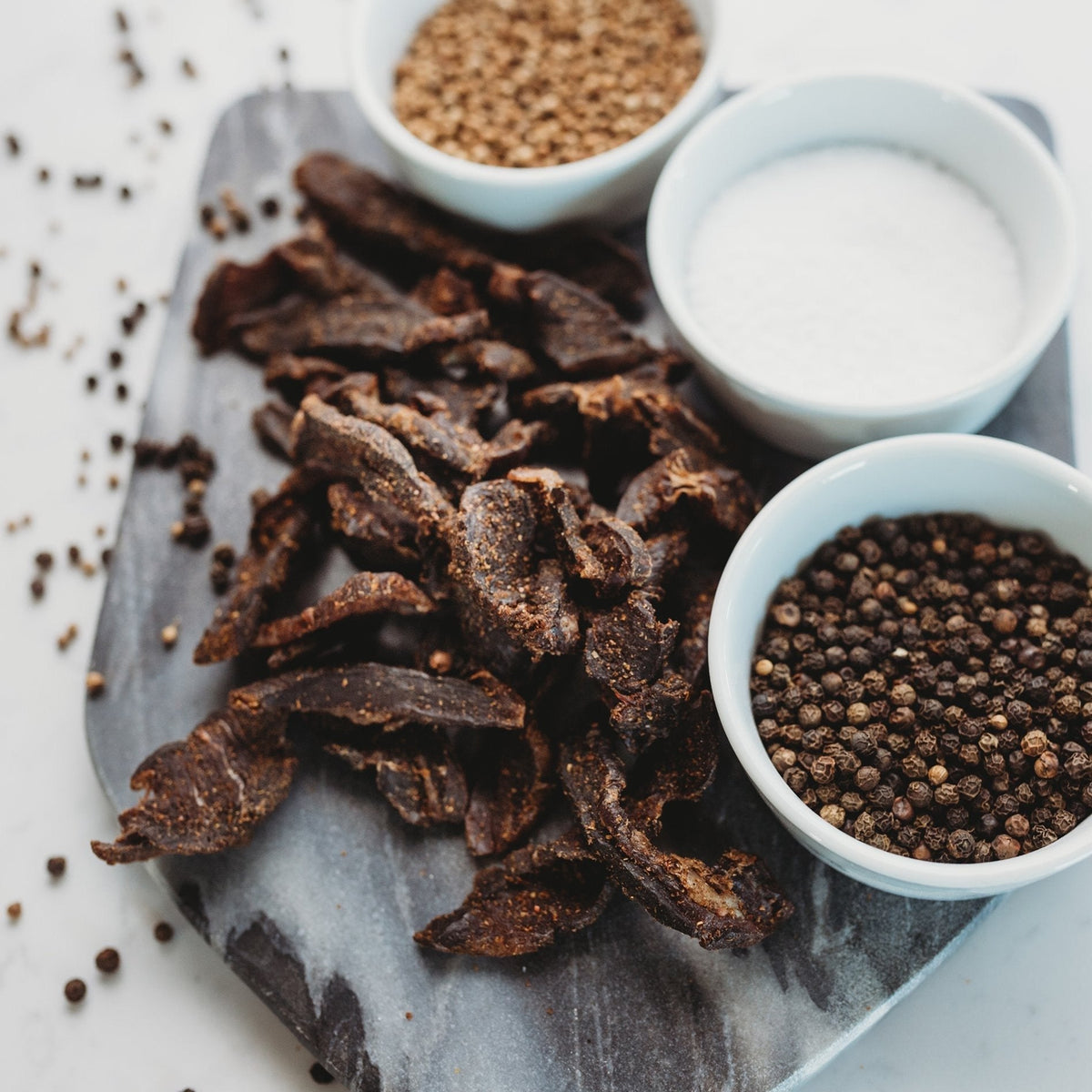
A clean ingredient list for real biltong is short. Beef, vinegar, salt, coriander, pepper, maybe garlic. That's it. If you're looking at twelve ingredients and half of them are things you'd need a chemistry degree to identify, put it down.
What Real Whole-Muscle Biltong Looks Like
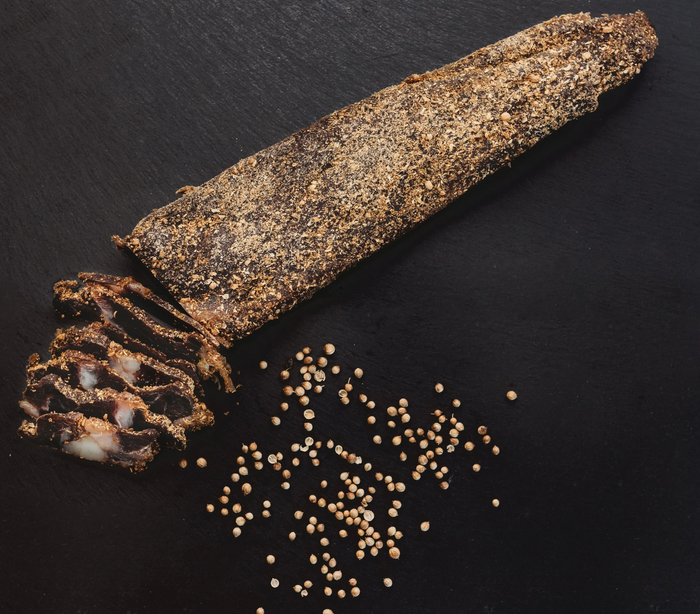
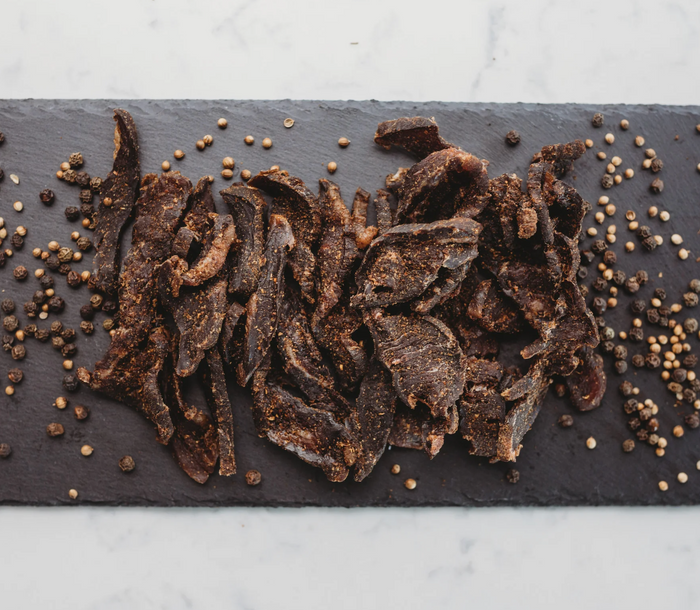
Whole-muscle biltong has visible grain. You can see the muscle fiber running through each slice or slab. The texture when you bite in has some resistance, then gives way to a tender chew. It doesn't crumble, it doesn't feel uniform like a formed product, and it doesn't dissolve into paste.
The color varies by cut and drying level, but you're generally looking for a dark brown exterior with a pink-to-red interior on a well-dried piece. If the cross-section looks uniformly gray, or the texture is spongy rather than fibrous, that's a warning sign.
Low-Grade Cuts and Why They Ruin the Flavor
Even within whole-muscle beef, the cut selection changes everything about how biltong turns out. Traditional South African biltong uses silverside, topside, or eye of round. These are lean, dense cuts with a clean flavor profile and tight grain that dries predictably and evenly.
Lower-grade cuts introduce problems at every stage of the process.
Too Much Intramuscular Fat
A marbled ribeye is fantastic on a grill. It's a poor choice for biltong. During drying, that intramuscular fat doesn't evaporate the way moisture does. It oxidizes. Oxidized fat tastes rancid, and it can make a piece of biltong that's only a few days old taste like it's been sitting out for weeks. Good biltong uses lean cuts specifically because fat is the enemy of shelf-stable dried meat.
Cuts with High Connective Tissue
Cuts from heavily worked muscles, like the chuck or shank, are loaded with collagen and connective tissue. That works beautifully in a braise where heat converts collagen to gelatin. In air-dried meat, that same tissue dries hard and chewy, and it can develop a slightly bitter or sour flavor that you can't season your way out of. No amount of coriander and black pepper will cover it.
Grain-Fed vs. Grass-Fed
This one matters more than it sounds. Grass-fed beef has a slightly different fatty acid profile than conventionally grain-fed beef. The omega-3 to omega-6 ratio is more balanced, and the fat oxidizes more slowly. It also has a cleaner flavor. Grain-fed beef, especially from cattle finished quickly on corn, can have a heavier, almost greasy flavor when dried. That's not universally true, but it shows up often enough that the grass-fed distinction is worth paying attention to on a label.
The sliced biltong from The Grub Company starts with grass-fed beef specifically for this reason. The ingredient list is exactly what it should be: beef, coriander, black pepper, salt, garlic, vinegar. Each flavor variation adds a handful of ingredients at most.
The Vinegar Question: Too Much or Too Little
Vinegar is a functional ingredient in biltong, not just a flavor note. It lowers the surface pH of the meat before drying, which inhibits bacterial growth and helps the exterior form a proper crust. Used correctly, you don't really taste it in the finished product. You might get a faint tang, but it doesn't dominate.
When biltong tastes sharply sour or acidic, one of two things happened. Either the producer used too much vinegar and didn't let it work off properly before drying, or they used a cheaper vinegar with a harsh acetic profile. Malt vinegar is traditional and works well. White spirit vinegar works. Cheap industrial acetic acid diluted in water, which some producers substitute to cut costs, leaves a chemical sourness that has nothing to do with traditional biltong flavor.
Moisture Content and What "Off" Smells Tell You
Biltong sits on a spectrum from very wet (almost rare in the center) to very dry (almost jerky-level desiccated). Personal preference varies widely. Some people prefer the wet, others want it fully dry. Neither is wrong.
What is wrong is biltong that's unevenly dried, wet on the outside but dry in the center, or that smells musty. Musty or moldy smell usually means humidity got to it during drying or storage. A small amount of white surface bloom on a slab is sometimes harmless salt crystallization, but any green, black, or fuzzy growth is spoilage, period.
If your sliced biltong smells sour in the bag and you haven't had it for weeks, that's either a seal failure or it was already marginal when it shipped. Trust your nose here.
How Spice Profiles Can Mask Quality Problems
Heavy spicing is one of the oldest tricks in processed meat manufacturing. If you dump enough chili or garlic powder on a low-grade product, you can mask the off-flavors long enough for someone to swallow the bite. By the time the aftertaste arrives, the transaction is already complete.
This doesn't mean heavily spiced biltong is automatically low quality. Peri peri biltong with a real chili flavor built on quality beef is great. The tell is whether the spice and the meat flavor work together or whether the spice seems to be covering for something. High heat or overwhelming salt on a product from a brand that won't tell you what cut of beef they use is a red flag worth taking seriously.
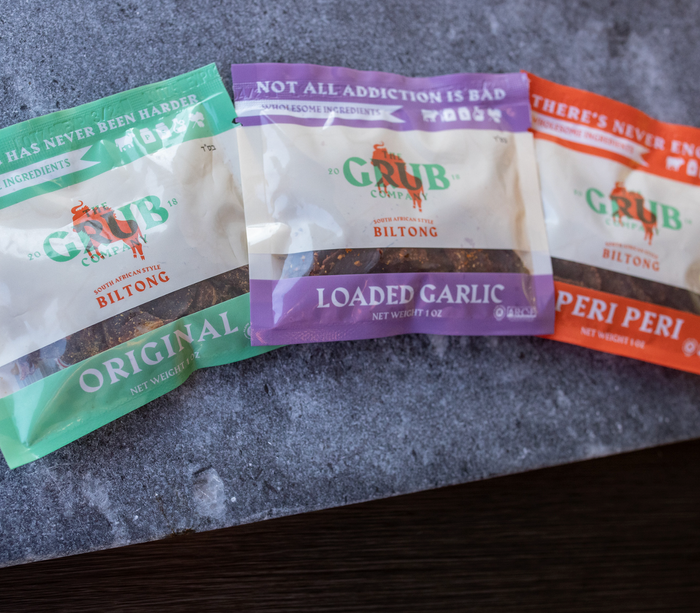
If you're new to biltong and want a clean baseline for what good actually tastes like, the Biltong Sampler Pack is a straightforward way to try three distinct flavor profiles on the same base meat. You get Original, Peri Peri, and Loaded Garlic in one shot, which lets you understand how spicing changes the experience on a consistent, quality base.
What Kosher Certification Actually Signals About Quality
If you're buying kosher biltong specifically, the certification does some meaningful work for you beyond dietary compliance. Kosher slaughter (shechita) and inspection standards are strict about animal health and the condition of the meat at the point of slaughter. A kosher certifier like the Aleph K or R.C.F. isn't just checking the slaughter method. They're on-site and watching the process.
That doesn't mean all kosher biltong is automatically excellent, but it does mean the base meat cleared a documented inspection process that would have caught obvious quality issues like diseased tissue or prohibited parts. For someone who can't visit the production facility themselves, that paper trail has real value.
If you buy in quantity regularly, it's worth looking at a biltong subscription rather than one-off purchases, because consistency matters. When you find a producer whose quality you trust, locking in regular delivery is smarter than rolling the dice on a new brand each time.
Practical Buying Checklist Before You Order
Run through these before committing to any new biltong brand:
- Ingredient list: Should be short. Beef, spices, vinegar, salt. Nothing that requires a dictionary.
- Cut disclosure: Does the brand tell you what cut they use? If they won't say, assume the worst.
- Grass-fed claim: Look for it on the label, not just in marketing copy. Real claims show up in the ingredients section or on the cert documentation.
- Certifying body: For kosher buyers, check which certifying organization is named and whether that organization is one you recognize and trust.
- Packaging integrity: Biltong in a properly sealed bag should have no moisture condensation on the inside of the packaging when you receive it.
- Return/complaint policy: A brand confident in their product will deal with a bad batch. One that won't replace a clearly spoiled product is telling you something.
Frequently Asked Questions
Why does my biltong taste metallic even though it smells fine?
Metallic flavor in dried beef usually points to the cut used. Cuts with higher myoglobin content, like neck or shank, develop a livery, mineral taste when dried. Secondary trim cuts have the same problem. If the biltong smells fine but tastes metallic, the issue is the beef selection, not spoilage. Whole-muscle cuts from the round or silverside dry clean. If a brand won't tell you what cut they use, that silence is worth paying attention to.
How do I tell the difference between biltong made with whole muscle and a formed or pressed product?
Look at the cross-section of the meat. Whole-muscle biltong has visible fiber grain running in one direction through each piece. Formed or pressed products look uniform and smooth in cross-section, often with a slightly spongy or paste-like texture when you bite in. Real biltong has variation. The edge dries firmer than the center, and you can see and feel the muscle structure. If every piece looks identical and textures like a uniform block, it was likely formed, not whole-cut.
Is sour-tasting biltong always spoiled, or could it just be from the vinegar?
It can go either way, and the smell helps you tell the difference. Vinegar-forward biltong from an over-soaked batch will smell sharp and tangy but clean. Spoiled biltong smells sour in a different way, more like fermented or musty, sometimes with a faintly ammonia edge. If the sourness is on the smell, treat it as spoiled. If the product smells clean but tastes noticeably acidic, it's probably a production issue with vinegar quantity, unpleasant but not dangerous.
Does grass-fed beef actually taste different in biltong, or is that just a marketing label?
It genuinely tastes different, and the difference is more noticeable in dried meat than in cooked. Grass-fed beef has a slightly leaner fat profile and a cleaner, less heavy flavor. The fat also oxidizes more slowly during drying, which matters a lot for shelf life and for avoiding that rancid edge you sometimes get on lower-quality dried beef. It's not a small distinction in this context. The drying process concentrates everything in the beef, good and bad, so starting material quality shows up clearly in the finished product.
Can heavy spicing in biltong actually hide a bad beef base?
Yes, and it's a common workaround in lower-quality products. Strong chili heat or high salt can temporarily override off-flavors, especially on the first bite. The problem usually shows up in the finish, that lingering aftertaste after you swallow. Good biltong with bold spicing tastes like beef plus spice. Poor biltong with heavy spicing tastes like spice with something underneath that doesn't quite make sense. If the flavor is all spice and the beef flavor is nowhere, that's worth questioning.
What's the lowest-risk way to try a new biltong brand without committing to a big order?
Start with a sampler or the smallest available bag size. The Biltong Sampler Pack is a practical option here, three flavors in one purchase at a low entry cost. It lets you check texture, grain, smell, and flavor before you buy in bulk. If everything checks out and you're happy with the quality, then look at larger orders or a subscription arrangement. Spending twelve dollars to validate a brand beats spending sixty on a bulk order that disappoints.
Why does some biltong smell musty right out of the sealed bag?
Musty smell on sealed biltong usually means one of two things. Either moisture was present during drying and mold began developing before packaging, or the seal wasn't airtight and ambient humidity got in during storage or shipping. In both cases, the product is compromised. A faint earthy smell from the coriander and pepper is normal. A musty or mildew smell is not. Contact the seller immediately. Any reputable brand will replace it without making it difficult.
Most of what causes that flavor is decided before the meat ever goes on the rack. Ours is grass-fed kosher beef, six ingredients, dried in small batches — the whole list is on the page.