Best Biltong Thickness for Snacking vs Cooking: A Complete Guide
For most snackers, our Sliced Biltong Mini's win on convenience and flavor punch—thin cuts release mouthwatering spices faster on your palate, and you finish one in two bites instead of five. But if you're planning to sear biltong for a charcuterie board or toss it into a stew, grab our Biltong Slabs instead. Thicker cuts hold their structure in the pan and develop more layered spice complexity during drying, giving you that rich, meaty depth meat lovers crave. The thickness you choose comes down to one question: are you eating straight from the bag, or cooking with it?
Why Thickness Matters More Than You'd Think
Biltong thickness isn't just about portion size—it changes how the meat tastes, how long it lasts, and what you can actually do with it. Thin cuts dry faster, which means the spice crust forms quickly and hits your mouth with intensity. Thick cuts take longer to cure all the way through, letting the spices penetrate deeper into the meat fibers. One isn't better than the other; they're built for different moments. Understanding the difference keeps you from buying the wrong cut and being disappointed when you open the package.
How We Choose: What Makes Thickness Work for Different Uses
We stock multiple thickness options because real customers use biltong in real ways. We looked at how fast thin versus thick cuts deliver flavor, how they perform under heat, how they hold up in storage, and what texture you actually want in your mouth. We tested portions: how many bites does a thin strip take? How long does a slab stay chewy versus brittling out? We also watched which formats customers reach for on repeat—the Sliced Biltong Mini's for desk drawers, the Biltong Slabs for entertaining, the Sampler Pack for people who aren't sure yet. That's where this guide comes from.
Thin Biltong: Speed, Snacking, and Spice Intensity
Thin-cut biltong—like our Sliced Biltong Mini's—is the carnivore's quick fix. Because there's less meat to dry, the spice crust forms fast and the interior reaches its final moisture level quickly. That means every bite tastes like concentrated flavor. You're getting the full spice profile without waiting, and the thin edges dissolve almost immediately, which is exactly what you want when you're snacking straight from the bag or throwing biltong into a salad.
Thin cuts also give you portion control. A single Sliced Biltong Mini is two or three bites—perfect for all-day munching without overdoing it. If you're grazing at work, traveling, or loading a charcuterie board where you want variety without dominating the plate, thin is where it's at. The trade-off: thin biltong loses moisture faster if you live somewhere humid or leave the bag open. You'll want to seal it tight and store it in a cool, dry spot. It also won't hold up the same way in a hot pan—thin cuts can get brittle if you're not careful with heat.
Thick Biltong: Chew, Complexity, and Cooking Applications
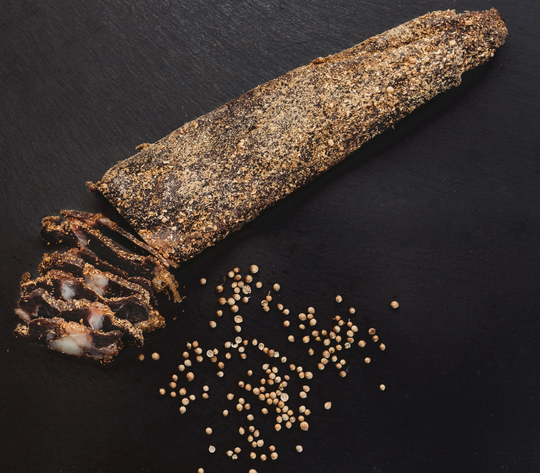
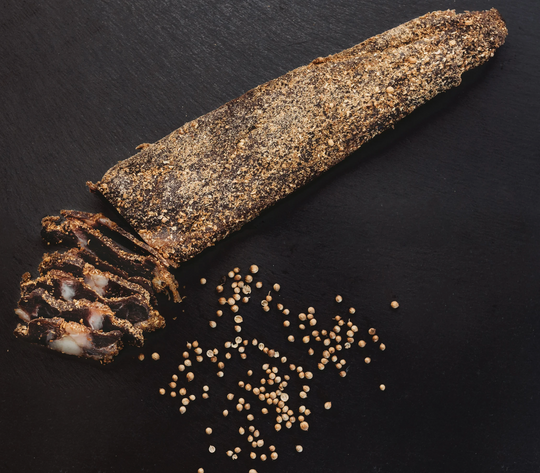
Our Biltong Slabs are built different. Thicker cuts mean the spices have time to work their way deeper into the meat during the drying process, creating layered, complex flavors that thin cuts can't match. When you bite into a slab, you get that melt-in-your-mouth texture for longer, and the chew gives you something substantial to sink your teeth into.
Thick biltong is also your friend in the kitchen. If you're searing it for a charcuterie board, the structure holds up to heat without getting brittle. The meat fibers stay intact, so you get actual texture instead of it turning to dust. For slow-cook applications—stewing, simmering into soups, or adding to savory grain bowls—thick cuts preserve the meat fiber integrity that makes biltong worth eating instead of just reaching for ground beef. The surface char develops differently too: more time on the cure means a deeper, more complex spice crust that actually stands up to cooking without burning off immediately.
Storage, Shelf Life, and Environmental Factors
Thickness affects how your biltong behaves in storage more than most people realize. Thin cuts dry completely and reach equilibrium fast, but they're also more vulnerable in high-humidity environments. If you live near the coast or somewhere muggy, thin biltong needs airtight storage and a cool space—think pantry, not kitchen counter. Thick slabs have more interior mass, so they take longer to absorb ambient moisture, giving you a wider window for storage conditions. That said, thick cuts also need airflow during cure, so stack them loosely if you're storing multiple slabs.
Both formats last longer when kept cool and sealed. Open a package, eat a few pieces, and seal it back up immediately. Biltong doesn't go bad fast—the cure and drying process handles that—but exposure to air and humidity accelerates aging. If you're buying in bulk (like our Bulk Biltong or Biltong Bulk Box Donation), consider dividing thick slabs into portions and vacuum-sealing them. That way you're not constantly opening the whole package.
Cost Per Bite: Thin vs. Thick
Here's the practical side: thin cuts deliver cost-per-serving efficiency when you're snacking solo. One Sliced Biltong Mini might cost less per piece than buying a whole slab, and you're not committing to chewing through something massive. But if you're feeding a group or cooking with biltong, thick cuts often win on price per pound. You get more meat per purchase, and you can portion it however you want—slice it thinner for salads, keep it thick for searing, shred it for stews.
This is where our Biltong Sampler Pack shines. It gives you access to different thicknesses so you can figure out which format fits your life and budget before committing to full boxes of one or the other. Test the Sliced Biltong Mini's for a week, grab a slab for a dinner party, and see where you actually reach most often.
Matching Thickness to Your Real Use Cases
Snacking and grazing: Thin cuts win. You want fast flavor, portion control, and zero prep. Grab a Sliced Biltong Mini, chew, done.
Charcuterie boards and entertaining: Go thick. Slabs look more impressive, stay textured longer on the palate, and show off the craft. Thin cuts disappear too fast.
Salads and integrated cooking: Thin slices. They integrate into dressings and grain bowls without dominating the texture. You want biltong flavor, not biltong dominance.
Pan-searing and hot applications: Thick slabs. They hold structure under heat and develop a better crust. Thin cuts risk becoming dust.
Slow-cook, stew, or soup: Thick cuts. The meat fiber integrity holds up to long cooking. Thin cuts can over-soften and lose definition.
Travel, office, or all-day snacking: Thin cuts. Lightweight, no mess, portion-controlled, flavor-forward.
Testing before bulk commitment: Grab the Biltong Sampler Pack. You get access to different formats, find your favorite, then order confidently in bulk.
Our Recommendation
Start with the Biltong Sampler Pack if you're new to biltong thickness choices. It removes the guessing game and lets you taste the difference firsthand. If you already know you're a snacker, grab our Sliced Biltong Mini's and keep them in your desk, car, or bag—they deliver fast, mouthwatering flavor without commitment. If you're cooking or entertaining, reach for our Biltong Slabs. They're built for texture, heat, and complexity, giving you that rich, layered taste that turns biltong into something special. For the carnivore who wants it all, our Bulk Biltong and Biltong Bulk Box Donation formats let you stock up on your preferred thickness and actually save money. The thickness you choose is about your life, not the meat—pick what fits how you actually eat.
Frequently Asked Questions
Can I use thin-sliced biltong for pan-searing, or will it fall apart?
Thin biltong can sear, but it needs a hot pan and quick work. The thinner edges will crisp up fast, sometimes getting brittle before the center warms through. For consistent results and better texture retention, stick with our Biltong Slabs. They hold their structure under heat and develop a proper crust without becoming dust.
How long does thin-sliced biltong last once the package is opened?
Thin-sliced biltong stays fresh for weeks in a sealed container at room temperature (cool and dry), but exposure to air and humidity speeds up aging. Once you open the package, seal it back tight immediately. If you live in a humid climate, consider storing it in an airtight bag or container in the pantry. You'll know it's past its prime when the edges turn pale or brittle, or if it develops an off smell—which takes longer than you'd think because of the cure, but thin cuts are more vulnerable to environmental moisture than thick slabs.
Should I buy thin or thick biltong if I'm snacking throughout the day?
Thin biltong—our Sliced Biltong Mini's—is built for all-day snacking. Each piece is two or three bites, so you get flavor hits without overcommitting to chewing. They're portable, portion-controlled, and deliver fast mouthwatering spice without mess. Grab a few and toss them in your bag, desk drawer, or car for grab-and-go munching.
What's the difference in flavor between thin and thick biltong if it's the same seasoning?
Thickness changes how the spices penetrate during drying. Thin cuts dry fast, so the spice crust forms quickly and hits your palate with intensity—you get a fast flavor punch. Thick slabs take longer to cure all the way through, allowing the spices to work deeper into the meat fibers. You end up with layered, more complex flavor that builds as you chew. Same seasonings, different timing during the dry process, noticeably different mouthwatering experience.
Can I slice thick biltong thinner at home, or does that change the meat?
You can absolutely slice our Biltong Slabs thinner at home if you want. Use a sharp knife and slice against the grain for the cleanest cuts. It won't change the meat quality or cure, but it will change the texture and how the pieces taste—you'll lose some of that melt-in-your-mouth chew that thick cuts deliver naturally. If you're doing this for salads or cooking applications, go for it. If you want the full thick-slab experience, leave them as-is.
Does thin biltong dry out faster because of its thickness, and will it go bad sooner?
Thin biltong reaches its final moisture level faster than thick cuts, but that doesn't mean it spoils sooner. The drying and cure process preserves the meat either way. What does matter: thin cuts are more vulnerable to picking up ambient moisture in humid environments. Store thin slices in a sealed, cool, dry spot and they'll last just as long as thick slabs. Leave them exposed on a counter in summer humidity, and they'll age faster—but that's about storage, not spoilage. Keep them sealed, keep them cool, and you're fine.
Should I buy the Biltong Sampler Pack if I think I already know what I want?
Only if you're unsure. The Sampler Pack is built for testing—it gives you access to different thicknesses so you can figure out your actual preference before committing to bulk. If you've had biltong before and you know thin cuts are your thing (or thick, or mixed), skip straight to the Sliced Biltong, Biltong Slabs, or Bulk Biltong formats. But if you're new to thickness choices or you want to confirm your preference, the Sampler is the mouthwatering, wallet-smart move.