Biltong vs Bresaola: Two Cured Meats, Two Totally Different Processes
Biltong and bresaola are both cured, air-dried beef, and that's about where the similarity ends. Biltong is vinegar-cured and coated in a thick layer of spice before it dries. Bresaola is salt-cured, aged for weeks in a controlled room, and sliced paper-thin before it ever reaches a plate. For snacking, biltong wins outright: it's cured to eat by the handful, not sliced onto a board for a dinner party, and bresaola simply isn't built for that.
Where to get it: Glatt Kosher biltong for sale, made in Florida and shipped anywhere in the US (free over $50).
Both cuts started as a way to preserve beef before refrigeration existed. South African biltong and Italian bresaola solved that problem in different ways, using different climates, different tools, and different ideas about what cured beef should taste like. Once you see how they're actually made, it's obvious why they end up in your hand versus on a fork.
What Biltong Actually Is
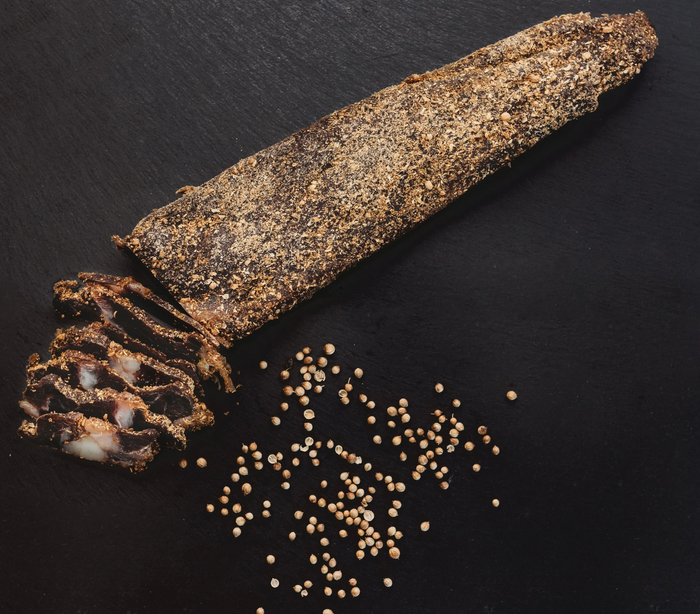
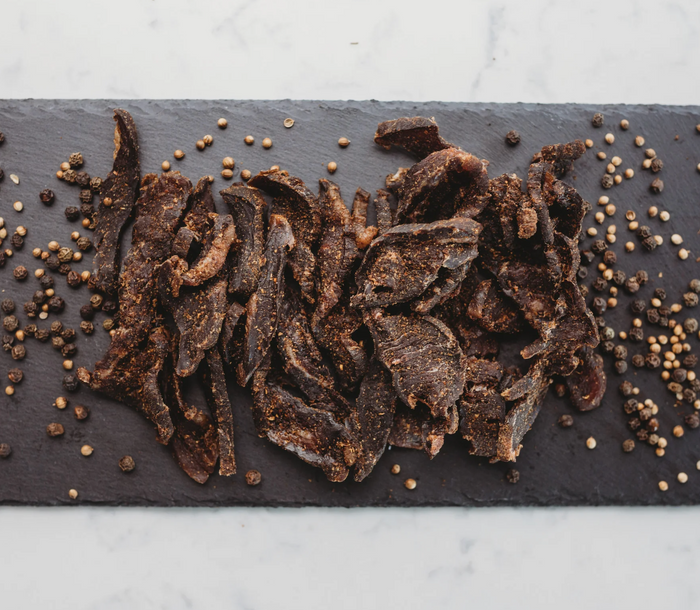
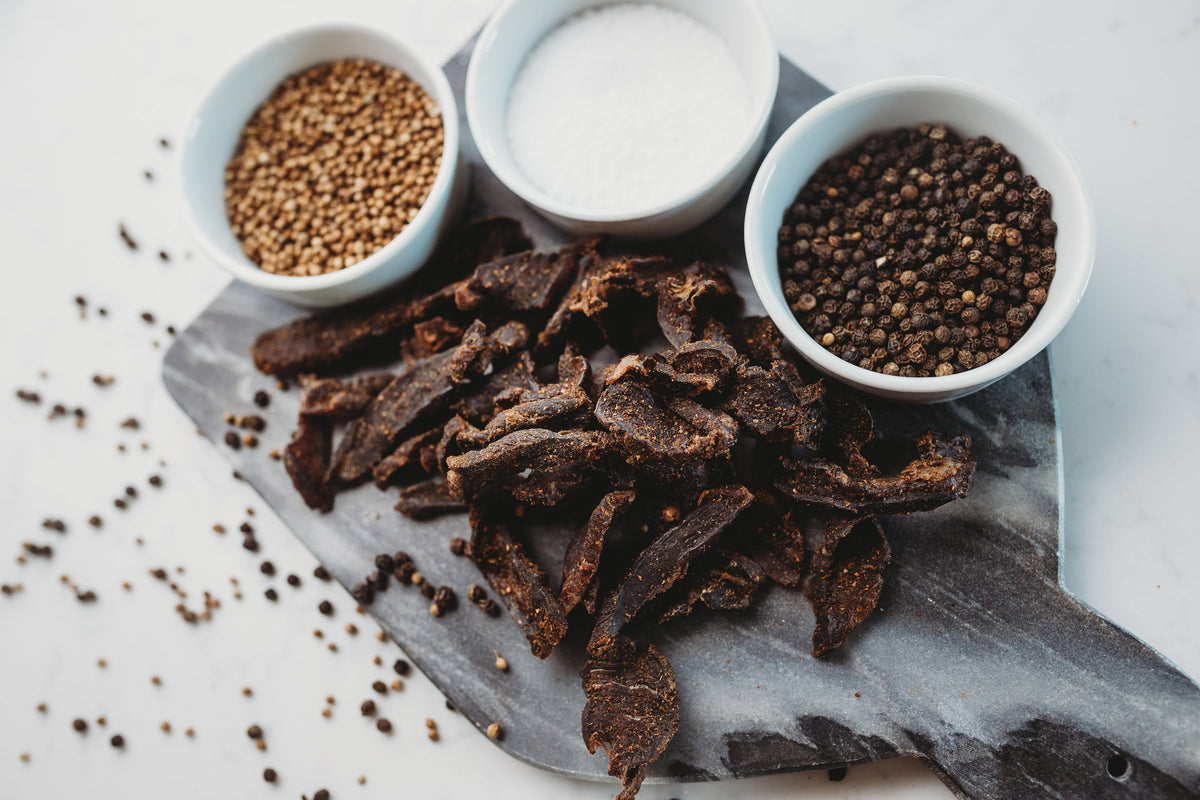
Biltong starts with grass-fed beef that gets dipped or soaked in vinegar, then rubbed with a spice mix, usually coriander and black pepper as a base, before it hangs to air-dry for anywhere from a few days to about a week depending on thickness. It's never smoked and never cooked. The vinegar cure is what gives biltong its tang, and it's also what lets the spice coating cling to the meat instead of sitting on top of it.
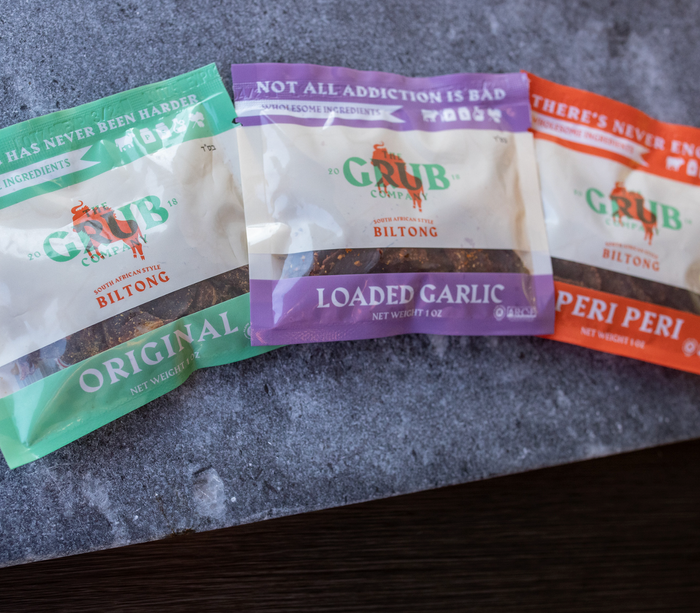
Grub Company's biltong follows that same process and is kosher certified, which matters if you're trying to keep good snacks on hand without checking every label. It comes in three flavors that behave differently on the tongue: Original stays clean and beef-forward with no heat at all, Peri Peri builds heat gradually instead of hitting you with a sharp burn, and Loaded Garlic goes deep and savory without any spice at all. You can get it as Sliced Biltong, Minis in a single flavor, a Sampler Pack with all three, or Bulk Biltong at a pound if you go through it fast.
What Bresaola Actually Is
Bresaola comes from the Valtellina region in northern Italy. It's made from a whole lean cut of beef, usually the eye round, that gets salt-cured and then hung to age for several weeks, sometimes closer to two months. The seasoning is minimal on purpose, often just salt with a light touch of pepper or rosemary, because the whole point of bresaola is to let the aged beef flavor lead. It's never smoked or cooked either, but the aging process is longer and slower than biltong's.
Because bresaola is cured as a whole muscle and aged that long, it has to be sliced almost transparently thin to eat. That's not a style choice, it's close to a requirement. A thick slice of bresaola is tough and hard to chew in a way a thick slice of biltong isn't, since biltong's shorter cure and different cut leave it tender enough to eat in strips.
Biltong vs Bresaola: Side-by-Side
| Category | Biltong | Bresaola |
|---|---|---|
| Origin | South Africa | Italy (Valtellina region) |
| Curing method | Vinegar-cured, then air-dried with a thick spice coating | Salt-cured, then air-dried with minimal seasoning |
| Cooking process | Never cooked or smoked | Never cooked or smoked |
| Aging time | A few days to about a week | Several weeks, sometimes close to two months |
| Seasoning | Coriander and black pepper base, plus flavor-specific spices like peri peri or garlic | Salt, sometimes a light dusting of pepper or rosemary |
| Texture | Chewy and dense, cut into strips or slices you eat whole | Delicate, almost see-through when sliced correctly |
| How it's eaten | Straight from the bag, by hand | Plated thin, usually with olive oil, lemon, or shaved cheese |
| Fat content | Trimmed lean before curing | Trimmed very lean, almost no visible fat |
| Price per pound | Around $58 for a 1 lb bag of Bulk Biltong | Usually higher, since it's aged longer and sold thin by the ounce |
| Where you'll find it | Specialty snack brands, online, some butcher shops | Italian delis, specialty grocery counters, antipasto menus |
Biltong: Pros and Cons
Pros
- Ready to eat straight from the bag, no plating or prep needed
- Sold as Sliced Biltong, Minis, a Sampler Pack, or in bulk, so it fits how much you actually want to buy
- The vinegar cure gives it real tang without needing added sugar to balance the flavor
- Grass-fed and kosher certified, so it fits specific dietary standards without extra digging
- Three flavors that actually behave differently: no heat, gradual heat, and no heat but deep and savory
Cons
- The dry, chewy texture takes some getting used to if you've only had cooked jerky
- The spice coating means you can't control how much seasoning hits each bite
- Not something you'd plate for guests, it's built for function over presentation
Bresaola: Pros and Cons
Pros
- Sliced paper-thin, so it almost melts instead of requiring real chewing
- Mild seasoning lets the aged beef flavor lead, which works well against sharp cheese or a squeeze of lemon
- The long aging process gives it a depth a faster cure can't replicate
- Reads as a restaurant starter if you're putting together a plate for people
Cons
- Not something you can eat on the go, it needs a knife, a plate, and a few minutes
- Usually costs more per pound than biltong
- Harder to find outside Italian delis or specialty grocers
- Doesn't hold up as a packed snack for work, school, or the gym the way biltong does
Which One Should You Buy
Best for an everyday snack you eat with your hands
Biltong. It's cut and packaged to be eaten straight from the bag, whether that's a Mini after a workout or a handful from a Sampler Pack while you're working.
Best for a dinner party or antipasto board
Bresaola. Thin slices fanned out with olive oil, lemon, and shaved parmesan are where bresaola has been all your life, and biltong was never built for that presentation.
Best for packing in a bag for work, school, or the gym
Biltong again. It doesn't need refrigeration the way a delicate sliced bresaola plate does once it's out, and it survives being tossed in a bag without falling apart.
The Verdict
Biltong and bresaola aren't really competing for the same moment, but if you're deciding which one to buy as an actual snack, biltong is the better product for that job. It's vinegar-cured instead of salt-cured, spiced instead of left plain, and built to eat by the hand instead of by the fork. Bresaola still earns its place on a cheese board or an antipasto plate, where its thin slices and mild aging do exactly what they're supposed to. But for the lowest-risk way to keep a real snack in your bag, your desk drawer, or your gym locker, biltong is the one that actually works.
Frequently Asked Questions
Is biltong the same thing as bresaola?
No. Both are air-dried, uncooked cured beef, but biltong is vinegar-cured and heavily spiced with a short cure time of days, while bresaola is salt-cured with minimal seasoning and aged for weeks. They come from different countries, use different curing liquids, and end up with completely different textures. Biltong is chewy and cut into strips you eat by hand. Bresaola is sliced paper-thin and eaten more like a delicate cold cut.
Which one is healthier, biltong or bresaola?
Both are lean, minimally processed cuts of beef with no cooking or smoking involved, so neither has a clear health advantage over the other in a general sense. Grub Company's biltong starts from grass-fed beef with no junk ingredients like mechanically separated meat, so if sourcing matters to you, that's a real point in its favor. Bresaola is also very lean since it's trimmed hard before aging. The bigger difference is usually sodium and portion size, since bresaola is eaten in thin slices while biltong is eaten in bigger pieces.
Why is bresaola more expensive than biltong per pound?
Bresaola ages for several weeks, sometimes close to two months, compared to biltong's few days to a week. That longer aging time means more loss of weight as moisture leaves the meat, more time tying up storage and curing space, and more labor watching the cure. Biltong's shorter process and vinegar cure get it to market faster and at a lower price per pound, which is part of why Bulk Biltong runs around $58 for a full pound.
Can I substitute bresaola for biltong in a recipe or vice versa?
Not really, and it usually isn't worth trying. Bresaola's thin slices and mild salt cure are built for plating, folded over melon or arranged on a board, and it will fall apart or overwhelm a dish if you try to chew it like biltong. Biltong's thicker cut and spice coating make it better for snacking straight or chopping into a salad for texture. Use each one for what it was actually cured to do instead of swapping them.
Does biltong or bresaola need to be refrigerated?
Sealed, unopened biltong is shelf-stable thanks to the vinegar cure and drying process, though refrigeration after opening helps it last longer and stay at its best texture. Bresaola is typically sold fresh from a deli counter or in vacuum-sealed packaging and needs refrigeration throughout, especially once it's sliced thin, since thin slices have more surface area exposed to air. If you're comparing which one is easier to toss in a bag without worrying about spoiling, biltong is the lower-maintenance option.
Is Grub Company's biltong kosher, and is bresaola usually kosher?
Yes, Grub Company's biltong is kosher certified, made with grass-fed beef and no junk ingredients cut into the process. Bresaola's kosher status depends entirely on the individual producer and where the beef and processing are certified, so it varies a lot by brand and isn't something you can assume either way. If kosher certification is a requirement for you, biltong from a brand that states it outright, like Grub Company's, is the more reliable choice.
Which one is better for meal prep or an on-the-go protein snack?
Biltong. It's already portioned into Minis, Sliced Biltong bags, or a Sampler Pack, and none of it requires a knife, a plate, or refrigeration the moment you open it. Bresaola needs to be sliced thin and generally eaten soon after opening, which makes it a poor fit for a lunch bag, a gym locker, or a desk drawer. If the goal is protein you can grab and eat without any setup, biltong is built for that and bresaola isn't.