How Long Does Real Biltong Curing Take, and Why Rushing It Ruins the Meat
Why Curing Takes Days, Not Hours
Real biltong curing takes days because the vinegar cure and the slow air-dry both need time to actually do their job, and neither step can be sped up without changing what comes out the other end. The vinegar needs time to work into the surface of the meat and lower the pH enough to matter. The air-drying needs time for moisture to work its way out from the center of the cut to the surface, evaporate, and repeat, over and over, until the meat reaches a safe, shelf-stable texture.
Want some on hand? Order biltong online: Glatt Kosher, air-dried in Florida, free US shipping over $50.
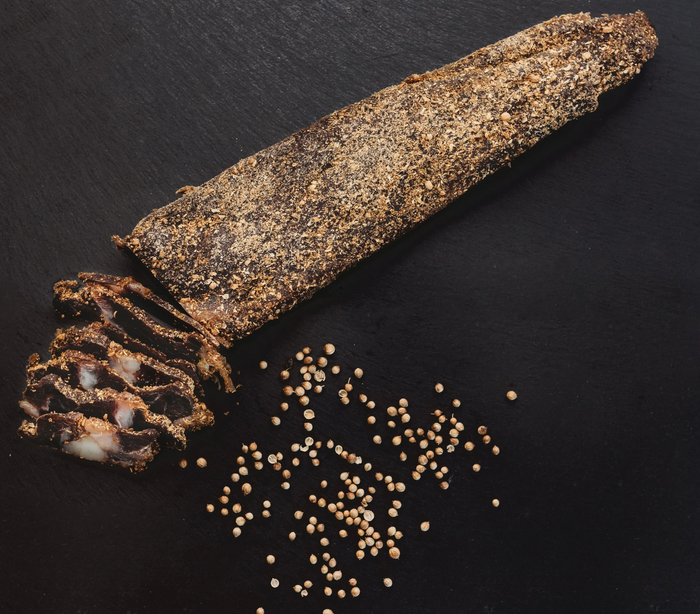
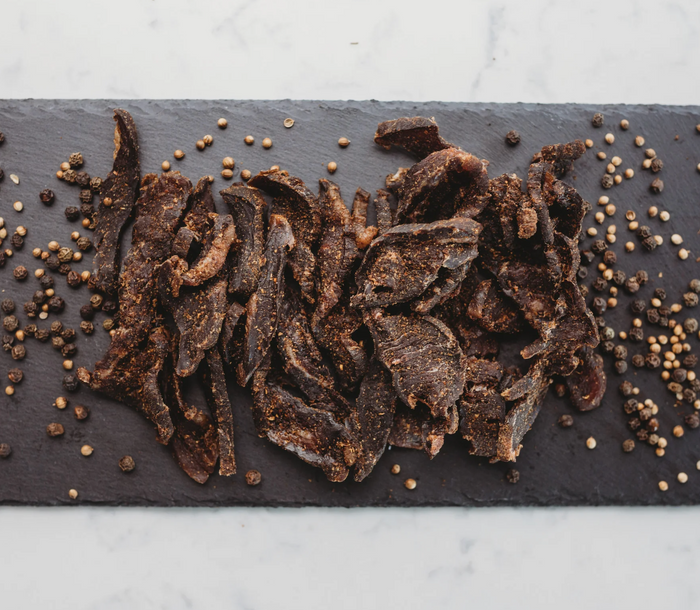
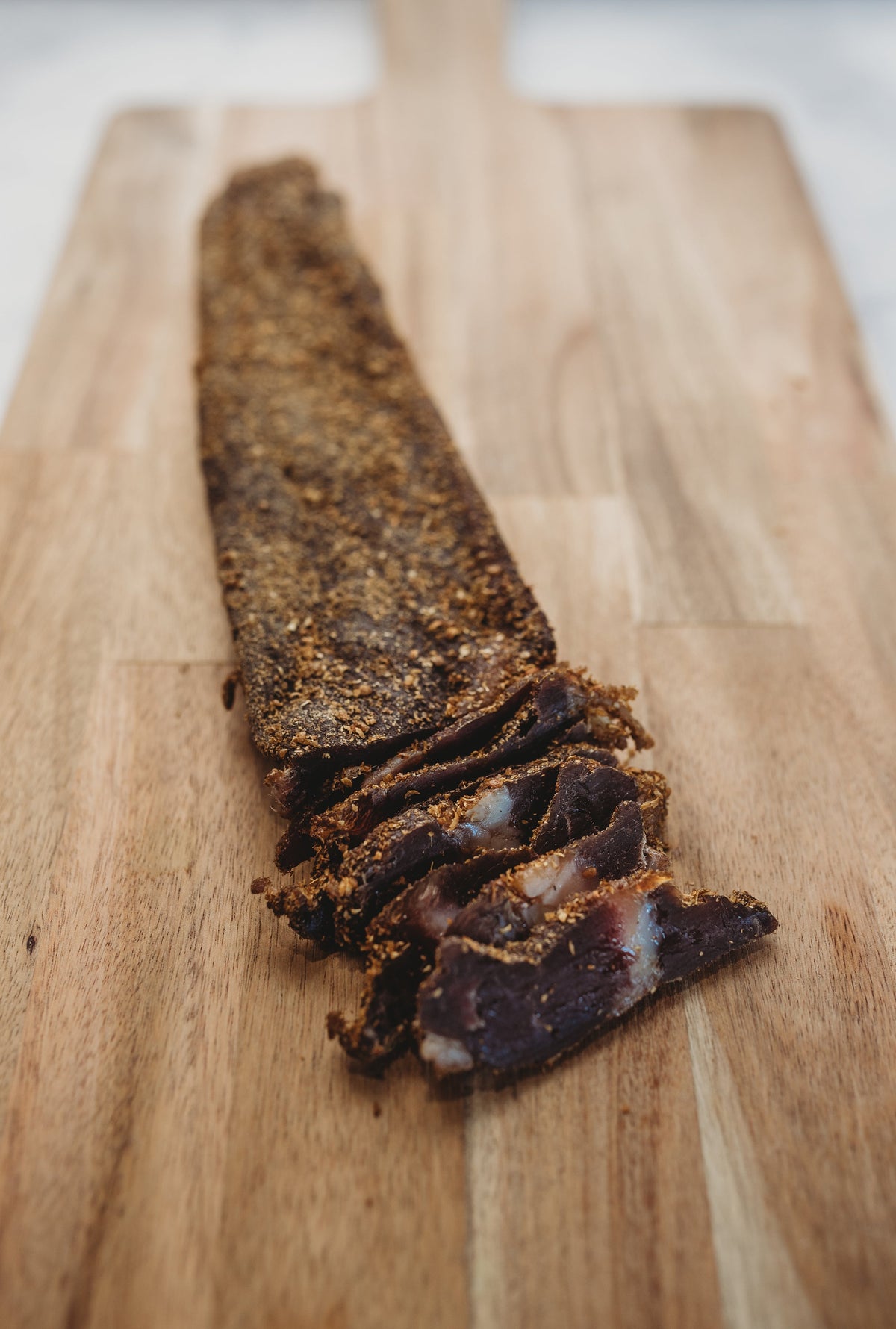
How long that takes depends on thickness. A thin cut of Sliced Biltong dries faster than a thick Biltong Slab, simply because moisture has less distance to travel out of a thin piece than a thick one. That's also why biltong makers talk about "wet" biltong and "dry" biltong. Shorter drying time leaves a softer, moister piece, while a longer dry produces a firmer, more concentrated one. Neither is wrong. They're different points on the same curve, and personal preference decides where you stop.
What Happens When You Rush It
Rushing the dry usually means cranking up heat or airflow to pull moisture out faster, and that's where things go wrong. If the outside of the meat dries too fast relative to the inside, you get a hard, dry shell forming on the surface while the center is still wet. That shell then traps moisture inside instead of letting it keep migrating out, which is close to the opposite of what curing is supposed to accomplish. The meat can end up looking dry and finished on the outside while still holding unsafe moisture underneath.
Picture two identical cuts started the same day. One dries in a properly controlled room over the time it actually needs. The other gets blasted with extra heat to finish faster. The rushed piece might look done a day or two earlier, but cutting into it can reveal a soft, underdried center that the outside never let anyone see. That's not a shortcut, it's a different, worse product wearing the same label.
Why This Is Where the Quality Line Gets Drawn
Time is one of the easiest things to cut in food production, because it's invisible in the final packaging. Nobody can see on a label how many days a batch actually cured or dried. That's exactly why it matters who's making the decision. Grub Company doesn't rush a batch to hit a shipping date, and thickness decides drying time rather than a fixed schedule deciding it for the meat. Cutting the process short to move product faster is the kind of shortcut that eventually shows up as a texture or safety problem, and that's not a trade we're willing to make with something a family is going to eat.
If you've made it this far, you understand more about what actually goes into a bag of biltong than most people who've been eating it for years. The next decision is a practical one: pick sliced biltong for something ready to eat straight out of the bag, or a slab if you want to cut your own thickness and see the drying difference for yourself.
Frequently Asked Questions
How long does it take to properly cure and dry biltong?
It varies with thickness and how dry you like the final product, ranging from several days for thinner sliced cuts to a couple of weeks for thicker slabs. Thinner cuts lose moisture faster because there's less distance for water to travel out of the meat. There isn't one fixed number that applies to every cut, which is part of why rushing the process with a fixed shortcut timeline causes problems.
What's the difference between "wet" and "dry" biltong?
Those terms describe how long a batch dried and how much moisture is left. Wet biltong has a shorter dry time and a softer, moister texture, while dry biltong has been left longer and comes out firmer and more concentrated in flavor. Neither one is more correct than the other. It comes down to what texture you actually like.
What happens if biltong is dried too quickly?
Drying too fast, usually from added heat or airflow, can cause the outside of the meat to dry into a hard shell before the inside has lost enough moisture. That shell traps moisture in the center instead of letting it keep evaporating out, which can leave the meat underdried inside even though it looks finished on the outside. That's both a texture problem and a safety problem.
Why does thickness affect curing and drying time so much?
Moisture has to travel from the center of a cut out to the surface before it can evaporate. A thin cut, like Sliced Biltong, has a short distance for that moisture to travel, so it dries relatively quickly. A thick Biltong Slab has much farther for moisture to travel from the center, so it takes considerably longer to reach the same level of dryness all the way through.
Can biltong be dried at home faster than the traditional method?
You can find shortcuts online, but speeding up the process usually trades away the qualities that make biltong what it is. Rushing the dry with extra heat risks case-hardening the outside while the inside stays underdried, and skipping or shortening the vinegar cure means the meat doesn't get the pH change that helps preservation work in the first place. The traditional slow cure and dry exists because it actually works.
Does a longer cure time mean stronger flavor?
Generally yes. As moisture leaves the meat over a longer dry, the remaining flavor, both from the beef and from the spice cure, becomes more concentrated. That's part of why a firmer, longer-dried piece often tastes more intense than a softer, shorter-dried one, even though both started from the same cut and the same spice blend.