Shabbat Lunch Ideas That Need No Reheating
The easiest Shabbat lunch is a cold one: sliced brisket or schnitzel, two or three salads, challah, dips and a bowl of certified Glatt Kosher biltong, all finished on Friday and served straight from the fridge or the counter. Plan one protein, three salads and one real starter, and nothing at the table needs heat.
Grub is a kosher meat-snack maker, not a caterer, and every bag we sell is certified Glatt Kosher. But we hear the same question every week from families who host: what do I put on the table at noon when I do not want to rely on a warming setup? This guide is a plan, not a list of recipes to memorize. It covers the structure of a cold lunch, five dishes with quantities, and where our own biltong helps and where it does not.
One note before we start. Whether, how and for how long food may be kept warm over Shabbat is a question for your own rabbi, and households differ. This guide sidesteps the question by serving everything cold or at room temperature. If you want hot food on the table, ask your rabbi what applies in your home.
Why Cold Works for Shabbat Lunch
A cold lunch is not a lesser lunch. Good delis have served cold sliced meats and salads for a century, and nobody calls that a compromise.
There are three practical reasons it works.
All the work happens before Shabbat. Cooking, slicing, mixing and plating happen Thursday and Friday. On Shabbat you take things out and set them down. Exactly what you may do in the kitchen on Shabbat is a matter for your rabbi, which is one more reason to leave nothing to do.
Nothing overcooks. A pot kept hot for many hours changes. A cold brisket does not. It firms up, slices cleanly and tastes better the next day.
Guests can come and go. A cold table does not run on a schedule. If the shul kiddush runs long, the food waits without suffering.
The honest trade-off: a cold meal can feel light in winter. If your family expects a steaming bowl in January, a cold lunch will feel like a different kind of meal. Some households serve it anyway, with hot tea or soup made according to their own practice. That part is between you and your rabbi.
How to Build the Table
Think in five slots. Fill each with one thing and the table is balanced.
- Bread: challah, and a second loaf or rolls if the crowd is large.
- Dips: one or two. Hummus and techina are pareve and travel well.
- Salads: three, with different textures. One crunchy, one creamy, one sharp.
- Protein: one main cold meat, plus something small and salty on the side.
- Sweet finish: a pareve cake or fruit.
Keep meat and dairy apart all the way through. If lunch is a meat meal, everything on the table is meat or pareve. That includes dips, dressings and the cake. Read labels on bread, crackers and dressings, since some carry dairy. If you wait between a meat meal and dairy, follow your family's custom on how long.
For quantity, plan about a half pound of cold meat per adult when it is the main dish. Plan a little less if there is also a substantial starter and several salads.
Five Dishes That Need No Heat
Cold Sliced Brisket
Brisket is the classic make-ahead meat because it improves overnight.
- One 4 lb first-cut brisket
- 2 large onions, sliced
- 4 cloves garlic, smashed
- 1 cup ketchup or crushed tomatoes
- 1/2 cup water
- 1 tablespoon paprika, 2 teaspoons salt, 1 teaspoon black pepper
Rub the brisket with the paprika, salt and pepper. Layer the onions and garlic in a roasting pan, set the brisket on top, and pour the ketchup and water around it. Cover tightly with foil. Roast at 325°F for about three hours, until a fork slides in with little resistance. Cool, then refrigerate the whole piece in its juices overnight.
On Thursday night or Friday, slice it cold against the grain, about a quarter inch thick. Cold meat slices much more cleanly than hot meat. Lay the slices in a dish and spoon the cold, jellied juices over the top. Cover and keep it chilled until lunch.
The trade-off: cold brisket fat is firm. If anyone at your table dislikes that texture, trim the fat cap before slicing.
Cold Schnitzel
Schnitzel is just as good cold, and it is the one kids reliably eat.
- 2 lb chicken cutlets, pounded to a half inch
- 2 eggs, beaten
- 1 1/2 cups plain breadcrumbs
- 1 teaspoon paprika, 1 teaspoon salt, 1/2 teaspoon garlic powder
- Oil for the pan
Mix the seasonings into the breadcrumbs. Dip each cutlet in the egg, then press into the crumbs. Fry in a half inch of oil for three to four minutes per side until golden and cooked through. Chicken should reach 165°F inside. Drain on a rack, not on paper towels, so the underside stays crisp. Cool completely, then refrigerate in a single layer.
It will not be as crisp as it was fresh. That is the cost. It will still be good, and a squeeze of lemon on the table helps.
Three Salads That Hold
A cold lunch lives or dies on the salads. These three do not wilt, and between them they cover crunch, cream and tang.
- Chopped cabbage and carrot slaw: 1 small head shredded cabbage, 3 shredded carrots, 1/3 cup mayonnaise, 2 tablespoons white vinegar, 1 tablespoon sugar, 1/2 teaspoon salt. Mix on Friday. It improves as it sits.
- Cucumber and dill: 4 cucumbers sliced thin, 1/4 cup white vinegar, 2 tablespoons chopped dill, 1 teaspoon sugar, 1/2 teaspoon salt. Salt the slices for fifteen minutes, drain them, then dress.
- Roasted beet salad: 4 large beets roasted in foil at 400°F for about an hour, peeled, cubed and tossed with 2 tablespoons olive oil, 1 tablespoon red wine vinegar and a pinch of salt.
Israeli salad is lovely, but cut tomato and cucumber release water and go soft within hours. If you want it, dress it as late as you can on Friday. Whether and how you may chop a salad on Shabbat itself is a question for your rabbi, so most families skip it and cut everything beforehand.
A Starter That Needs No Plate: Biltong
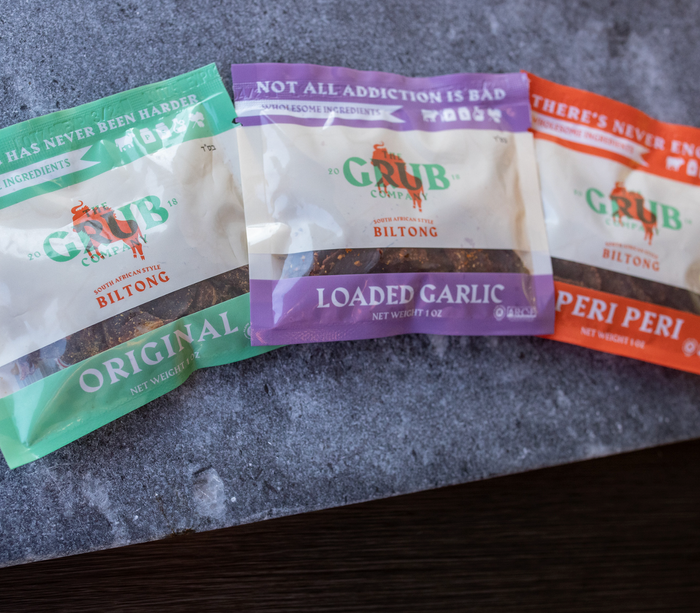
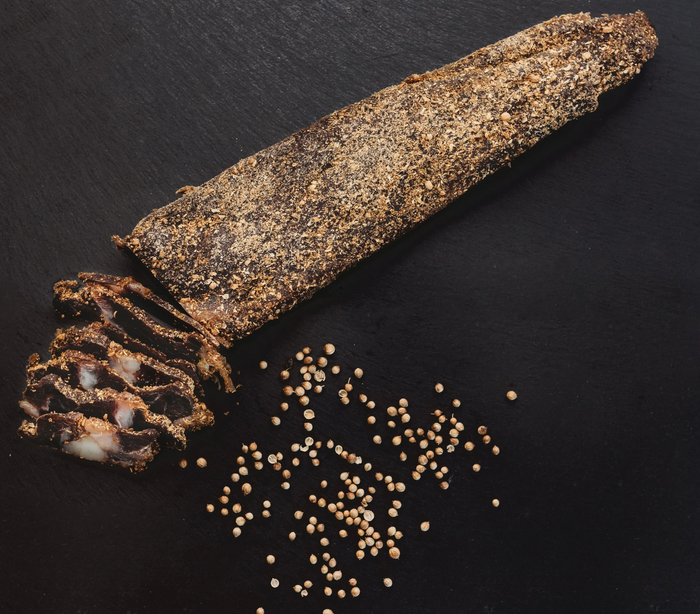
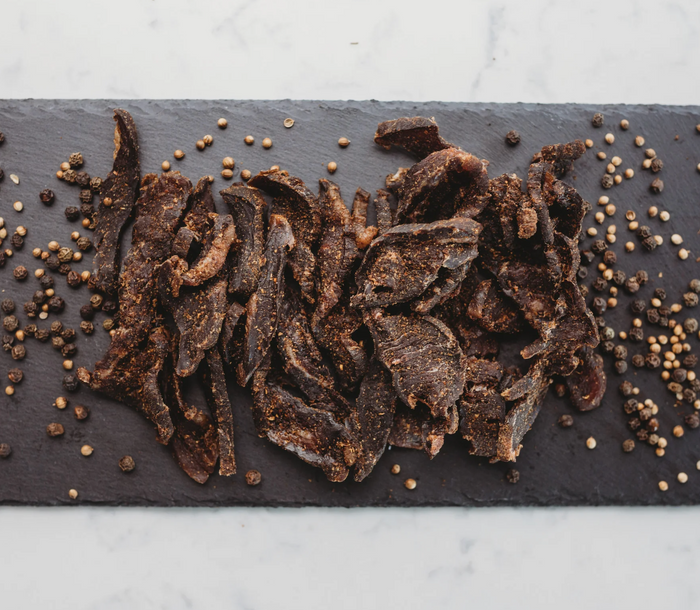
This is where our own product fits. Biltong is South African air-dried beef. It is cured and ready to eat, so there is nothing to cook, nothing to reheat and no refrigeration needed. A 3 oz bag of Sliced Biltong poured into a bowl is a starter that sits on the table while people find their seats.
It comes in three flavors. Original is beef first, then the warm citrus note of coriander, and it suits everyone. Peri Peri has real heat building behind it and divides a room. Loaded Garlic is roasted garlic, rounder and savory rather than hot. For a mixed table, put out Original and one other, and label the bowls.
Two quick ways to make it feel like food rather than a snack:
- Biltong on challah: a smear of hummus on a slice of challah, a few slices of Original on top.
- Biltong on the slaw: a small handful torn over the cabbage salad just before serving. It adds salt and chew.
The honest limit: biltong is the wrong pick if you need a plated, seated first course. It is a bowl on a table, not a soup. A bag of biltong also does not replace the main protein. At four ounces or so per person it is a starter, not a lunch.
A Sweet Bowl for the End
Something sweet and meaty is a surprise on a cold table, and people take to it. Our Meat Candy is a cooked, glazed jerky in two flavors: Hickory Kickory Dock, smoky hickory with sweetness behind it, and Baa-Baa BBQ Sheep, a Korean-style sweet and savory. Where biltong is salty and air-dried, Meat Candy is sweet. Put a small bowl out beside the cake and the fruit and let people pick.
The Friday Schedule
Here is a timeline that keeps Friday calm.
- Thursday night: Roast the brisket and refrigerate it in its juices. Roast the beets.
- Friday morning: Fry the schnitzel and cool it on racks. Slice the brisket cold and return it to its juices. Make the slaw.
- Friday midday: Salt, drain and dress the cucumbers. Cube the beets and dress them. Portion the dips into serving bowls.
- Before candles: Pour the biltong and the jerky into bowls and cover them. Set out the challah. Label what is meat and what is pareve.
On Shabbat, you carry bowls to the table and take the cover off. That is the whole job.
If you want the same idea at its most stripped-down, we wrote a separate piece on Shabbos and Yom Tov food that needs no kitchen. And for the long afternoon after lunch, see kosher jerky for Shabbos afternoon.
Stocking Up
If you host often, a bag of biltong in the pantry takes the pressure off. The easiest way to find your flavor is through Buy Biltong Online, where you can see every size and flavor. If your table also wants something sweet, browse our kosher beef jerky collection. US orders over $50 ship free, and shipping is US only. Order early in the week so everything arrives well before Friday.
Bottom Line
A cold Shabbat lunch is a planning decision, not a sacrifice. One cold meat, three salads that hold, dips, challah and a bowl of biltong cover the table. Do the work Thursday and Friday, label what is meat and what is pareve, and ask your rabbi about anything involving heat or work on Shabbat itself. Then enjoy the lunch.
Frequently Asked Questions
What can I serve for Shabbat lunch without reheating?
Cold sliced brisket, cold schnitzel, salads that hold their texture, hummus or techina, challah, and ready-to-eat items like biltong. Make everything before Shabbat and serve it chilled or at room temperature.
Can I keep food warm on Shabbat?
That is a question for your own rabbi. Practice varies between households, and the details matter. This guide avoids the question by serving everything cold.
Is a cold Shabbat lunch still a proper meal?
Yes. A table with challah, a main protein, several salads and dips is a full meal. Many families serve cold lunches all year, and some prefer them in summer.
Does biltong need to be refrigerated or heated?
No. Biltong is cured and air-dried, so it is ready to eat from the bag and keeps without refrigeration. Once a bag is open, close it up after the meal.
Can I serve dairy dips with a meat lunch?
No. Meat and dairy are kept separate. For a meat meal, use pareve dips such as hummus or techina, and check the label for dairy ingredients.
How much cold meat do I need per person?
Plan about a half pound per adult if the meat is the main dish. Plan a little less if there is a substantial starter and several salads.
What is a good no-cook starter for Shabbat lunch?
A bowl of sliced biltong, with challah and hummus on the side, works without any preparation. Original suits most tables. Peri Peri has real heat, so put it out only if your guests like spice.