Kosher Catering: Adding a Meat Board Without Adding Work
The easiest way to add a meat board to a kosher catered event is to buy ready-to-eat, certified Glatt Kosher biltong and jerky yourself, set it out in bowls, and let the caterer keep running the meal. It needs no kitchen, no refrigeration, no heat and no staff, so it adds a course to the event without adding a task to anyone's list.
We make certified Glatt Kosher biltong and beef snacks in small batches in Florida, and a lot of our orders go to people planning an event with a caterer. Our kosher biltong page explains how our meat is certified. This guide is about the practical side: what a meat board does at a catered event, what to settle with your caterer first, how much to buy, and how to set it up so nobody has to babysit it.
Why a meat board works at a catered event
Catered events have a gap. Guests arrive, and the first hot food is still a while away. People stand around holding a drink. A bowl of something savory fills that gap, and it matters more than most hosts expect.
A meat board suits that gap for four reasons:
- It needs no kitchen. Biltong is air-dried beef, already cured and ready to eat from the bag. There is nothing to heat, plate or keep warm. The catering team never touches it.
- It needs no refrigeration. You are not asking for fridge space in a kitchen that is already full.
- It needs no utensils. Sliced biltong is picked up by hand. Guests do not need plates, forks or tongs.
- It does not wilt. A tray of hot appetizers has a clock on it. A bowl of biltong looks the same at the end of the hour as at the start.
That last point is the one hosts value most. You are not coordinating timing with anyone. You put it out, and it works.
Settle three things with your caterer first
This is the part that keeps the board from becoming extra work. Raise it early, in one short conversation.
1. Is outside food allowed at all? Many caterers and venues have a rule about food that does not come from their kitchen. Some are relaxed about sealed, packaged, certified products. Some are not. Ask plainly: "Can I put out sealed, certified Glatt Kosher snacks at the welcome table?" Get the answer before you order.
2. Does the event run under a supervision arrangement that covers outside food? If your event has a supervisor or a rabbi involved, they may have a view on food brought in from outside. That is theirs to decide, not ours. Ask them, and follow what they say. A sealed product with a clear certification on the package is the simplest case to bring to that conversation, but the answer is still theirs.
3. Is the meal meat or dairy? Meat and dairy are kept separate, and that is plainly accepted practice. If the catered meal is dairy, a beef board does not belong in the same meal. How long to wait between a meat meal and a dairy one depends on your family's custom. If the meal is meat or pareve, a beef board fits. If you are not sure what the meal is, ask before you buy anything.
If you are planning for Pesach, check every product for a Pesach certification before you buy. Do not assume a product that is kosher year-round is certified for Passover.
What to buy
For a catered event, think in terms of one job: grab-and-eat, no fuss.
The base: sliced biltong
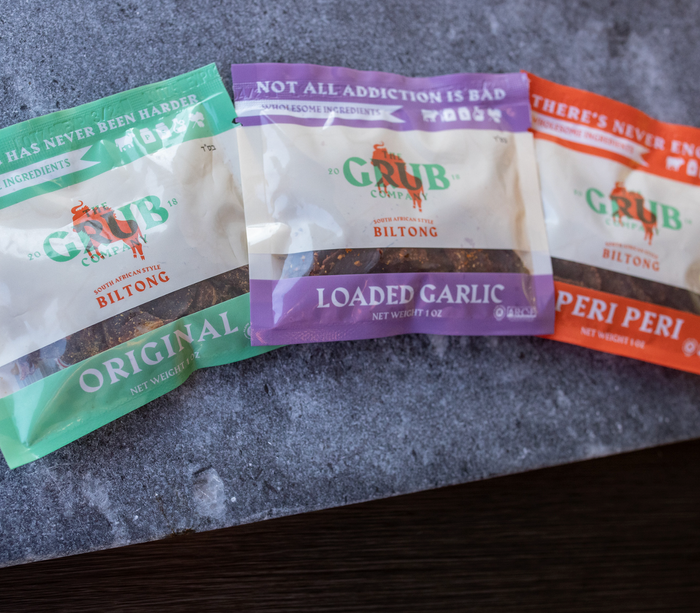
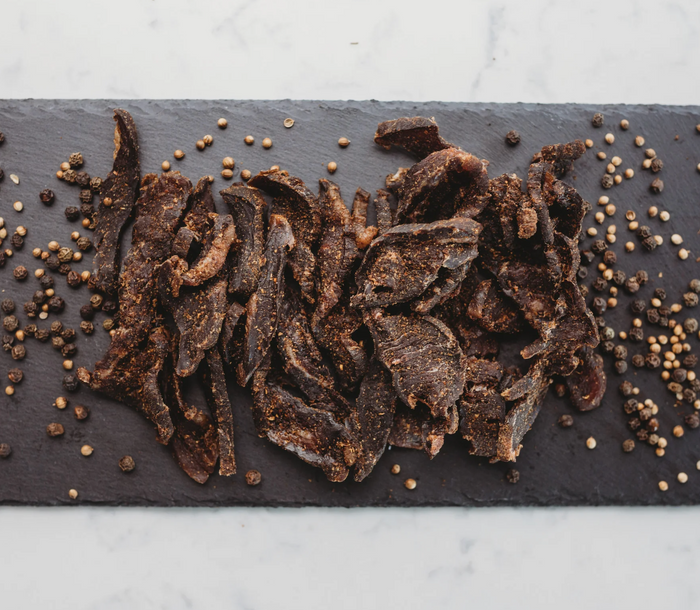
Our Sliced Biltong is the one to start with. Each 3 oz bag is sliced, sealed and ready to eat, with nothing to cut. It comes in three flavors:
- Original: beef first, then the warm citrus note of coriander. It suits everyone.
- Peri Peri: the same meat with real heat building behind it. Not a whisper.
- Loaded Garlic: roasted garlic, rounder and sweeter, savory rather than hot.
At a catered event with a mixed crowd, buy mostly Original. It is the flavor nobody has to be warned about. Add Loaded Garlic as the second bowl. Peri Peri is the right pick if you know your guests like heat. It divides a room, which is entertaining at home and inconvenient at a kiddush or a wedding reception where you cannot ask everyone what they can handle.
The sweet counterpoint: Meat Candy
Biltong is savory and salty. Our Meat Candy, which is our beef jerky, is cooked, glazed and sweet. Hickory Kickory Dock is smoky hickory with the sweetness behind it. Baa-Baa BBQ Sheep is Korean BBQ, sweet and savory together. Both are real, whole sliced beef. Putting one bowl of each side by side gives guests a choice, and a choice is what turns a snack bowl into a board. You can see the whole jerky range in our kosher beef jerky collection.
One note: Meat Candy uses a glaze. If anyone in your group has a food allergy or a dietary restriction, check the label or ask us before you order.
For a big guest list: the pound
If you are feeding a hall, a bag at a time gets tedious. Our Bulk Biltong, a full pound of sliced biltong, comes in the same three flavors with no slicing needed. Portion it into bowls before the event. Do not open the whole pound onto one tray and leave it for hours.
When not to buy a slab
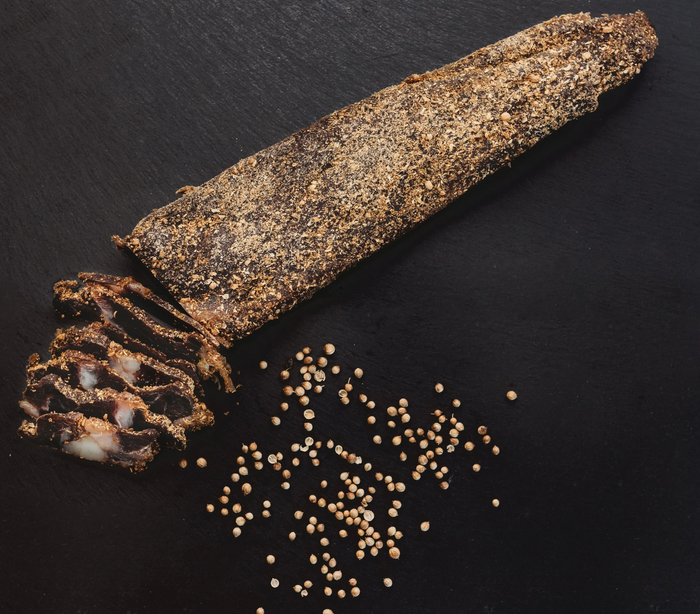
Biltong Slabs are a good centerpiece at a home party, with a knife and a board. They are the wrong pick at a catered event. A slab needs a board, a sharp knife and a person willing to cut. At an event where you want nobody working, sliced beats slab every time. Sliced disappears. A slab waits for a volunteer.
How much to buy
A simple rule for an appetizer board is 2 to 3 ounces of meat per guest. If the board is also standing in for part of the meal, plan on about double that. A 3 oz bag is a sensible unit, so one bag per guest is the top of the range and half to one bag per guest is the usual range.
Two adjustments:
- Long cocktail hour, short main meal: go to the top of the range. People graze more when there is nothing else to do.
- Big plated dinner right after: stay at the bottom. The board is a starter, not the event.
Biltong keeps well in a sealed bag, so extra is never wasted. Leftover bags go home with you. For the full math, including mixed crowds, our guide on how much biltong to buy for a party works it out properly.
How to set it up so nobody has to touch it
The goal is that nobody on the catering staff or on your side is assigned to this table. Here is how to do it.
- Portion before the day. Open the bags at home and pour the biltong into clean bowls, or a clean tray lined with parchment. Do not open bags on site and carry loose meat around. If you prefer, set out the sealed 3 oz bags in a basket and let guests open their own.
- Use meat-only or pareve serving pieces. A bowl or tray that has held dairy is a question for your rabbi. The simple fix is to use new or dedicated pieces, or disposable ones, and not think about it again.
- Put it at the arrival point. The welcome table or the bar is the right spot. That is where people are standing with nothing to do.
- Add a simple label. A small card that says what each flavor is. "Original", "Garlic" and "Peri Peri (spicy)" is enough. It saves the staff from answering the same question fifty times.
- Add pareve sides if you want a fuller board. Pickles, olives, mustard and crackers all work, but read every label. Crackers and chocolate sometimes contain milk. Look for a kosher symbol that says pareve. Only add what the caterer agrees to put out.
- Refill once, then stop. Keep two or three sealed bags in a bag under the table. One refill around the midpoint is plenty.
If you want to build something larger, with sides, a slab and a proper layout, our guide to building a biltong charcuterie board covers it. That is a different job, and a bigger one. The setup above is the low-effort version.
Shipping and timing
We ship within the US only. Order well ahead of the event, not the week of. Biltong is shelf-stable, so there is no reason to cut it close, and an early order leaves room to adjust the quantities once your final guest count settles. US orders over $50 ship free. You can see every size, flavor and sampler on Buy Biltong Online.
If you are not sure which flavors to commit to for a crowd, order a Biltong Sampler Pack first and taste before you buy in volume. Our Biltong Sampler Pack is one mini bag each of Original, Peri Peri and Loaded Garlic.
The bottom line
A meat board at a catered event should add food, not work. Check with your caterer and your rabbi first, confirm the meal is meat or pareve, portion the biltong into bowls ahead of time, and put it where guests arrive. Mostly Original, a bowl of sweet jerky for contrast, and nobody has to be in charge of it. Biltong is the wrong pick if you want a hot, plated starter, or if the meal is dairy. For everything else, it is the lowest-effort board you can add.
Frequently Asked Questions
Can I bring my own biltong to a kosher catered event?
Ask the caterer and the venue first. Some allow sealed, certified packaged food and some do not. If a rabbi or supervisor is involved in the event, ask them too, and follow their answer.
Does a meat board work if the catered meal is dairy?
No. Meat and dairy are kept separate, so a beef board does not belong at a dairy meal. If the meal is meat or pareve, it fits. How long to wait between a meat meal and dairy depends on your family's custom.
How much biltong do I need for a catered event?
About 2 to 3 ounces per guest for an appetizer board, and roughly double that if it also stands in for part of the meal. A 3 oz bag of Sliced Biltong is a handy unit. Buy a little extra, since sealed bags keep.
Which flavor is safest for a mixed crowd?
Original. It is beef, then the warm citrus note of coriander, and it suits everyone. Add Loaded Garlic as a second flavor. Peri Peri has real heat, so use it when you know your guests like it.
Does biltong need refrigeration or serving utensils?
No. Sliced biltong is ready to eat from the bag, needs no refrigeration and is eaten by hand. That is exactly why it adds so little work to a catered event.
Is Grub's biltong certified Glatt Kosher?
Yes. Our biltong and Meat Candy are certified Glatt Kosher. Our kosher biltong page has the details. For Passover, check for a Pesach certification before you buy.
Can you ship to an event outside the US?
No. We ship within the US only.