Rosh Hashanah Food: Simanim, Meat Dishes and the Table
Rosh Hashanah food is built around the simanim, the symbolic foods eaten at the start of the meal, followed by a festive Glatt Kosher meat meal that leans sweet. Start with apple and honey, add dates, pomegranate and one or two more simanim, then serve a braised main like honey brisket.
Related: Rosh Hashanah Simanim: The Symbolic Foods, Apples and Honey Explained
We make certified Glatt Kosher biltong and beef jerky, so we spend a lot of time thinking about what goes on a holiday table. We are not a caterer, and this is not a halachic ruling. It is a practical guide to the simanim, the meat dishes that suit the table, and the small things that make a long Yom Tov meal easier to run.
What the Simanim Are and How the Seder Works
Simanim means "signs" or "omens." On the first night of Rosh Hashanah, many families eat a set of foods and say a short prayer over each one. The prayer is called a yehi ratzon. It begins "May it be Your will," and it plays on the Hebrew or Aramaic name of the food to ask for something good in the year ahead.
The most widely known siman is an apple dipped in honey. The blessing over the fruit comes first, then the prayer for a sweet year. After that, the order and the exact list vary. Ashkenazi, Sephardi, Syrian, Moroccan and Persian families each have their own. Some do a full seder of seven or more foods. Some do three. Both are normal.
Here are the simanim you will see most often.
- Apple and honey. For a sweet new year. The one nearly everyone does.
- Dates. Tamar in Hebrew, tied to the hope that our enemies be removed.
- Pomegranate. For a year full of good deeds, as a pomegranate is full of seeds.
- Leek or scallion (karti). Tied to the hope that those who wish us harm are cut off.
- Beet (selek). Same idea, based on a word meaning "to remove."
- Squash or gourd (kara). For a good decree, as the word sounds like "to read" or "to proclaim."
- Black-eyed peas (rubia or lubia). For increase. Many families cook them in a stew.
- Head of a fish or a ram. So we are the head and not the tail.
Customs differ on which foods you eat, which you only look at while saying the prayer, and what order you go in. If your family does it one way, keep doing it. If you are hosting guests with a different tradition, ask your rabbi how to handle it, or simply ask the guests what they are used to.
Many families also avoid certain foods at this meal, such as nuts or very sour and bitter things. The reasons given vary, and not everyone avoids them. This is a minhag, a custom, not a universal rule. Ask your rabbi what applies to your household.
Setting Up the Table Before Yom Tov
A simanim plate looks like a lot. It is mostly slicing, and it can all be done the day before.
Cut the apples last, as close to the meal as you can. Slice the leek, beet and squash in advance. Roast or boil the beet and squash, then store them covered in the refrigerator and bring them to room temperature before serving. Split the pomegranate and put the seeds in a small bowl. Set out the honey in a dish you do not mind getting sticky.
Plan one small plate or bowl per food. The goal is that nobody has to reach across the table or ask where the dates are while the blessing is being said.
What you may prepare on Yom Tov itself is not the same as what you may prepare on Shabbos, and customs differ. Do as much as you can before candles, and ask your rabbi about the rest. Our piece on Shabbos and Yom Tov food that needs no kitchen covers the foods that never need you to touch an oven.
Meat Dishes That Suit the Rosh Hashanah Table
The Rosh Hashanah meal is a meat meal in most homes. Sweet is the theme, but not too sweet. A honey-braised main sits better next to roasted vegetables and a tart salad than next to more sugar.
Honey and Apple Braised Brisket
This is the main course that most people picture. It is forgiving and it reheats well, which matters when the meal is on Yom Tov.
- One 5 lb first-cut brisket, kosher, trimmed lightly (leave a thin layer of fat)
- 2 large onions, sliced thick
- 4 cloves garlic, smashed
- 2 tart apples, cored and sliced
- 1 cup beef broth, pareve or meat as appropriate to your meal
- 1/4 cup honey
- 1/4 cup apple cider vinegar
- 2 tablespoons tomato paste
- 1 tablespoon kosher salt, 1 teaspoon black pepper
Season the brisket on both sides. Sear it in a hot, heavy pan, four to five minutes a side, until it browns. Put the onions in the bottom of a roasting pan and lay the brisket on top. Stir the broth, honey, vinegar and tomato paste together and pour it over. Tuck the garlic and apples around the meat.
Cover tightly with foil. Braise at 325°F for about three and a half to four hours, until a fork slides in without pushing. Cool it in the liquid, refrigerate, and slice the next day against the grain. Reheat the slices in the sauce, covered, at 300°F for 30 to 40 minutes.
Slicing cold is the trick. Hot brisket shreds. Cold brisket slices cleanly. Do this before Yom Tov and you only have to warm it.
The trade-off: it is a long, heavy dish. If you are feeding six or fewer, a smaller cut or chicken is the better call.
Honey-Glazed Chicken Thighs
For a smaller table, or as the second main alongside brisket.
- 8 bone-in, skin-on chicken thighs
- 3 tablespoons honey
- 2 tablespoons Dijon mustard
- 2 tablespoons olive oil
- 1 tablespoon soy sauce or a certified equivalent, if your family uses it
- 1 teaspoon garlic powder, 1 teaspoon paprika, salt and pepper
Whisk everything but the chicken. Toss the thighs in the mixture and let them sit for an hour. Roast skin-side up at 425°F for 35 to 40 minutes, until the skin is deep gold and the juices run clear. Spoon the pan sauce over at the end.
Dishes Built Around the Simanim
Some families cook the simanim into the meal rather than only tasting them first. Roasted beets and squash with a little honey and salt work as sides. A lubia stew of black-eyed peas, tomato, onion and garlic goes well beside meat. Leeks can be braised alongside the brisket. A pomegranate salad is just seeds, chopped herbs, red onion and lemon, and it cuts through a heavy main.
The First Course, Before Anyone Sits Down
Between candle lighting and the blessings, guests arrive and wait. Something small and cold on the table helps. It also means the hostess is not plating while she is trying to greet people.
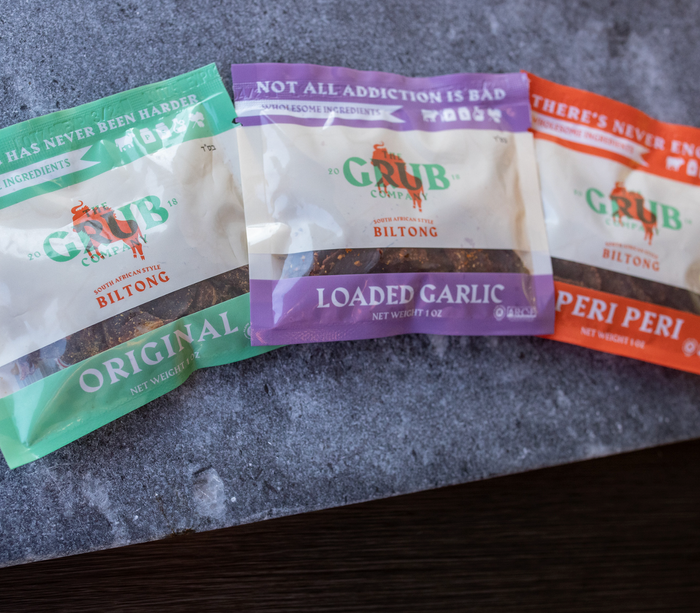
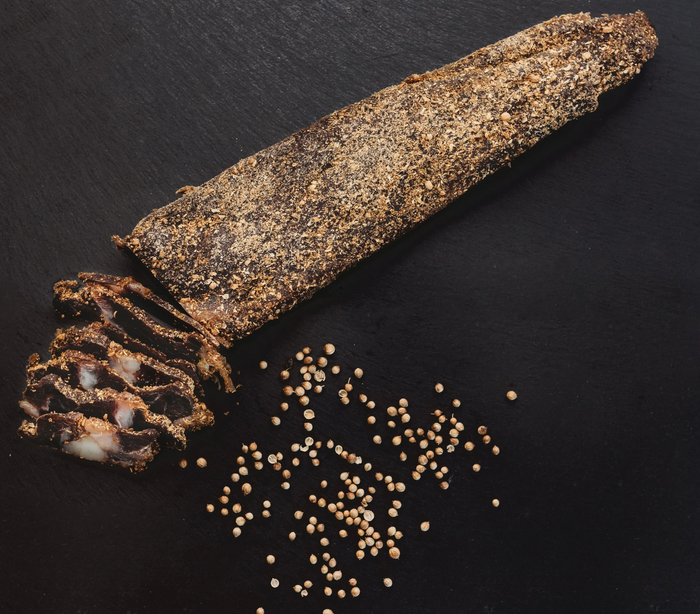
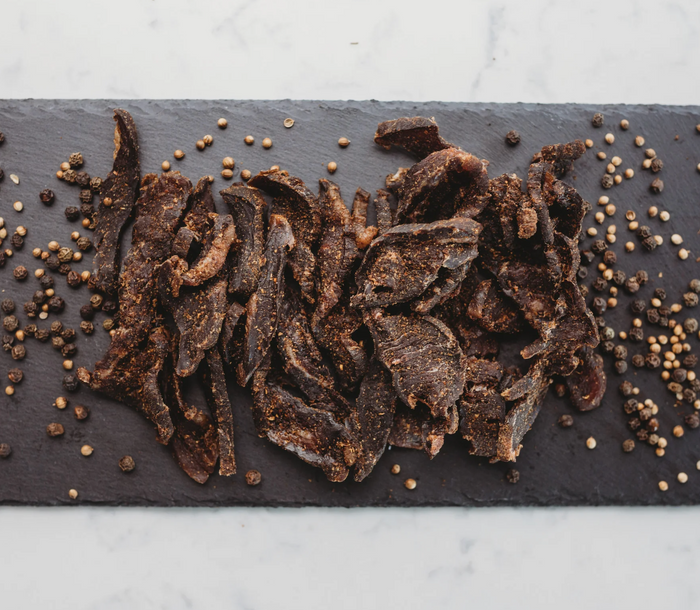
Biltong is a good fit. It is air-dried beef that is already cured and ready to eat, so there is nothing to cook, slice or warm. It keeps at room temperature and it does not make the table sticky. Our Sliced Biltong comes in a 3 oz bag in Original, Peri Peri and Loaded Garlic. For a mixed crowd, Original is the safe choice. Peri Peri has real heat and divides a room.
Here is one simple pairing that fits the theme.
Biltong and date bites. Slit 12 Medjool dates and remove the pits. Press one almond into each, if no one at the table has a nut allergy. Wrap each date in a 2-inch strip of Original biltong. Serve at room temperature. It takes about fifteen minutes and holds for a day, covered. The sweet date and the salty beef is a combination people either love or do not, so put out something more familiar beside it.
If you want sweet instead of savory, Meat Candy is our jerky. It is cooked and glazed, in Hickory Kickory Dock or Baa-Baa BBQ Sheep. It suits a board with pickles, olives and mustard. It is not the thing to put out right before a honey brisket, because you will have two sweet items competing. Pick one or the other.
If you are building a larger spread, our kosher beef jerky collection is where the jerky lives. Everything we sell is certified Glatt Kosher.
One honest limit. Biltong is the wrong pick if your meal is dairy, or if a guest keeps a stricter standard than your own. It is a meat product. Keep it on the meat side of the table and away from cheese, butter and cream. If you are not sure how long to wait between meat and dairy, follow your family's custom or ask your rabbi.
Rosh Hashanah Gifts and the Guest Who Brings Something
Rosh Hashanah is also a gift-giving time. Honey, apples, dates and cakes are the usual. A bag of biltong is a reasonable addition for a host who keeps a meat kitchen, since it does not need refrigeration and does not need to be opened that night. The Buy Biltong Online page lists sizes and samplers. A sampler lets the recipient find their own heat level, which matters because you do not know their tolerance as well as you think. If the gift is going to a family you do not know well, check that they keep a standard compatible with the certification before you buy.
US orders over $50 ship free. We ship within the US only, so order early if the gift is going out to family and the date is fixed.
Buying kosher meat online has its own checks, and we wrote them down in How to Buy Kosher Meat Online.
Bottom Line
Do the simanim simply. Apple and honey, dates and pomegranate cover most tables, and you can add the rest if your family does. Cook one braised main the day before and slice it cold. Put something ready to eat on the table for the wait before the blessings. Ask your rabbi about anything contested, and keep meat and dairy apart all the way through.
Frequently Asked Questions
What foods are eaten on Rosh Hashanah?
Most families eat the simanim first: apple dipped in honey, and often dates, pomegranate, leek, beet, squash and black-eyed peas. The meal that follows is usually a festive meat meal with a braised main, roasted vegetables and something sweet to finish. Many families also serve round challah, as a symbol of the cycle of the year.
What are the simanim for Rosh Hashanah?
Simanim are symbolic foods eaten with a short prayer asking for a good year. Common ones are apple and honey, dates, pomegranate, leek, beet, gourd and black-eyed peas. Some families also include the head of a fish or ram. Which ones you eat and in what order depends on your family's custom, so ask your rabbi if you are unsure.
What meat is served on Rosh Hashanah?
Brisket is the most common main course in Ashkenazi homes, often braised with honey or onions. Chicken is also very common, as are roasts and stews. Sephardi and Mizrahi families serve their own dishes, such as lamb, stuffed vegetables and rice with meat. Whatever you serve, buy it certified and keep meat and dairy separate.
Can you eat biltong on Rosh Hashanah?
Our biltong is certified Glatt Kosher and ready to eat straight from the bag, so it needs no cooking or warming. It is a meat product, so serve it at a meat meal and not alongside dairy. If you have a question about a specific Yom Tov practice, ask your rabbi.
How far ahead can I make the Rosh Hashanah meal?
Most of it. Brisket is better made a day or two ahead and sliced cold. Roasted vegetables, salads and the simanim plate can be prepared the day before. Cut the apples last. What you may do on Yom Tov itself differs from what you may do on Shabbos, and customs vary, so ask your rabbi about anything you plan to do after candle lighting.
Is it OK to serve biltong before a honey-glazed main?
Yes, and it is a good use of it. A savory, salty bite before a sweet main gives the table balance. Choose Original over Peri Peri if the crowd is mixed. If your main is already very sweet, skip the sweet jerky and stick with biltong.