Shabbat Dinner Ideas: A Meat Menu That Comes Together Friday
A good Shabbat meat dinner is a cold first course, a soup, one braise or roast, two sides and a pareve dessert, all finished by Friday afternoon. Everything below can be made ahead, and one starter uses certified Glatt Kosher biltong straight from the bag.
Related: Hostess Gifts: What to Bring a Kosher Host (and Any Host)
We make kosher meat snacks, not menus. But a lot of our customers put our biltong on the table before the meal, and we have watched enough Friday afternoons go sideways to have opinions. This is a plan for a family-sized Shabbat dinner that holds together: what to serve, what to make on which day, and where each dish tends to go wrong. Our certified Glatt Kosher biltong shows up once, in the starter, and nowhere else it does not belong.
Plan the Menu Backwards From Candle Lighting
The mistake most hosts make is planning dishes. Plan the clock instead.
Work out what has to be hot at the table and what does not. Hot food on Shabbat depends on your warming setup and on what your family's custom allows. If you are unsure how to keep food warm, or what you may reheat, ask your rabbi. Everything below is built so that most of it is fine at room temperature or needs only a simple reheat.
Here is the shape of a menu that works:
- Cold first course: something that sits out while people arrive.
- Soup: chicken soup is the classic for a reason. It is better the second day.
- One main: a braise or a roast, not both. Two mains means two things to time.
- Two sides: one vegetable, one starch.
- Dessert: pareve, because the meal is meat.
Keep meat and dairy apart all the way through. That includes the dessert, the bread spread and the dressing on the salad. Read labels on anything packaged. And remember that how long your family waits between a meat meal and dairy is a matter of your own custom.
Quantity rule of thumb: for a main, plan about a half pound of bone-in meat per adult, a bit less for boneless. Plan on leftovers. Nobody has ever regretted extra brisket on Shabbat lunch.
The Cold First Course: Biltong, Dates and Almonds
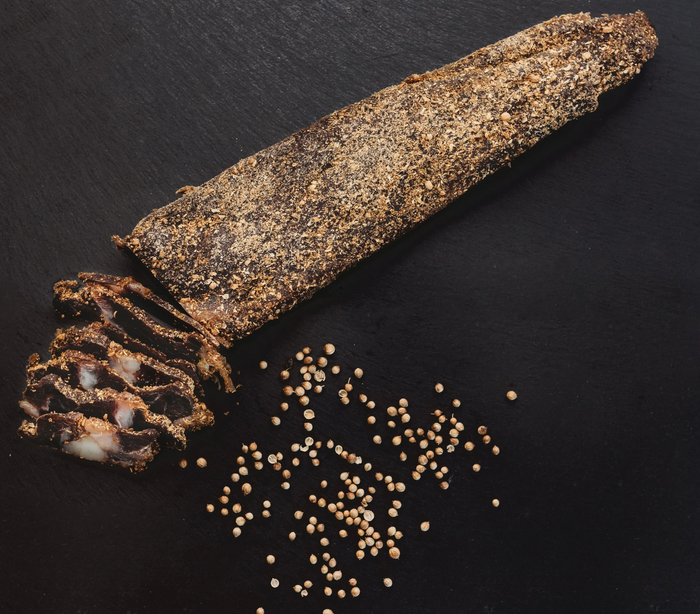
This is the one place we will push our own product, because it genuinely fits. Biltong is South African air-dried beef. It is already cured and ready to eat, so nothing here is cooked. It is savory, a little spiced, and it needs something sweet next to it.
Biltong and date bites (makes about 12):
- 12 Medjool dates
- 12 whole almonds
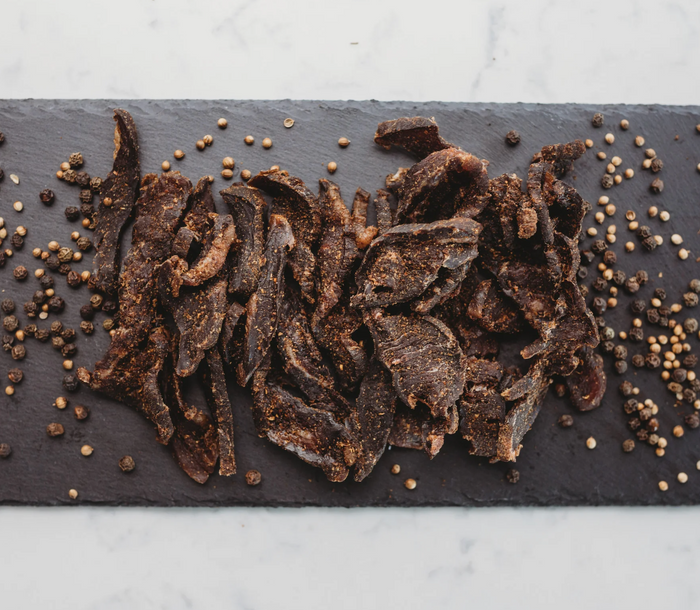
- About 12 thin strips of Sliced Biltong, Original flavor, each roughly 2 inches long
Slit each date lengthwise and remove the pit. Press an almond into the center. Wrap a strip of biltong around the date and secure with a toothpick if it will not stay. Set them on a plate, cover loosely, and leave them at room temperature. They can be made Thursday night. The whole job takes about fifteen minutes.
Use Original for a mixed table. It is the reference point: beef first, then the warm citrus note of coriander. Peri Peri has real heat and divides a room. If you have a guest who loves heat, put a small separate plate of Peri Peri on the side.
The honest trade-off: sweet and salty is not for everyone. If your table is traditional, serve these alongside something familiar, like olives or a plain challah dip, and let people choose. Biltong is also the wrong pick for anyone who wants a soft, melting bite. It gives way rather than fighting back, but it is still a chewy, dry-cured meat.
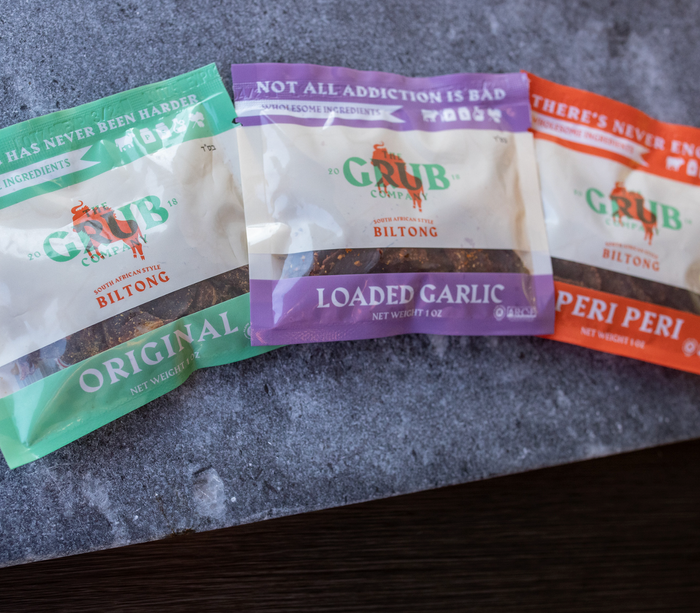
Not sure which flavor your guests will like? The Biltong Sampler Pack has one small bag each of Original, Peri Peri and Loaded Garlic, which is a low-risk way to find out before Friday.
The Main: Brisket That Rewards You for Starting Early
If you want one dish that does most of the work for you, make brisket. It is forgiving, it reheats well, and it tastes better after a night in the fridge. Make it Thursday.
Slow-braised brisket (serves 8 to 10):
- 5 pounds first-cut or second-cut brisket
- 2 large onions, sliced
- 4 carrots, cut in thick chunks
- 4 cloves garlic, crushed
- 2 tablespoons tomato paste
- 1 cup kosher dry red wine
- 1 cup beef or chicken stock
- 2 teaspoons paprika, 1 teaspoon salt, 1 teaspoon black pepper
- 2 tablespoons oil
Heat the oven to 325°F. Rub the brisket with the paprika, salt and pepper. Heat the oil in a roasting pan or a large Dutch oven on the stovetop and brown the meat on both sides, about five minutes a side. Remove it. Cook the onions in the same pan until soft, then stir in the garlic and tomato paste for a minute. Add the wine and stock and scrape the bottom of the pan.
Put the brisket back, fat side up. Scatter the carrots around it. Cover tightly with a lid or foil. Braise for about three to three and a half hours, until a fork slides in with no resistance.
Cool it, then refrigerate it in its juices. On Friday, lift off the fat, slice the cold brisket against the grain, and lay the slices back in the sauce. Slicing cold is the whole secret. Warm brisket shreds. Cold brisket slices cleanly.
Where it goes wrong: brisket slices that were cut with the grain, and brisket that was cooked too fast. Low and slow, always.
The alternative: if you would rather roast a chicken, rub two whole chickens with olive oil, lemon, garlic, salt and paprika. Roast at 400°F for about an hour and ten minutes, until the thickest part of the thigh reads 165°F. Chicken is lighter and cheaper, but it dries out faster on a warming tray than brisket does. If your setup is uncertain, pick brisket.
Sides That Do Not Need You
Two sides is enough. Choose ones that tolerate sitting.
Honey-roasted carrots. Peel 2 pounds of carrots and cut them in halves lengthwise. Toss with 2 tablespoons oil, 2 tablespoons honey, 1 teaspoon salt and a pinch of cinnamon. Roast at 425°F for 25 to 30 minutes, turning once. They are good warm or at room temperature.
Potato kugel. Grate 3 pounds of peeled potatoes and 1 onion. Squeeze out the liquid hard. Mix with 4 eggs, 3 tablespoons oil, 2 teaspoons salt and 1/2 teaspoon pepper. Pour into an oiled 9 by 13 inch pan and bake at 400°F for about an hour, until the top is deep golden. Kugel reheats well and is better with a crisp top, so do not cover it.
Both are pareve, which means they work with the meat meal and can also go on a dairy table another week.
Dessert and the Other Direction: Do You Even Need Every Course?
A pareve dessert should not need the oven on Friday. Fruit with a pareve chocolate sauce, or a simple sorbet, is enough. If you have time, a pareve chocolate mousse made with a pareve whipped topping is a hit. Check that the topping is labeled pareve, since some are not.
And be honest about how many courses you need. A starter, a main, two sides and a dessert is a complete meal. Soup is optional if your menu is already full. A table of five that skips soup is no worse. A host who is exhausted by Friday at three is.
If Shabbat afternoon is your next worry, we have written about that too: see Kosher Jerky for Shabbos Afternoon, and for planning beyond dinner, Shabbos and Yom Tov: Food That Needs No Kitchen.
A Make-Ahead Schedule
Wednesday: shop. Buy everything. Order biltong early if you need it shipped, since we ship within the US only, and US orders over $50 ship free. You can browse the full range on Buy Biltong Online.
Thursday: make the brisket. Make the soup. Assemble the date bites. Make the kugel batter only if you will bake it Friday.
Friday morning: slice the brisket and put it back in its sauce. Bake the kugel. Prep the carrots.
Friday afternoon: roast the carrots. Set the table. Plate the cold course and cover it. Stop an hour before candle lighting and do nothing else.
If you are also thinking about a sweeter, cooked snack for the kids at the table, our kosher beef jerky collection has Meat Candy in Hickory Kickory Dock and Baa-Baa BBQ Sheep. It is jerky, not biltong, so it is sweeter and more forgiving for younger tastes.
The Bottom Line
Pick one main, make it Thursday, and keep the first course cold. A Shabbat dinner does not have to be impressive. It has to be ready when the candles are lit, and it has to leave you with a little energy to enjoy it.
Frequently Asked Questions
What is a good Shabbat dinner menu for a meat meal?
A cold first course, chicken soup, brisket or roast chicken, two sides such as roasted carrots and potato kugel, and a pareve dessert. All of it can be made on Thursday or Friday morning, which leaves Friday afternoon free.
What can I make ahead for Shabbat dinner?
Almost everything. Brisket and soup are better after a night in the fridge. Date and biltong bites can be assembled the day before. Kugel and roasted carrots are best finished on Friday, but the prep can be done earlier.
Can I serve dairy at a Shabbat meat dinner?
No. If the meal is meat, keep everything meat or pareve, including dessert, dips and spreads. How long your family waits between meat and dairy is a matter of your own custom. If you are unsure, ask your rabbi.
Is biltong a good starter for Shabbat dinner?
Yes, if your table likes savory and salty flavors. Biltong is already cured and ready to eat, so there is no cooking, and it keeps at room temperature. It is a poor choice for guests who dislike chewy meat or strong spice. Original suits most tables.
How do I keep brisket from drying out?
Cook it low and slow, covered, at 325°F. Cool it in its juices, slice it cold against the grain, and then return the slices to the sauce. Do not slice it hot.
How much meat do I need per person?
About a half pound of bone-in meat per adult, a bit less for boneless, and more if you want leftovers for Shabbat lunch. A 5-pound brisket serves roughly eight to ten people alongside sides.
Can I use hot food on Shabbat?
What you may reheat and how you may keep food warm depends on halacha and on your family's custom. We do not rule on that. Ask your rabbi, and plan the menu so most of it is fine at room temperature.