Rosh Hashanah Simanim: The Symbolic Foods, Apples and Honey Explained
On Rosh Hashanah, the Jewish New Year, families eat simanim: symbolic foods, led by an apple dipped in honey, each with a short prayer for a good year. The apple and honey stand for a sweet new year, and the other foods each carry their own wish. Our own biltong and beef jerky are certified Glatt Kosher, made in Florida.
We make certified Glatt Kosher biltong and beef jerky, and we spend every fall thinking about what goes on a holiday table. We are not a rabbi, and this is not a ruling. It is a plain guide to what each siman means, how the custom works, how to set the plate, and what to do when your family and your guests do things differently.
What Simanim Are and Why We Eat Them
Simanim (singular: siman) means "signs" or "omens." The idea is simple. On the first night of Rosh Hashanah, you eat a food, say a blessing if it needs one, and then say a short prayer that begins "Yehi ratzon," meaning "May it be Your will." The prayer plays on the Hebrew or Aramaic name of the food, or on what it looks like, and asks for something good in the year ahead.
The source for the custom is the Talmud, which lists a handful of foods to eat at the start of the new year: gourd, black-eyed peas (or fenugreek, depending on how you read the word), leeks, beets and dates. Over the centuries, communities added more. The apple and honey that nearly everyone knows today is a later Ashkenazi custom, which is why you will not find it in the oldest lists. It is still the one most people do.
Practice varies, and it is all legitimate. Some families do a full seder of seven or eight foods in a set order. Some do three. Some eat each food. Some only look at it while they say the prayer. If your family has a way of doing it, keep doing it. If you are unsure, ask your rabbi.
Apple and Honey, Explained
This is the siman people search for most, so it is worth doing properly.
The apple is dipped in honey. You say the blessing over tree fruit first, the one you would say over any apple. You take a bite. Then you say the yehi ratzon, asking that the coming year be good and sweet. The order matters: blessing, bite, then the prayer.
Why an apple? The reasons you will hear are tradition-based, not a single proof. Some point to the apple's sweetness and its association with a fruit that is hardy and fragrant. Some connect it to a line in Song of Songs. Honestly, no one reason is the reason, and you do not need one to do it well. The honey is the message: the year should be sweet, not just good.
Honey is accepted as kosher, even though bees are not a kosher animal. Many families still prefer a jar with a certification on it, the same way they would with any packaged food. If you are not sure about a specific jar, ask your rabbi.
Some families also dip the round challah in honey instead of salt at the Rosh Hashanah meal, and continue through Sukkot. This is a custom, not a rule. If your family dips in salt all year, ask what your family does for this holiday.
How to set up the apple and honey
- Use crisp apples. Honeycrisp, Gala or Fuji hold up well and are sweet enough to match the honey.
- Slice them last, as close to the blessing as you can. Cut apples brown fast. A squeeze of lemon on the slices slows that down.
- Put the honey in a small bowl or jar, with a spoon that will not go missing. Plan one bowl for every four or five people, so no one reaches across the table.
- Have a few extra slices ready. They go quickly, especially with children.
The Other Simanim and What They Mean
Here are the foods you will meet most often, and the wish behind each. Most of the prayers work by wordplay, so the meanings come from how the Hebrew name sounds.
- Dates (tamar). Tied to the word for "to end." The wish is that our enemies come to an end.
- Pomegranate (rimon). The wish is that our good deeds be as many as the seeds in a pomegranate. A common saying is that a pomegranate has 613 seeds, matching the number of commandments. That is a tradition, not an exact count, and seeds vary from fruit to fruit.
- Leek or scallion (karti). The word sounds like "to cut off." The wish is that those who wish us harm be cut off.
- Beet (selek). The word sounds like "to remove." Same wish as the leek. Many families use Swiss chard or spinach, which carry the same word.
- Gourd or squash (kara). The word sounds like "to proclaim" or "to read." The wish is that a good decree be proclaimed for us and that our merits be read before heaven.
- Black-eyed peas (rubia or lubia). The word sounds like "to increase." The wish is that our merits increase. Many Sephardi families cook them into a stew.
- Head of a fish or ram. The wish is that we be a head and not a tail, meaning that we lead rather than trail behind. A ram's head also recalls the ram that took Isaac's place. Not everyone has a whole fish on the table, and many families skip it or use a picture or a fish-shaped dish. Ask your rabbi what your family does.
- Round challah. Not a siman in the strict sense, but it belongs on the table. The round shape stands for the cycle of the year. Many bakers add raisins.
Beyond this list, you may see honey cake, fresh figs, quince, or Persian and Moroccan dishes like rice with herbs and sweet fruit. Each community has its own set. A table with three of the foods above is a complete, valid table.
Many families also avoid certain foods at the Rosh Hashanah meal, such as nuts, or sour and bitter things like vinegar and pickles. The reasons given vary, and not every family keeps the custom. We mention it because a guest may politely decline a dish. It is not an insult. Ask your rabbi what applies to your household.
How to Put Together a Simanim Plate
A simanim plate looks like a lot of work. It is mostly slicing, and nearly all of it can be done the day before.
Here is a simple plan for a table of six to ten.
- The day before: Roast the beets and squash. Cube them and refrigerate them in covered containers. Wash and trim the leeks. Split the pomegranate and spoon the seeds into a small bowl.
- The morning of: Take the roasted vegetables out so they come to room temperature. Set out the dates in a bowl, with the pits removed if you serve small children.
- Just before the meal: Slice the apples. Put out honey. Give each person a small plate and a napkin.
If you cook on Yom Tov itself, or prepare anything after candle lighting, the rules are not the same as for Shabbos, and customs differ. Do as much as you can before the holiday starts, and ask your rabbi about the rest. Our piece on Shabbos and Yom Tov food that needs no kitchen covers the things that never need an oven.
Simple honey-roasted beets and squash
This covers two simanim in one pan.
- 3 medium beets, peeled and cut into 3/4-inch cubes
- 1 small butternut squash (about 2 lb), peeled, seeded and cut into 3/4-inch cubes
- 3 tablespoons olive oil
- 2 tablespoons honey
- 1 teaspoon kosher salt, 1/2 teaspoon black pepper
Heat the oven to 425°F. Toss the beets in half the oil, salt and pepper on one sheet pan. Toss the squash in the rest on a second pan. Keep them apart or the beets will stain the squash pink. Roast for 30 to 35 minutes, turning once, until the edges are browned and a knife slides in. Drizzle half the honey over each pan in the last five minutes. Serve warm or at room temperature. It holds covered in the refrigerator for two days.
Where a Meat Snack Fits, and Where It Does Not
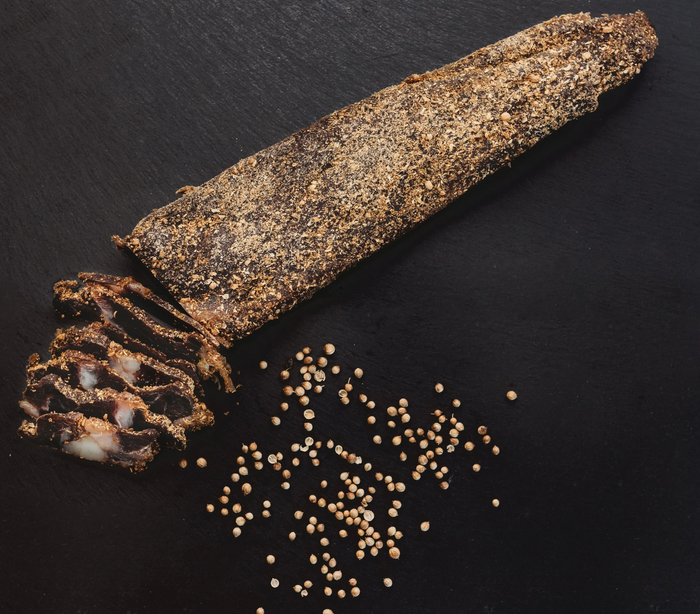
Biltong is not a siman. We do not want to suggest otherwise, and there is no tradition behind it. But the simanim are eaten at the start of the meal, and guests often wait through candle lighting, kiddush and the blessings before real food arrives. A bowl of something ready to eat helps.
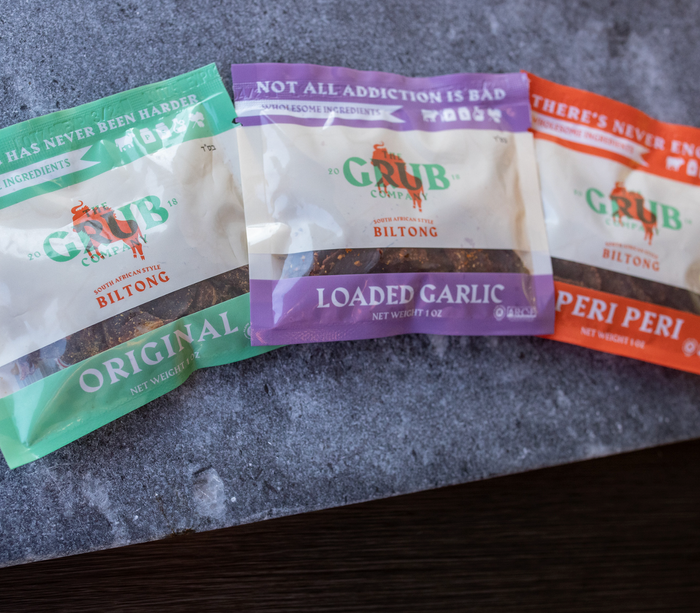
Our Sliced Biltong is air-dried beef that is already cured, so there is nothing to cook, slice or warm. It keeps at room temperature and it does not make the table sticky. It comes in Original, Peri Peri and Loaded Garlic. For a mixed crowd, Original is the safe pick. Peri Peri has real heat and divides a room.
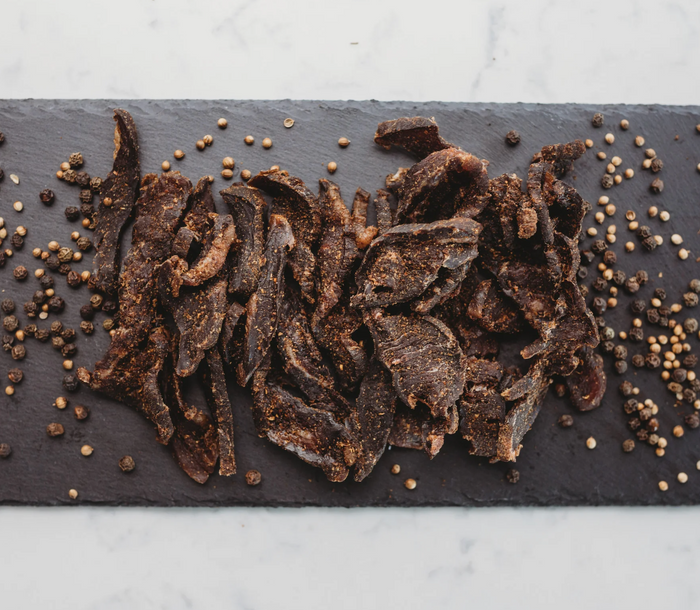
If you want sweet, our Meat Candy (our jerky) is cooked and glazed, so it leans sweet. It has a glaze, so check the label if anyone at your table has an ingredient concern. Between a sweet honey main and sweet jerky, pick one. Two sweet things compete.
The honest trade-off: biltong is the wrong pick if your meal is dairy, or if a guest keeps a stricter standard than your own. It is a meat product, so keep it on the meat side of the table and away from cheese, butter and cream. How long to wait between meat and dairy follows your family's custom, so ask your rabbi if you are unsure.
Everything we make is certified Glatt Kosher, and you can read what that means on our kosher biltong page. For a larger spread, our kosher beef jerky collection shows the full line, and Buy Biltong Online lists sizes and flavors. If you are buying for a host whose heat tolerance you do not know, the Biltong Sampler Pack lets them find their own. US orders over $50 ship free, and we ship within the US only.
If Your Family and Your Guests Do It Differently
This is the part that causes the most quiet stress. You are hosting, and half the table does it one way and half another.
Do not fix it by picking a winner. Put out the foods your family eats, say your prayers, and let guests add the ones they know. Ask them in advance. People are usually glad to bring the dish they grew up with, whether it is a lubia stew, a leek patty or stuffed vegetables. A simanim table with two traditions on it is not wrong. It is a fuller table.
If a question comes up that goes beyond custom, such as which blessing applies to a specific food or whether a particular dish is acceptable at the table, that is a question for your rabbi.
Bottom Line
Start with apple and honey. Add dates and pomegranate if you want more, and the rest if your family does them. Do the slicing the day before, and cut the apples last. Say the prayer in the order your family says it, and ask your rabbi about anything contested. Everything else is a pleasant extra.
Frequently Asked Questions
What do apple and honey mean on Rosh Hashanah?
The apple dipped in honey stands for a sweet new year. You say the blessing over the fruit, take a bite, then say a short prayer asking that the year be good and sweet. It is a long-standing Ashkenazi custom, and it is the best-known siman today.
What are the simanim for Rosh Hashanah?
Simanim are symbolic foods eaten with a short prayer for a good year. Common ones are apple and honey, dates, pomegranate, leek, beet, squash, black-eyed peas, and the head of a fish or ram. Which ones you eat and in what order depends on your family's custom, so ask your rabbi if you are unsure.
What is Jewish New Year food?
The meal usually starts with the simanim and round challah, often dipped in honey. A festive meat meal follows in most homes, with a braised main like brisket or chicken, roasted vegetables and something sweet to finish. Sephardi, Persian and Moroccan families each have their own dishes.
Why is challah round on Rosh Hashanah?
The round shape stands for the cycle of the year, with no beginning and no end. Many families bake it with raisins or dip it in honey. The explanations offered vary, and it is a custom rather than a rule.
Do you have to eat all the simanim?
No. Some families eat a full seder of seven or more foods and some do only apple and honey. Some eat each food and some only look at it while saying the prayer. Follow your family's practice, and ask your rabbi if you are not sure what it is.
Can you serve biltong on Rosh Hashanah?
Our biltong is certified Glatt Kosher and ready to eat from the bag. It is not a siman, but it works as a ready-to-eat bite while guests wait. It is a meat product, so serve it at a meat meal and keep it apart from dairy. For a question about a specific Yom Tov practice, ask your rabbi. Our guide to what Glatt certification means explains the label.
Which foods do some families avoid on Rosh Hashanah?
Many families skip nuts and sour or bitter foods at this meal. The reasons given differ and not everyone keeps the custom. If you are hosting, ask your guests in advance, and ask your rabbi what applies to your household.