No Kosher Store Near You? How to Get Kosher Meat and Snacks Anyway
If there is no kosher store near you, you have three real options: order fresh and frozen kosher meat from a certified online butcher, buy sealed certified products from a regular supermarket's kosher shelf, or have shelf-stable kosher meat snacks delivered to your door. We make certified Glatt Kosher biltong and beef jerky in Florida, and we hear from people in this exact spot every week.
Searching "kosher meat near me" and finding nothing is common. Large Jewish communities have kosher butchers, markets and restaurants within a short drive. Everyone else lives in a gap. A college town. A small city in the Mountain West. A military base. A rural county where the nearest kosher shop is a long drive and a half-day trip. This guide is for them.
We make Glatt Kosher meat snacks, not fresh meat, so we will be plain about which problem we solve and which we do not.
First, work out what you actually need
"Kosher food store" covers very different shopping trips. Sort yours before you search.
- Fresh meat for dinner. Chicken, ground beef, a brisket, Shabbos cuts. This needs a kosher butcher or a supplier that ships cold.
- Pantry and packaged goods. Sealed, certified food that lasts. Much of this is already on regular grocery shelves.
- Snacks and grab-and-go protein. Food for the desk, the car, the lunchbox, a flight, Shabbos afternoon. This is the easiest category to solve from a distance because it does not need a cold chain.
- A particular occasion. A holiday, a kiddush, a shiva house, a care package. These have deadlines, so shipping time matters more than price.
Fresh meat is the hard one. Everything else on the list can be solved without a trip.
Option 1: Check what is already near you
Before you assume nothing exists, look again. "Kosher store" is a narrow search. Wider ones turn up more.
- The supermarket kosher section. Many large grocery stores in mid-size and big cities keep a small kosher shelf or freezer case with sealed, certified meat and packaged goods. Call the store and ask. It is faster than driving over.
- A local synagogue or Chabad house. Even a small congregation usually knows where the nearest kosher meat is, who drives to get it, and whether anyone organizes a group order. This is the best source of local knowledge you have. Send an email. They will usually answer.
- A shared run. In some towns, a few families rotate a monthly drive to the nearest kosher butcher and bring back meat for everyone. If that does not exist where you live, you can start it.
- A university Hillel. Campus kosher offerings sometimes include packaged meat or a list of nearby options. Ask.
One caution. Look for a visible certification on the package, and read what it says. A label that says "kosher-style" or "made in the kosher tradition" is not a certification. The same logic applies to any packaged meat: the certification mark has to be on the package.
Option 2: Order fresh and frozen kosher meat online
This is the real answer for dinner meat. Certified online kosher butchers ship fresh or frozen cuts packed with insulation and coolant. We cover how to choose one, what to check on the certificate and what to ask in our guide to buying kosher meat online.
A few practical points from the customer side:
- Ask what is certified. Slaughter, processing and packing should all be under supervision. Ask for the current certificate, not an old one on a website.
- Plan the freezer. Shipped meat usually arrives frozen or very cold. Clear space before the box comes, and know how you will use it.
- Be home or have a plan. Do not let a cold shipment sit on a porch. Pick a delivery day when someone is there.
- Order enough to make the shipping worth it. One steak is a poor use of a cold-chain box. A month of meat is a better one.
- Know the trade-off. Online meat costs more per pound than a local butcher once shipping is counted. If a real kosher butcher is within an hour's drive and you visit now and then, the drive may beat the box.
Option 3: Get kosher snacks delivered, no cold chain needed
This is where we come in. Snacks are the easy part of the problem, and the part where people most often give up and buy something they cannot verify.
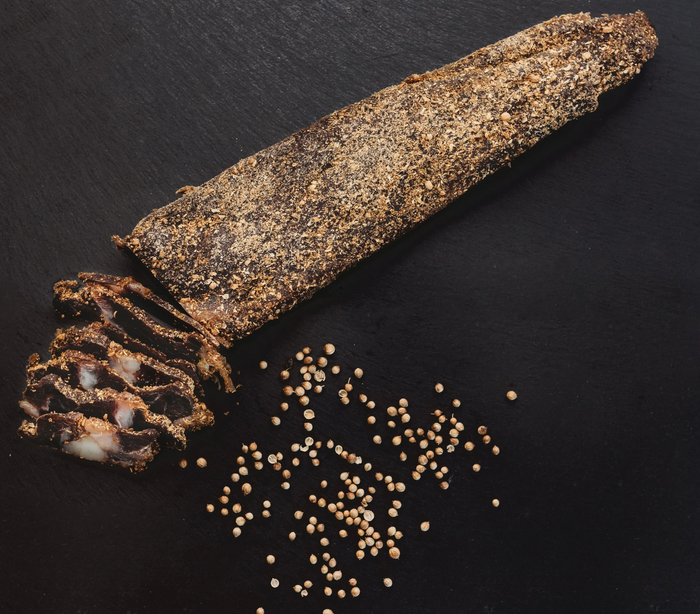
Biltong is a South African air-dried beef. It is cured and dried, so it is ready to eat and does not need refrigeration. That makes it ideal for people far from a kosher market. It ships anywhere in the US, it keeps in a pantry, and nothing about it needs a freezer or a delivery window.
Here is what we make, by name:
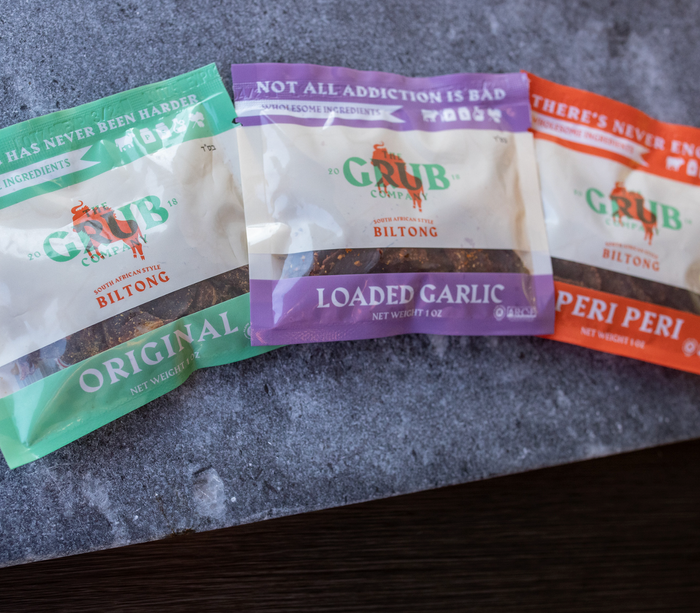
- Sliced Biltong. Our everyday bag. Three ounces, already sliced, in Original, Peri Peri or Loaded Garlic. Original is beef first, then coriander. Peri Peri has real heat. Loaded Garlic is savory and rounder, not hot.
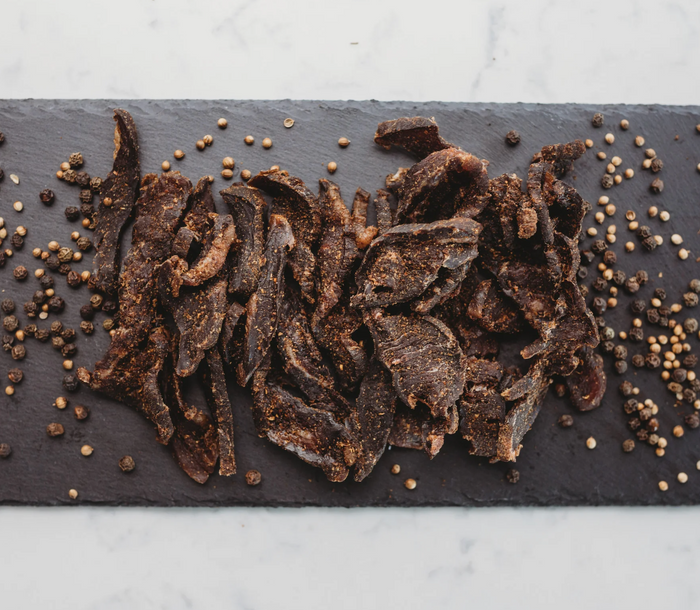
- Meat Candy, our beef jerky. It is cooked, glazed and sweeter, in Hickory Kickory Dock and Baa-Baa BBQ Sheep. If you want the jerky you grew up with, start here.
- Biltong Sampler Pack. One mini bag each of Original, Peri Peri and Loaded Garlic. The right first order if you have never had biltong.
Browse our kosher beef jerky collection for the jerky side of the shelf, or buy biltong online to see every size and format. US orders over $50 ship free. We ship within the US only.
Biltong is the wrong pick if you need dinner. It is a snack and a board item, not a Shabbos main. And if you want something fully cooked and sauced, it is not that either. For that you need Option 2.
What to look for on any package from a distance
When you cannot walk into a shop and ask questions, the package has to answer them. Check these before you buy anything.
- A visible certification on the package itself. Not just a website claim. The mark should be on the label.
- The word "Glatt" if it matters to your family. Glatt describes a stricter standard for the animal's lungs. Many households look for it on beef. If your family's practice is different, follow your family's practice.
- Meat or pareve. Meat products are meat. Keep them apart from dairy in your kitchen, and wait between meat and dairy according to your family's custom.
- The full ingredient list. Read it. Sauces and glazes are where unexpected ingredients show up. Our Meat Candy uses a glaze, so check the label for anything you avoid.
- Passover. If you are buying for Pesach, look for a Pesach certification on that specific product. A year-round certificate does not cover it. If you are unsure, ask your rabbi.
How to build a small kosher stock when you live far from a store
You do not have to solve this every week. Most people who live far from a kosher market settle into a rhythm. Here is a simple one.
- Once a quarter, one big meat order. From a certified online butcher, frozen, for dinners and Shabbos.
- Pantry items from the supermarket. Look for sealed goods with a visible certification. Check each label every time, because recipes change.
- Snacks by mail. A few bags of biltong or jerky in the pantry covers lunches, travel, a hungry teenager and the long stretch of Shabbos afternoon. You are never stuck without a kosher option.
- A short list of backups. Know the nearest kosher restaurant or shop, even if it is far, for the day you need it.
If protein is the goal, our short list of kosher snacks with real protein covers what else is worth keeping around besides jerky and biltong.
When to just make the drive
We would rather tell you this than sell you something. If a kosher butcher is within reach and you need fresh cuts, a ground-to-order roast, or a conversation with someone who knows your family's needs, go. No box replaces a butcher who knows you by name and can answer a question on the spot.
Online ordering fills the gap between trips. It does not replace the shop when the shop is within reach.
The bottom line
No kosher store nearby does not mean no kosher food. Ask your synagogue first. Order fresh and frozen meat from a certified online butcher. Keep sealed, certified goods from the supermarket. And for snacks, get certified Glatt Kosher biltong or beef jerky shipped to your door, with nothing to refrigerate and nothing to drive for.
Frequently Asked Questions
How do I find kosher meat near me?
Start with a call to your nearest synagogue or Chabad house. They know where local kosher meat comes from. Then call larger supermarkets and ask whether they carry a sealed, certified kosher meat section. If neither works, order from a certified online kosher butcher.
Is a kosher section in a regular supermarket reliable?
It can be, if the products carry a visible certification on the package. You are buying a sealed, packaged product, not a butcher's service. Read the label each time. A label that says "kosher-style" is not a certification.
Can I get kosher meat shipped to my house?
Yes. Certified online kosher butchers ship fresh or frozen meat in insulated boxes. Ask for the current certificate and plan your freezer space before it arrives. We sell shelf-stable kosher meat snacks, not fresh cuts, and we ship within the US only.
What kosher meat food keeps without refrigeration?
Dried meats such as biltong and beef jerky are shelf-stable until opened. Our biltong is ready to eat and needs no refrigeration. Once a bag is open, close it tightly and finish it in a reasonable time.
Is Grub's biltong certified?
Yes. Our biltong and beef jerky are certified Glatt Kosher, and the certification is on the bag. Read the label and the ingredient list for the product you are buying.
What is the difference between biltong and jerky?
Biltong is cured with vinegar and spices, then air-dried. It is savory and sliced thin or thick. Jerky is typically cooked, marinated and sweeter. Our Meat Candy is the jerky. Our Sliced Biltong is the biltong. Many people keep both.
Do you ship outside the United States?
No. We ship within the US only. US orders over $50 ship free.