How Does Biltong Not Rot? Salt, Vinegar and Air Explained
Biltong does not rot because salt, vinegar and slow air-drying take away the water and the welcoming conditions that bacteria and mold need. Remove the water, add salt and acid, keep the air moving, and fresh beef becomes a food you can keep in a bag on a shelf. We make certified Glatt Kosher biltong, so this is a question we answer from the drying room.
Everything we make at Grub is certified Glatt Kosher, air-dried in small batches in Florida from grass-fed beef. A strip of beef left on a counter spoils in a day. A strip of biltong sits in a bag for a long time. Same animal, same muscle. The difference is a short list of steps, each one taking away something that spoilage needs.
Why fresh meat rots
Fresh beef is mostly water, and it is rich in protein. For bacteria and mold, that is a feast. Given moisture, warmth and a little time, they multiply on the surface and spoil the meat. Enzymes in the meat itself also break it down.
So preserving meat comes down to making it a bad place to live. People have known this for thousands of years. You can dry it, salt it, make it acidic, smoke it, keep it cold, or combine several of those. Biltong uses three together: salt, acid and drying.
Salt: the first line of defense
Salt does two jobs. It pulls water out of the meat through the surface, and it makes the surface hard for many microbes to grow in. A salted piece of beef starts losing moisture right away, and its surface becomes less friendly to the organisms that cause spoilage.
Salt also has a long connection to kosher meat. Salting is part of how meat is prepared in kashrut, and it has always been linked with preservation. For biltong, the point is plain: salt starts the drying and protects the surface while the rest of the process catches up.
Vinegar: a small amount of acid
Vinegar is the second step. A vinegar wash adds acid to the surface of the meat, and most spoilage bacteria do not thrive in acid. It is a light touch, not a pickle. The meat does not taste sour. What the vinegar does is give the surface extra protection in the first hours, when the meat is still wet, which is the riskiest moment.
Our guide on what the vinegar wash actually does goes into this step in more detail. The short version: vinegar adds a hurdle. It is one of several, and no single hurdle does the whole job.
Spices: flavor first, a little help second
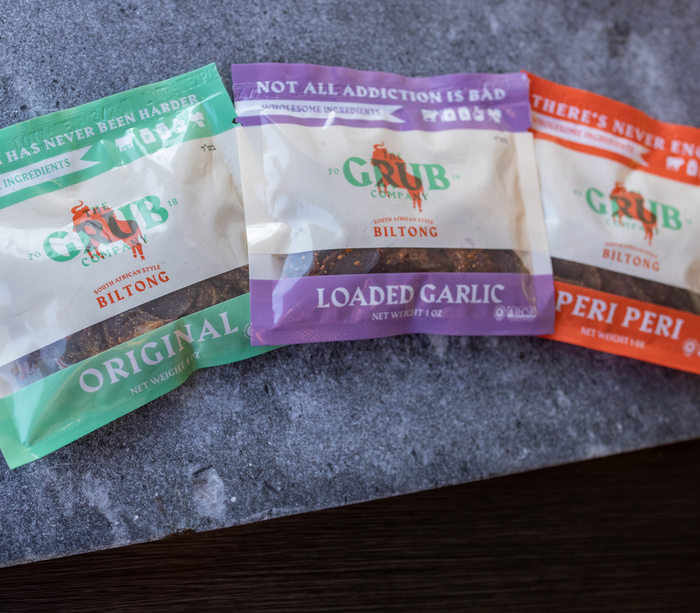
Our Original biltong lists grass-fed kosher beef, coriander, black pepper, salt, garlic and vinegar. Peri Peri adds red pepper and brown sugar. Loaded Garlic uses coriander, garlic, roasted garlic, salt, tomato powder and vinegar. The spices are there for taste. Coriander and pepper are the classic biltong notes, and they are why the product tastes the way it does.
We will not claim that spices are what keeps biltong from rotting. Salt, acid and drying are doing the heavy lifting. Spices are flavor, and any extra help they give is a bonus we do not rely on.
Air: the slow part that does the work
Drying is the step that turns salted, spiced beef into biltong. The meat is hung in a drying space where air moves across it. Moving air carries moisture away from the surface, and the meat gradually loses water from the inside out.
Three things matter in the drying room:
- Airflow. Still air lets moisture hang around the meat. Moving air keeps taking it away.
- Humidity. If the room is too damp, the meat dries too slowly and the surface stays at risk. If it is too dry too fast, the outside hardens and traps moisture inside.
- Time. The drying cannot be rushed without paying for it. We wrote about this in air circulation, humidity and hang time.
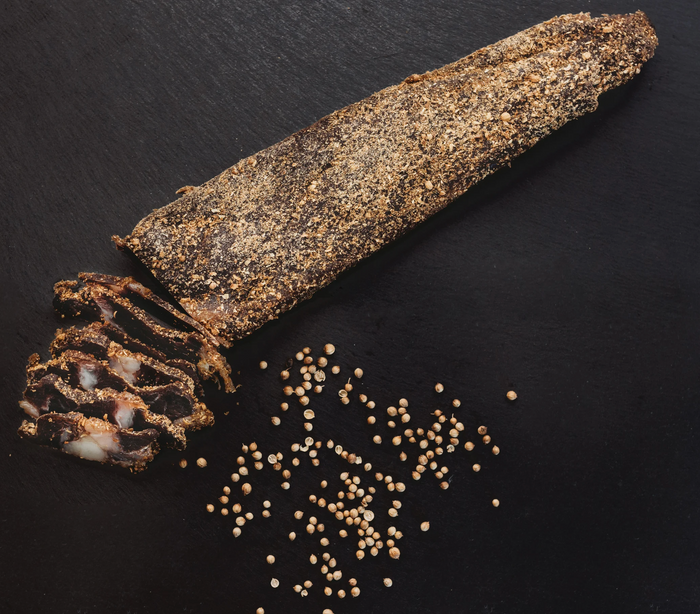
A maker who knows the meat reads the piece by feel and by look, not just a clock. Thicker pieces take longer. That is also why a biltong slab, which is uncut, can stay a little softer in the middle than a thin slice.
Why it still needs to be kept dry
This is the part people miss. Biltong does not rot because it is dry. If you add water back, the protection weakens. A bag that sweats in a hot car, a container with damp pieces, or a humid kitchen with an open bag can let mold in.
So the preserving is partly done at the factory and partly done by you. Keep it sealed. Keep it cool and dry. Reseal after opening, and finish an opened bag sooner rather than later. If you see fuzzy mold, a sour smell or a slimy surface, throw it out. Dried meat is protected, not invincible, and "it's cured" is not a promise against everything.
A note on making it at home
Plenty of people build a box with a light bulb and a small fan and dry meat at home. It can work, but we want to be plain about two things.
First, food safety. Home drying depends on clean meat, the right salt and acid, steady airflow and a humidity you can control. Get one wrong and you can end up with a product that looks fine but is not protected. If you do try it, follow conservative, tested guidance and discard anything in doubt.
Second, kashrut. Home biltong is not kosher unless the meat, the salt, the vinegar, the spices and the equipment are all kosher. That is exactly why a certified product exists. If you keep kosher, buying a certified bag is simpler and more reliable than trying to certify your own garage.
Putting the pieces together
Think of it as a series of hurdles. Fresh beef has almost none, so spoilage walks straight through. Each step adds a hurdle: salt, then acid, then drying, then a sealed bag. Spoilage organisms can clear one or two hurdles. They struggle to clear all of them at once.
That is also why the order and the care matter. Salt before drying means the surface is protected while the water is still leaving. Acid early means the riskiest hours are covered. Drying slowly and evenly means no wet pocket is left in the middle. And packing the finished meat dry means the work done in the drying room is not undone on the way to your kitchen.
It also explains why two products that look alike can behave differently. A piece dried too fast on the outside can hold moisture inside. A piece dried in a damp room can end up with a surface that is dry to the touch but not truly protected. From the outside you cannot always tell, which is why we say to trust a maker with a track record and to check the bag when it arrives.
What you can see and smell when it works
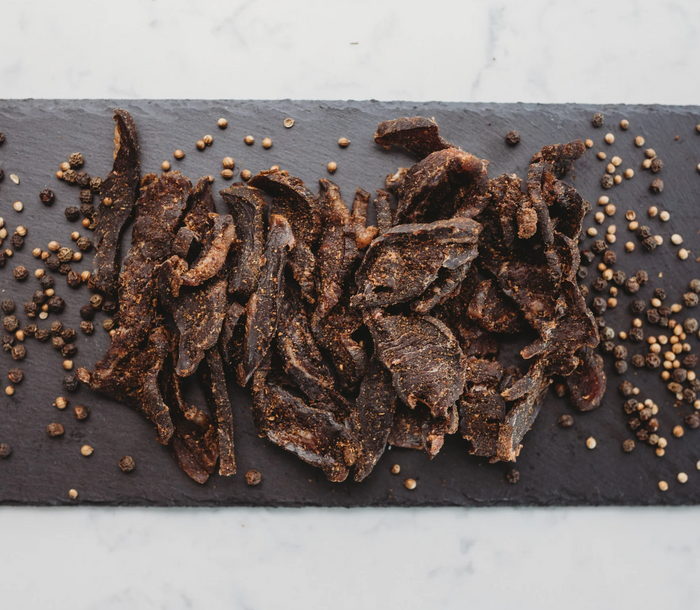
A well-dried piece of biltong has a dry surface and a firm bite. The edges look dark and the center may be a deeper red, depending on how it was cut and how long it dried. It smells of beef, vinegar and spice. It does not smell sour. It does not feel tacky. If a piece does not match that description, set it aside. Our slabs are a good example, because you can see the cut surface for yourself when you slice one.
When this is the wrong approach
Air-drying is not the right preservation method for everything. If you want meat that is fully cooked, with a soft, sweet glaze, jerky is a different method. Jerky is cooked in hours and flavored with a marinade and sugar. Our Meat Candy is that style. Biltong is the wrong pick if you want a sweet, tender, cooked-through bite.
The bottom line
Biltong does not rot because several simple steps work together: salt draws out water and protects the surface, vinegar adds a layer of acid, and slow, moving air dries the meat until spoilage has little to work with. The result keeps because it stays dry, so store it that way. If you want to taste it, the Sliced Biltong comes in Original, Peri Peri and Loaded Garlic, and everything we sell is on Buy Biltong Online. For the sweeter side of the shelf, see our kosher beef jerky.
Frequently Asked Questions
Why doesn't biltong rot without a fridge?
Because salt, vinegar and slow air-drying remove the water and add hurdles that bacteria and mold need to overcome. Keep it dry and sealed and it does not need refrigeration.
Does vinegar preserve biltong?
It helps. A vinegar wash adds acid to the surface, which works against many microbes, especially early in the process. It is one of several steps, not the only one.
Do the spices stop biltong from spoiling?
Spices are mainly for flavor. Salt, acid and drying do the main work, and we do not claim the spices preserve the meat.
Can biltong still go bad?
Yes. If it gets wet, hot or old, mold can grow. Throw out any piece with fuzzy mold, a sour smell or a slimy surface.
Is homemade biltong kosher?
Only if the meat, salt, vinegar, spices and equipment are all kosher. That is why a certified product exists. If you keep kosher and have questions, ask your rabbi.
Why is a slab softer in the middle than slices?
Thicker pieces dry from the outside in, so the center keeps more moisture. Thin slices dry through faster.
Does Grub ship outside the US?
No. We ship to US addresses only, and US orders over $50 ship free.