How Big Is Biltong? Size, Weight & Thickness Explained
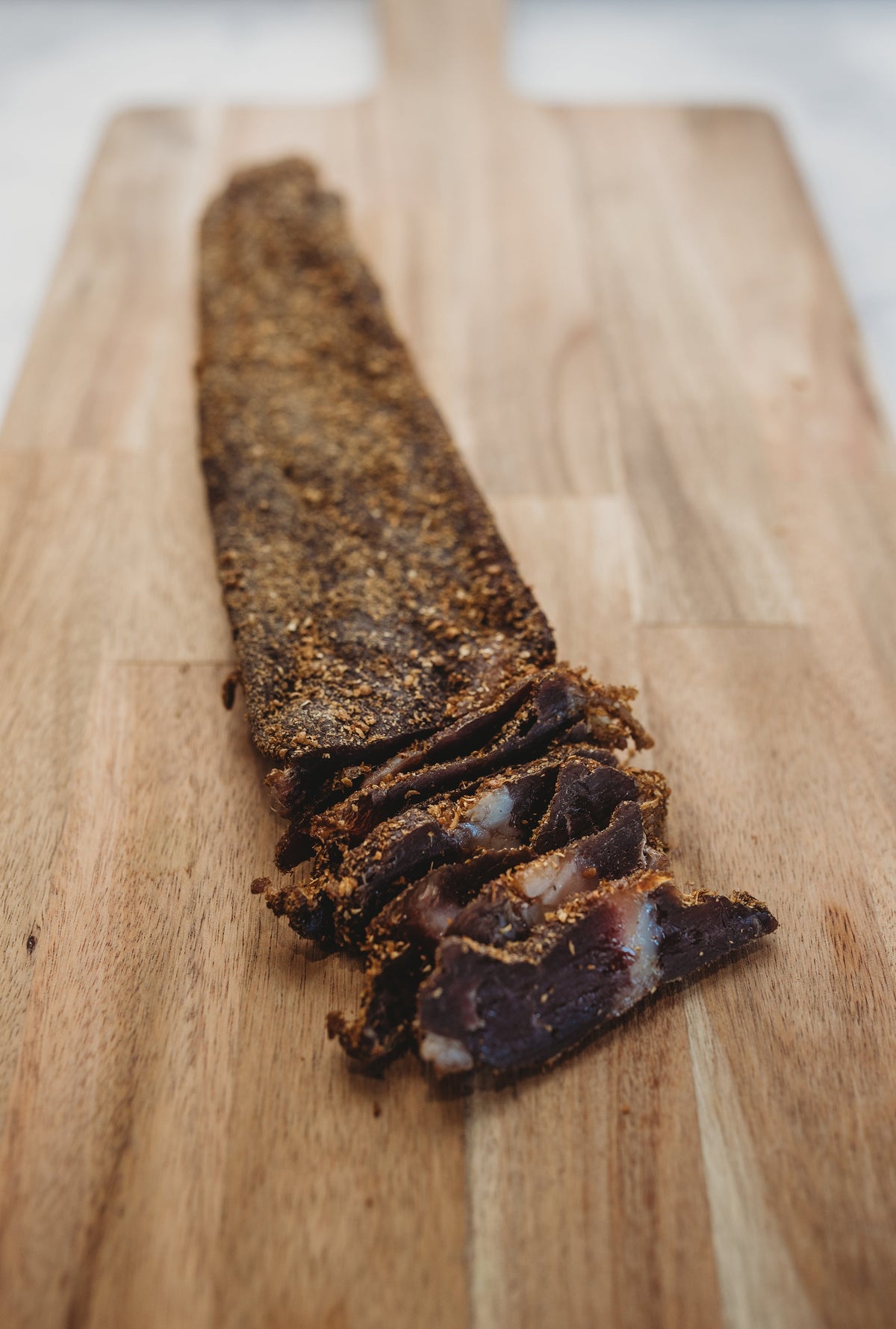
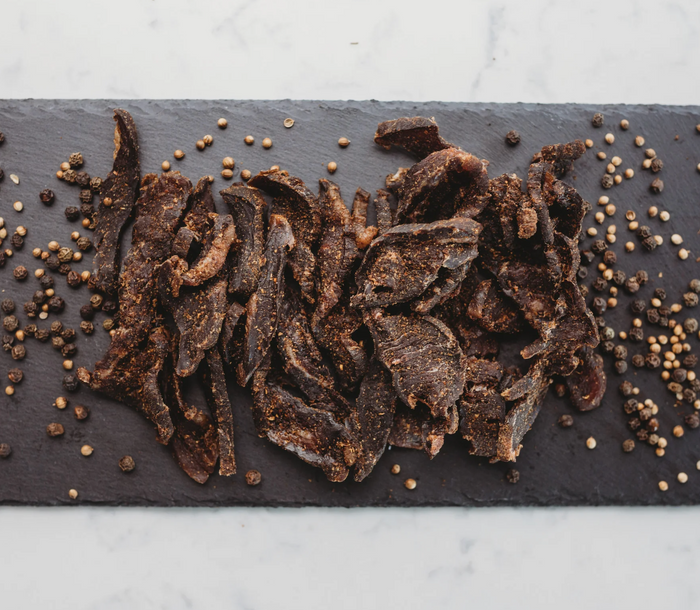
Biltong strips typically run 2 to 8 inches long and 0.5 to 1 inch thick, with individual pieces weighing anywhere from 0.5 to 3 ounces, which is roughly 14 to 85 grams. That range is wide because size depends on the cut, how the meat was sliced before drying, and how long it hung. What you will not find is biltong that is thin, flat, or crumbled into bits. It comes from whole muscle meat, which means the finished piece has real substance to it.
Where to get it: Glatt Kosher biltong for sale, made in Florida and shipped anywhere in the US (free over $50).
Size is not a cosmetic detail on a dried meat. It sets how evenly a piece dries, how it behaves in a sealed bag, how long a single piece takes to eat, and how much you are actually getting for the price on the label. Anyone who has opened a bag of something called biltong and found flat brown chips knows the difference matters. Below is what the numbers mean, where they come from, and how to read them when you are standing in front of a product page trying to work out what you will get.
The numbers, and what moves them
Three variables set the finished size of a piece: the cut it came from, how thick it was sliced before it went on the rack, and how long it stayed there. Change any one and the piece that comes off looks different. A long strip taken down the length of a topside can easily reach 8 inches before drying. The same muscle cut across gives you shorter, wider pieces that never approach that length no matter how they are dried.
Drying time is the variable most people forget. Meat loses water on the rack, and water has volume. A strip that hangs for a short cure comes off plumper, heavier and closer to the size it went on. The same strip left hanging longer comes off shorter, narrower and lighter, because the fibers have drawn in on themselves. Two pieces cut identically on the same day can differ by a third in weight purely because one came down earlier than the other.
That is why nobody in this trade quotes an exact size. We can tell you the band, we can tell you what pushes a piece toward one end of it, and we can be honest that a bag of a natural product contains pieces that are not identical. A producer promising uniform pieces to the millimeter is either forming the meat or trimming a great deal of good product into waste.
Thickness is the decision that makes biltong biltong
That thickness is the real difference between biltong and American beef jerky. Jerky is usually sliced to about an eighth to a quarter of an inch before drying. Biltong is cut half an inch to an inch thick, which means more chew, more time in your mouth, and a texture closer to a tender dried steak than a flat meat chip. That is not a cosmetic choice. Thicker cuts are the traditional way biltong has been made, and they produce a different eating experience entirely.
Thickness also changes the physics of drying. A thick piece cannot lose water evenly, because the outside is exposed to moving air and the inside is not. So it dries from the outside in, forming a firmer outer layer while the middle stays softer and darker. That gradient is the thing people are describing when they say a piece of biltong has a bite to it and then gives way. A thin slice never develops it, because the outside and the inside dry at almost the same rate.
There is a trade-off, and it is a real one. Thick pieces take much longer to dry, they occupy rack space for longer, and they are less forgiving if airflow is poor. Thin pieces are faster, cheaper to produce and more consistent. The thicker cut costs more to make. It is also the reason the product is worth eating.
Why a strip shrinks more than it looks like it should
Most of what leaves a strip of meat during drying is water, and water is most of the weight of raw beef. The visual shrink is smaller than the weight shrink, because the fibers compact rather than simply disappearing. A strip that looks two thirds of its original size can easily be under half its original weight. This is the single biggest reason people underestimate how much raw beef sits behind a small bag.
Shrinkage is also uneven. The ends of a strip dry faster than the middle, so a long piece tapers. Edges that carried a little fat hold their shape better than pure lean, because fat does not give up water the way muscle does. Pieces cut from the same muscle on the same day come off the rack with different profiles, and that is normal rather than a defect.
Weight is the more useful question
Length and thickness tell you what a piece feels like in the hand. Weight tells you what you bought. Because pieces vary so much, counting pieces is close to meaningless as a way of comparing two products, and any seller quoting a piece count without a weight is telling you very little.
The number that matters is ounces or grams in the bag, and after that, price per ounce. Our Bulk Biltong is the one product in our range with a weight in its name, one pound of sliced biltong at $58.00, which is the cleanest per-ounce figure we can give you. Everything else in the range is a smaller pack of the same meat, and the same math applies once you know what you are holding.
The smallest piece that still holds together
The minimum coherent size of a biltong piece lands around 1.5 to 2 inches, because biltong is cut from whole muscle cuts such as topside, brisket or silverside. You cannot meaningfully produce a smaller piece from those cuts without losing the structural integrity that makes it biltong rather than meat crumble. Below that, the piece dries out through and through, and the pleasant contrast between firm outside and softer middle disappears.
Small does have its place. Sliced Biltong Mini's at $4.99 are the smallest format we sell, and they exist because a lot of people want a controlled amount in a pocket rather than a piece they have to work at. The pieces are shorter and lighter, sitting at the bottom of the weight band, and they eat faster. That is the point of them.
The largest piece that still dries properly
At the other end there is a ceiling, and it is set by airflow rather than by taste. Past a certain thickness, the outside of a piece dries and tightens before the middle has released enough water. The surface then acts like a seal, the interior stays wetter than it should, and you have a piece that looks finished and is not. Producers call this case hardening, and it is the failure mode that ruins whole batches.
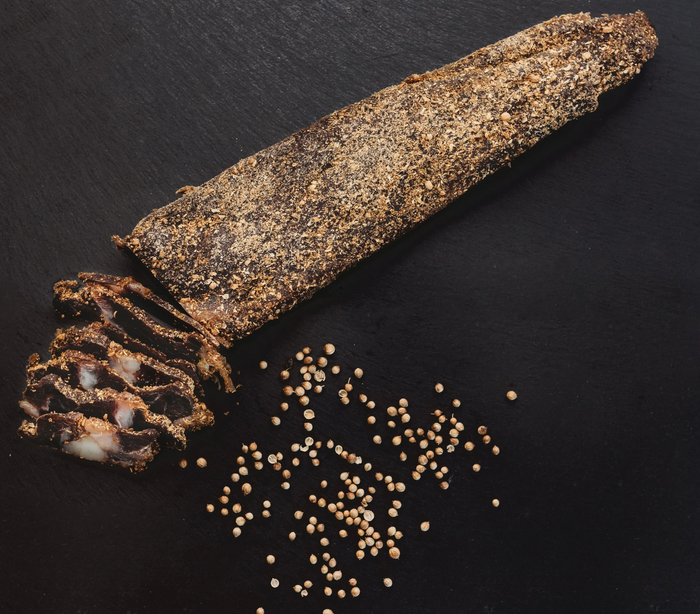
This is why a slab is still a strip rather than a block. Biltong Slabs at $58.00 are the long, uncut format, dried whole and sliced later by whoever is eating them. They sit at the top of the 2 to 8 inch range and they are thicker through the middle than anything pre-sliced. They are not, however, a lump of beef. The geometry has to let air reach the center within a reasonable time.
The three sizes in our range, and who each one suits
We sell the same meat in different geometries, and the choice is genuinely about how you eat rather than about quality tiers.
- Sliced Biltong Mini's, $4.99. The shortest, lightest pieces. Pocket sized, quick to eat, easy to hand round. The format most likely to disappear in one sitting.
- Sliced Biltong, $11.99. Full sliced pieces, ready to eat from the bag, in the middle of the size band. The default for most people.
- Biltong Sampler Pack, $12.99. The way to see more than one format side by side before you commit to a larger order.
- Biltong Slabs, $58.00. Uncut lengths at the top of the size range. You decide the thickness of every slice, which no pre-sliced product can offer.
- Bulk Biltong, 1LB of Sliced Biltong, $58.00. A full pound of the sliced format. The size question here is about the bag rather than the piece.
If you are deciding between sliced biltong and slabs, the size difference matters more than it sounds. Slabs are the full uncut strips, closer to the 4 to 8 inch end, and you tear or cut them yourself. Sliced comes ready cut into thinner pieces, closer to the mini end of the scale, and it is easier to share or eat straight from the bag.
Surface area is why size changes how a bag behaves
Cut a strip into slices and you have not changed how much meat is there. You have changed how much of it is exposed to air. That has consequences after the bag is opened. More cut surface means faster moisture exchange with the room, so sliced product drifts drier in a dry house and softer in a humid one, and it does both faster than a slab does.
A slab is the most stable format for exactly this reason. Its skin protects its interior, and it gives up moisture slowly. If you buy a pound and expect to work through it over weeks rather than days, the uncut format is the more forgiving choice. If you want to open a bag and eat, sliced is the sensible one and the difference will never come up.
Which way the grain runs
Muscle fiber direction changes what a given size feels like to eat. A piece cut with the grain holds together in long fibers and pulls apart in strands. A piece cut across the grain gives way more easily and eats shorter, even at identical dimensions. Two 3 inch pieces can feel like different products depending on which way the butcher turned the muscle.
Traditional practice cuts with the grain for slabs, because a long strip needs the fiber running its length to hang without tearing. Sliced product is usually cut across afterward. That is part of why a slab you cut yourself eats differently from bought slices even when the slice thickness is the same.
How to judge size before you open the bag
Product photography flatters dried meat, so a few habits help. Read the net weight first and treat every other number as secondary. Look for a piece shown against something with a known size rather than alone on a board. Check whether the seller calls the product sliced or whole, because that single word tells you more about piece size than any photograph will.
Be suspicious of unusually uniform pieces. Whole muscle does not produce identical rectangles, so a bag of perfectly matched shapes suggests the meat was formed, pressed or heavily trimmed. Variation is the honest signal here. So is visible fiber structure on a cut face, which flat processed products do not have.
What a pound actually looks like
A pound of dried meat is more than people expect by volume and less than they expect by piece count. Because biltong keeps a good deal of its moisture compared with fully dehydrated products, a pound of it is denser and takes up less room than a pound of very dry chips would. Our Bulk Biltong, 1LB of Sliced Biltong at $58.00 is the reference point for this, and it works out to roughly $3.63 an ounce.
That is the figure to carry into any comparison. Whatever else you are looking at, convert it to price per ounce and the marketing falls away. Pack sizes are designed to be hard to compare. Ounces are not.
Cutting a slab down at home
Buying uncut puts the size decision in your hands, which is the whole appeal. A sharp knife and a steady board are all it takes. Cut across the grain for shorter, softer pieces, and with it for long chewy strips. Thin slices off a slab eat very differently from thick ones, and it costs you nothing to try both from the same piece.
Two practical notes. Slice only what you plan to eat in the next few days, because cut faces lose moisture faster than an intact slab. And let a very firm slab sit at room temperature for a while before cutting, since cold meat resists a blade and you will end up with ragged pieces rather than clean ones.
Size complaints, and what they usually mean
Pieces smaller than expected almost always means a longer dry rather than a short measure, especially if the pieces are also firmer than usual. Pieces that seem huge and heavy usually came off the rack earlier and carry more moisture, which is a preference rather than a fault, though they will not keep as long once opened.
Wildly mixed sizes in one bag are normal for whole muscle and unusual for anything formed. Pieces that are all identical and all thin are the real warning sign. And a bag that feels light for its stated weight is worth weighing, because dried meat is one of the few foods where the eye is a genuinely poor judge of quantity.
Bottom line
Biltong runs 2 to 8 inches long, half an inch to an inch thick, and half an ounce to three ounces a piece, and the spread within that band is a feature of whole muscle meat rather than sloppiness. Judge a product by net weight and price per ounce, not by piece count or a photograph. Then pick the geometry that matches how you eat, minis at $4.99 for pocket sized portions, sliced at $11.99 for everyday, slabs at $58.00 when you want to make the cutting decision yourself, and the sampler at $12.99 if you would rather compare before you commit.
Frequently Asked Questions
How big is a typical piece of biltong?
A typical piece runs 2 to 8 inches long and half an inch to an inch thick, weighing between half an ounce and three ounces. The spread is wide because three things move it at once: the muscle the strip was cut from, how thick it was sliced before drying, and how long it hung. Longer drying means a smaller, lighter, firmer piece. Because of that variation, the useful number when you are comparing products is net weight in the bag rather than the size of any single piece.
Why is biltong cut so much thicker than jerky?
Thickness is what produces the texture. A thick piece dries from the outside in, so it develops a firmer outer layer over a softer, darker middle, and that contrast is what people mean when they say biltong has bite and then gives way. A thin slice dries evenly all the way through and never develops the gradient. The cost of the thicker cut is time, since thick pieces occupy rack space far longer and are less forgiving if airflow is poor.
How much does biltong shrink while it dries?
Most of what leaves the meat is water, and water makes up most of the weight of raw beef, so the weight loss is far larger than the visible change in size. A strip that still looks like two thirds of its original size can be under half its original weight. Shrinkage is also uneven. Ends dry faster than middles, so long strips taper, and areas carrying a little fat hold their shape better than pure lean because fat does not release water the way muscle does.
Are the pieces in a bag all the same size?
No, and they should not be. Biltong is cut from whole muscles, which are not uniform shapes, so a bag holds a range of lengths and weights. Perfectly matched rectangles in every bag suggest the meat was formed, pressed or trimmed heavily, and heavy trimming means waste that ends up in the price. Variation is the honest signal. What should be consistent is the net weight on the pack, which is the figure to compare between products.
Which size should I buy first?
If you have never tried biltong, the Biltong Sampler Pack at $12.99 lets you see more than one format side by side without committing to a large order. For an everyday bag, Sliced Biltong at $11.99 is the standard format, ready to eat straight from the pack. Sliced Biltong Mini's at $4.99 suit a pocket or a bag. Once you know what you like, Bulk Biltong at $58.00 for a full pound brings the per ounce cost down to roughly $3.63.
What is the difference between slabs and sliced for size?
Slabs are uncut lengths at the top of the size range, dried whole and cut later by whoever eats them, which lets you set slice thickness yourself. Sliced biltong arrives ready cut into shorter, lighter pieces. There is a practical difference beyond size: a slab has less exposed surface, so it exchanges moisture with the room more slowly and stays stable longer after opening. Sliced is more convenient and drifts drier or softer faster depending on your kitchen.
How do I work out whether a bag is good value?
Convert everything to price per ounce and ignore the rest. Pack sizes across dried meat products are rarely comparable, and piece counts tell you almost nothing because pieces vary so much in weight. Our clearest reference is Bulk Biltong, one pound of sliced biltong at $58.00, which is about $3.63 an ounce. Take that figure to any product page and the marketing falls away. If a seller will not state a net weight, that in itself is the answer.