Grass-Fed vs Grain-Fed Biltong: Which Muscle Meat Produces Better Flavor
The beef you start with matters more than almost anything else in the biltong-making process. You can nail the spice blend, get the hang-time exactly right, control the humidity to perfection, and still end up with a mediocre result if the muscle meat itself wasn't up to the job. Grass-fed versus grain-fed isn't just a label distinction or a feel-good marketing debate. It changes the fat profile, the color, the moisture retention, and ultimately the flavor of the finished product in ways that are specific and measurable. Here's what actually separates the two, and why it matters if you care about what ends up in your mouth.
Shop the real thing: buy biltong online, Glatt Kosher and made in Florida. US orders over $50 ship free.
Where the Difference Starts: How Each Animal Is Raised
Grass-fed cattle spend their lives eating what cattle evolved to eat. Pasture, grass, legumes, whatever grows in the field. Their muscles work harder because they roam more, which builds a leaner, denser muscle structure with less intramuscular fat overall.
Grain-fed cattle, by contrast, typically start on pasture and finish in a feedlot on corn- and soy-heavy diets. The caloric density of grain accelerates growth and encourages fat deposition inside the muscle, which is what produces the heavy marbling you see in a Prime-grade ribeye at a steakhouse. That marbling is exactly what Americans have been taught to associate with quality beef.
For a steak, heavy marbling is genuinely valuable. Fat renders when you apply heat, and that's what gives a well-marbled cut its juicy, buttery texture. Biltong is different. It's a dry-cured, air-dried product. No heat. No rendering. So the rules change.
Fat in a Dried Product Behaves Differently
When you air-dry beef without cooking it, intramuscular fat doesn't go anywhere. It stays in the meat as it loses moisture. The question becomes: is that fat an asset or a liability?
In biltong, fat can go one of two ways. If the fat is from a healthy animal with a good omega-3 to omega-6 ratio, it contributes richness and a pleasant mouthfeel. If it's from a grain-fed animal with a heavier saturated fat load and higher omega-6 concentration, it can turn rancid faster during the drying process, which produces off-flavors. Not always. Not dramatically. But it's a real risk, especially in warmer or more humid environments.
Grass-fed beef fat has a higher proportion of omega-3 fatty acids compared to grain-fed. The exact ratio varies by breed, pasture quality, and season, but the general pattern is consistent across research. That omega-3 fat is less prone to oxidative rancidity during air-drying because it doesn't react the same way under ambient conditions. This is part of why grass-fed biltong tends to have a cleaner, brighter flavor at the end of curing.
The Color Question
Grass-fed beef is darker. The muscle meat is a deeper red, sometimes bordering on burgundy, because the animals have more myoglobin in their muscle tissue from more physical activity. Grain-fed beef is lighter red, and the fat is white or pale yellow.
Grass-fed fat actually has a slight yellow tint from the beta-carotene in the grass. That yellow tinge in the fat isn't a defect. It's a marker of a pasture diet. Some people who haven't seen it before find it odd, but it's completely normal and actually a decent visual confirmation that the animal spent real time on grass.
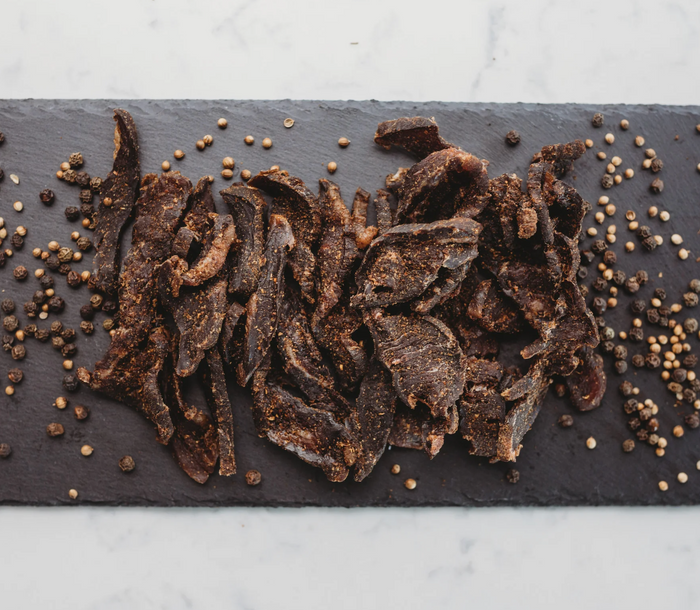
In biltong, the color of the finished product matters because it signals moisture content and quality to an experienced buyer. Dark, wine-red biltong from grass-fed beef looks different than pale-pink biltong from grain-fed. Neither color alone guarantees quality, but understanding what you're looking at helps you evaluate what you're buying.
Flavor Profile: Side by Side
This is the part most people actually care about, so let's be specific.
Grass-Fed Biltong
The flavor tends to be more pronounced. More "beefy" in the mineral, earthy sense. There's a slight tanginess from the vinegar cure that comes through more clearly because the meat itself isn't as fatty. You get the spice blend, the salt, the coriander, and then the actual meat flavor underneath it. For people who want biltong to taste like what it is, which is seasoned air-dried beef and nothing more, grass-fed delivers that most directly.
The texture is also different. Less intramuscular fat means a firmer, chewier result. Traditional South African biltong, which is the original, was made from game meat and grass-fed cattle. The chew was part of the experience. It's not tough in an unpleasant way, but you know you're eating real muscle meat.
Grain-Fed Biltong
Grain-fed biltong tends to be milder in flavor and slightly more tender because of the fat distributed through the muscle. If you're used to American beef and find the mineral intensity of grass-fed beef a little sharp, grain-fed biltong will feel more familiar. It's less polarizing. The higher fat content also means it dries to a slightly more yielding texture.
For people who are new to biltong, especially those coming over from beef jerky, grain-fed can be an easier entry point. But experienced biltong eaters almost universally prefer grass-fed once they've had both. The depth of flavor isn't there in grain-fed the way it is in a properly made grass-fed product.
Nutritional Differences That Actually Show Up in the Final Product
Biltong concentrates everything in the raw beef because you're removing 40-60% of the moisture by weight. That means the nutritional differences between grass-fed and grain-fed beef get amplified in the dried product.
- Omega-3 fatty acids: Grass-fed beef has a meaningfully better omega-3 to omega-6 ratio. In a concentrated product like biltong, that ratio is preserved and concentrated along with everything else.
- Conjugated linoleic acid (CLA): Grass-fed beef has higher CLA content. CLA is a naturally occurring fatty acid found in ruminant fat that has been studied for various health-related properties. Biltong made from grass-fed beef will carry higher CLA levels than grain-fed equivalents.
- Protein per ounce: Both are high-protein snacks, but grass-fed biltong is often leaner, which means slightly higher protein density per gram of finished product.
- Vitamin and mineral content: Grass-fed beef tends to be higher in Vitamin E, Vitamin A precursors, and certain B vitamins. These differences are real but modest in the context of a snack-sized serving.
None of this is to say grain-fed biltong is nutritionally deficient. It's still far better than most processed snack foods. But if you're reaching for biltong specifically because you want a clean, high-protein, high-quality snack that your body will actually use, the sourcing of the beef is worth caring about.
Why the Kosher Biltong Space Defaults to Grass-Fed
Kosher beef production in the US draws from a different supply chain than conventional beef. The requirements of kosher slaughter, specifically the emphasis on animal health and the involvement of trained inspectors at each stage, tends to filter out animals that were raised in poor conditions. That doesn't automatically mean kosher equals grass-fed, but the overlap between quality kosher beef and grass-fed sourcing is significant.
The Grub Company's sliced biltong is made from grass-fed kosher beef, certified Glatt Kosher by both the R.C.F. and the Aleph K. The ingredient list is simple: grass-fed kosher beef, coriander, black pepper, salt, garlic, vinegar, and that's it for the Original flavor. For people keeping kosher who also care about what they're actually eating, this matters. There's no "mechanically separated chicken," no mystery fillers, no ingredients you'd need a chemistry degree to understand.
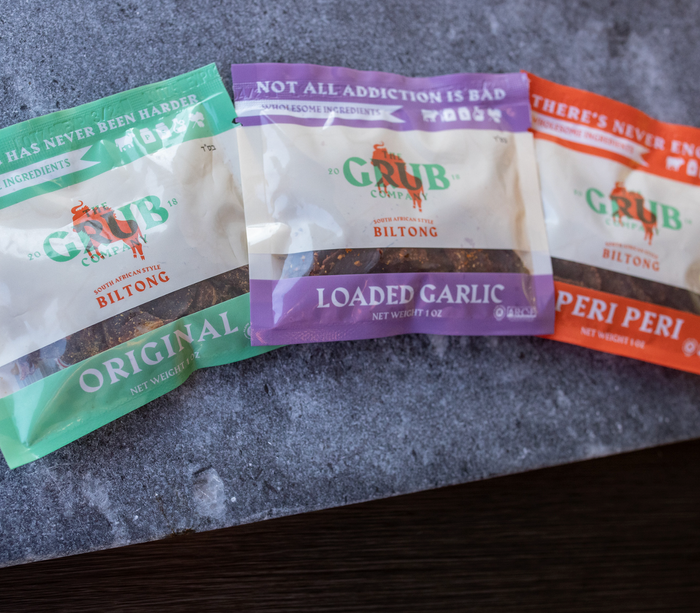
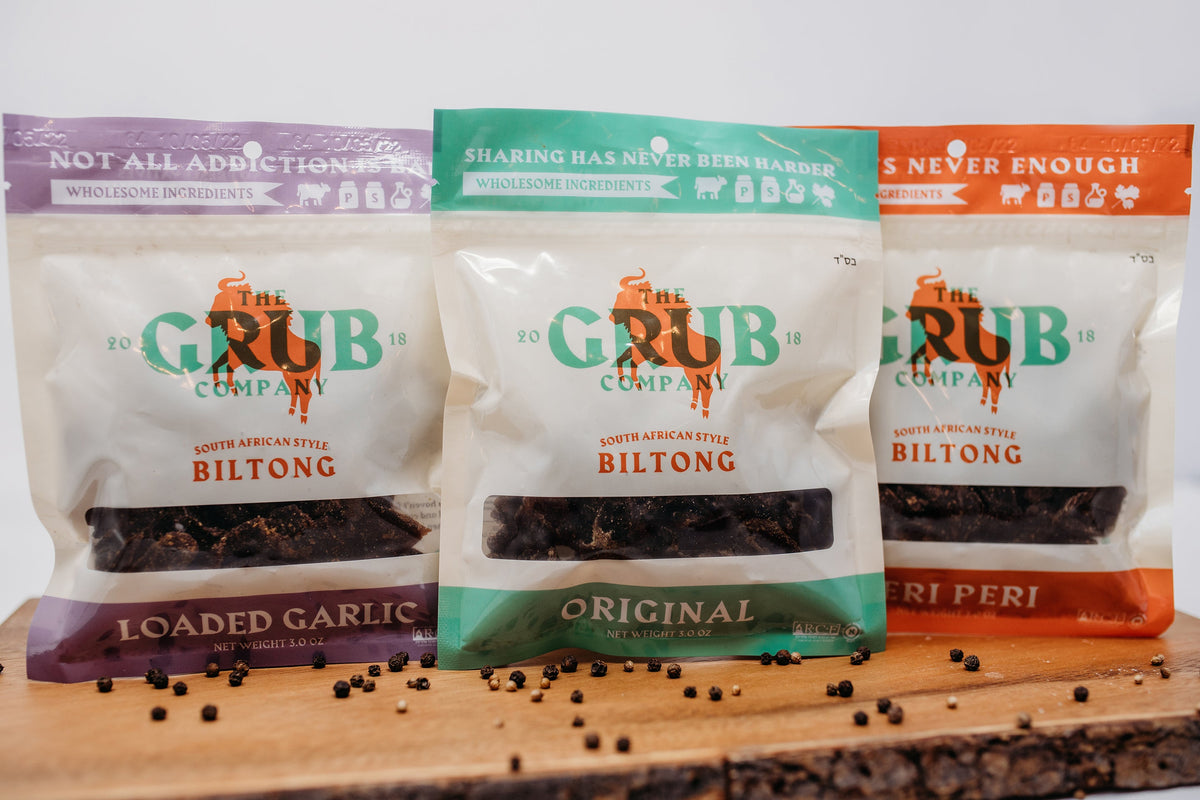
If you want to try all three flavors before committing, the Biltong Sampler Pack at $12.99 is the lowest-risk way to do it. One mini bag each of Original, Peri Peri, and Loaded Garlic. You'll know within a few bites which direction you want to go.
Cut Selection and Its Interaction with Feed Type
The cut of beef matters almost as much as the feed type, and the two interact. Traditional biltong uses silverside or topside, which are lean, hardworking muscle cuts from the hindquarter. Grass-fed animals develop these muscles more fully because they actually use them. The result is a tighter grain with better flavor development during the curing process.
Grain-fed beef from a feedlot animal has less developed hindquarter muscles because the animal is more sedentary. The cut may look similar, but the cellular structure is different. It holds water differently, dries differently, and yields a different texture in the end.
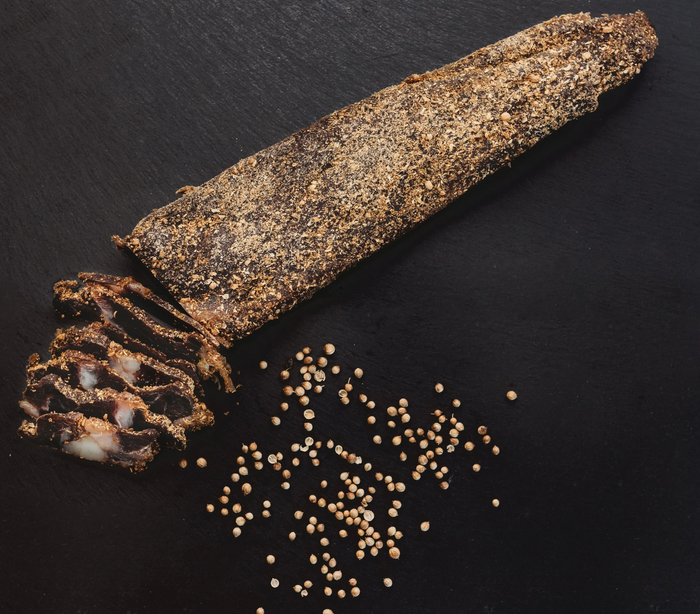
When you see biltong sold by the slab, as opposed to pre-sliced, you're generally looking at a product where the cut integrity matters most. The Biltong Slabs at $58 per pound let you slice each piece fresh off the slab, which is how traditional biltong is meant to be eaten. That freshly cut surface, where you can see the grain and the color of the meat, is where the grass-fed difference shows up most clearly in appearance.
Shelf Life and Stability
This is one area where grain-fed beef can actually have a slight practical advantage. Higher intramuscular fat content can make biltong feel more supple and pleasant at lower moisture levels, which helps when you're making product that needs to sit on a shelf for an extended time. The trade-off is potential oxidative rancidity if the fat quality isn't great or the packaging isn't right.
Well-made grass-fed biltong, properly sealed, keeps well and doesn't have this oxidation concern to the same degree. The leaner profile means there's simply less fat to go rancid. For a subscription product where you're receiving regular shipments, the consistency of grass-fed sourcing is a real asset over time.
If you eat biltong regularly, a biltong subscription makes practical sense. You lock in a consistent product from a consistent source, which removes the sourcing uncertainty that comes with buying whatever happens to be available at a random snack shop.
Which Should You Buy?
If you've never had biltong before, the feed type probably isn't your first concern. Get oriented with the flavor and texture of the product first. The Sampler Pack is where to start.
If you've had biltong and want to go deeper, you actually like what you're eating, and you're thinking about making it a regular part of how you eat, then grass-fed sourcing is worth seeking out specifically. The flavor is more complex, the nutritional profile is better, and you're getting a product that reflects the way this food was originally made in South Africa using free-range game and cattle, not feedlot animals.
For people keeping kosher, the grass-fed connection is even more relevant because the kosher supply chain already trends toward higher-quality sourcing. When a product is Glatt Kosher and grass-fed, those two things are reinforcing each other, not unrelated claims.
Grain-fed biltong isn't bad biltong. But grass-fed is better biltong. The difference is real, it's specific, and once you've tasted both, you'll know exactly which way you want to go.
Frequently Asked Questions
Can I taste the difference between grass-fed and grain-fed biltong if I'm not a beef expert?
Most people can, yes. Grass-fed biltong has a more pronounced, earthy beef flavor with a slightly firmer chew. Grain-fed biltong is milder and a little more tender from the intramuscular fat. If you've only had grain-fed beef your whole life, grass-fed can taste "stronger" at first. That intensity is the actual meat flavor coming through, not a defect. A sampler pack with different biltong flavors is a good way to orient yourself before buying in bulk.
Why does grass-fed biltong sometimes have yellow fat on it?
That yellow color comes from beta-carotene, which accumulates in the fat of cattle that eat grass and other pasture plants. It's completely normal and actually a reliable visual sign that the animal was raised on a real pasture diet. White or pale fat in biltong typically signals a grain-finished animal. The yellow tint has no effect on flavor or safety, and in experienced biltong circles it's considered a positive indicator of sourcing quality.
Is grass-fed biltong higher in protein than grain-fed?
Slightly, yes, because grass-fed beef is leaner. When you remove moisture during the drying process, everything in the raw beef concentrates. A leaner muscle with less intramuscular fat means more protein per gram of finished product. The difference isn't enormous on a per-serving basis, but if you're eating biltong specifically as a high-protein snack, the grass-fed version does deliver a marginally denser protein hit per ounce.
Does grass-fed biltong spoil faster because it's leaner?
No, it's actually the opposite. The main spoilage risk in dried meat is fat oxidation, which turns fat rancid over time. Grass-fed biltong is leaner and its fat has a better omega-3 composition that's less prone to oxidative rancidity than the heavy saturated fat in grain-fed beef. Properly sealed grass-fed biltong holds up well and tends to be more shelf-stable than its grain-fed equivalent, especially in warmer storage conditions.
Why does The Grub Company specifically use grass-fed beef for their biltong?
Grass-fed beef produces a cleaner, more complex flavor in a dry-cured product like biltong, where there's no cooking step to mask the quality of the raw ingredient. It also aligns with the Glatt Kosher supply chain, which overlaps significantly with grass-fed sourcing. The ingredient lists across the product line are intentionally short: grass-fed kosher beef, a few spices, vinegar. Using grain-fed commodity beef would change both the flavor profile and the ethos behind how the product is made.
Is there a noticeable texture difference between grass-fed and grain-fed biltong?
Yes. Grass-fed biltong tends to be chewier with a tighter grain because the muscle tissue is more developed and leaner. Grain-fed biltong is slightly more tender and yielding because the intramuscular fat softens the texture even after drying. Traditional South African biltong was always made from grass-fed or game meat, so the chewier texture of grass-fed is actually the more authentic experience. People who've grown up on it find the grain-fed version a little soft and mild by comparison.
Does slab biltong versus sliced biltong show the grass-fed difference more clearly?
Slab biltong does let you see and taste the difference more directly. When you slice a fresh piece off the slab yourself, you can see the deep red color of the grass-fed muscle, the tight grain, and the slight yellow tint in any visible fat. Pre-sliced biltong has already oxidized slightly on the cut surface, which can mute some of those visual markers. If you want to understand what grass-fed biltong actually looks like at its best, slicing from a slab is the clearest way to see it.