Buying Biltong for an Office: Quantities, Formats and What Goes Fastest
Buy Sliced Biltong Mini's at $4.99 for an office and Bulk Biltong at $58.00 only once you know the place will finish it. Individually sealed portions behave completely differently from a shared bag in a room full of people who did not choose the snack, and the difference decides whether your order gets eaten or gets stale on a shelf. Everything else in this piece is detail around that one call.
Related: Corporate and Client Gifts: Kosher Food Gifts That Work for Everyone · Gifts for Coworkers: Food Gifts That Work for Every Diet in the Office
Want some on hand? Order biltong online: Glatt Kosher, air-dried in Florida, free US shipping over $50.
Ordering for other people is a different problem from ordering for yourself, and most buying advice quietly assumes you are the one eating. You are not. You are guessing at the preferences of a group, spending somebody else's money, and living with the result in a shared kitchen for the next two weeks. That changes which format wins.
Buying for a group is a forecasting problem
When you buy for yourself, you know your own taste and you eat at your own pace. Neither holds in an office. Some people will love it, some will try one piece and stop, and some will not touch dried meat at all. You cannot know the split until you have run the experiment once.
The consequence is that your first order should be designed to produce information rather than to be efficient. Buy small formats, watch what happens, and only commit to volume once you know the shape of demand. An office that goes through a pound a week is a completely different purchase from one that takes a month to finish the same pound, and no amount of thinking about it in advance tells you which one you have.
This is also why the cheapest per ounce option is frequently the wrong first purchase. Efficiency on something nobody finishes is not efficiency.
What a shared bowl does to consumption
Put an open bag out in a kitchen and three things happen, all of them predictable and none of them good for the quality of what people eat on day four.
The bag stays open. Nobody reseals a communal bag properly, and even when somebody rolls the top down, it gets opened again forty minutes later. Air circulates through it all day, and dried meat in circulating air keeps drying. The pieces at the end of the week are noticeably firmer than the pieces at the start.
Consumption also front loads badly. The first day or two takes the majority of the bag, because it is new and people are curious, and then the rate falls off sharply. What is left is the tail of a bag that has been open the longest, being eaten by the people least interested, which is close to the worst combination available.
And a shared bowl gets picked over. The larger, better looking pieces go first and the small end pieces sit there. In a home that does not matter, because somebody eventually eats them. In an office they get looked at and passed over for a week.
Why individually portioned Mini's change the arithmetic
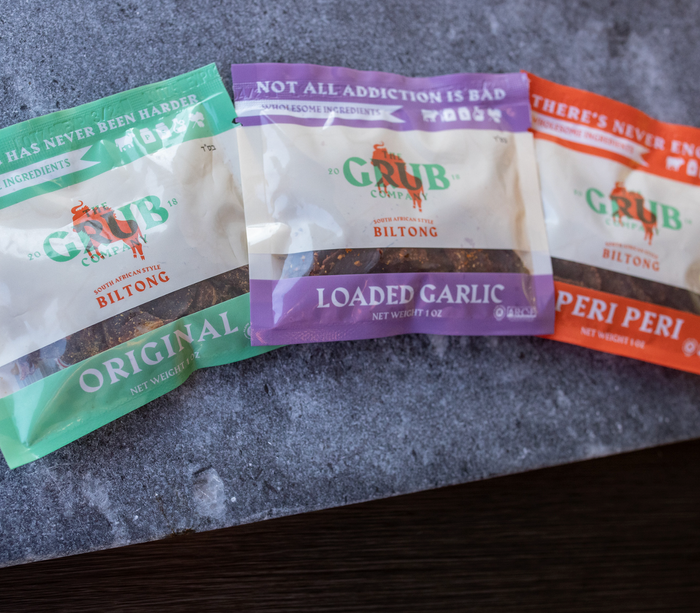
Sliced Biltong Mini's at $4.99 solve all three of those problems at once, and not because of anything about the meat inside. It is the seal that does the work.
Each person opens their own and finishes it, which means nobody ever eats from a bag that has been open for five days. Every portion tastes the way it did when it arrived. That is a straightforward quality gain that a bulk bag cannot deliver in a shared kitchen no matter what you spend.
The second effect is on distribution. Sealed portions are countable and they are fair. Ten portions for ten people is a thing everyone can see. An open bag is a race, and in most offices the same three people win it. If you are buying on behalf of a team, that fairness is often worth more to you than a lower cost per ounce.
The third effect is on waste. An unopened portion is not going stale. If half the office does not take theirs this week, they are still perfectly good next week, and nothing has been lost. An open bag that half the office ignored is a different story.
What Bulk Biltong at $58.00 is actually for
A pound of sliced biltong at $58.00 is the right purchase in a specific situation, and it is worth being clear about which one, because it is bought optimistically far more often than it should be.
It is for an office that has already proven it will finish a pound inside a week. Not one that thinks it will. One that has. At that rate, the bag is never open long enough for drying to be a real issue, the cost per ounce is the best available, and you are buying one thing instead of counting out portions.
It is also right for a specific event rather than a standing supply. A launch day, a client visit, a team lunch, an all hands with food. A pound in a bowl on a table for an afternoon is exactly what a pound is good at. The failure case is the pound bought as a general kitchen supply for a fifteen person office that takes three weeks to get through it.
The rule we would give a first time office buyer is this. Portions until you have data. Pounds once the data says a pound disappears.
Where Sliced Biltong at $11.99 fits
The standard sliced bag is the middle unit and it does a job neither of the others does. It is small enough that a team of six or eight will finish it in a sitting, which means it does not spend days open, and it is large enough to feel like a shared thing rather than a rationed one.
For a meeting, a small team, or a department within a larger office, this is usually the right unit. Two of them on a table for a group of ten is better than one pound, because the two bags get opened at different times and the second one is fresh when the first one is finished.
It is also the sensible way to add variety on top of a portion based order. Portions for everyone, plus a couple of share bags for whoever is in that day, covers both the fairness question and the sociable one.
The Sampler Pack at $12.99 for a team that has not tried it
If most of the office has never eaten biltong, a Biltong Sampler Pack at $12.99 is the most useful thing you can put in the kitchen, because it answers the question people actually have. They do not want to know your opinion on airflow. They want to know whether they like it.
Buy one or two, put them out, and pay attention to what gets finished. That is your data, and it costs under thirty dollars to collect. Then order the format that matches what you learned.
The mistake is buying the sampler for a room that already knows what it likes. At that point it is an expensive way to get a small amount of a thing people have already chosen, and you should be buying the format they choose instead.
Slabs in an office, honestly
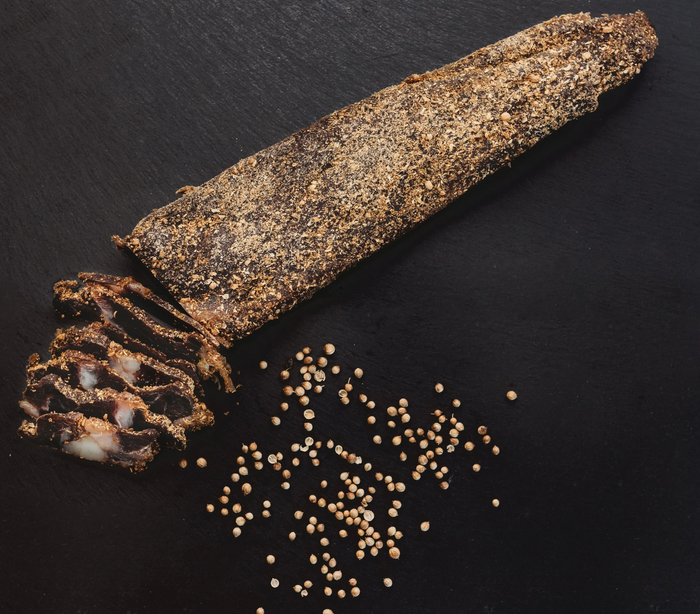
Biltong Slabs at $58.00 are a poor fit for most offices and we would rather say so than sell you one. A slab is dried whole and cut later, which means somebody needs a sharp knife, a board, and a willingness to stand there cutting while colleagues wait.
Most office kitchens have neither the knife nor the counter, and the ones that do rarely have someone who wants that job. What you get in practice is a slab that sits in a cupboard because the first person to consider it decided it was too much effort.
There is one exception worth naming. If your office has a genuine kitchen, a decent knife, and at least one person who enjoys carving things in front of other people, a slab is a better centerpiece for an event than anything else in the range. That is a real scenario. It is just not the common one.
Mixed preferences and the people who will not eat it
In any group of twenty, expect a portion who will not eat dried beef at all. Vegetarians, people who avoid beef for religious reasons, people who simply dislike the texture. Plan for that rather than being surprised by it, and do not size your order as though every head is a consumer.
The practical adjustment is to count consumers rather than headcount. In an office of twenty five, buying for eighteen is usually closer to right than buying for twenty five, and you will know the real number after the first order.
The other adjustment is social rather than numerical. If biltong is the only thing in the kitchen, the people who do not eat it notice. Something alongside it, whatever that is in your office, takes the sting out of a shared snack that not everyone shares.
Chewier or drier, and one honest note on the other product
Some people want something chewier and sweeter than air dried beef, and Meat Candy at $7.99 exists for them. It is heat dried rather than air dried, which makes it a different texture and a different eating experience rather than a better or worse one. In an office with mixed preferences, having both is a reasonable way to cover more of the room without doubling your spend, and that is as much as this piece needs to say about the difference.
What goes fastest and what gets left
Since you asked for honesty about this, here it is from what we see.
- Sealed portions go fastest, because taking one requires no decision about whether you are taking too much.
- The first day of a new bag goes fastest of any day. Expect a third to half of an open bag to go on day one.
- Larger, flatter slices go before smaller, thicker ones in any shared bowl.
- Leaner pieces go before visibly fatty pieces in an office, which is different from what happens at home.
- The last quarter of any open bag is what gets left, every time, in every office.
- A slab that needs cutting gets left longest of anything in the range.
That last quarter of a bag is not waste. It is drier and more concentrated than the rest and it is genuinely good over eggs or a baked potato, which is worth telling whoever runs your kitchen before they throw it out.
Sizing an order, with numbers
Bulk Biltong at $58.00 is one pound, or sixteen ounces, which works out at $3.63 an ounce. That gives you a way to price any plan you like.
For a ten person office where biltong is an occasional treat rather than a staple, ten Mini's at $4.99 is $49.90 and gives every person their own sealed portion. That is your first order and it will tell you almost everything.
For a twenty five person office where the first order disappeared in two days, a pound a week at $58.00 is around $2.32 per person per week, and you should expect the real consumer count to be nearer eighteen than twenty five, so more like $3.22 a head. For a fifty person office, two pounds a week at $116.00 with a couple of Sliced Biltong bags at $11.99 to cover meetings is a sane standing order.
For an event rather than a standing supply, work from two ounces a head for a room where the food is the point and one ounce where it is one of several things on a table.
Storage in an office kitchen
Offices are harder on dried meat than homes are, for boring reasons. Kitchens sit under bright lights all day, air conditioning moves dry air constantly, and a bag left near a sunny window gets warm every afternoon. All of that accelerates the drying of anything sitting open.
Keep the supply in a cupboard rather than on a counter, and put out only what will get eaten that day. If a bag is going to live open for a week, a clip or a resealable container does more for it than anything else you can do.
The fridge is not the answer and is actively worse. Cold air is a condensation risk every time the door opens, and moisture is the one thing that dried meat genuinely does not want. Cool, dark, dry and closed is the whole of the requirement.
Bottom line
Start with Sliced Biltong Mini's at $4.99, one per person, and let the office tell you what it wants. Sealed portions eat fresh every time, distribute fairly, and cost you nothing when somebody does not take theirs. That first order is cheap information and it beats any forecast you could make sitting at a desk.
Move to Bulk Biltong at $58.00 once you know a pound disappears inside a week, keep a couple of Sliced Biltong bags at $11.99 for meetings, and count consumers rather than headcount, because a fifth of any room will not eat it. Skip the slab unless you have a real knife and somebody who wants to use it. And tell whoever runs the kitchen not to bin the last of the bag.
Frequently Asked Questions
What is the best biltong format for an office?
Sliced Biltong Mini's at $4.99, at least for a first order. Individually sealed portions mean nobody ever eats from a bag that has been open for five days, so every portion tastes the way it did on arrival. They are countable and fair, which matters when you are spending on behalf of a team. And an unopened portion is not going stale, so anything not taken this week is fine next week. A shared bag in a communal kitchen cannot deliver any of that.
How much biltong should I order for an office?
Start with one Sliced Biltong Mini's at $4.99 per person, so $49.90 for a ten person office, and use that first order as data rather than as a forecast. Bulk Biltong at $58.00 is one pound at $3.63 an ounce, which is roughly $2.32 per head per week across twenty five people. Count consumers rather than headcount though. Expect around a fifth of any room not to eat dried beef at all, so a twenty five person office is realistically buying for eighteen.
When is a one pound bag the right purchase for a workplace?
Once the office has already proven it will finish a pound inside a week, and for events rather than as a standing kitchen supply. At that rate the bag is never open long enough for drying to matter, and the cost per ounce is the best in the range. The failure case is a pound bought optimistically for a fifteen person office that takes three weeks to get through it, by which point the last of it has been open in a dry kitchen for far too long.
Why does a shared bag go stale in an office?
Because nobody reseals a communal bag properly and it gets opened again within the hour. Office kitchens also run air conditioning that moves dry air constantly and sit under lights all day, so an open bag keeps drying at a faster rate than it would at home. Consumption front loads too, with a third to half of a bag going on day one, which leaves the tail of the oldest product being eaten by the least interested people.
What gets eaten first and what gets left?
Sealed portions go fastest of anything, because taking one requires no decision about whether you are taking too much. Within an open bowl, larger flat slices go before smaller thick ones, and leaner pieces go before visibly fatty ones, which is the reverse of what tends to happen at home. What gets left, every time and in every office, is the last quarter of an open bag and any slab that needs cutting before anyone can eat it.
Should I buy a slab for the office kitchen?
Usually not. Biltong Slabs at $58.00 are dried whole and cut later, so somebody needs a sharp knife, a board and the willingness to stand there cutting while colleagues wait. Most office kitchens have neither the knife nor the counter space. The exception is real and worth naming. If you have a genuine kitchen and at least one person who enjoys carving in front of an audience, a slab is the best centerpiece in the range for an event.
How should biltong be stored in an office kitchen?
In a cupboard rather than on a counter, and put out only what will be eaten that day. Bright lights, constant air conditioning and a sunny window all speed up the drying of anything sitting open. If a bag has to live open for a week, a clip or a resealable container is the single most useful thing you can add. Do not put it in the fridge. Cold air brings condensation every time the door opens, and moisture is what dried meat least wants.
What if some of the team will not eat biltong?
Plan for it rather than being surprised by it. In any group of twenty, expect a portion who will not eat dried beef, whether for dietary reasons, religious ones, or simple dislike of the texture. Size the order on consumers rather than on headcount, and you will know the real number after one round. Putting something else in the kitchen alongside it also helps, because a shared snack that not everybody shares is noticed by the people it excludes.