Camping Food Ideas: What to Pack When the Cooler Is Full
The best camping food is what keeps without ice: dried meat, hard cheese, tortillas, nut butter, whole fruit and a few things that cook over a fire. We make certified Glatt Kosher biltong and jerky, so protein that needs no cooler is where we start.
Related: Gifts for Campers: Food for the Pack and the Campfire
Every camping trip has the same problem. The cooler fills up on day one, and by day three it is a bin of lukewarm water with a few sad packages floating in it. Everything we make at Grub is certified Glatt Kosher, and it is all shelf-stable, so we think about this a lot. Here is how we plan food for a camping trip, from the first snack in the car to the last breakfast at the site.
Plan the trip by what the cooler cannot do
Start by deciding what goes in the cooler, and keep that list short. Raw meat, milk, eggs and anything cooked and leftover need cold. Give those the cooler, and plan to eat them in the first one or two days, while the ice is still ice.
Everything else should live outside it. That means a second bag or bin, kept in the shade, with food that does not care about temperature. Eat the cooler food first, then switch to the dry bag. The longer the trip, the more the dry bag matters.
A simple rule works well: for each meal, ask whether you could still eat it on day four. If the answer is no, it goes on the day-one menu or it stays home.
Two more habits that save a trip:
- Pack by meal, not by item. One bag per day, or one bin per meal. You stop digging through everything for the pasta.
- Freeze what you can. A frozen block of ice lasts far longer than cubes, and frozen water bottles double as drinking water once they melt.
Snacks: the part that never goes wrong
Camping snacks do the heavy lifting, because you eat them all day. Kids want something every ninety minutes. Adults hiking to a lake want something they can eat standing up. A good snack list is dense, sealed and a little salty.
Here is what holds up in a hot car and a warm tent:
- Dried meat: biltong or jerky
- Nuts and seeds, if nobody in the group has an allergy
- Whole fruit that bruises slowly, like apples and oranges
- Dried fruit
- Crackers and rice cakes
- Hard cheese, which keeps better than soft cheese but still likes shade (and remember meat and dairy stay separate)
- Something sweet that does not melt, like a plain cookie or a few pieces of hard candy
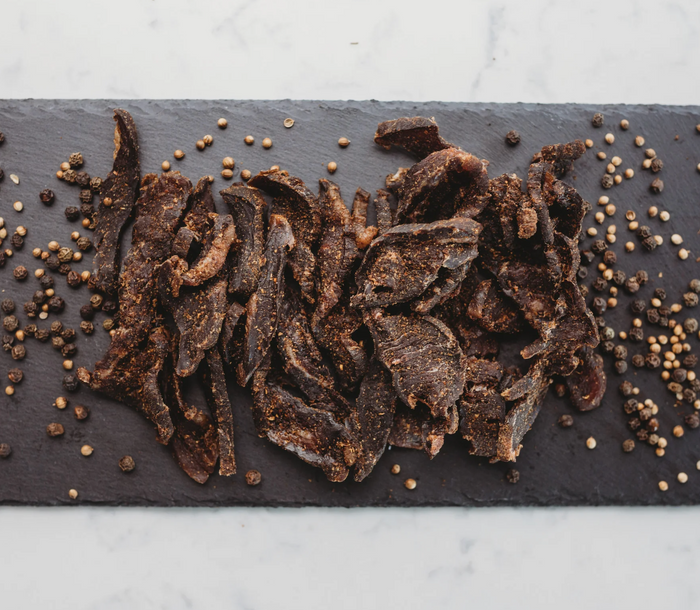
The protein item is the one people forget, and it is the one that makes the others last. Crackers and fruit are gone in an hour. Meat keeps you going until dinner.
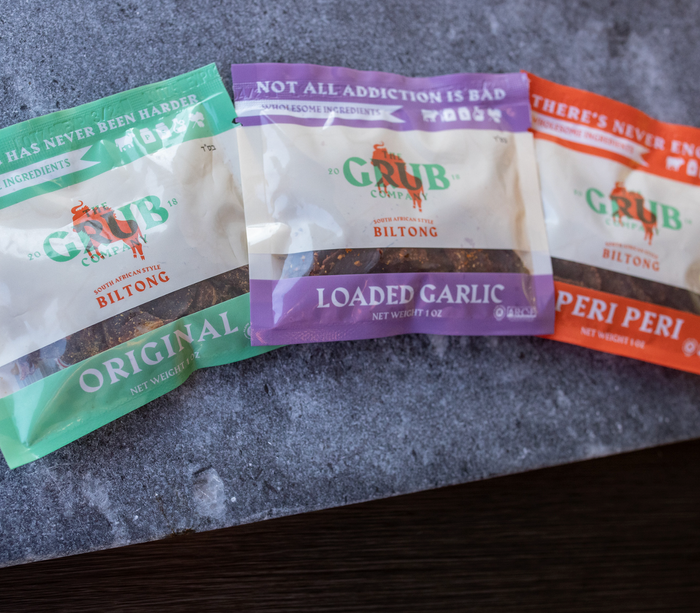
Our Sliced Biltong is the everyday bag: three ounces, already sliced, in Original, Peri Peri or Loaded Garlic. It needs no refrigeration, no knife and no cutting board. For a mixed group, Original is the safe choice, because it is beef first, then a warm coriander note. Peri Peri has real heat, so know your campers before you buy it for the whole group. Loaded Garlic is savory and rounder, not hot.
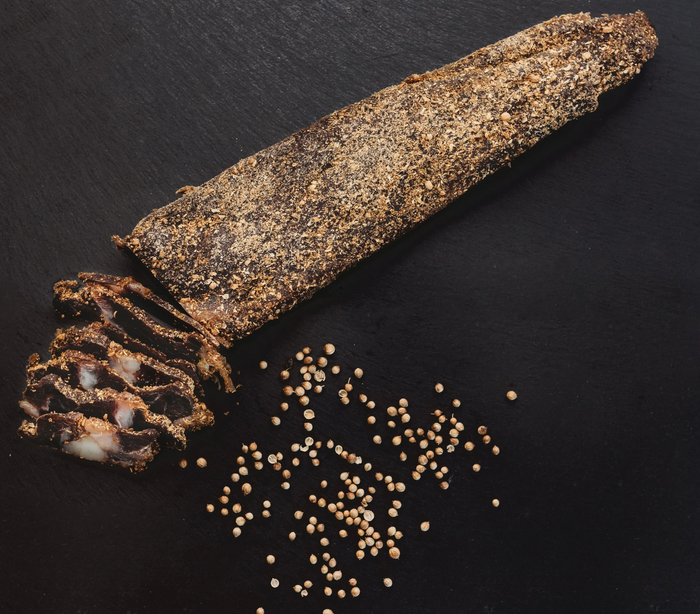
Biltong is air-dried, not cooked, and it is already ready to eat. Open the bag and go. Keep the bag sealed and out of a hot car, and it holds up well.
For campers who like jerky better, our Meat Candy is the sweeter option: cooked, glazed sliced beef in Hickory Kickory Dock and Baa-Baa BBQ Sheep. It is a different method from biltong, with more sweetness. If you are comparing the two for a trip, see our full range of kosher beef jerky.
Breakfast: fast, hot and nearly effortless
Camp breakfast should take ten minutes and one pot. You are cold, you are hungry and you do not want dishes.
Oatmeal. Pack instant oats in a zip bag with a handful of raisins or chopped dried apple and a spoonful of brown sugar. Add boiling water, stir and wait two minutes. A spoon of nut butter on top makes it hold you until lunch.
Tortilla breakfast wraps. Scramble eggs in the morning of day one or two, while the eggs are still cold. Fold into tortillas with a little cheese. Wrap in foil and warm them by the fire. Day three onward, swap the eggs for a smear of nut butter and sliced banana.
Granola and shelf-stable milk. Single-serve cartons of shelf-stable milk sit happily in a bag until you open them. If you keep a kosher household, check that the milk and the granola carry a kosher certification, and keep the dairy away from your meat meals as you normally do.
Coffee. A pour-over cone and a few filters weigh almost nothing. Instant works too. Heat extra water at breakfast and fill a thermos, and you have hot drinks all morning.
Lunch: no stove, no fuss
Lunch on a camping day usually happens somewhere else, at a trailhead, a beach or a lakeside. Plan for cold food that does not need a cooler.
- Tortilla roll-ups. Spread with nut butter or hummus from a sealed cup, roll up a banana or sliced apple inside, and cut in rounds.
- Tuna or salmon pouches on crackers. Buy them with a kosher certification if you keep kosher.
- A "board" on a rock. Crackers, hard cheese, apple slices and a few strips of biltong. It is the camping version of a charcuterie plate, and it takes two minutes to lay out.
- Trail mix, built by the group. Nuts, dried fruit, a little chocolate if it is cool enough, and broken pieces of crisp beef or biltong for salt.
Our Sliced Biltong Mini's are the right bag here. They are one ounce, sealed, and about what one person finishes in a sitting. You pass them out like granola bars. Nobody opens a big bag, eats half and leaves the rest to go stale in a pocket. They are the most expensive way to buy biltong per ounce, so use them when portioning is the point, as it is on a trail.
If you are heading out on foot, our guide to kosher jerky for hiking and camping goes deeper on what to carry in the pack itself.
Dinner: one pot, one fire, one plan
Dinner is where you can eat well. Keep it to one pot or one foil packet, and prep the ingredients at home.
Foil packets. Chop potatoes, carrots and onion small at home. At camp, toss with oil, salt and pepper, wrap tightly in a double layer of foil and set on hot coals for 30 to 40 minutes, turning once. Add a cooked kosher sausage or pre-cooked chicken pieces if you have them. Open carefully, because the steam is hot.
Pasta in one pot. Boil water, cook the pasta, drain, then stir in jarred sauce and a handful of shelf-stable vegetables or beans. If you are eating meat, add cooked meat that has stayed in the cooler since day one. It is not a gourmet dinner, and that is fine. It is hot and it is on the table in 20 minutes.
Burgers and hot dogs. The classic. Use kosher meat, cook it over the fire until fully cooked through (raw meat must be cooked, unlike biltong), and keep it for night one or two. If you keep kosher, bring your own foil and a clean grate, or cook on a separate pan, so nothing touches a surface that is not yours. Ask your rabbi about the details of kashering a campfire grate for your family.
Rice and beans. A pot of instant rice and a can of beans with spices from home makes a filling base. Top with shredded dried meat if you want more protein.
For the last night, when the cooler is empty and you want something that feels like a meal, a board of crackers, cheese and biltong works better than people expect.
Dessert and the campfire
S'mores are the standard answer, but marshmallows and some graham crackers are not certified kosher. Check the label for a kosher symbol on the marshmallows, since many contain gelatin. Certified marshmallows exist, and they toast the same.
Other fire-friendly sweets:
- A banana, split down the skin, stuffed with chocolate chips and wrapped in foil, set on the coals for 10 minutes.
- Apple slices with cinnamon and sugar in foil.
- Popcorn kernels in a foil pouch, shaken over the fire.
And if the evening ends in a quiet crowd with nothing planned, a bag of jerky passed around the fire has never gone wrong.
What to leave at home
Some foods look right and fail in the field:
- Raw meat past day two. Unless your cooler is frozen solid, cook it early.
- Anything that melts into the bag. Chocolate bars, gummy candy, soft cheese spreads.
- Delicate fruit. Berries and ripe peaches are bruised paste by the time you arrive.
- Heavy glass jars. Decant sauces into a squeeze bottle or buy plastic.
- Strongly scented open food in a tent. In bear or raccoon country, all food goes in a locked car or a hung bag, never in your sleeping space.
An honest trade-off about biltong: it is the wrong pick if you want something soft and wet. It is dry, firm and chewy, and it is meant to be eaten slowly. If you want something that tears like a sandwich, bring a sandwich. If you want a snack you can keep in your pocket for six hours, biltong is the right one. Also remember that salty snacks make you thirsty, so bring more water than you think you need.
A simple packing list
For a three-day trip with two adults and two kids, this is a reasonable skeleton. Adjust for your group.
- In the cooler: eggs, a pack of kosher hot dogs or burgers for night one, cheese, milk, a few pieces of fruit.
- In the dry bin: oats, tortillas, nut butter, pasta, sauce, rice, canned beans, crackers, dried fruit, nuts, coffee, tea bags, marshmallows with a kosher symbol, chocolate.
- Meat snacks: one 3 oz bag or two or three 1 oz minis per person per day, plus one extra bag for the car.
- Kitchen basics: a pot, a pan, foil, a sharp knife, a can opener, matches, a lighter, a trash bag.
- Water: more than you think.
If you want to try before you commit to a full bag, the biltong collection has every size and flavor, and US orders over $50 ship free.
The bottom line
Treat the cooler as a short-term tool, not the plan. Eat the cold food first, build the rest of the trip around dry, sealed food, and keep a bag of protein within arm's reach. Biltong is not the whole menu, but it is the one item that fills the gap when everything else is gone.
Frequently Asked Questions
What are the best camping foods that need no cooler?
Dried meat like biltong and jerky, nut butter, tortillas, hard cheese, whole fruit, dried fruit, crackers, instant oats, instant rice, pasta and canned beans. All of these keep for days without ice.
How do I keep food cold while camping?
Pre-chill the cooler, use block ice or frozen water bottles, keep the lid shut and put the cooler in the shade. Eat the perishable food on day one and two, then move to shelf-stable meals.
Does biltong need to be refrigerated on a camping trip?
No. Biltong is air-dried, ready to eat and does not need refrigeration. Keep the bag sealed, out of direct sun and out of a hot car when you can. Once a bag is open, eat it within a reasonable time, and see our guide to how long biltong lasts for details.
Can you take kosher food camping?
Yes. Plan around certified packaged food, bring your own foil, pans and utensils, and keep meat and dairy separate as you normally would. If you have a question about using a campfire grate or shared campground equipment, ask your rabbi.
What are good camping snacks for kids?
Fruit, crackers, cheese, trail mix without nuts if there is an allergy, and a small bag of jerky or biltong. Our one-ounce Minis are sealed single servings, and there are no nuts or dairy in them. Check the label for your own family's needs.
How much food should I pack for a camping trip?
Plan three meals and two to three snacks per person per day, then add a little extra for a delayed return or a cold night. Hungry campers eat more outdoors than they expect.
Is jerky or biltong better for camping?
Both work, and they are different. Biltong is savory, air-dried and salty. Meat Candy, our jerky, is cooked, glazed and sweeter. Many campers pack both. Meat Candy uses a glaze, so check its label if you have dietary restrictions.