Smoking Beef Jerky in a Smoker: Temperatures, Wood and Timing
To make safe jerky in a smoker, heat the meat to 160°F first, then dry it at a steady 130–140°F. Smoke is the flavor, not the safety step. Use a thermometer for the meat and a second one for the smoker, and do not trust the dial on the lid. Our own biltong and beef jerky are certified Glatt Kosher, made in Florida.
Related: Smoked Beef Jerky: What Smoke Actually Does to the Meat · How to Make Beef Jerky in a Food Dehydrator (Kosher Kitchen Guide)
We make certified Glatt Kosher biltong and beef jerky, so we spend our days thinking about drying beef. This guide covers what a smoker can and cannot do for jerky, which temperatures matter, how to pick wood, and where home smoking goes wrong. The food-safety numbers come from the USDA Food Safety and Inspection Service (FSIS). The craft opinions are ours, and we say which is which.
The safety rule comes first
Jerky is not a normal smoker job. A brisket cooks until it is done. Jerky has to be cooked and dried, and those are two different jobs with two different temperatures.
FSIS's current advice for homemade jerky is to heat the meat to 160°F (165°F for poultry) before the drying step. Then dry it at a constant 130–140°F. The reason is simple. A low drying temperature on raw meat does not reliably kill the bacteria on it, and once meat starts to dry, those bacteria get harder to kill. Heating first closes that gap.
Here is what that means in a smoker:
- Smoker air temperature. For cooking meat in a smoker, FSIS says to keep the heat between 225°F and 300°F, and to monitor it with a thermometer. That range is for cooking, not for drying thin strips.
- Meat temperature. Raw ground beef needs to reach 160°F inside. FSIS gives the same 160°F number as the first step for jerky.
- Drying temperature. After the 160°F step, drop to a steady 130–140°F and hold it.
That leaves a real problem. Many smokers will not hold 130–140°F, and most will not hold it for hours without drifting. If yours cannot, you have two honest options. Do the 160°F heat step in the smoker for flavor, then finish the drying in an oven or dehydrator that holds a steady low temperature. Or skip the home project and buy it made.
One thing we will not do is hand you a timetable. FSIS gives temperatures, not an hours-per-pound formula, and so should anyone you trust. Strip thickness, humidity, how full the rack is and how much airflow you have all change the answer.
How to set up the smoker
Start with two thermometers. A probe for the meat, and a separate one for the air in the smoker. FSIS says the same thing about smoking in general: one thermometer for the food, one for the smoker. A lid thermometer can read off by a large margin, and with jerky a small error is the difference between safe and not.
- Choose the cut. Use lean beef. Fat goes rancid and does not dry well. Trim all visible fat. Top round, bottom round and eye of round are the usual picks.
- Slice evenly. Partly freeze the meat for a while so it firms up, then slice. Even strips dry at the same speed. Uneven strips mean some are leather and some are still damp. Cutting across the grain gives a tender bite. Cutting with the grain gives a chewier, tougher strip.
- Marinate in the refrigerator. FSIS says to marinate in the refrigerator, never on the counter, and not to save the marinade to reuse. Marinating adds flavor. It does not make raw meat safe. FSIS has cited research showing that marinating alone did not meaningfully reduce the pathogen on beef slices.
- Pat the strips dry. Wet meat takes smoke unevenly and dries slowly.
- Heat to 160°F. Get the meat to 160°F inside, checked with a thermometer, before you start drying.
- Dry at 130–140°F. Hold the temperature steady until the jerky is done.
A simple marinade that works
This makes enough for about 2 pounds of sliced lean beef. It is a starting point, not a law.
- 1/2 cup soy sauce or coconut aminos
- 2 tablespoons brown sugar
- 1 tablespoon black pepper
- 2 teaspoons garlic powder
- 2 teaspoons onion powder
- 1 tablespoon apple cider vinegar
- 1 teaspoon smoked paprika
Mix, toss with the beef in a covered container, and refrigerate overnight. If you keep kosher, check every bottle. Soy sauce and Worcestershire sauce are common places where a non-kosher ingredient hides.
Choosing wood
FSIS has nothing to say about which wood is best, so this part is our opinion. Jerky is thin, and thin meat takes smoke fast. The most common mistake is too much smoke, not too little. Over-smoked jerky tastes bitter and harsh.
- Hickory. Strong, sweet and bacon-like. It is the classic jerky wood, and the one we reach for in our Hickory Kickory Dock flavor. Use a light hand.
- Oak. Milder and steadier than hickory. A good default if you are unsure.
- Apple or cherry. Light and fruity. They suit teriyaki and sweeter marinades.
- Mesquite. Sharp and earthy. It overwhelms thin strips fast, so use it sparingly or skip it.
Use dry, seasoned hardwood chips, chunks or pellets, and avoid softwoods like pine, which carry resin. Start with less smoke than you think you want. You can always smoke the next batch longer.
How to tell it is done
Do not go by the clock. Take a strip out, let it cool for a few minutes, and bend it. Done jerky bends and cracks along the surface but does not snap in half. If it breaks cleanly, it is over-dried. If it bends like a wet noodle with no cracking, it needs more time.
Let the batch cool, then put it in a loosely closed container for several hours before sealing. If any strips get moist from the others, they were not quite dry. FSIS says home-dried jerky keeps for only about 1 to 2 months, while commercially packaged jerky keeps for 12 months. Our guide on how to store kosher jerky and biltong covers what to do with an open bag.
Mistakes that ruin a batch
Most failed batches come down to the same few errors. None of them need special gear to fix.
- Trusting the lid thermometer. Put a probe at meat level, where the strips actually sit. The air near the lid can be very different.
- Crowding the racks. Strips that touch or overlap dry unevenly and trap moisture. Leave space so air can move around each one.
- Skipping the heat step. This is the one that matters for safety. A smoker that hovers at a low temperature from the start never gives you the 160°F first step FSIS calls for.
- Too much smoke early. Meat takes smoke best while it is damp. Heavy smoke at the start gives a bitter crust. A steady thin stream is better than a thick cloud.
- Using fatty cuts. Fat does not dry. It turns greasy and goes off sooner. Trim hard, or pick a leaner cut.
- Sealing it warm. Warm jerky sweats inside a closed bag. Cool it fully first.
Be honest with yourself about the cost of getting it wrong. Jerky is a shelf-stable snack, so a mistake can sit unnoticed for weeks. If a batch smells off, looks damp or grows mold, throw it out.
Smoked jerky and kosher
Homemade jerky is only kosher if everything in it is. That means the beef itself, every ingredient in the marinade, the smoker and the racks. A smoker that has held non-kosher meat is a problem, and most home smokers have. If you keep kosher and want smoked flavor, the simplest route is to buy a product made under supervision. Our Hickory Kickory Dock Meat Candy is smoky hickory with the sweetness behind it, and our full range is on the kosher beef jerky page.
When smoking jerky is the wrong pick
Smoking jerky at home is a good weekend project. It is the wrong pick if you want a reliable result on a schedule, if your smoker cannot hold a low steady temperature, or if you do not own two thermometers. It is also the wrong pick if you want a snack that needs no effort and no refrigeration worry.
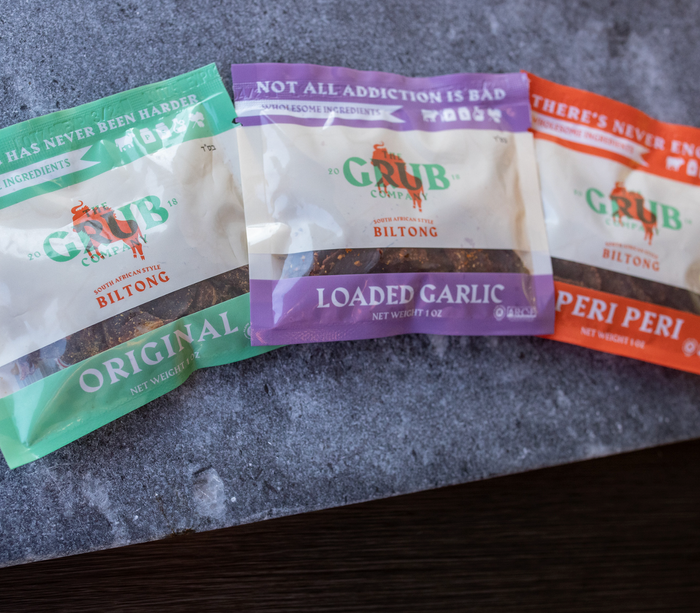
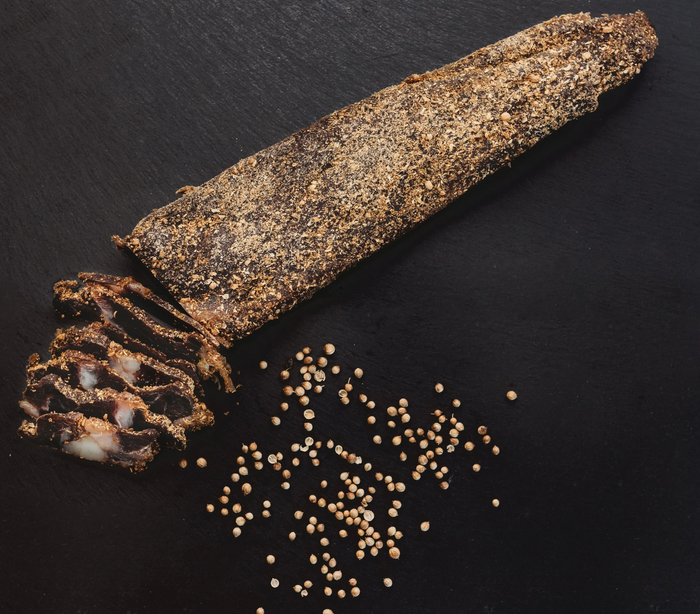
If you like dried beef but not the smoke, look at biltong. It is air-dried, not smoked or cooked, so the method is different. Our biltong vs beef jerky comparison explains how. Our Sliced Biltong comes sliced and ready to eat, and you can see every size on Buy Biltong Online. US orders over $50 ship free.
The bottom line
Smoke makes jerky taste good. Temperature makes it safe. Heat the meat to 160°F, dry it at a steady 130–140°F, use two thermometers, and go easy on the wood. If your smoker cannot hold a low temperature, finish in an oven or dehydrator, or buy it made.
Frequently Asked Questions
What temperature should I smoke beef jerky at?
FSIS advises heating the meat to 160°F first, then drying at a constant 130–140°F. FSIS's general smoker guidance is to keep the smoker's air temperature between 225°F and 300°F when cooking meat. Jerky needs both steps, which is why many people finish in a dehydrator or oven.
How long does it take to smoke jerky?
There is no single answer. Strip thickness, humidity and airflow all change it. Judge by texture, not the clock: a done strip bends and cracks without snapping.
Do I need to cook jerky before drying it?
Yes, according to FSIS. Heat beef to 160°F (poultry to 165°F) before the drying step. Dry heat at 130–140°F alone may not reliably kill bacteria on raw meat.
Which wood is best for smoking jerky?
That is a matter of taste, not safety. Hickory is the classic. Oak is milder, and apple or cherry are lighter and fruity. Use dry hardwood and go lightly, because thin strips over-smoke quickly.
Can I marinate jerky overnight?
Yes, in the refrigerator. FSIS says not to marinate on the counter and not to reuse the marinade. Marinating adds flavor but does not make raw meat safe.
How long does homemade jerky last?
FSIS says home-dried jerky keeps for 1 to 2 months, while commercially packaged jerky keeps for 12 months.
Is homemade smoked jerky kosher?
Only if the beef, every marinade ingredient and the equipment are kosher. A smoker that has held non-kosher meat is not suitable. If you are unsure, ask your rabbi, or buy a certified product.