Halal Beef Jerky: Is Kosher Jerky Halal, and What to Check
No, kosher jerky is not automatically halal, and we do not sell ours as halal. Some Muslim families do eat kosher meat, but scholars disagree on it, so the decision belongs to you and your imam. We make certified Glatt Kosher biltong and jerky, so here is how the two standards compare and what to check on any bag.
What halal and kosher have in common
The two systems look alike from a distance, and that is why people ask. Both are religious dietary laws. Both govern which animals may be eaten and how they must be slaughtered. Both forbid pork. Both require the blood to be drained from the meat.
Both also reach past the slaughterhouse. They cover what the animal is, how it is killed, what the meat touches afterward and what goes into the finished product. A snack is only as compliant as its weakest step.
The similarity is real, but it is not the same as equivalence. Two lists that overlap are still two lists. A shopper who treats them as one list will sometimes be right and will sometimes buy something their own household would not accept.
Where they differ
Here is what is plainly agreed about each standard, without taking a side on any dispute.
- Who slaughters. Halal slaughter is performed by a Muslim, who says a blessing invoking God's name over the animal. Kosher slaughter, called shechita, is performed by a trained and certified Jewish slaughterer, who says a blessing of his own.
- What the animal is. Both traditions permit beef from cattle. Kosher law adds rules that halal does not. Only certain parts of the animal may be used. Certain fats and sinews must be removed. The meat is soaked and salted to draw out blood.
- Dairy. Kosher law keeps meat and dairy completely separate, in the product, the equipment and the kitchen. Halal has no such rule.
- Alcohol. Halal avoids alcohol as an ingredient. Kosher law has no general ban on it. It has its own rules about wine and grape products, which are a separate matter.
- Supervision. A kosher product carries a certification from a rabbinic agency. A halal product carries one from a halal certifier. They are different bodies checking different lists.
Our own standard is certified Glatt Kosher. You can read what that means in practice in What "Glatt Kosher" Certification Actually Means for Grub Company's Biltong and Beef Jerky, and the details are on our kosher biltong page.
Notice what that list does not say. It does not say one standard is stricter than the other. They are strict about different things. Kosher law is very particular about the animal's body and about keeping meat away from dairy. Halal is very particular about who performs the slaughter and about alcohol. A product can satisfy one and fail the other.
So is kosher jerky halal?
The honest answer is: it depends on who you ask.
Many Muslims look to the Quran's allowance for the food of the People of the Book. Some scholars read that as permitting meat slaughtered by observant Jews. Others disagree. Their objections vary. Some point to the blessing that is said. Some point to the method. Some argue the allowance does not apply to modern industrial production. These are scholars arguing with each other, and we are not going to settle it for them.
That leaves a family with a simple rule. If halal matters to you, ask your imam or your halal authority whether kosher meat is acceptable to you. Their answer decides it. Ours does not, and neither does the label's.
We will say one thing plainly. We do not carry a halal certification, and nothing on our packaging claims halal status. If a seller tells you kosher and halal are the same thing, treat that as a reason to look harder at the seller. A halal claim should come with a halal certificate you can read.
The reverse is also worth saying. Halal does not make a product kosher. A kosher household needs a rabbinic certification, and a halal mark does not stand in for one. Each standard has to be met on its own terms.
What to check on any bag of halal beef jerky
If you are shopping for halal jerky, the front of the bag tells you little. The word "halal" in a bold font is not a certification. Work through these in order.
1. A named halal certifier
Look for a certification mark from a halal certifying body, and look it up if you do not recognize it. A bare "halal" claim with no named body behind it is a claim, not a certificate. Different certifiers hold different standards, and your community may trust some more than others. If you are unsure which ones yours trusts, that is another question for your imam.
2. The ingredient list, line by line
Read it for pork derivatives and for alcohol. The places they hide are flavorings, glazes and marinades. A short list is easier to check than a long one. Jerky with a sweet glaze or a smoke flavor has more lines to ask about than a plain savory strip.
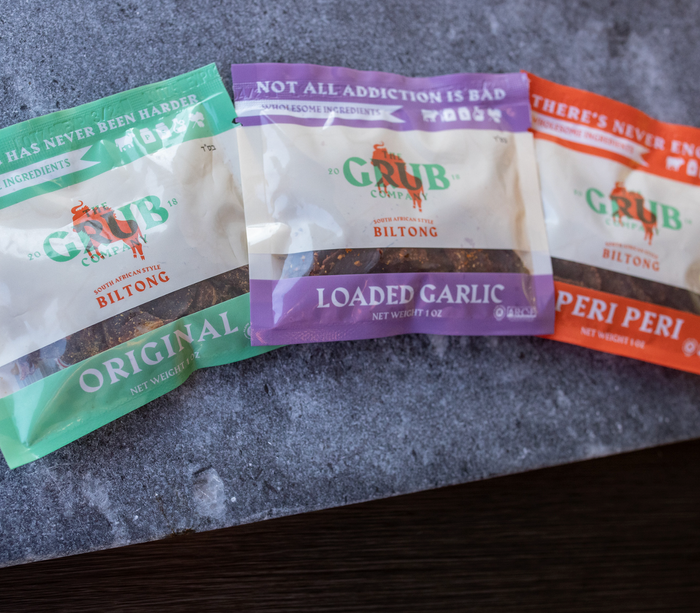
Our Meat Candy uses a glaze, so if you are checking for anything specific, read its label and ask us before you order. Our Sliced Biltong in Original is grass-fed kosher beef, coriander, black pepper, salt, garlic and vinegar. That is a short list, which makes it easy to read. A short list does not make it halal.
3. Where the beef comes from and how it was slaughtered
A certificate should cover the slaughter, not only the finished product. If a bag says halal but the beef supplier is a mystery, keep asking. A reputable maker can tell you who supplies the meat and who certifies the slaughter. A maker that goes quiet on this has given you your answer.
4. Shared equipment
Ask whether the line also runs pork products. Cross-contact matters to many halal households, and a maker that cannot answer the question has told you something. The same question applies in a kosher plant, where meat and dairy lines must stay apart.
5. "Natural" and "smoke" flavors
These can be fine. They are also the most common place for an unclear ingredient. If the label does not say what is in it, the maker should be able to. If they cannot, pick a different bag.
6. Whether the claim is on the bag or only on the website
A certification that exists only in a product description is easy to lose track of. Check that the mark is on the package itself, and that the lot you receive carries it. Marketplaces and resellers sometimes copy a description from one product onto another.
Jerky versus biltong, if kosher meat is acceptable to you
If your imam accepts kosher meat, the next question is which snack. They are different foods.
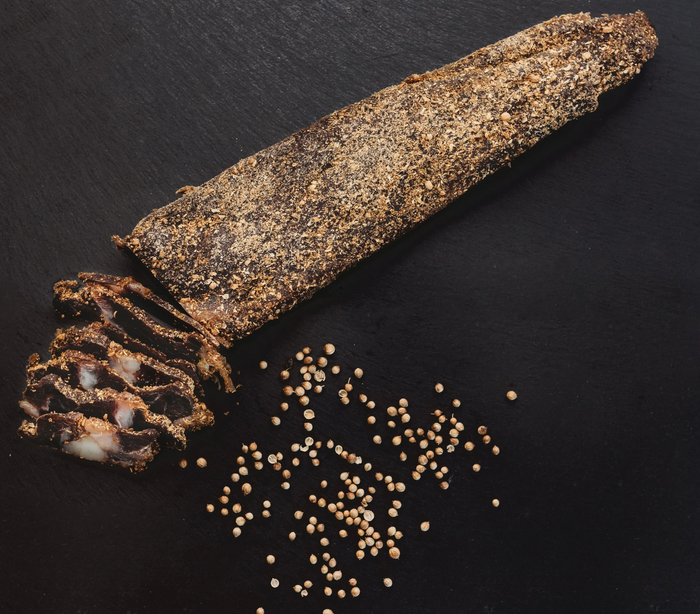
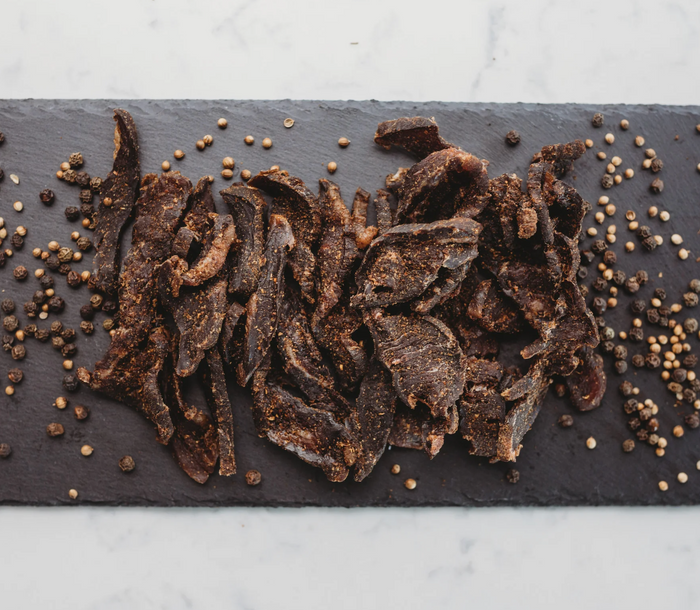
Biltong is cured with vinegar and spices, then air-dried slowly. It is savory and salty, with a softer chew that gives way rather than fighting back. There is no cooking step and no glaze. Jerky is cooked, glazed and sweeter. It is the one most people picture when they hear the word.
The practical difference for a label-reader is the length of the ingredient list. Biltong's list is short and mostly spices. A glazed jerky has more going on, which means more lines to check. Neither is better. They answer different cravings.
For a first bag, start with Original biltong. It is the plainest of the line, so it is the easiest to judge, and it has the shortest ingredient list. If you want something sweeter, Meat Candy is real, whole sliced beef with a glaze. The Meat Candy vs. Biltong comparison walks through the difference if you cannot decide.
You can browse our kosher beef jerky collection for the sweeter end of the shelf, or see every size and flavor on Buy Biltong Online. US orders over $50 ship free. We ship within the United States only.
One honest trade-off. If you need a halal certificate on the bag, ours is the wrong pick. We are a kosher maker. We would rather tell you that now than have you open a package and find out.
Bottom line
Kosher and halal overlap, but they are not the same standard, and kosher jerky is not halal by default. Whether kosher meat is acceptable to you is a question for your imam. For anything sold as halal, look for a named certifier, read every ingredient and ask about slaughter and shared equipment. If you are comfortable with certified Glatt Kosher beef, our biltong and jerky are made in small batches in Florida from grass-fed beef.
Frequently Asked Questions
Is kosher beef jerky halal?
Not automatically. Some Muslims eat kosher meat and some scholars permit it, while others do not. Ask your imam or halal authority. Our jerky is certified Glatt Kosher and is not certified halal.
Can Muslims eat kosher meat?
Scholars differ. Some accept meat slaughtered by observant Jews, based on the Quranic allowance for the food of the People of the Book. Others do not. It is a personal question for you and your imam.
What is the difference between halal and kosher slaughter?
Halal slaughter is done by a Muslim who invokes God's name. Kosher slaughter, shechita, is done by a trained Jewish slaughterer. Kosher law also removes certain fats and sinews and requires soaking and salting the meat. Both traditions require draining the blood.
Does halal jerky contain alcohol?
It should not, but check. Alcohol can appear in flavorings and marinades. Read the whole ingredient list and look for a named halal certifier. Our Meat Candy uses a glaze, so read its label or ask us.
Is biltong halal?
Biltong is a South African cured meat. Whether any bag is halal depends on the slaughter and the certification, not the style. Ours is certified Glatt Kosher, not halal.
Do you sell halal beef jerky?
No. We make certified Glatt Kosher biltong and jerky from grass-fed beef. We are not a halal producer, and nothing we sell carries a halal claim.
Does Grub ship outside the United States?
No. We ship within the US only. US orders over $50 ship free.