How to Build a Kosher Charcuterie Board (Meat Board)
A kosher charcuterie board is a meat board: certified kosher cured meats, plus pareve things to eat with them, and no cheese. Build it around Glatt Kosher biltong and a sweet jerky, add something sharp, something crunchy and something fresh, and it works better than the dairy version ever did.
Related: Thanksgiving Appetizers: Meat Boards and Bites for a Kosher Table · Friendsgiving Food Ideas: What to Bring When Someone Keeps Kosher · Kosher Catering: Adding a Meat Board Without Adding Work
We make certified Glatt Kosher biltong and beef snacks in small batches in Florida, so a meat board is a question we get a lot. The traditional charcuterie board is meat and cheese. Put the two together and it is not kosher. That is not a problem to work around. It is a different board with its own logic, and it is easy to get right once you know the rules. Our kosher biltong page explains how our meat is certified.
The one rule that shapes the whole board
Meat and dairy are not served together. That is plainly accepted practice, and it decides everything else on this page. A kosher meat board has no cheese, no butter, no cream-based dip and no cracker made with milk or whey. How long you wait between a meat meal and dairy afterward depends on your family's custom, so follow yours.
People ask whether this makes the board boring. It does not. Cheese does three jobs on a regular board: salt, fat and something creamy. A meat board gets all three from other places. Cured meat brings the salt and the fat. Hummus, tahini or a good olive oil brings the creamy. Everything else on the board is there for contrast.
Two practical points before you start:
- Check every "pareve" item. Pareve means neither meat nor dairy. Crackers, flatbreads, chocolate and some dips quietly contain milk. Read the label and look for a kosher symbol that says pareve.
- Keep your board and knives meat-only or pareve. A board and knife that have touched dairy are a question for your rabbi. The simplest fix is to keep a dedicated one for meat and not think about it again.
Start with the meat
The meat is the board. Everything else supports it. You want two or three kinds that look different and taste different, so people can compare. A board with four similar salty meats is a plate of salt.
Biltong first
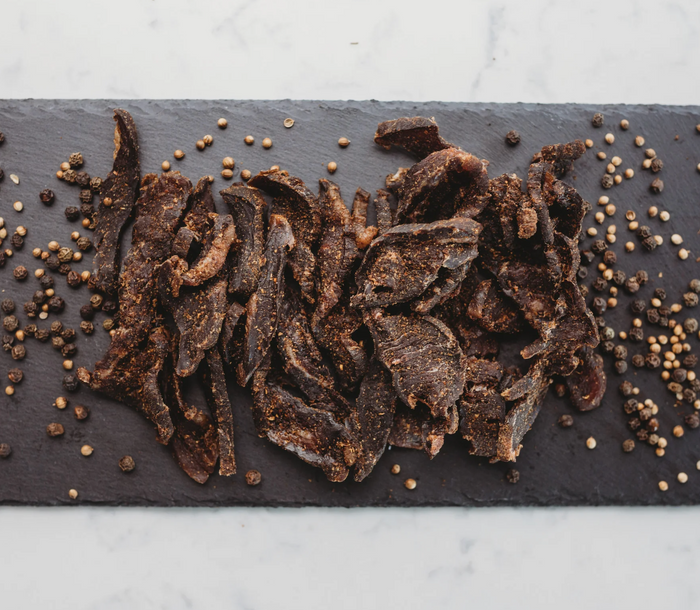
Biltong is air-dried beef, cured with salt, vinegar and spices, and it is ready to eat from the bag. That makes it the easiest thing you will ever put on a meat board. There is no slicing, no refrigeration and no cooking. Open the bag and pile it up.
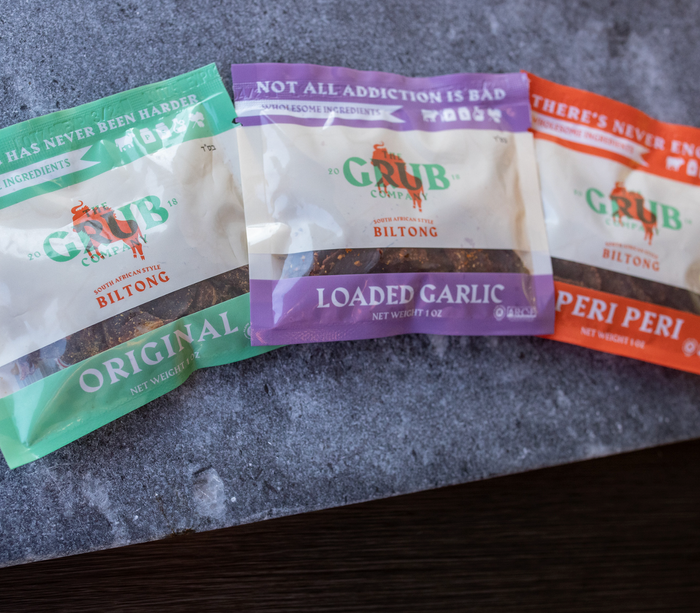
Our Sliced Biltong comes in three flavors, and they do different jobs on a board:
- Original: beef first, then the warm citrus note of coriander. This is the reference point and it suits everyone.
- Peri Peri: the same meat with real heat building behind it. Put it out, but know that it divides a room.
- Loaded Garlic: roasted garlic, rounder and sweeter, savory rather than hot.
If you are only buying one, buy Original. If you are buying two, add Loaded Garlic before Peri Peri. Heat tolerance is hard to guess, and you do not want half your guests avoiding a third of the board.
Want more on biltong alone? We wrote a separate guide on building a biltong charcuterie board. This page is about the whole board.
Slabs, if you like a bit of theater
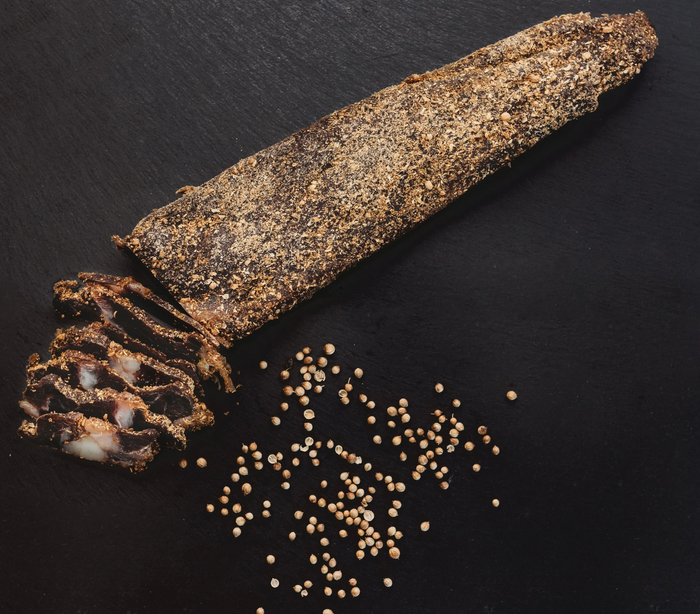
Our Biltong Slabs are a pound of biltong, uncut. You put the slab on the board with a sharp knife beside it, and guests slice what they want, as thick or as thin as they like. It looks like food somebody made, not a snack somebody opened.
Here is the honest trade-off. A slab is an ingredient, not a snack. It needs a board, a good knife and one person willing to start cutting. At a big party, sliced biltong disappears and a slab waits for a volunteer. If you want people grazing without thinking, buy sliced. Use a slab when the board is the centerpiece and you have time to let it be one.
Something sweet
Biltong is savory and salty. Put something sweet beside it and both taste better. That is the job of our Meat Candy, which is our beef jerky: cooked, glazed and unashamedly sweet. Hickory Kickory Dock is smoky hickory with the sweetness behind it. Baa-Baa BBQ Sheep is Korean BBQ, sweet and savory together. Both are real, whole sliced beef, and both are certified Glatt Kosher.
Put the two next to each other and people will sample both, then argue about which they prefer. That is the board doing its job. If you want to see everything we make in jerky, browse our kosher beef jerky collection.
Deli-style meats
You can add sliced kosher deli meats such as salami, pastrami or smoked beef or turkey. We do not make these, so we will not tell you which to buy. We will tell you what to look for:
- A clear kosher certification on the package, and a meat designation. Do not assume.
- Whole-muscle slices when you can get them, because they look better and eat better on a board.
- Sliced thin and fanned out, not stacked. Thin slices hold flavor better and take up less room.
- One smoked meat and one spiced meat at most. You are building contrast, not volume.
The pareve side of the board
This is where a meat board earns its place. A cheese board relies on bread and fruit. A meat board has more room to be interesting, because nothing here has to compete with dairy.
Sharp and sour. Cured meat is salty and fatty, and acid is what cuts through it. Put out dill pickles, pickled red onion, cornichons, marinated artichokes, olives and a few roasted peppers. Pick two or three, not all of them.
Mustards and spreads. Whole-grain mustard is the classic partner for cured beef. Add a sweeter fig or onion jam if you like. Hummus works well on a meat board and is naturally pareve. Check the label on anything sold as a dip.
Crunch. Crackers, breadsticks, pita chips or toasted baguette slices. This is where milk hides, so read the ingredients. Roasted chickpeas and nuts give you crunch without bread. If someone at your table has a nut allergy, skip the nuts and use something else.
Fresh and sweet. Grapes, sliced apple or pear, fresh figs when they are in season, dried apricots, dates. Sweet fruit makes biltong taste more savory. Add a few squares of pareve dark chocolate if you want a finish.
A "cheese" stand-in, if you want one. Some people miss the soft element. You can use a pareve-certified spread or a pareve non-dairy cheese alternative. Read the label for the kosher symbol and the word pareve. They taste different from real cheese, and nobody pretends otherwise. Hummus and tahini do the creamy job better.
How to build it, step by step
The order matters. Big things first, small things last.
- Pick the board. Use a clean, meat-only or pareve board, big enough that nothing is stacked on top of anything else. A large platter or even a sheet pan lined with parchment works.
- Place the bowls. Put out small bowls for the wet items first: mustard, jam, hummus, olives, pickles. Space them out. They are the anchors.
- Add the biltong. Pour or pile the sliced biltong in two or three spots, not one. Put a slab and knife down if you are using one. Mix the flavors so each sits near a bowl that suits it. Garlic next to mustard. Peri Peri next to something cooling like pickled cucumber.
- Add the jerky. Put the Meat Candy on the opposite side of the board from the biltong, so people see two clear choices.
- Fan the deli meats. Fold or fan them into the gaps. Leave a little room between piles.
- Fill the gaps. Add the crackers, then the fruit and nuts. Everything left over goes in the cracks.
- Finish. Fresh herbs, a handful of dried fruit, a little black pepper. Done.
For quantity, plan about 2 to 3 ounces of meat per person if the board is an appetizer, and about double that if it is the meal. A 3 oz bag of sliced biltong is a sensible unit. Buy a bit more than you think you need, since biltong keeps well in a sealed bag and leftovers are never a problem. If you are feeding a crowd, our guide on how much biltong to buy for a party does the math properly.
A board without pork, and who it suits
Kosher meat does not include pork, so a kosher board is a charcuterie board without pork by default. That is useful if you are hosting a mixed group. We will not make claims about other dietary rules for you. If a guest follows one, ask them what they need and read the labels.
Biltong is the wrong pick if your board needs to look fancy and no one is going to touch it. It is meant to be eaten. If you want a purely decorative spread, buy the slab and a sharp knife and leave it as a centerpiece. Otherwise, use the bag, because a board that gets finished is a better board.
Where does this board fit? A few good places:
- Shabbos afternoon or kiddush. Biltong needs no kitchen, no reheating and no utensils, which is a real advantage.
- A holiday table starter. Put it out while people arrive and the main course finishes.
- Game day or a watch party. A beef board next to the screen beats a bowl of chips.
- A gift or host board. A small board with a bag of each flavor and a jar of mustard is a good thing to bring.
On Pesach, check for a Pesach certification on every item before you buy. Do not assume a product that is kosher year-round is certified for Passover.
The bottom line
A kosher charcuterie board is a meat board, and it is better for it. Choose two or three kinds of kosher meat that contrast, add pickles, mustard and something crunchy, check that every pareve item really is, and leave the cheese for another meal. Start with sliced biltong and a sweet jerky and you have already built the hard part. You can see everything we make on Buy Biltong Online. US orders over $50 ship free.
Frequently Asked Questions
Can a kosher charcuterie board have cheese?
Not if it has meat on it. Meat and dairy are kept separate. If you want a cheese board, make it a separate dairy board for a dairy meal, with its own board and knives.
What goes on a kosher meat board instead of cheese?
Pickles, olives, mustard, hummus, roasted peppers, fruit, nuts and crackers. Hummus handles the creamy part. Read the label on anything pareve, because crackers and chocolate sometimes contain milk.
Is biltong good on a charcuterie board?
Yes. It is ready to eat, needs no refrigeration and no slicing if you buy it sliced, and it sits well beside pickles and mustard. Original suits everyone, Loaded Garlic is milder than Peri Peri, and Peri Peri is the one with real heat.
How much meat do I need per person?
About 2 to 3 ounces per person for an appetizer board, and roughly twice that if the board is the meal. Buy a little extra. Sealed biltong keeps, so there is no waste.
Can I use a board that has had cheese on it?
Ask your rabbi. The simple answer is to keep a board and knife for meat or pareve use only, so the question never comes up.
How do I make a charcuterie board without pork?
Use beef, which is what we make. Biltong and beef jerky are both beef, and a kosher board has no pork at all. Add pareve sides and you have a full board without pork.
Is Grub's biltong certified Glatt Kosher?
Yes. Our biltong and Meat Candy are certified Glatt Kosher. Our kosher biltong page has the details.