The Best Biltong in the USA: How to Judge Any Brand
There is no single best biltong, but there is a reliable way to judge any brand in about four minutes. This guide gives you a scoring method — twelve checks across sourcing, process, packaging and price — so you can compare any two producers yourself instead of trusting a review score written by someone who tried one bag.
Why "best biltong" lists are usually useless
Most roundups rank on taste, which is the least transferable thing about food. Whether you prefer wet or dry, mild or hot, thick or thin is personal, and a reviewer's preference tells you nothing about whether you will agree.
What is transferable is quality of production. A maker who uses the right cut, dries slowly, packages properly and prices honestly will make biltong you can judge on your own terms. A maker cutting corners will produce something you dislike for reasons that have nothing to do with your palate.
So judge the production, then judge the taste yourself.
The twelve-point check
| # | Check | Good sign | Warning sign |
|---|---|---|---|
| 1 | Cut named | Silverside, topside, or a stated blend | "Premium beef" and nothing more |
| 2 | Grass-fed stated | Named, and consistent across the site | Claimed on the homepage only |
| 3 | Vinegar step described | Explicitly part of the process | No mention anywhere |
| 4 | Drying time | Stated in days | Stated in hours, or not at all |
| 5 | Air-dried, not dehydrated | "Air-dried", "hung", "cured" | "Dehydrated", "slow-cooked", "smoked" |
| 6 | Coriander in the blend | Present, usually first or second spice | Absent — likely a jerky recipe renamed |
| 7 | Sugar position | Absent from Original; minor in heat blends | Second or third ingredient |
| 8 | Preservatives | None listed | Sodium nitrite, potassium sorbate |
| 9 | Ingredient count | 5–7 | 12+ |
| 10 | Oxygen absorber | Stated on the site or visible in the bag | No mention; plain zip bag |
| 11 | Certification, if you need it | Named agency, viewable certificate | The word "kosher" with no agency |
| 12 | Price per ounce | $3.50–$5.00 depending on format | Well under $3 — something was substituted |
Score a brand out of twelve from their own website. Anything at ten or above is a serious producer. Below seven, you are probably looking at a reseller or a jerky operation with a South African name on the bag.
The three checks that matter most
If you only do three, do these.
Ingredient list
This is the single most informative thing on any biltong page, and it takes ten seconds. A real blend reads: beef, vinegar, salt, coriander, black pepper, garlic. That is it. If sugar appears high, if you see soy sauce, if there are nitrates, or if the list runs past a dozen items, the process was not traditional biltong regardless of what the label says.
Whether the process is described at all
Makers talk about making. If a site has no page describing how the product is made — no cut, no drying time, no method — the seller almost certainly does not run the drying room. That is not automatically bad, but it means nobody there can answer a real question about the product.
Price per ounce, converted
Bag sizes in this category are deliberately inconsistent. Convert everything. The category floor exists for a physical reason: it takes roughly two to three pounds of raw beef to produce one pound of biltong, because the drying goes that far. Below about $3 per ounce, something has been changed — a cheaper cut, a shorter dry leaving more water weight, or added sugar to carry a weaker product.
What the price tiers actually mean
| Price per oz | What you are usually getting |
|---|---|
| Under $2.50 | Not biltong in any meaningful sense, or heavily under-dried |
| $2.50–$3.50 | Commodity cuts, shorter drying, often sweetened |
| $3.50–$4.50 | The working range for properly made biltong |
| $4.50–$5.50 | Grass-fed, certified, small-batch, or single-serve formats |
| Over $5.50 | Specialty, game meat, or you are paying for the packaging |
Note that single-serve minis sit high on this scale for packaging reasons, not quality reasons. Compare like with like: a 1 oz bag against another 1 oz bag, a pound against a pound.
South African brands versus US-made
A common question, and the honest answer is that origin is not the deciding factor.
Imported South African biltong carries genuine heritage and often decades of technique. The trade-off is transit — biltong is at its best within weeks of drying, and a product that has crossed an ocean and sat in a distribution chain is not fresh in the way the maker intended. Import rules also restrict what can enter the US, which limits what is legitimately available.
US-made biltong is fresher by definition and can be shipped days after drying. The variation is in expertise: some US producers are South Africans making it exactly as they always did, and some are jerky operations that added a product line.
Apply the twelve-point check to both. It sorts them faster than nationality does.
Judging it once it arrives
The website tells you about the producer. The bag tells you about the batch.
- Color. Deep red-brown, darker at the edges. Uniform pale brown suggests heat drying. Gray is a bad sign.
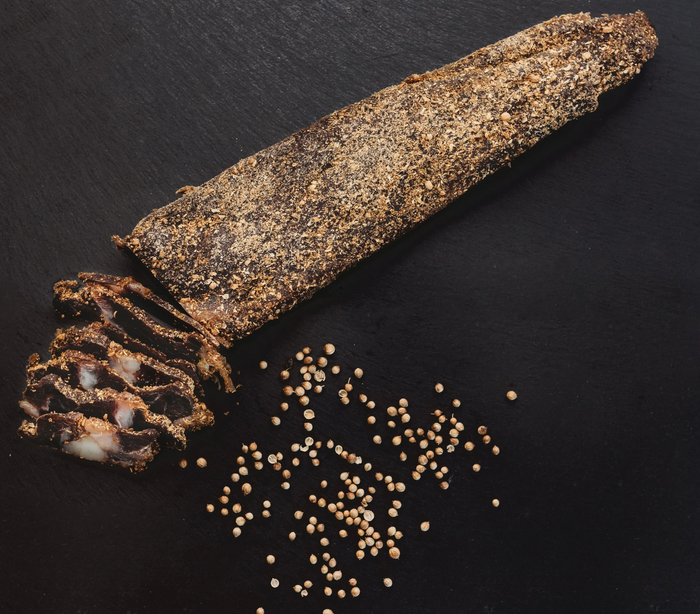
- The cut face. Sliced biltong should show a gradient — darker firm edge, lighter softer center. A uniform cross-section means it was over-dried or cooked.
- Smell. Beef, vinegar, coriander. Sweet or smoky means jerky seasoning. Sour or ammonia means send it back.
- The bend test. A good piece bends and yields. It should not snap like a cracker, and it should not feel damp.
- The first chew. Biltong shreds along the grain. If it tears against the grain like jerky, it was cut and dried the jerky way.
- The finish. You should taste beef last, not sugar. If the aftertaste is sweet, check the ingredient list again.
Best biltong for specific needs
| If you need… | Look for |
|---|---|
| Certified kosher | A named agency and a published certificate — the market is small, so this narrows fast |
| Keto / zero sugar | An Original blend with no sugar in the list at all |
| Highest protein per ounce | Drier styles; check the panel, not the marketing |
| Lowest sodium available | Compare panels directly; the range across brands is wide |
| Nut-free and dairy-free | Standard for traditional biltong; verify the specific flavor |
| Best value per ounce | Bulk sliced or a slab, and portion it on arrival |
| Gifting | A sampler — it removes the risk of guessing someone's heat tolerance |
Scoring a producer without tasting anything
The twelve checks above give you a number. Here is how to read it, and what each band actually means for a purchase.
| Score | What it means | What to do |
|---|---|---|
| 11–12 | A serious maker who documents their own process | Buy the Original and judge the meat |
| 9–10 | Almost certainly a real maker; a couple of things unstated | Buy, and ask the missing questions |
| 7–8 | Could be a good reseller or a maker with a thin website | Email them before ordering |
| 5–6 | Probably a reseller, possibly a jerky operation with a new line | Buy the smallest size available first |
| Under 5 | Nobody on that site is drying meat | Look elsewhere |
The score is not a verdict on quality — some resellers sell excellent biltong made by someone competent. It is a measure of how much you can find out before you spend money, and of who will be able to explain a bad batch if you get one.
The three checks that carry most of the weight
If you only do three, do these, in this order.
1. The ingredient list
Ten seconds, and the single most informative thing on any biltong page. A real blend reads: beef, vinegar, salt, coriander, black pepper, garlic. That is it.
Sugar high in the list means a jerky recipe wearing a South African name. Soy sauce or Worcestershire means a jerky marinade. Nitrites mean the drying did not go far enough to preserve on its own. Twelve or more items means a formulation rather than a food. None of that requires you to know anything about biltong — it is just reading.
2. Whether the process is described at all
Makers talk about making. If a site has no page describing how the product is made — no cut, no drying time, no method — the seller almost certainly does not run the drying room.
That is not automatically disqualifying. It does mean nobody there can answer a real question about the product, which matters the day a bag is wrong.
3. Price per ounce, converted
Bag sizes in this category are deliberately inconsistent, so headline prices tell you very little. Convert everything.
The category floor exists for a physical reason: two to three pounds of raw beef make one pound of biltong, and a batch occupies a controlled room for days. Below roughly $3 an ounce, an input has changed — a cheaper cut, a shorter dry leaving water weight you are paying for, or sugar carrying a weaker product.
What the price tiers mean
| Per ounce | What you are usually getting |
|---|---|
| Under $2.50 | Not biltong in any meaningful sense, or heavily under-dried |
| $2.50–$3.50 | Commodity cuts, shorter drying, often sweetened |
| $3.50–$4.50 | The working range for properly made biltong |
| $4.50–$5.50 | Grass-fed, certified, small-batch, or single-serve packaging |
| Over $5.50 | Specialty, game meat, or you are paying for the box |
Compare like with like: a 1 oz bag against another 1 oz bag, a pound against a pound. Single-serve sits high on that scale for packaging reasons rather than quality ones, and a single bag with paid shipping can exceed $5 an ounce regardless of what the product costs.
Judging it once it arrives
The website tells you about the producer. The bag tells you about one batch, and there are seven things to check before you decide anything.
| Check | Good | Bad | What it tells you |
|---|---|---|---|
| Color | Deep red-brown, darker at the edges | Uniform pale brown, or gray | Pale means heat; gray means poor airflow or old meat |
| The cut face | Firm dark rim, softer redder center | Uniform all the way through | The gradient is the record of slow drying |
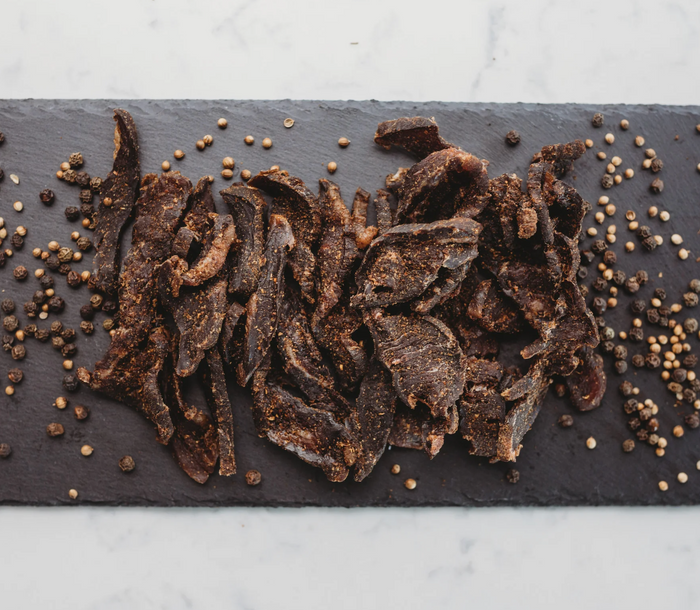
| Spice | Visible cracked seed, a little loose in the bag | Powder coating | Cracked clings and stays aromatic; ground does not |
| Smell | Beef, vinegar, coriander | Sweet, smoky, sour or paint-like | Sweet means jerky seasoning; sour or rancid means send it back |
| The bend | Bends and yields | Snaps, or feels damp | Over-dried, or under-dried |
| First chew | Shreds along the grain | Tears across it | Tearing means it was cut and dried the jerky way |
| The finish | Tastes of beef last | Tastes sweet last | Check the ingredient list again |
The cut face is the hardest to fake and the most informative. That gradient is a physical record of water leaving slowly from the outside inward over days — a process that finishes in six hours never has a long enough period to leave one.
How to read biltong reviews
Reviews are worth something, but only if you read them for the right things. Taste opinions barely transfer between strangers. Consistency and freshness reports are gold.
| Review says | Worth | Why |
|---|---|---|
| "Too dry" / "too wet" | Low | Preference, and you can dry it further yourself |
| "Too spicy" / "not spicy enough" | Low | Entirely personal |
| "Different from my last order" | High | Batch inconsistency is a real production problem |
| "Arrived with mold" | Very high | Under-drying or a packaging failure |
| "Rock hard" | Medium | Could be old stock, could be an over-dried batch |
| "Tasted sweet" | High | Suggests a jerky recipe under a biltong name |
| "Mostly small pieces" | Medium | Offcuts sold as standard product |
| "Shipped fast, arrived fresh" | High | The most useful thing a reviewer can tell you |
Read the three-star reviews first. Five-star reviews tell you someone likes biltong; one-star reviews are frequently about shipping. The middle is where people describe the product accurately.
Imported against American-made
A question people ask early, and the honest answer is that origin is not the deciding factor.
| Imported from South Africa | Made in the USA | |
|---|---|---|
| Heritage | Genuine, often decades of technique | Varies — some makers are South Africans doing exactly what they always did |
| Freshness | Weakest point — an ocean and a distribution chain | Can ship days after drying |
| Availability | Restricted by meat import rules | Unrestricted |
| Price | Freight and duty on top | No import cost |
| Consistency | Depends how long it sat | Depends on the maker |
Biltong is at its best within weeks of drying. A product that has crossed an ocean and sat in a warehouse is not fresh in the way the maker intended, however good the recipe. Meanwhile some US producers are jerky operations that added a line, and some are people who have been making it since before anyone here had heard of it.
Apply the twelve checks to both. They sort producers faster than nationality does.
The reseller tells
Distinguishing a maker from a reseller is the single most useful judgment you can make, because a maker can answer questions and a reseller can only forward them. The signals are consistent:
- No process page. No cut, no cure, no drying time, no method described anywhere.
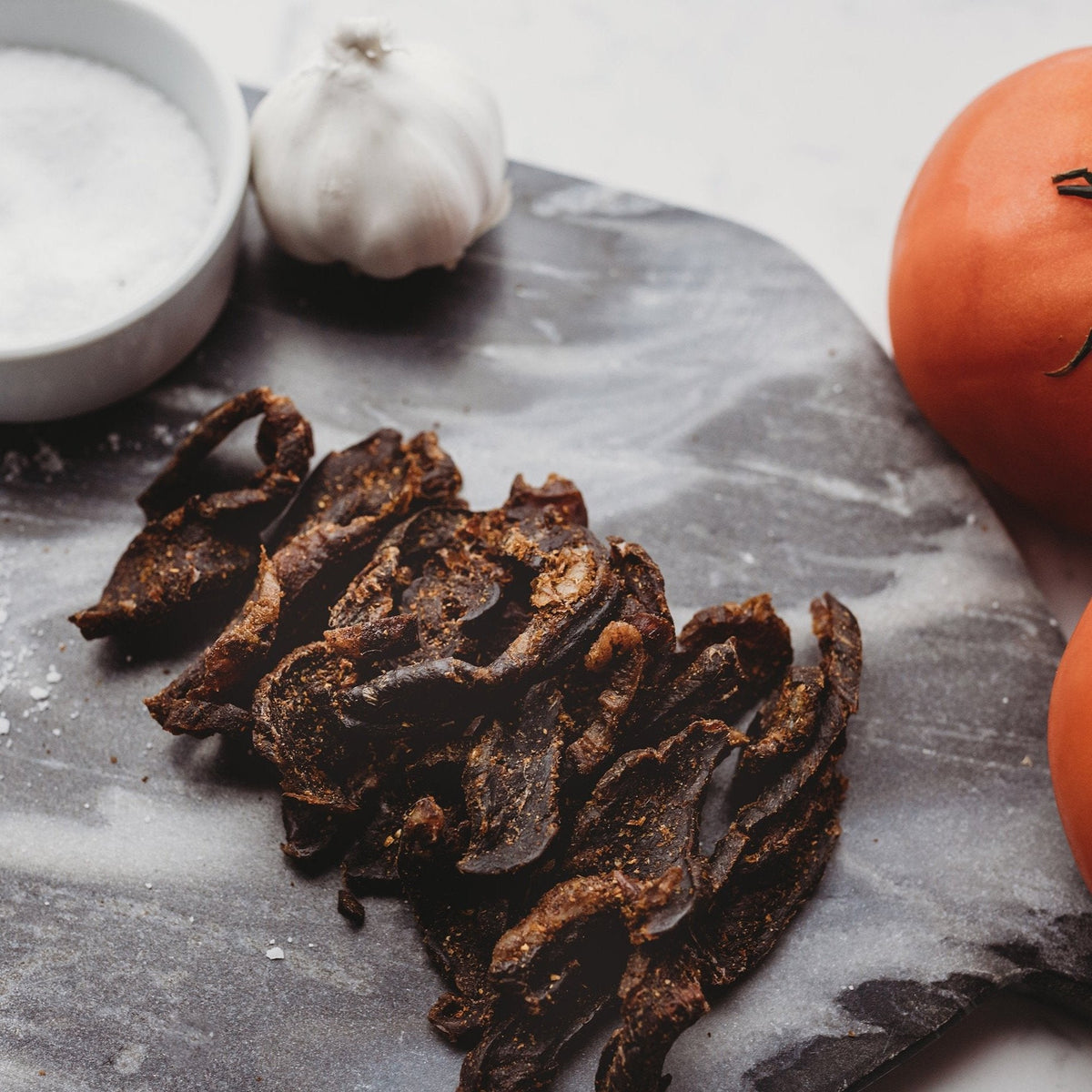
- Stock photography. Raw steak on a marble board is a stock image. Makers photograph hanging racks, because they have them.
- No batch or pack dates. Someone who dries the product knows when they dried it.
- A huge flavor range from a small operation. Twenty flavors usually means somebody else is doing the drying.
- Vague sourcing. "Premium beef" with no cut named.
- Heritage language doing the work of specifics. "Traditional methods" and "authentic recipe" with no numbers attached.
- No answer to a direct question. Email and ask what cut they use and how long they dry it. A maker answers in a sentence.
None of this makes a reseller's product bad. Plenty of resellers sell good biltong made by someone competent. But in a small-batch product something occasionally goes wrong with a batch, and that is the day the difference matters.
Questions worth emailing before a first order
- What cut do you use, and in what ratio? "Silverside, with some topside" is a real answer.
- How long do you dry it, and at what temperature? Days and room temperature is what you want.
- Do you toast your coriander? A small question that reveals a great deal about care.
- How soon after drying do you ship? The advantage of buying direct — a good producer is proud of the number.
- Do you pack with an oxygen absorber? A yes/no that decides the shelf-life claim.
- Can you tell me the batch date on what I would receive? The most revealing question on this list.
You do not need all six. Asking any two and reading how they answer tells you most of what the twelve-point check would, in less time.
Best for a specific need, rather than best overall
| If you need… | Look for |
|---|---|
| Certified kosher | A named agency and a published, current certificate. The market is small, so this narrows fast |
| Zero sugar, keto | An Original blend with no sugar anywhere in the list |
| Highest protein per ounce | Drier styles; check the panel rather than the marketing |
| Lowest sodium available | Compare panels directly — the range across makers is wide, and none is low |
| Nut-free and dairy-free | Standard for traditional biltong; verify the specific flavor |
| Best value per ounce | Bulk sliced or a slab, portioned on arrival |
| A gift | A sampler — it removes the risk of guessing someone's heat tolerance |
| Tender rather than chewy | A wetter style, and a maker who states dryness at all |
| Something that survives a glovebox | Honestly, jerky. Biltong is better food and less forgiving once opened |
That last row is deliberate. Part of judging a category honestly is knowing where it is not the right answer.
Why there is no single best biltong
Two reasons, and they are worth stating plainly because every roundup pretends otherwise.
The biggest variable is preference, not quality. Wet against dry splits people roughly down the middle, and there is no correct answer. A reviewer who prefers dry will mark down an excellent wet biltong. That tells you about the reviewer.
Biltong is made in batches, and batches vary. A small maker's product in March and in September are not identical — humidity changes, the beef changes, the drying room behaves differently. Consistency is itself a mark of quality, and it is exactly what a single review cannot measure.
Which is why this page gives you a method rather than a winner. Judge the production, buy the Original, and decide the taste yourself — that is a skill that keeps working after any list goes out of date.
What "best" means for a food made in batches
Most product roundups assume a stable object: the thing is what it is, and a review of one unit describes all of them. That assumption holds for headphones and fails for biltong.
Every batch is a separate event. The beef is different animals. The humidity in the drying room in July is not the humidity in November. A maker who does everything right still produces a range rather than a constant, and a maker who does not control humidity produces a wide one.
Which means the quality that actually matters is consistency, and it is invisible to a single purchase. The only ways to detect it are to buy from the same producer twice, or to read reviews specifically for the phrase "different from last time".
It also means a single bad bag is weaker evidence than people treat it as. One disappointing order from a producer with a good process is more likely a batch than a verdict. Two in a row is a verdict.
The failure modes, and what each one tells you about the maker
| What arrived | What went wrong upstream | How serious |
|---|---|---|
| Tough and over-dry | Dried too far, or old stock | Minor — often a batch or a slow shelf |
| Uniform pale color | Heat was used | Serious — it is not really biltong |
| Tastes sweet | Sugar in the blend | Serious — a jerky recipe under the name |
| Mold on arrival | Under-dried, or packaging failure | Serious — a process control problem |
| Paint-like smell | Fat oxidized | Serious — poor trimming or long storage in light |
| Bag mostly small offcuts | Grading, or none | Minor — sometimes good value, but should be disclosed |
| Spice powder rather than cracked seed | Ground spice used | Minor — a shortcut, and it shows in the aroma |
| Gray tinge | Poor airflow, or meat not fresh going in | Serious — both are process failures |
Sort those into two groups. Over-dry, offcuts and ground spice are execution issues within a real biltong process. Pale color, sweetness, mold and gray tinge are signs the process itself is wrong — and no amount of good beef fixes a wrong process.
Which is the whole argument for judging the producer before the bag: the second group is predictable from a website, and the first group is not predictable from anything.
A four-minute routine for any producer you are considering
Everything on this page compresses into a sequence you can run on a phone while standing in line.
- Open the ingredient list. Six items, no sugar high up, no nitrites, no soy. Ten seconds, and it eliminates most of the market.
- Find the process page. Look for vinegar, coriander, and a drying time in days. If there is no process page at all, note that and continue.
- Convert one price to dollars per ounce. Take their standard bag, divide, and check it against the $3.50–$4.50 working range.
- Look at their photographs. Their own racks and their own product, or stock images of raw steak?
- Check for an oxygen absorber mentioned anywhere, and for a pack or batch date.
- If you need certification, find the certificate — not the claim, the document, with a date on it.
- Send one email if anything above was missing: what cut, and how many days. Then buy the smallest Original they sell.
That is the whole method. It takes about four minutes, it requires no expertise, and it will tell you more than any roundup — because it is measuring the producer rather than one reviewer's palate on one day.
And when the bag arrives, the seven physical checks take another thirty seconds. Color gradient, cracked spice, the bend, the smell, the first chew, the finish. By then you will know more about that producer than most of their customers ever will.
Two habits make the whole thing compound. Keep a note of what you scored each producer and what arrived — after three or four orders you will have a personal map of the market that no published list can match, because it is calibrated to your own preference for wet or dry. And buy from the same producer twice before deciding, since consistency is the one quality that matters most and the one a single bag cannot show you.
Quick answers
What is the best biltong in the USA? The one that scores highest on the twelve checks and matches your preference for wet or dry. Judge the production; the taste is yours to decide.
Is imported biltong better? Not automatically. Heritage is real; so is freshness, and locally made biltong wins on the second.
Why is good biltong expensive? Yield. Two to three pounds of beef become one pound of biltong.
How do I know it is real biltong? Vinegar in the process, coriander in the spice, days not hours of drying, no sugar in the Original, and a shred rather than a tear when you chew it.
How to read biltong reviews
Reviews are worth something, but only if you read them for the right things. Taste opinions are close to useless across strangers. Consistency and freshness reports are gold.
| Review says | Worth | Why |
|---|---|---|
| "Too dry" / "too wet" | Low | Preference, and you can dry it further yourself |
| "Too spicy" / "not spicy enough" | Low | Entirely personal |
| "Different from my last order" | High | Batch inconsistency is a real production problem |
| "Arrived with mold" | Very high | Under-drying or packaging failure |
| "Rock hard" | Medium | Could be old stock, could be an over-dried batch |
| "Tasted sweet" | High | Suggests a jerky recipe under a biltong name |
| "Bag was mostly small pieces" | Medium | Offcuts sold as standard product |
| "Shipped fast, arrived fresh" | High | The most useful thing a reviewer can tell you |
Read the three-star reviews first. Five-star reviews tell you someone likes biltong; one-star reviews are often about shipping. The middle is where people describe the product accurately.
The reseller tells
Distinguishing a maker from a reseller is the single most useful judgment you can make, because a maker can answer questions and a reseller can only forward them. The signals are consistent:
- No process page. No description of cut, cure, drying time or method anywhere on the site.
- Stock photography. Raw steak on a marble board is a stock image. Makers photograph hanging racks, because they have them.
- No batch or pack dates. Someone who dries the product knows when.
- A huge flavor range from a small operation. Twenty flavors usually means someone else is doing the drying.
- Vague sourcing. "Premium beef" with no cut named.
- No answer to a direct question. Email and ask what cut they use and how long they dry it. A maker answers in a sentence.
None of this makes a reseller's product bad. Plenty of resellers sell good biltong made by someone competent. But when something goes wrong with a batch — and in a small-batch product it occasionally will — the difference between a maker and a reseller is whether anyone can tell you why.
Questions worth emailing a producer
The fastest way to separate a serious maker from a rebagger is to ask. A maker answers these in a couple of sentences; anyone else takes days or deflects.
- What cut do you use, and in what ratio? "Silverside, with some topside" is a real answer. "Premium beef" is not.
- How long do you dry it, and at what temperature? Days and room temperature is the answer you want.
- Do you toast your coriander? A small question that reveals a great deal about how much care goes in.
- How soon after drying do you ship? Freshness is the advantage of buying direct — a good producer will be proud of the number.
- Do you pack with an oxygen absorber? A yes/no that decides the shelf life claim.
- Can you tell me the batch date on what I would receive? Producers who track batches can. It is the single most revealing question on this list.
You do not need to ask all six. Asking any two and reading how they answer tells you most of what the twelve-point check would, in less time.
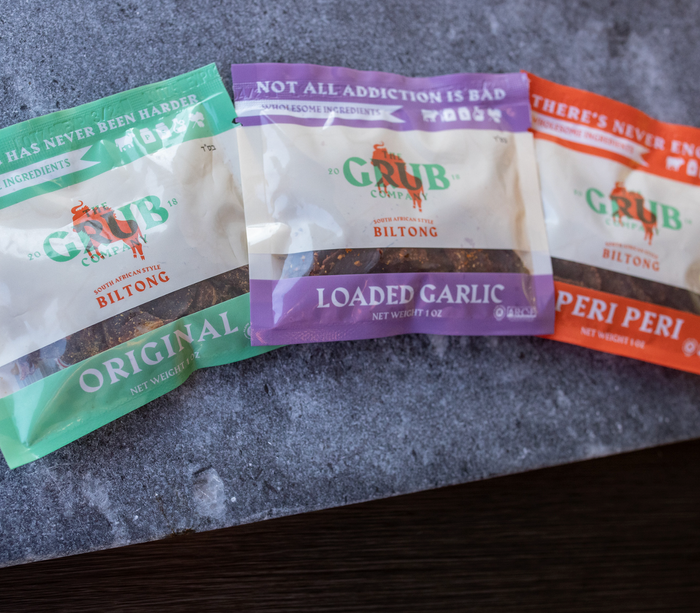
Run the checklist on us — grass-fed, certified Glatt Kosher, five-ingredient Original, air-dried in small batches, sealed with an oxygen absorber.
Run that checklist against ours: named process, published ingredients, honest stock.