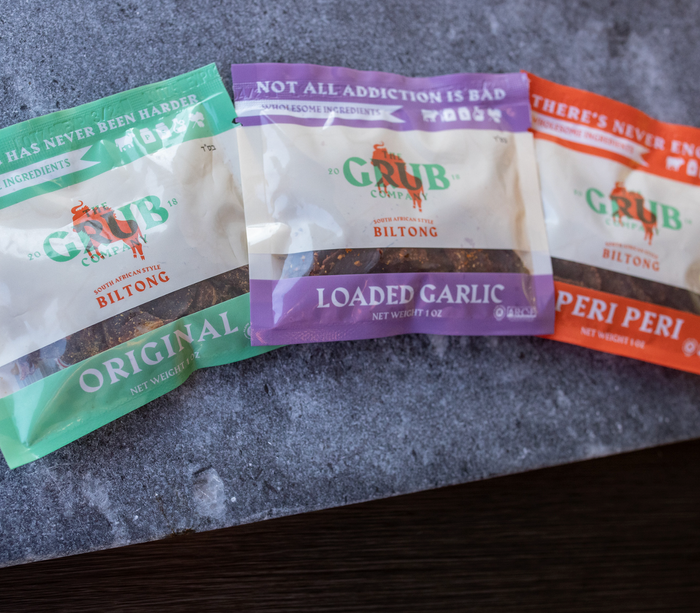
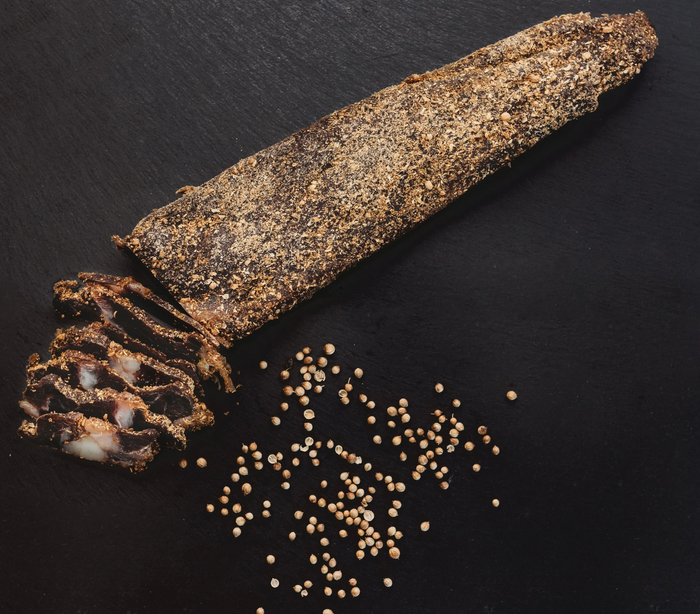
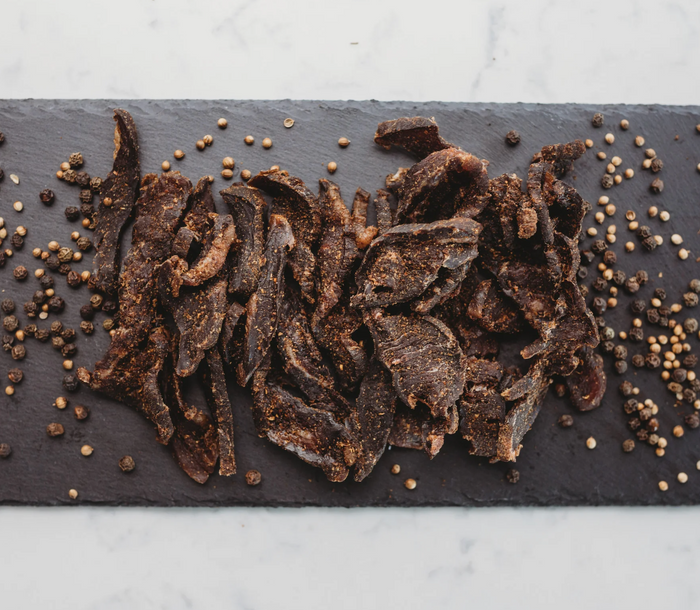
Meat Candy: What Beef Candy Is and How It Differs From Jerky
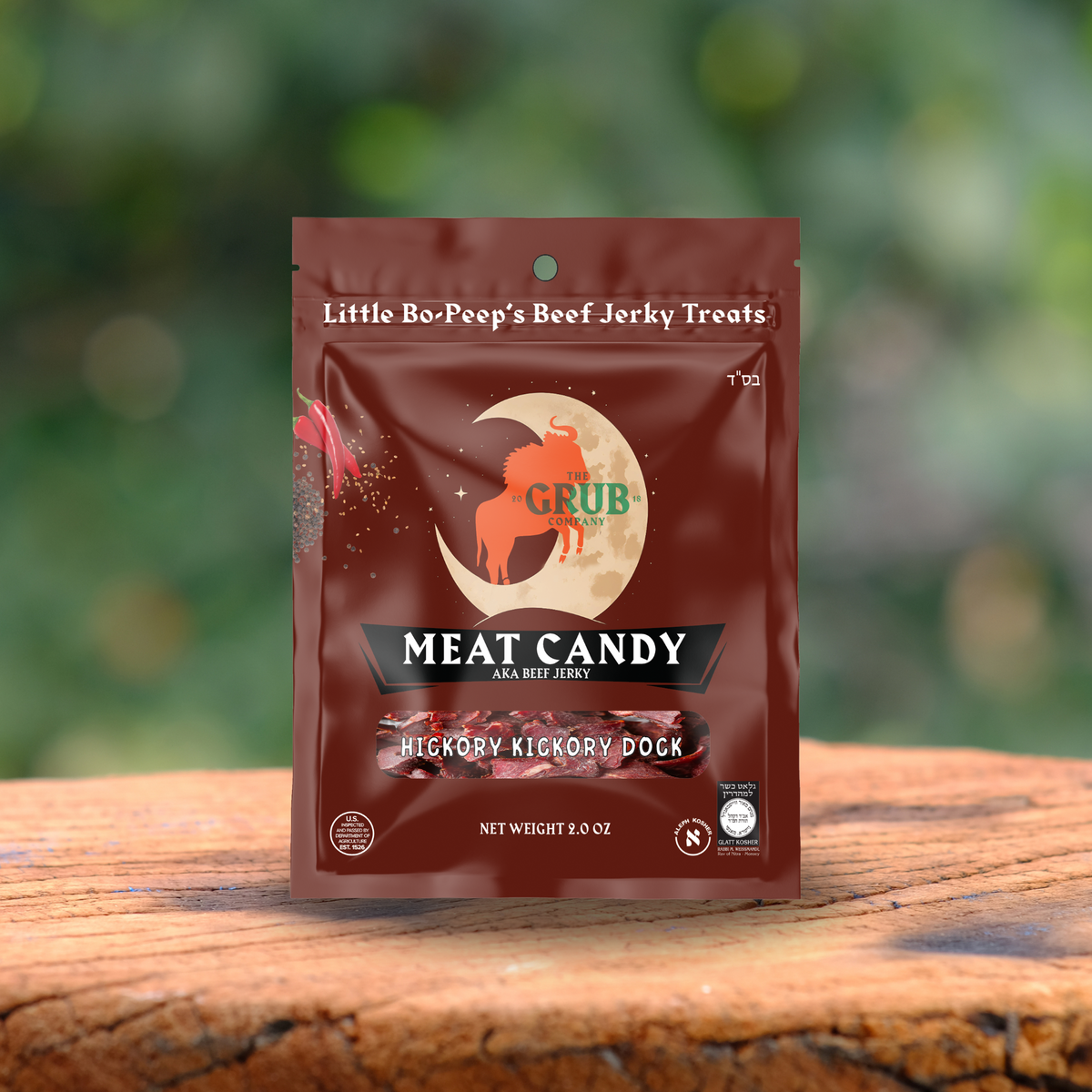
"Meat candy" and "beef candy" describe jerky made with a sweet glaze — sugar, honey or maple caramelized onto the surface so it eats like a confection. This guide covers what it actually is, how it differs from regular jerky and from biltong, how it is made, and how to judge a good one.
Related: A High Protein Candy Bar That Is Actually Meat
What people mean by meat candy
The term covers a few related things, and it helps to separate them.
| What it is called | What it actually is | Sweetness |
|---|---|---|
| Meat candy / beef candy | Jerky with a heavy sweet glaze, cooked until the sugar sets | High and deliberate |
| Candied bacon / pig candy | Bacon baked with brown sugar or maple | Very high |
| Sweet & spicy jerky | Standard jerky with sugar plus chili | Moderate to high |
| Teriyaki jerky | Soy and sugar marinade, a mainstream style | Moderate |
| Standard beef jerky | Marinated and heat-dried; sugar usually present but not the point | Moderate |
| Biltong | Vinegar-cured, air-dried, unsweetened | None |
So meat candy is at one end of a spectrum, and biltong is at the other. Jerky sits in between and drifts toward the sweet end more than most people realize.
How meat candy is made
The process is jerky's, with the sugar promoted from an ingredient to the point of the exercise.
- Slice thin, against the grain. Thin slices take glaze better and cook evenly.
- Marinate. A sweet base — brown sugar, honey, maple syrup, sometimes molasses — usually with soy sauce for salt and depth, and often chili or black pepper for contrast.
- Dry with heat. Low and slow, in a dehydrator, oven or smoker.
- Glaze and set. Additional sweetener may be brushed on toward the end so the sugar caramelizes on the surface rather than being absorbed.
That final step is what separates meat candy from sweet jerky. The sugar is not just in the marinade; it is a coating that sets into a slightly tacky, glossy shell. It is a confectionery technique applied to meat.
Why the sweet-and-savory pairing works
It is not a novelty. Sugar and salt on protein is one of the oldest reliable pairings in cooking — honey-glazed ham, char siu, teriyaki, candied bacon, sweet-and-sour pork. The salt sharpens the sweetness; the sweetness rounds off the salt; and the Maillard browning that happens when sugar meets protein under heat produces flavor compounds neither ingredient has alone.
Meat candy is that principle at maximum intensity. The reason it splits opinion is the same reason it works: nothing is held back.
Meat candy versus biltong
These are opposite answers to the same question — what do you do with beef so it keeps and tastes good.
| Meat candy | Biltong | |
|---|---|---|
| Cooked | Yes | No |
| Sweet | Very | Not at all |
| Primary flavor | The glaze | The beef |
| Cure method | Marinade plus heat | Vinegar, salt, air |
| Drying time | Hours | Days |
| Texture | Chewy, slightly tacky surface | Tender, shreds along the grain |
| Carbohydrate | Significant | Near zero |
| Keto-friendly | No | Yes |
| Eaten as | A treat | A staple snack |
A useful way to think about it: biltong is the everyday protein, meat candy is dessert that happens to be beef. Plenty of people keep both, for different moments.
Judging a good meat candy
Sweet food hides a lot, which is exactly why it is worth judging carefully.
- Is there a savory backbone? Good meat candy has salt, smoke or heat pushing back against the sugar. Without it, you are eating a chewy sweet.
- Can you taste beef? The meat should still be present in the finish. If not, the glaze is covering for the cut.
- Is the surface set or sticky? Set and glossy is correct. Wet and sticky means the sugar never caramelized properly, and it will not keep well.
- What is the cut? Good producers name it. Sweet products are where cheap cuts hide most easily.
- Is there a heat counterpoint? Not essential, but the best versions use chili or black pepper to stop the sweetness becoming one-note.
- How long is the ingredient list? Sugar, meat, salt, spice, smoke — a short list is a good sign here too.
Storage — sweet dried meat behaves differently
Sugar is hygroscopic: it attracts moisture from the air. That makes meat candy behave differently from both jerky and biltong once opened.
| Condition | What happens |
|---|---|
| Sealed, cool, dry | Keeps well; check the pack date |
| Opened in a humid room | Surface goes tacky, pieces stick together |
| Opened in a dry room | Glaze hardens; texture becomes brittle |
| Refrigerated after opening | Best option; use a sealed container |
| Warm car | Glaze softens and pieces fuse into a block |
Practical rule: reseal it, keep it cool, and do not leave it in a car in summer.
Nutrition, honestly
Meat candy is a treat and should be judged as one. It carries the protein of jerky plus the sugar of a confection — that is the deal, and it is a reasonable one as long as nobody is pretending otherwise.
Where it goes wrong is when sweetened jerky is marketed as a health snack. A 3 oz bag of heavily glazed jerky can carry as much added sugar as a candy bar while being sold on the protein number. If sugar is what you are avoiding — for keto, for blood-sugar management, or just generally — this is the category to skip, and biltong is the thing to reach for instead.
Serving it
- On a board. It works the way candied nuts do — a sweet counterpoint to salty cured meats and sharp cheese.
- With beer. A hoppy IPA cuts the sugar. A stout leans into it.
- Chopped over salad. Sweet-savory beef against bitter greens and a sharp dressing.
- As a gift. It reads as indulgent, which makes it an easier gift than a plain savory snack.
- Alongside biltong. The contrast flatters both — most people who try them side by side end up preferring one strongly, which is useful to discover.
What the glaze is actually doing
The sugar in meat candy is not decoration. It is doing four separate jobs at once, which is why the category cannot simply have the sugar removed.
| Job | What happens | Take it away and… |
|---|---|---|
| Flavor | Balances salt and soy; provides the sweetness people recognize | You have plain jerky |
| Texture | Sugar attracts and holds moisture, keeping the meat pliable after heating | It goes brittle |
| Browning | Sugar and protein under heat produce Maillard reactions — color and depth | It stays pale |
| The shell | Sugar brushed on late caramelizes into a set, glossy surface | No glaze, and the surface stays tacky |
That fourth job is what separates meat candy from merely sweet jerky. The sugar is not only in the marinade; it is applied again toward the end so it sets on the outside rather than being absorbed. It is a confectionery technique — the same one used for candied nuts — applied to beef.
Sweet dried meat is much older than it looks
Meat candy reads as a recent American novelty. The technique is not new at all.
Sugar is itself a preservative. It binds water in the same way salt does, which is why jam keeps and why honey does not spoil. Sweetening preserved meat is therefore one of the oldest reliable moves in cooking rather than a modern indulgence.
| Tradition | Where | What it is |
|---|---|---|
| Bak kwa | China, Singapore, Malaysia | Sweet dried pork in thin sheets, grilled. Sold for Lunar New Year for centuries |
| Char siu | Cantonese | Pork glazed with maltose and honey, roasted |
| Honey-glazed ham | Europe, then America | Cured pork finished with a sugar glaze |
| Candied bacon | United States | Bacon baked with brown sugar or maple |
| Meat candy | United States | Jerky with the glaze promoted to the point of the exercise |
Bak kwa is the closest historical relative — thin sheets of sweet dried pork, made the same way and for the same reasons, generations before anyone put "meat candy" on a bag. What is genuinely modern is the framing: selling it as a snack rather than as a festive food or part of a meal.
How to judge one
Sweet food hides a great deal, which is exactly why it repays careful judging.
- Is there a savory backbone? Good meat candy has salt, smoke or heat pushing back. Without it you are eating a chewy sweet.
- Can you taste beef? The meat should be present in the finish. If not, the glaze is covering for the cut.
- Is the surface set or sticky? Set and glossy is correct. Wet and sticky means the sugar never properly caramelized, and it will not keep well.
- What is the cut? Good producers name it. Sweet products are where cheap cuts hide most easily.
- Is there a heat counterpoint? Not essential, but the best versions use chili or black pepper to stop the sweetness becoming one-note.
- How long is the ingredient list? Sugar, meat, salt, spice, smoke — short is a good sign here too.
- Does it stick together in the bag? A little is normal. A solid block means too much residual moisture in the glaze.
Storing it — sweet dried meat behaves differently
Sugar is hygroscopic: it actively attracts moisture from the air. That makes meat candy behave differently from both plain jerky and biltong once opened, and it explains every storage quirk people notice.
| Condition | What happens | What to do |
|---|---|---|
| Sealed, cool, dry | Keeps well | Check the pack date |
| Opened in a humid room | Surface goes tacky; pieces stick together | Refrigerate in a sealed container |
| Opened in a dry room | Glaze hardens; texture turns brittle | Reseal promptly |
| Warm car | Glaze softens and pieces fuse into a block | Take it inside |
| Refrigerated after opening | Best option | Sealed container, not the open bag |
| Frozen | Works; glaze can weep slightly on thawing | Thaw sealed, at room temperature |
Note the contrast with biltong, which loses moisture to a dry room and takes it back from a humid one. Meat candy does both faster, because the sugar amplifies the exchange in each direction.
Making it at home
One of the easier things to make at home, because the sugar is forgiving in a way biltong's slow drying is not.
- Slice thin, against the grain — around 1/8 inch. Partially freezing the beef for an hour makes this far easier.
- Marinate 4–12 hours. A workable base: brown sugar, soy sauce, a little Worcestershire, black pepper, garlic, chili flakes if you want contrast.
- Drain and pat dry. Wet slices steam rather than dry, and the glaze will not set.
- Dry low. A dehydrator around 160°F, or an oven at its lowest setting with the door slightly ajar, for four to six hours.
- Glaze near the end. Brush on more sweetener in the last 30–45 minutes so it caramelizes on the surface rather than soaking in. This is the step that makes it candy rather than sweet jerky.
- Cool completely before bagging. Bagging it warm traps steam, the surface goes tacky, and it will not keep.
The most common home failure is impatience at the end — pulling it while the glaze is still wet. It should feel set and very slightly tacky, not sticky.
The whole sweet-to-savory spectrum
"Meat candy" sits at one end of a range, and knowing the range is the fastest way to work out what you actually want.
| Product | Sweetness | Cooked? | Added sugar per 3 oz | What it is for |
|---|---|---|---|---|
| Meat candy / beef candy | Very high | Yes | 20 g+ | A treat with protein in it |
| Candied bacon | Very high | Yes | High | A garnish or an indulgence |
| Teriyaki jerky | High | Yes | ~15–20 g | Mainstream snacking |
| Sweet and spicy jerky | Moderate to high | Yes | ~15 g | Mainstream snacking |
| Original jerky | Moderate | Yes | ~10–15 g | Everyday |
| Low-sugar / premium jerky | Low | Yes | ~2–8 g | People cutting sugar but wanting jerky texture |
| Biltong | None | No | 0 g in Original | Everyday protein |
Two things worth noticing. Even "original" jerky sits several steps along the sweet scale from where most people place it — the baseline is sweeter than the label suggests. And biltong is not at the low-sugar end of the jerky range; it is off the scale entirely, because it is a different process rather than a different recipe.
Meat candy against biltong, properly
They are opposite answers to the same question — what do you do with beef so it keeps and tastes good — and most people who eat a lot of dried meat end up keeping both.
| Meat candy | Biltong | |
|---|---|---|
| Cooked | Yes | No |
| Primary flavor | The glaze | The beef |
| Cure method | Marinade plus heat | Vinegar, salt, air |
| Drying time | Hours | Days |
| Texture | Chewy, slightly tacky surface | Tender, shreds along the grain |
| Carbohydrate | Significant | Near zero |
| Keto-friendly | No | Yes |
| Once opened, humid room | Goes tacky quickly | Absorbs moisture more slowly |
| Eaten as | A treat | A staple |
A useful frame: biltong is the everyday protein, meat candy is dessert that happens to be beef. Neither claim is a criticism of the other, and problems only arise when one is sold as the other.
Nutrition, without pretending
Meat candy is a treat and should be judged as one. It carries the protein of jerky plus the sugar of a confection — that is the deal, and it is a reasonable one as long as nobody misrepresents it.
Where the category goes wrong is when heavily glazed jerky is marketed on its protein number while quietly carrying as much added sugar as a candy bar. The protein is real; so is the sugar. A 3 oz bag delivering 25 g of protein and 22 g of added sugar is both of those things at once.
| Per 3 oz | Meat candy | Biltong |
|---|---|---|
| Protein | ~25–30 g | ~36 g |
| Added sugar | 20 g+ | 0 g in Original |
| Carbohydrate | 25 g+ | Near zero |
| Protein per 100 calories | ~8–10 g | ~15 g |
If sugar is the thing you are avoiding — for keto, for blood-sugar management, or just generally — this is the category to skip, and biltong is the thing to reach for instead. If sugar is not your concern, meat candy is a good version of what it is.
Serving it
- On a board. It works the way candied nuts do — a sweet counterpoint to salty cured meats and sharp cheese.
- With beer. A hoppy IPA cuts the sugar; a stout leans into it.
- Chopped over salad. Sweet-savory beef against bitter greens and a sharp dressing.
- As a gift. It reads as indulgent, which makes it an easier present than a plain savory snack.
- Alongside biltong. The contrast flatters both, and most people who try them side by side discover they strongly prefer one — which is useful to find out.
- Crumbled over ice cream. Sounds absurd, works for the same reason salted caramel does.
Why the name causes so much confusion
"Meat candy" is used for at least four different things, and searches for it return a mess. Here is the disambiguation.
| What people mean | What it actually is |
|---|---|
| A product name | A specific brand's sweet jerky line — which is what this page is mostly about |
| Candied bacon | Bacon baked with brown sugar or maple. Also called "pig candy" |
| Heavily glazed jerky generally | Any jerky where the sweetness is the point |
| A compliment | People say it about any dried meat they find addictive, including biltong, which is not sweet at all |
| Meat-flavored candy | Actual confectionery with a meat flavor — a novelty product, and a different category entirely |
The fourth row is worth flagging because it produces genuinely confusing reviews. Someone describing biltong as "meat candy" almost always means it is moreish, not that it is sweet — and a reader taking that literally will buy the wrong thing.
If you want the sweet glazed product, search for it by brand or by "sweet beef jerky". If you want the unsweetened South African one, search "biltong". The two are at opposite ends of the same shelf.
What goes wrong with it, and why
| Problem | Cause | What to do |
|---|---|---|
| Pieces fused into a block | Glaze softened in heat, then re-set | Separate them; it is a texture problem, not a safety one |
| Sticky, wet surface | Sugar never fully caramelized, or humid storage | Refrigerate; if it arrived that way, it will not keep well |
| Brittle and shattering | Over-dried, or a very dry storage room | Still fine to eat |
| Sugar crystals on the surface | The glaze recrystallized after temperature swings | Harmless |
| Tastes only of sugar | Cheap cut, glaze covering for it | Different producer |
| Mold | Too much residual moisture in the glaze | Discard the bag — sugar holds water, so this is a real risk here |
That last row deserves emphasis. Because sugar attracts and holds moisture, heavily glazed meat has a genuinely higher mold risk than unsweetened dried meat at the same apparent dryness. It is the one place where meat candy is less forgiving than biltong, and it is why the "cool completely before bagging" step matters so much in home production.
Who each one is for
| You are… | Reach for | Why |
|---|---|---|
| Watching sugar or carbs | Biltong | Meat candy is not a compromise here — the sugar is the definition |
| Wanting a treat with protein in it | Meat candy, portioned | It is good at exactly that |
| Feeding kids something savory | Biltong | Less sugar, and softer if you buy on the wetter side |
| Building a board | Both | Meat candy plays the role candied nuts do |
| Snacking daily | Biltong | Meat candy is a sometimes food and honest producers say so |
| Introducing someone to dried meat | Meat candy first | The easier first step; biltong is the better destination |
| Post-workout | Either, for different reasons | Biltong for protein per calorie; meat candy if you also want the carbohydrate |
| Gifting to someone whose taste you do not know | Meat candy | Sweet is a safer guess than unfamiliar |
That last row is a real point and slightly counterintuitive. Biltong is the better product and the riskier gift, because it is unfamiliar and genuinely divides people on first encounter. Sweet glazed jerky asks less of the recipient.
A note on honesty in this category
Sweet dried meat is a good thing that is frequently sold dishonestly, and it is worth saying which is which.
The honest version says: this is a treat, it has sugar in it, it also has protein, enjoy it. The dishonest version leads with the protein number, calls itself a performance snack, and puts the sugar content in small type on the back — which is how a product with as much added sugar as a chocolate bar ends up in a gym bag under the impression that it is a health food.
The tell is where the sugar appears. A producer confident in what they are selling puts it on the front, because "candy" is right there in the name and there is nothing to hide. A producer using sweetness to carry a weak product tends not to mention it at all.
How much to eat, and how to think about it
Meat candy is dense in both directions — protein and sugar — so portioning matters more than it does with plain dried meat.
A reasonable serving is one ounce, which lands around 8–10 g of protein and 6–8 g of added sugar. That is a snack. A whole 3 oz bag in one sitting is closer to a dessert than to a protein hit, and treating it as the latter is how people end up surprised by their sugar intake at the end of a week.
Two practical habits. Pour a portion out rather than eating from the bag — glazed products are unusually easy to keep reaching for, because the sugar removes the natural stopping point that salt provides. And keep it somewhere you have to decide to go, rather than on a desk, for the same reason.
None of that is a warning against it. It is a good version of a treat, and treats are fine. It is a warning against the specific mistake of eating it as though it were biltong, which is a food you genuinely can graze on without much thought.
Where it fits on a shelf, and where it does not
Sweet glazed dried meat occupies an awkward retail position, and knowing that helps you find it.
It is too indulgent for the health-food aisle and too expensive for the candy aisle, so it usually ends up in the jerky section — where it competes on a protein number it is not really optimized for, next to products that are less sweet and cheaper. That mismatch is why the good versions tend to be sold direct by the maker rather than through general retail.
It performs much better as a gift, a board component or a specialty purchase than as an everyday snack, because those framings let it be what it is instead of pretending to be a protein product. Producers who understand that sell it alongside their savory line rather than as a variant of it.
Quick answers
Is meat candy the same as jerky? It is a style of jerky, made sweeter and glazed.
Is it the same as candied bacon? Same idea, different animal. Candied bacon is pork; meat candy usually means beef.
Is meat candy healthy? It is a treat with protein in it. Judge it as a treat.
Our Original biltong lists no sugar in its ingredients: grass-fed kosher beef, coriander, black pepper, salt, garlic and vinegar. If you want dried beef without sugar, you want biltong.
Can you make it at home? Yes. Thin-sliced beef, a brown-sugar and soy marinade, a low oven or dehydrator, and a final glaze brushed on near the end.
Does it keep as long as jerky? Roughly, sealed. Less well once opened, because the sugar pulls in moisture.
Sweet dried meat is older than it looks
Meat candy reads as a modern American novelty, and the technique is not new at all. Sweetening preserved meat is one of the oldest moves in cooking, because sugar is itself a preservative — it binds water in the same way salt does, which is why jam keeps and why honey does not spoil.
Chinese bak kwa, the sweet dried pork sold in sheets around Lunar New Year, has been made for centuries and is the closest historical relative of what Americans now call meat candy. Cantonese char siu glazes pork with maltose and honey. European traditions cured hams with honey long before refined sugar was available.
What is genuinely modern is the framing — selling it as a snack in a bag rather than as a festive food or a component of a meal. The technique is old; the aisle is new.
Making it at home
Meat candy is one of the easier things to make at home, because the sugar is forgiving in a way that biltong's slow drying is not.
- Slice thin, against the grain. Around 1/8 inch. Partially freezing the beef for an hour makes this far easier.
- Marinate for 4–12 hours. A workable base: brown sugar, soy sauce, a little Worcestershire, black pepper, garlic, and chili flakes if you want contrast.
- Drain properly. Pat the slices dry. Wet slices steam rather than dry, and the glaze will not set.
- Dry low. A dehydrator at around 160°F, or an oven at its lowest setting with the door slightly ajar, for four to six hours.
- Glaze near the end. Brush on a little more sweetener in the last 30–45 minutes so it caramelizes on the surface rather than soaking in. This is the step that makes it candy rather than sweet jerky.
- Cool completely before bagging. Bagging it warm traps steam, the surface goes tacky, and it will not keep.
The most common home failure is impatience at the end — pulling it while the glaze is still wet. It should feel set and slightly tacky, not sticky.
Who each one is actually for
| You are… | Reach for |
|---|---|
| Watching sugar or carbs | Biltong. Meat candy is not a compromise here. |
| Wanting a treat with protein in it | Meat candy, portioned |
| Feeding kids something savory | Biltong — less sugar, and softer if you buy on the wetter side |
| Building a board | Both. Meat candy plays the role candied nuts do. |
| Snacking daily | Biltong. Meat candy is a sometimes food and honest producers say so. |
| Introducing someone to dried meat | Meat candy is the easier first step; biltong is the better destination |
Try our Meat Candy — or, if sweet is not what you are after, the biltong is the opposite end of the same shelf.
Both flavors, and what is in them.
Any crowd with children in it takes the sweet one first — the party shelf.