Is Biltong Healthy? Protein, Sodium, and What's Actually in the Bag
What's actually in the bag
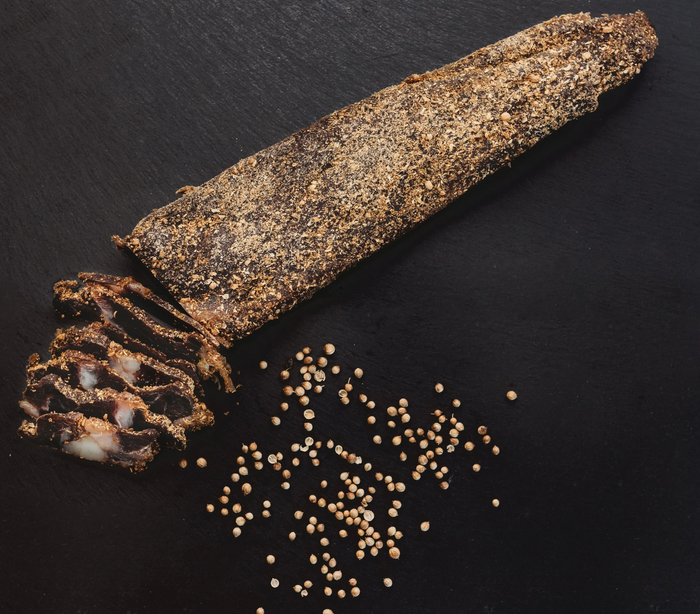
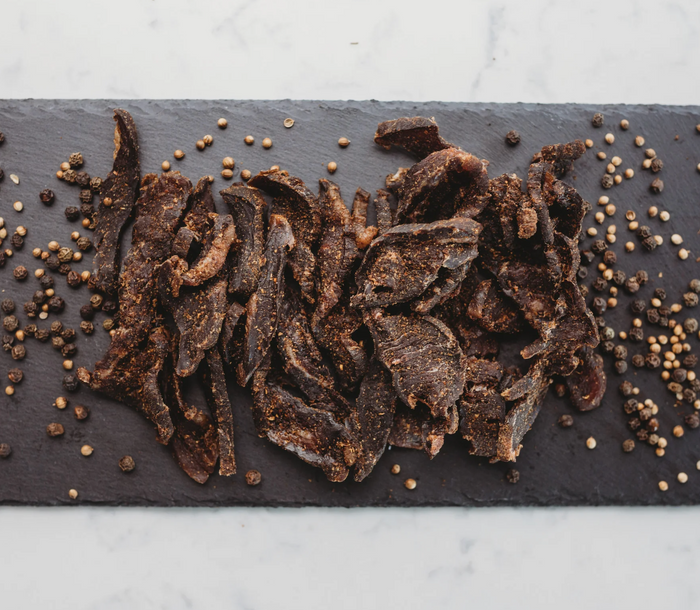
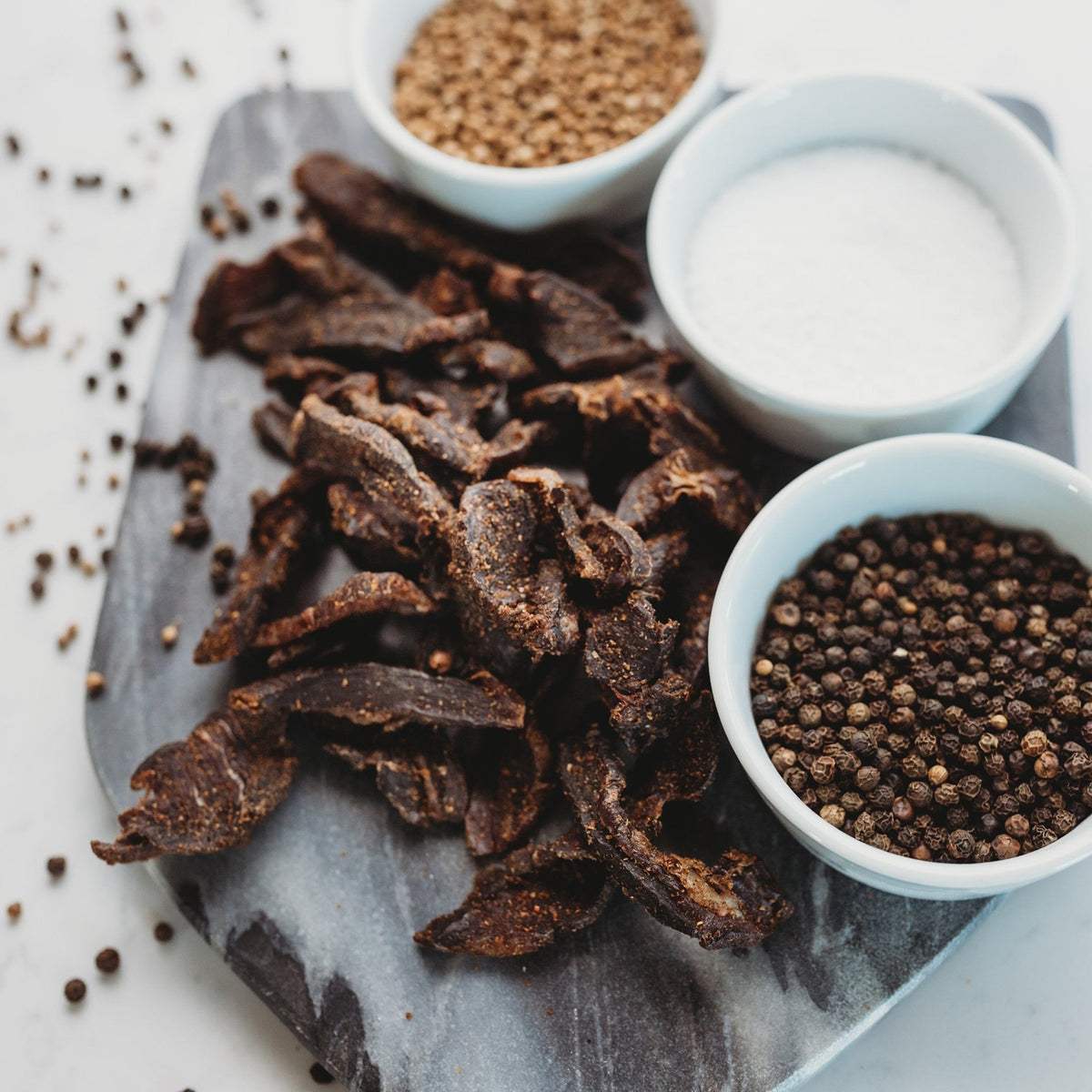
Biltong is grass-fed beef, air-dried and cured with vinegar and a spice blend, with no added sugar and no smoking or cooking involved. That's the whole ingredient list on most bags, which is shorter than what you'll find on a lot of jerky at a gas station counter. Mainstream jerky is often cooked, smoked, and sweetened with sugar or corn syrup to round out the flavor. Biltong skips that step. The vinegar cure does the work that heat and sugar do in other dried meats, which is a big part of why the texture and flavor end up so different.
Related: Low-Sodium Beef Jerky: What the Label Means, and Where Biltong Fits
Where to get it: Glatt Kosher biltong for sale, made in Florida and shipped anywhere in the US (free over $50).
We started this brand because we got tired of junk ingredients showing up in snacks that are supposed to be simple. Mechanically separated meat, fillers, and mystery preservatives have no place in what we make. Our biltong starts with real cuts of grass-fed beef, and we won't compromise on that.
Protein and carbs, in general terms
Dried lean beef is naturally high in protein and low in carbohydrate, and biltong doesn't change that basic math. Air-drying removes moisture, not protein, so what's left is mostly meat by weight once the water is gone. We're not going to hand you a made-up gram count here, because the real number shifts with the cut, the batch, and how long it dried. If you want exact numbers, the nutrition panel on your bag is the source to trust, not a guess from a blog post.
Sodium, honestly
Curing meat requires salt. That's true of biltong, prosciutto, corned beef, and pretty much anything preserved this way, so biltong is not a low-sodium food and we're not going to pretend otherwise. If you're watching your sodium intake for a medical reason, check the nutrition label on the specific flavor you're ordering, because Peri Peri, Original, and Loaded Garlic each use a different spice mix and the sodium can shift slightly between them. This is a case where the honest answer is to check the label, not because we're dodging the question, but because it's the only accurate one we can give you without guessing.
Where biltong fits if you're eating clean
If you're trying to eat less processed food, biltong is one of the lowest-risk snacks you can reach for between meals. It's shelf-stable, it travels well, and it's not hiding sugar or fillers behind a natural flavor label. It's kosher certified, which matters more than it sounds if kosher snacks that are actually good have been hard to find where you live. We haven't confirmed halal certification, so if that's a requirement for you, don't take our word for it until we can say so directly.
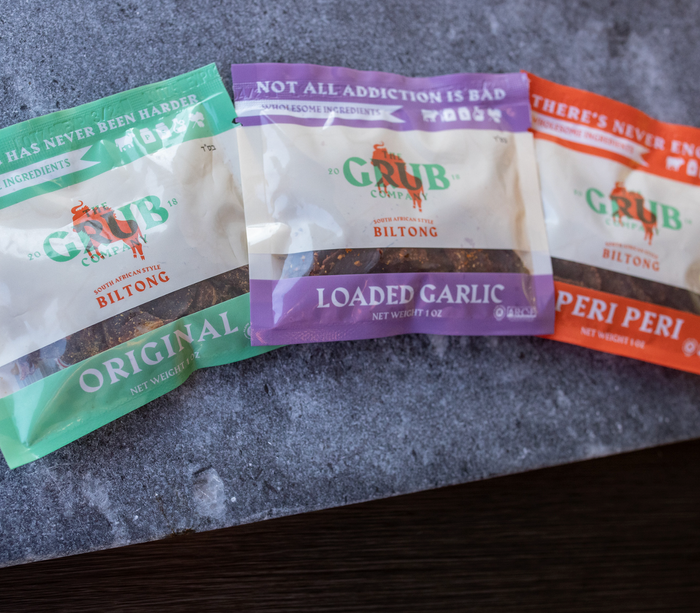
None of this makes biltong a meal replacement or a cure for anything. It's a snack made from real beef with a short ingredient list, and for a lot of people that's exactly the gap it fills. If you're deciding which flavor to start with, the Biltong Sampler Pack lets you try Original, Peri Peri, and Loaded Garlic in one order before you commit to a bigger bag.
Frequently Asked Questions
Does biltong have less sodium than regular beef jerky?
It depends on the brand of jerky you're comparing it to, since sodium levels vary a lot between products and cure recipes. What we can say is that biltong isn't cooked with sugary glazes or marinades the way a lot of commercial jerky is, so you're not getting sodium stacked on top of added sugar. If sodium is a specific concern for you, compare nutrition panels side by side rather than assuming one category of dried meat is automatically lower than another.
Is biltong gluten-free?
Biltong is made from beef, salt, vinegar, and spices, none of which are gluten sources, and we don't add flour, soy sauce, or other gluten-containing ingredients to our cure. If you have celiac disease or a severe gluten sensitivity, always check the label on your specific order, since spice blends and shared equipment can vary by supplier over time.
Does biltong contain any added sugar?
No. Our biltong doesn't use added sugar in the cure, which puts it in different territory than a lot of mainstream beef jerky that relies on sugar or corn syrup for flavor and browning. The taste comes from the vinegar cure and the spice blend instead, which is part of why biltong tastes more savory and less sweet than what you might be used to.
Is biltong a good protein source for kids?
Dried beef is a concentrated protein food, and biltong doesn't carry the added sugar that shows up in a lot of kid-marketed jerky snacks. It's also a cured, salted product, so portion size matters more for a smaller kid than it does for an adult. If you're planning to make it a regular snack for your child, the Sliced Biltong Mini's bag makes it easier to control portion size.
Can I eat biltong every day?
Plenty of people do, since it's shelf-stable, portable, and doesn't need refrigeration until it's opened. The main thing to watch with daily eating is sodium, simply because it's a cured meat and cured meat always carries more salt than the same cut fresh. If you eat it daily, it's worth glancing at your overall sodium intake for the day rather than treating biltong as a free pass.
Is biltong healthier than regular beef jerky?
It depends what you're comparing, but biltong tends to have a shorter ingredient list than most commercial jerky, since it skips added sugar, cooking, and smoking in favor of an air-dry vinegar cure. That doesn't automatically make every biltong healthier than every jerky on a shelf, but it does mean you're getting closer to just beef and spices with fewer things added along the way.
If protein per bag is what you are after, this is the shelf — six ingredients, no preservatives.