Is Biltong Healthier Than Jerky? An Honest Answer
The honest answer is that neither is a health food, and "healthier" depends on what you are comparing: the two are both high in protein, but biltong is typically savory and air-dried, while jerky is usually cooked and glazed with sugar. Read the label of whichever bag you hold. We make certified Glatt Kosher biltong and jerky, so we sell both sides of this argument.
Everything we make at Grub is certified Glatt Kosher, air-dried in small batches in Florida from grass-fed beef. We make biltong and Meat Candy, which is our jerky. Because we make both, we have no reason to push you toward one. We also will not give you health claims we cannot back up. This is a plain comparison of how the two are made, what is in them, and how to decide.
What both have in common
Start with the overlap, because it is larger than the arguments suggest. Both biltong and jerky are dried beef. Both are high in protein. Both are portable and need no refrigeration when sealed. Both are salty compared with fresh meat, because salt is part of how they are made. Both are a snack, not a meal replacement.
That last point matters. Dried meat is concentrated. A small handful carries a lot of flavor, a lot of salt and a lot of protein. We do not give nutrition numbers in this article, because they vary by recipe, and we would rather you read the label on the exact bag you buy. If you have a medical reason to watch salt, sugar or protein, ask your doctor, and let them decide, not a snack website.
For the full story on salt and protein, our article is biltong healthy goes through it.
Where they differ: the method
The real difference starts with how the beef is dried.
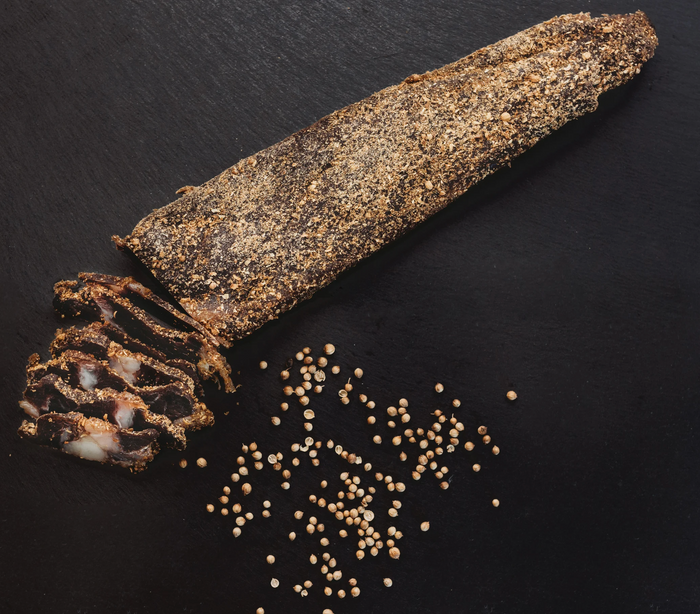
Biltong is cured and air-dried. The beef is cut into strips or slabs, salted, spiced, treated with vinegar and hung to dry with moving air. There is no cooking step. The drying takes time, and the result is a savory, slightly tangy meat that gives way when you bite it.
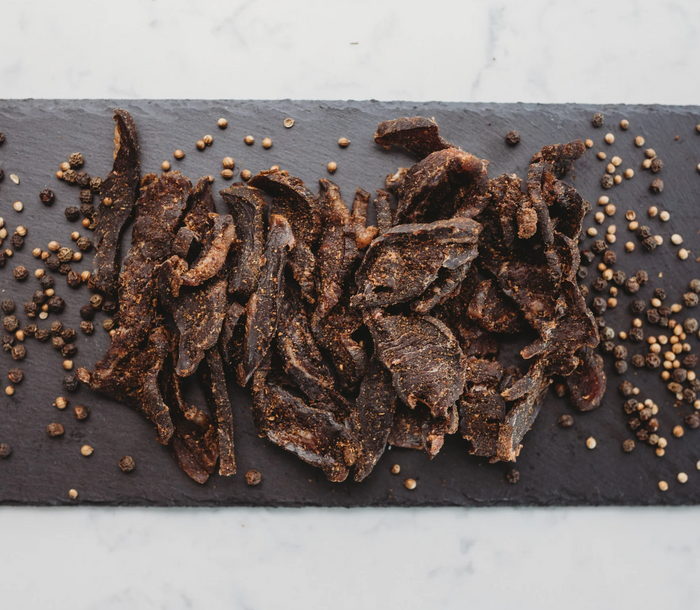
Jerky is usually cooked. The beef is sliced thin, marinated, and dried with heat over a few hours. It is often sweeter, with sugar in the marinade or glaze, and chewier. Our Meat Candy is made this way: cooked, glazed and unashamedly sweet, in Hickory Kickory Dock and Baa-Baa BBQ Sheep.
The two are opposite methods, and plenty of homes keep both. We go into the curing side in what makes biltong different from jerky.
Where they differ: sugar and flavor
This is where "healthier" arguments usually land. Jerky is commonly flavored with a sweet marinade or glaze. Biltong is usually flavored with salt, vinegar and spices like coriander and black pepper.
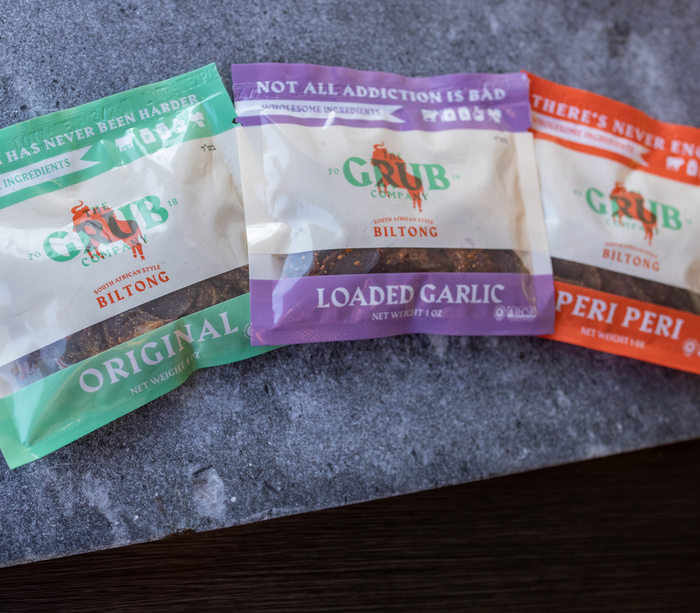
Look at the ingredients. Our Original biltong lists grass-fed kosher beef, coriander, black pepper, salt, garlic and vinegar. Sugar is not on that list. Our Peri Peri adds red pepper and brown sugar, so it is not the same. Loaded Garlic uses coriander, garlic, roasted garlic, salt, tomato powder and vinegar. Meat Candy uses a glaze, which is the point of it, so read its label if sugar matters to you.
That is a fact about ingredients, not a health verdict. Less added sugar is not automatically better for every person, and salt is still there. It simply means the two taste different and contain different things. If you are comparing bags from any maker, read the sugar line and the salt line on each, and compare like for like.
Where they differ: the meat itself
Both depend on the quality of the beef and on what else goes into the bag. Some jerky and some biltong in the market is made from chopped, reformed or low-grade meat. Others use whole muscle. This matters more than the category. When you compare any two bags, check:
- The first ingredient. It should be beef, named plainly.
- The ingredient list length. Shorter lists are easier to understand. Long lists are not automatically bad, but you should know what each item is.
- The cut. Whole sliced muscle has a different bite from ground and formed pieces.
- The certification, if kosher matters to you. For a kosher household, this decides the question before taste does.
Our biltong is made from grass-fed beef, and Meat Candy is made from real, whole sliced beef. The same label checks apply to anyone's products.
What we will not say
We will not say biltong is a health food. We will not say jerky is bad for you. We will not claim that air-drying makes meat more nutritious, or that one is better for weight, muscle or any condition. We do not have evidence to make those claims, and neither does most of what is written online on this question. The only thing we say about nutrition is that both are high in protein.
If someone tells you one is plainly healthier, ask what they are comparing. Often the answer is "a low-sugar biltong versus a very sweet jerky," which is a comparison of two recipes, not two categories. A savory jerky and a sweet biltong exist. The category label tells you less than the ingredient list does.
Texture, and why it changes how much you eat
Here is a practical point that gets ignored. How a snack feels affects how much of it you end up eating. Biltong gives way when you bite it and is often eaten in thin slices that dissolve quickly. Jerky is chewier and sweeter, and some people find a few pieces are enough, while others find it easy to keep going. Neither effect is a rule. It is just worth noticing which one you tend to overeat, because a snack you cannot stop eating is a salty, concentrated one whichever category it falls under.
This is also where portion size helps. A small bag you finish in one sitting is easier to track than a huge bag you graze from. Our Sliced Biltong Mini's are built for that, and a three-ounce bag is a natural single serving for many people. Decide your portion before you open the bag, not halfway through it.
Reading a label from any maker
Because the category tells you so little, the label does the work. Whatever you buy, check these in order:
- Is the first ingredient beef?
- Does the ingredient list include sugar, and how far up the list is it?
- How much salt does one serving carry, compared with how much you will actually eat?
- Does it list preservatives, flavorings or additives you do not recognize?
- Is there a certification that matters to you?
Do this for a biltong and a jerky side by side and the answer to "which is healthier for me" usually becomes obvious. It may even favor a particular jerky over a particular biltong. That is a fine outcome. The goal is to choose well, not to win the category argument.
How to decide for yourself
Use this short list.
- If you want to avoid added sugar, start with Original biltong and read the label. It is the plain version, with beef, coriander and pepper up front.
- If you like sweet, smoky and tender, jerky is the better pick. Meat Candy's glaze is the point. Biltong will feel dry and savory by comparison.
- If you want a lunchbox or travel snack, either works, and the one you will finish is the right one.
- If salt is a concern, both are salty. Ask your doctor about your own limit.
- If you want to try both, a small order costs little. The Sliced Biltong comes in three flavors, and our kosher beef jerky collection covers the other side.
When biltong is the wrong pick
Biltong is the wrong pick if you dislike a savory, slightly tangy flavor, if you want a sweet candy-like snack, or if you want a very soft, cooked texture. In those cases, jerky will suit you better. Jerky is the wrong pick if you want to avoid a sweet glaze or want something closer to a cured, savory meat. Neither is better in the abstract.
The bottom line
Biltong is not automatically healthier than jerky, and jerky is not automatically worse. Both are high in protein and salty. The real differences are method, sweetness and what is on the label. Read the ingredients, check the salt and sugar, pick the one you will actually eat, and ask your doctor if you have a medical reason to be careful. You can see every size and flavor on Buy Biltong Online.
Frequently Asked Questions
Is biltong healthier than jerky?
Not automatically. Both are high in protein and both are salty. They differ mainly in method and flavor, with biltong air-dried and savory and jerky usually cooked and sweeter. Read the label on the exact bag.
Does biltong have less sugar than jerky?
Often, but check each recipe. Our Original biltong lists no sugar in its ingredients. Our Peri Peri lists brown sugar, and our Meat Candy uses a glaze, so read those labels.
Is biltong or jerky better for protein?
Both are high in protein, and we make no claim beyond that. The amount varies by recipe, so use the label.
Is biltong raw?
No. It is cured and air-dried without a cooking step, which is why it looks different from cooked jerky. It is ready to eat as it comes.
Which is better for weight loss or the gym?
We make no claims about performance, weight or recovery. Both are high in protein. For any goal, ask your doctor or a dietitian.
Is Grub's jerky kosher?
Yes. Both our biltong and our Meat Candy are certified Glatt Kosher.
Does Grub ship outside the US?
No. We ship to US addresses only, and US orders over $50 ship free.