Biltong vs Pastrami: Cured, Dried and Smoked Beef Compared
Biltong and pastrami are both seasoned, cured beef, but they are different foods: biltong is air-dried until it keeps on a shelf and is eaten cold, while pastrami is brined, smoked, steamed and served hot. Both can be made as certified Glatt Kosher products, and ours is the dried one.
We make certified Glatt Kosher biltong and beef jerky in Florida, and the pastrami question comes up more than you would expect. People who grew up on deli sandwiches taste biltong for the first time, notice the black pepper and coriander, and say it reminds them of pastrami. They are right about the spice. They are wrong about almost everything else. Here is how the two really compare, so you know what you are buying and when each one is the right pick. For how our own certification works, see our kosher page.
What pastrami is
Pastrami is a deli meat. It starts with a fatty cut of beef, traditionally from the plate or the navel, though brisket is common too. The beef is cured in a salt brine, rubbed heavily with black pepper and coriander, smoked, and then steamed until it is tender enough to slice thin and pile on rye.
Each step does a job. The brine seasons the meat all the way through and keeps it from going off while it cures. The rub builds the dark, peppery crust. The smoke adds depth. The steaming turns a tough cut into something soft. The result is moist, rich and warm, and it is meant to be eaten that way, usually in a sandwich, with mustard and a pickle.
The key point for comparison: pastrami is a cooked, wet-cured, smoked meat. It is not dried to preserve it. It is a food you buy at a counter or from the refrigerated case and eat within a reasonable time, the way you would any other cooked deli meat.
What biltong is
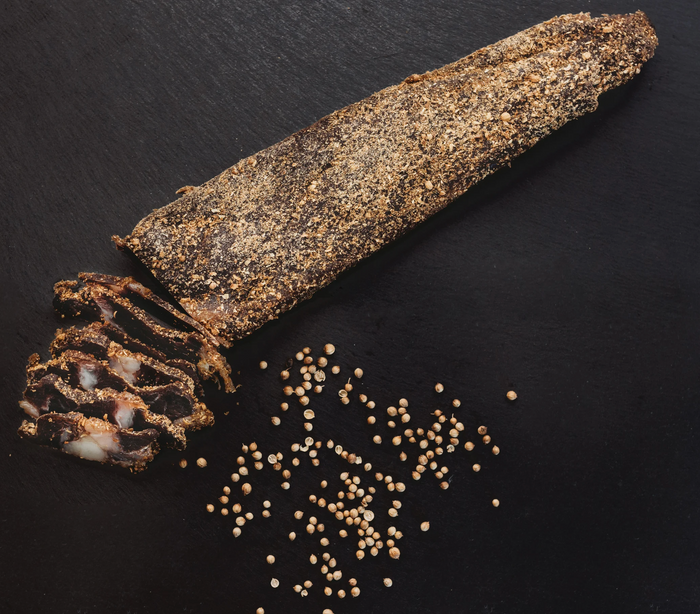
Biltong is the South African tradition of air-dried beef. Strips or whole pieces of lean beef are cut, rubbed with salt and spices, given a vinegar treatment, and hung to dry in moving air until the meat firms up. There is no smoking and no steaming. The drying itself is the preservation.
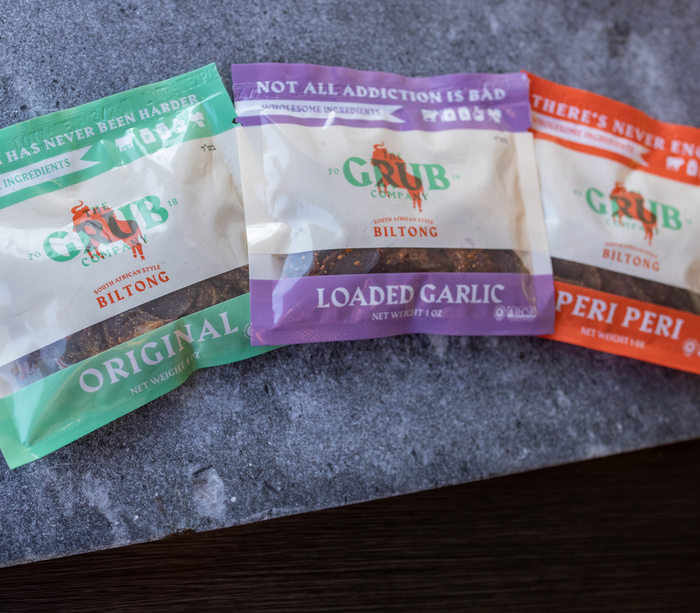
Our Original biltong is made from grass-fed kosher beef, coriander, black pepper, salt, garlic and vinegar. That is the whole ingredient list. If you want the longer version of the process, our guide to what biltong is walks through it.
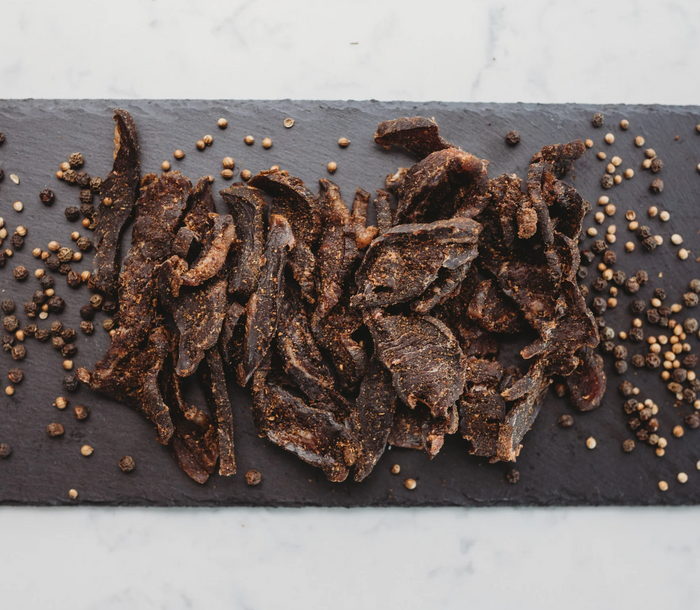
The result is a dense, savory, chewy slice of beef that you eat cold, straight from the bag. It is not hot, it is not wet, and it does not need a plate. Our Sliced Biltong comes cut and ready to eat in three flavors: Original, Peri Peri and Loaded Garlic.
Where they overlap
The overlap is real, which is why people compare them.
- Beef. Both are beef, and both lean on the same family of spices. Coriander and black pepper are central to a classic pastrami rub and to Original biltong.
- Salt-cured. Both rely on salt to season and preserve the meat. This is one of the oldest ways of keeping beef, and it is also tied to kosher practice, which is why we wrote about salt, kashrut and cured meat.
- Savory and peppery. If you like the crust on a pastrami sandwich, you will probably like the flavor of Original biltong.
- Kosher versions exist for both. Pastrami is a staple of kosher delis. Biltong, made with kosher beef and a kosher process, is a certified Glatt Kosher snack.
That is where the likeness ends.
Where they are completely different
Texture
Pastrami is soft and juicy. It falls apart under the knife and is tender on the tongue. Biltong is firm and chewy. It gives way rather than fighting back, but you are still chewing it. Nobody confuses the two in the mouth.
Temperature
Pastrami is best hot, fresh off the steamer. Biltong is a cold, room-temperature food. If you want something warm, biltong is the wrong pick.
Smoke
Pastrami has a smoked flavor. Biltong does not. The flavor in biltong comes from the beef, the spices, the vinegar and the long air-drying. If you are craving smoke, look at our Meat Candy, whose Hickory Kickory Dock flavor is smoky and sweet. It is a cooked, glazed jerky and a different thing from both biltong and pastrami.
How you store and carry it
This is the biggest practical difference. Pastrami is a deli meat. Treat it like one: keep it cold and follow the storage directions from wherever you bought it. We will not tell you how long a deli's pastrami keeps, because that depends on how it was made and packed.
Biltong is not a deli meat. It is shelf-stable and needs no refrigeration, which is why it travels so well: a glove box, a gym bag, a carry-on, a desk drawer. Once a bag is open, keep it sealed and away from heat. Our piece on how long an opened bag lasts covers the details.
How you eat it
Pastrami is a meal ingredient. You build a sandwich, a plate, a hot platter. Biltong is a snack. You open the bag and eat it, or you put it out with olives and nuts. They solve different problems, so they rarely compete for the same moment.
A fair side-by-side
- Process: pastrami is brined, rubbed, smoked and steamed. Biltong is spiced, vinegar-treated and air-dried.
- Served: pastrami hot and sliced thin. Biltong cold and chewy.
- Refrigeration: pastrami is a deli meat and should be kept cold. Biltong needs none.
- Best for: pastrami for a sandwich or a hot meal. Biltong for a snack you can carry.
- Flavor: pastrami is smoky, peppery and rich. Biltong is savory, with coriander and pepper up front.
Which one should you buy?
Be honest about the moment. If you are making lunch, buy pastrami. Nothing a bag can do replaces a hot pastrami sandwich, and biltong does not try to. If you want something that survives a long day in a bag, sits on a table through a party without wilting, and needs no fork, buy biltong.
Plenty of people keep both. Pastrami is for the table, biltong is for everything else. If you have never had biltong, the easiest way in is a small bag of Original, which is the reference point for the whole range. Our biltong collection lists every size and flavor, and our kosher beef jerky page covers the sweeter, cooked end of the shelf.
One note for kosher households: biltong is meat. It follows the same rule as pastrami. Keep it off any dairy table, and ask your rabbi about anything your family's custom treats differently.
Bottom line
Pastrami and biltong share a spice rack, not a method. Pastrami is smoked, steamed, soft and hot. Biltong is air-dried, firm and cold, and it needs no refrigeration. Buy pastrami for the sandwich. Buy biltong for the bag.
Frequently Asked Questions
Is biltong like pastrami?
Only in the seasoning. Both use black pepper and coriander on beef. Pastrami is brined, smoked and steamed, so it is soft and served hot. Biltong is air-dried, so it is firm, chewy and eaten cold.
Is biltong smoked like pastrami?
No. Biltong is not smoked. It is seasoned, treated with vinegar and dried in moving air. The flavor comes from the beef, the spices and the drying, not from smoke.
Can you eat biltong in a sandwich like pastrami?
You can, but it is a different experience. Biltong is dense and chewy, so thin slices work better than thick ones. It will not give you the soft, hot pile of a deli sandwich. Most people eat it on its own or on a board.
Does biltong need to be refrigerated like pastrami?
No. Biltong is air-dried and shelf-stable, so it needs no refrigeration. Pastrami is a deli meat and should be kept cold. After opening a bag of biltong, keep it sealed and away from heat.
Is Grub's biltong kosher?
Yes. Our biltong and Meat Candy are certified Glatt Kosher. Biltong is meat, so keep it away from dairy. For Passover specifically, we do not claim a Pesach certification, so check the label if that matters to you.
Which has more flavor, biltong or pastrami?
They taste different rather than more or less. Pastrami is smoky, peppery and rich. Biltong is savory and spiced, with coriander and black pepper. Original is the closest to the pastrami rub. Peri Peri adds heat and Loaded Garlic is rounder and sweeter.
Is biltong a deli meat?
No. A deli meat is sliced to order and kept cold. Biltong is a packaged, air-dried snack that is ready to eat and does not need a fridge.