Best Beef Jerky: How to Judge It, and When Kosher Changes the Answer
The best beef jerky is whole-muscle beef with a short ingredient list, a texture you can tear rather than snap, a sweetness that does not drown the meat, and one you will actually finish. If you keep kosher, the certification decides the answer before taste does, and ours is certified Glatt Kosher.
People search "best beef jerky" hoping for a ranked list. We are not going to give you one, because the honest answer depends on who is eating it. What we can give you is a way to judge any bag in about a minute, from a shelf, with no tasting required. We make certified Glatt Kosher biltong and jerky in Florida, so we look at this category the way a maker does. Read how Grub's certification works if the kosher part matters to you, and ask your own rabbi about anything your family treats differently.
Start with the cut: whole muscle or something else
The single biggest quality signal in jerky is what the meat was before it became jerky. There are two broad families.
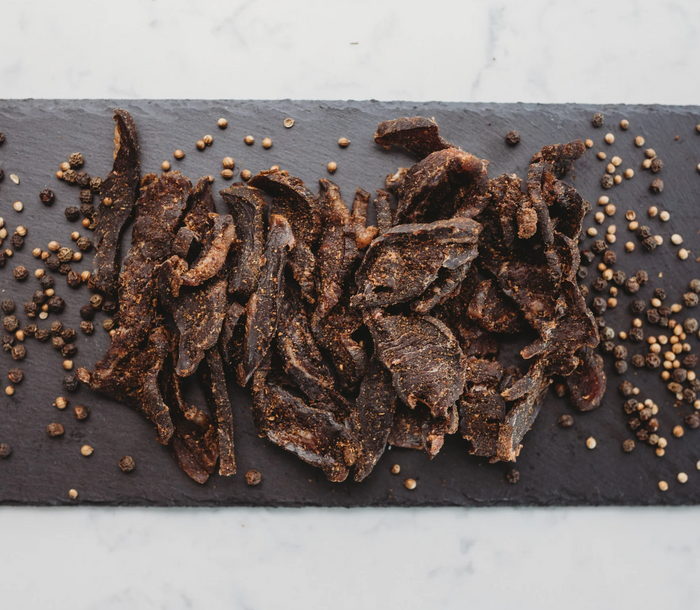
- Whole-muscle jerky. A real piece of beef, sliced, marinated and dried. You can see the grain running through it. It tears in strands. Each piece looks a little different from the next.
- Formed or chopped jerky. Meat that was ground or chopped, mixed with seasoning, and pressed into strips. Every piece looks identical. The texture is uniform, often soft and a little spongy.
Formed jerky is not unsafe and it is not always bad. It is cheaper to make and it is consistent, which is why it fills so many shelves. But if you are asking what is best, whole muscle wins on chew, on flavor and on honesty. Look at the pieces through the bag. If they are suspiciously uniform, read the ingredients for hints about what went in.
Meat Candy, our jerky, is real, whole sliced beef. That is the first thing we decided about it, before any flavor. Anything else would be a different product with the same name.
Texture: it should bend before it breaks
Pick up a piece, or press the bag. Good jerky is dry but not brittle. You should be able to bend a strip nearly in half and see the surface crack a little without the strip shattering. It should tear with effort, not crumble.
Two failure modes are worth knowing:
- Too dry. It snaps, it is tough to chew, and the flavor tastes flat because there is no moisture to carry it. It usually means the strip was dried too far.
- Too soft and mushy. It feels wet or greasy, and it has no real pull. That usually points to a formed product or an under-dried one.
Texture is also personal. Some people want a jerky that fights back for ten minutes. Others want something tender they can eat in the car. Neither is wrong. The cut and the slice thickness decide this, and we covered the trade-off in chewy vs tender beef jerky.
Sugar: the glaze is where jerky changes personality
Most jerky is sweet. A marinade or glaze with sugar, honey, molasses or something similar is what separates a savory strip from the candy-like end of the category. Sweetness is not a flaw. It is a style. The question is whether the sugar is there to complement the beef or to cover it up.
A fast test: read where sugar sits in the ingredient list. Ingredients are listed from most to least by weight. If a sweetener comes before the spices, the product leans sweet. If it sits near the end, it is a background note. And if the beef does not taste like beef through the sweetness, that is your answer.
We do not hide that Meat Candy is sweet. The name is the warning label. It is cooked, glazed and unashamedly sweet, and it comes in two flavors. Hickory Kickory Dock is smoky hickory with the sweetness behind it rather than in front. It tastes closest to what most people mean by jerky. Baa-Baa BBQ Sheep is Korean BBQ style, sweet and savory together, with more going on. Because it uses a glaze, check the label for anything you or a guest need to avoid. You can see both on the Meat Candy page.
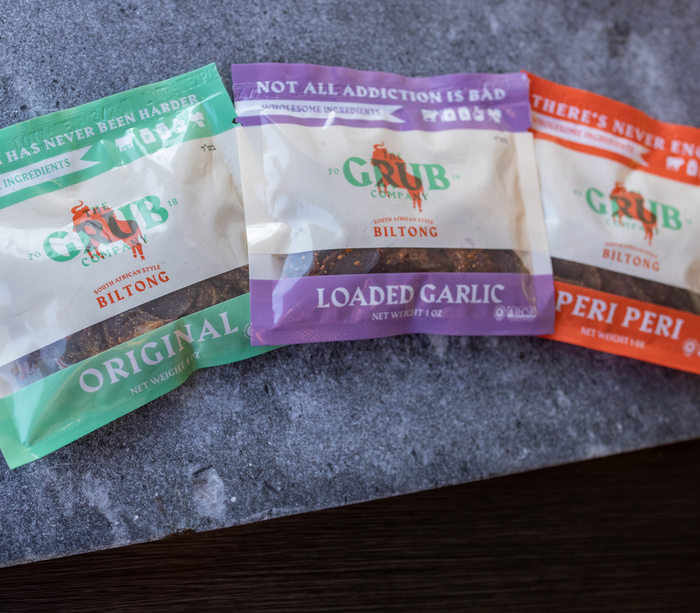
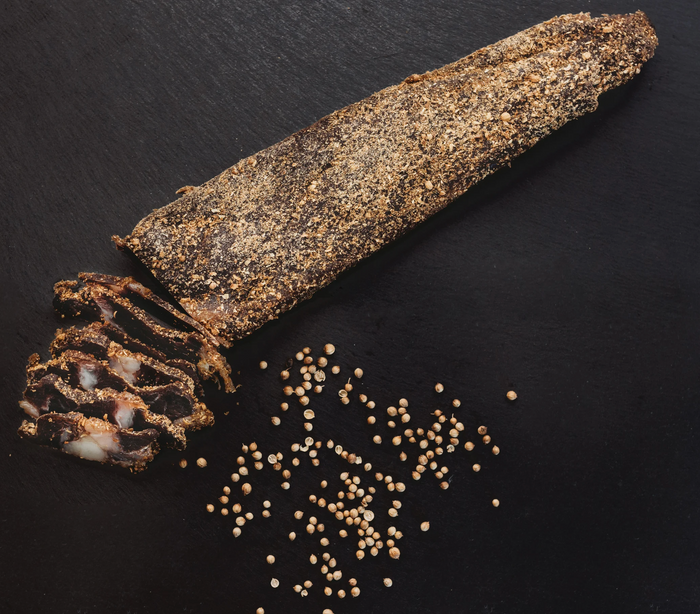
If sweet jerky is not what you want, say so out loud. Not everyone does. Some people want the salty, savory, spiced end of the shelf, and that is closer to biltong, which we make for exactly that taste. Short version: jerky is cooked and sweet-marinated, biltong is cured and air-dried and savory.
Ingredients: shorter is usually better, but read the words
Turn the bag over. The list tells you more than the front does. Here is what to look for.
- The first ingredient should be beef. Not "beef" buried behind a long list, and not an unnamed "meat."
- A recognizable list. Spices, salt, a sweetener, a smoke or flavor note. If you cannot picture most of the items in a kitchen, ask why they are there.
- Sourcing language. Grass-fed, small batch and similar phrases are claims. They can be true or just a label. Look for a maker who explains them rather than just printing them.
- Allergen notes. Soy and wheat show up in a lot of marinades. If you avoid either, read carefully. We cannot make a claim for a product we have not checked for you, so always read the actual bag in front of you.
One more honest point. A long ingredient list does not make a jerky bad, and a short one does not make it good. A short list with poor meat is still poor. Use the list to check the claims the front of the bag makes, not as a score.
Certification: where kosher changes the answer
If you keep kosher, everything above is a second question. The first question is whether you can eat it at all. This is where most of the jerky aisle drops out.
For jerky to be kosher, the beef has to come from a kosher animal slaughtered properly, and every other ingredient in the marinade has to be acceptable too. Common marinade sauces are a frequent problem because they need their own certification. A bag that says "kosher style" or simply shows no certification is not a kosher product. Look for a clear certification mark on the package, and for "Glatt" if your household requires it. The mark is the whole story. Without it, the taste test does not matter.
We wrote a plain checklist in is beef jerky kosher, and what to check. If you want to see what we offer in this category, our kosher beef jerky collection is the place to start. And remember that kosher jerky is still meat. Keep it off a dairy table and ask your rabbi about waiting times between meat and dairy, because that is a family custom.
The honest part: the best jerky is the one you finish
You can do everything right on the label and still buy the wrong bag. A very chewy jerky is wasted on someone who wants something tender. A very sweet jerky is wasted on someone who wants salt. A big bag is wasted on someone who wants one snack and then leaves it to go stale in a drawer.
So the practical advice is boring and true:
- Buy a small bag of the style you think you want before you buy a big one.
- Pay attention to which flavor you reach for a second time, not which one impressed you the first time.
- If you are buying for someone else, pick the milder, more familiar flavor. Smoky and sweet is a safe middle.
And a trade-off we will state plainly: Meat Candy is the wrong pick if you want a low-sweetness, savory snack. For that, look at biltong instead. Our biltong collection has every size and flavor.
Bottom line
Judge jerky by five things: whole-muscle beef, a texture that bends and tears, sugar that supports the meat, an ingredient list that matches the front of the bag, and a certification you can see if you keep kosher. Then buy a small bag first. The best jerky is the one that gets finished, and for kosher shoppers it is the one with the mark on it.
Frequently Asked Questions
What makes a beef jerky "good"?
Whole-muscle beef you can see grain in, a texture that bends and tears rather than snaps or crumbles, and seasoning that supports the beef instead of hiding it. After that, it comes down to your taste: sweet or savory, chewy or tender.
Is whole-muscle jerky better than formed jerky?
For flavor and chew, usually yes. Formed jerky is made from chopped or ground meat pressed into strips, so every piece is uniform. It is not necessarily unsafe, but it tastes and feels different. If texture and honesty matter to you, choose whole muscle.
How can I tell if jerky has too much sugar?
Check the ingredient list. Ingredients are listed from most to least by weight, so a sweetener near the top means a sweet product. Then taste a small bag. If the beef disappears under the sweetness, it is a candy-style jerky. That is fine if you want it, and a miss if you do not.
What does kosher beef jerky need to be kosher?
The beef must come from a kosher animal, slaughtered according to kosher law, and every other ingredient and process must be acceptable too. Look for a clear certification mark on the package. "Kosher style" is not a certification. If your household requires Glatt, check for that word.
Is Grub's Meat Candy real beef jerky?
Yes. Meat Candy is our jerky, made from real, whole sliced beef, cooked and glazed. It comes in Hickory Kickory Dock and Baa-Baa BBQ Sheep, and it is certified Glatt Kosher. Because of the glaze, check the label for anything you need to avoid.
Should I buy jerky or biltong?
It depends on taste. Jerky is cooked, usually sweet and chewy. Biltong is cured and air-dried, savory and softer to bite. Plenty of people keep both. If you want less sweetness, start with biltong.
How should I store jerky once the bag is open?
Reseal it tightly and keep it away from heat and sunlight, and follow the storage directions printed on the bag. If an opened bag smells off or shows any mold, do not eat it.