Biltong vs Pemmican: Old Survival Food, New Snack
Biltong is spiced, air-dried lean beef. Pemmican is dried lean meat pounded and mixed with rendered fat, sometimes with dried berries. Both are old, portable foods built for travel, and we make the biltong, which is certified Glatt Kosher.
We make certified Glatt Kosher biltong and beef jerky in Florida. Pemmican has become a talking point among hikers, campers and people who like old food traditions, and the comparison to biltong comes up often. They are related in purpose and different in nearly everything else. This guide explains what each is, where each came from, and when each is the sensible choice. For how our certification works, see our kosher page.
What pemmican is
Pemmican is a traditional food of Indigenous peoples of North America, especially the Plains. The word comes from a Cree term. It was made by drying lean meat, pounding it into a coarse powder or flakes, and mixing it with melted fat. Dried berries were sometimes added. The mixture was then packed into portions.
The point was energy and portability. Dried lean meat gives protein. Fat gives calories. Together they made a dense food that could be carried on long journeys and eaten without cooking. It is a working food, designed for travel and winter.
Today a number of people make pemmican at home or buy it from small makers. It is firm, rich and fatty, and it tastes of meat and tallow rather than of seasoning. We will not describe particular makers or give you any figures on how long it keeps. The facts depend on how it is made and stored, and we have no way to verify them for you.
What biltong is
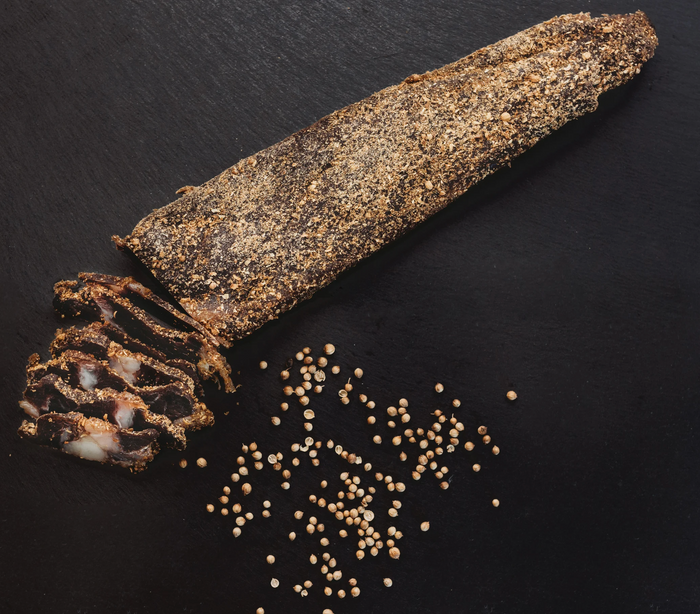
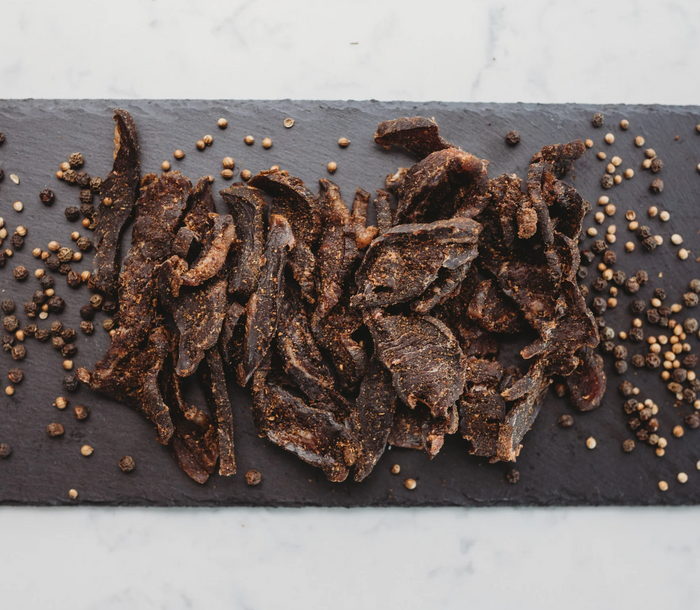
Biltong comes from South Africa. Lean beef is cut into strips or pieces, rubbed with salt and spices, treated with vinegar, and hung in moving air until it dries and firms up. The dried meat is then sliced or kept in pieces. Nothing is added back. There is no melted fat mixed in.
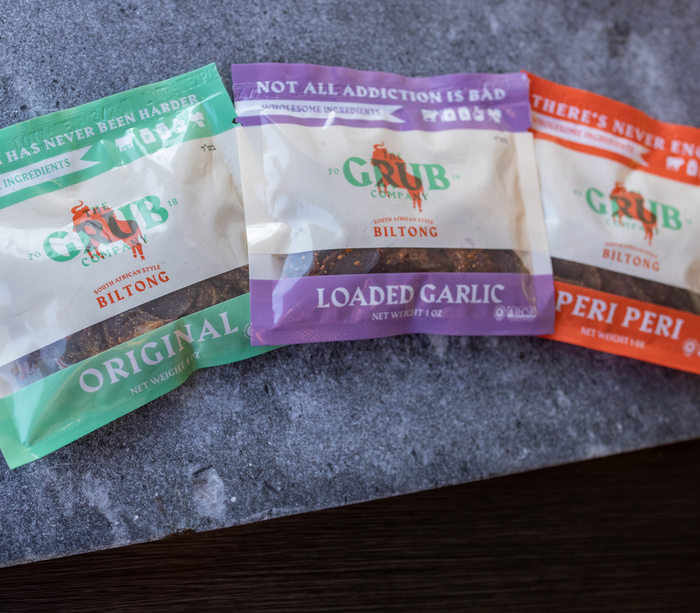
Our Original biltong lists grass-fed kosher beef, coriander, black pepper, salt, garlic and vinegar. Peri Peri and Loaded Garlic add heat and roasted garlic. You can read about the roots of the tradition in the history of biltong. It is chewy, savory and ready to eat.
What they share
- A travel purpose. Both exist to make meat portable and edible without cooking or refrigeration in the field.
- Dried meat at the core. Both begin with lean meat that is dried to preserve it.
- Protein. Both are meat-based foods. We say only that biltong is high in protein.
- Old roots. Each comes from a people who needed meat to last through long journeys. Our guide to meat curing across cultures shows how many places reached the same idea.
How they differ
The fat
This is the central difference. Pemmican is built on added fat: dried meat mixed with rendered fat. Biltong is lean, and it stays lean. If you want a rich, fatty, calorie-dense food, pemmican is the one. If you want a lean, savory snack, biltong is.
The texture
Pemmican is crumbly and dense, a block you break apart or eat in pieces. Biltong is firm and chewy in slices. They do not feel alike in the mouth at all.
The seasoning
Traditional pemmican is plain: meat, fat and sometimes fruit. Biltong is defined by its spices and vinegar. If you like flavor you can taste, biltong gives you more of it.
The preparation
Pemmican requires drying, pounding, melting fat and mixing. Biltong requires cutting, spicing and drying. Both are real work done well, and both are things we do not suggest you attempt at home with kosher in mind. Home biltong is not kosher unless the meat, salt, vinegar, spices and equipment are kosher, which is exactly why a certified product exists.
The eating moment
Pemmican is a fuel for long exertion in cold or remote conditions. Biltong is an everyday snack. It fits a desk drawer as well as a pack.
Which one is better for the trail?
It depends on the trip. For a long expedition where calories matter most, a fat-rich food has a case. For a day hike, a camping weekend or a long drive, a light, ready-to-eat, lean snack is easier to carry and nicer to eat. Biltong needs no refrigeration, no cooking and no utensils, which is why we wrote about it for hiking and camping.
Biltong is the wrong pick if you specifically want a high-fat, traditional food in the pemmican style. It is also not a replacement for a full meal or for water and proper planning on a serious trip. Treat it as a snack, not as the whole kit.
Kosher and pemmican
Pemmican can be made from any meat. For a kosher household, it would need kosher meat, kosher fat and kosher handling throughout, and we cannot vouch for products we do not make. We make biltong, with kosher beef and a certified process. Ask your rabbi about anything outside a product you can read the certification on.
Biltong is meat, so it follows the usual rule: keep it away from dairy, and follow your family's custom on waiting between meat and dairy.
How to try biltong
Start with our Sliced Biltong in Original, the reference point for the range. If you want to taste all three flavors first, the Biltong Sampler Pack has one mini bag each. Every size is on Buy Biltong Online, and our kosher beef jerky page covers the cooked, sweeter jerky. We ship to every US address, free on orders over $50.
Why the old foods are having a moment
Interest in pemmican has grown alongside interest in simple, whole-ingredient foods and in how people ate before refrigerators. That is a healthy instinct. Biltong comes from the same instinct: meat, salt, spice, vinegar and air. Nothing is added to make it last. The drying does the work.
The ingredients are worth reading on any food you buy. Ours are short. Original lists grass-fed kosher beef, coriander, black pepper, salt, garlic and vinegar. Peri Peri adds red pepper and brown sugar. Loaded Garlic adds roasted garlic and tomato powder. If you have a question about an ingredient, ask us before you buy.
Eating either one
You can eat pemmican in small pieces on its own, and traditional uses also include cooking it into a stew. Biltong you eat as it is. Slice it thin for a more delicate chew, or leave it thicker for a heartier bite. Our piece on the best biltong thickness helps you decide.
Neither food is a complete diet. Both are tools for specific moments. If you have a medical or dietary question about how much dried meat suits you, ask your doctor.
Bottom line
Pemmican is dried meat bound with fat, a dense fuel from North America. Biltong is lean, spiced, air-dried beef from South Africa, chewy and ready to eat. Both are old answers to the same problem. Pick pemmican if you want a fatty traditional food. Pick biltong if you want a lean, flavorful snack that is certified Glatt Kosher.
Frequently Asked Questions
Is biltong the same as pemmican?
No. Biltong is lean beef, spiced and air-dried. Pemmican is dried lean meat pounded and mixed with rendered fat, sometimes with dried berries. They share a purpose, portable meat, but not a method.
Which has more fat, biltong or pemmican?
Pemmican, by design, because fat is added to it. Biltong is made from lean beef and has no added fat.
Where does pemmican come from?
It is a traditional food of Indigenous peoples of North America, especially on the Plains. The word comes from a Cree term.
Where does biltong come from?
South Africa. It grew out of the need to preserve meat for travel. See our history of biltong for the full story.
Is biltong good for hiking?
It is a good snack for it. It is ready to eat, light, and needs no refrigeration. It is a snack, not a full meal, so pack water and real food as well.
Is pemmican kosher?
That depends on the meat, fat and handling used. Pemmican is not something we make. If you want a kosher dried meat, biltong from a certified maker is the simpler route. Ask your rabbi about anything uncertified.
Is Grub's biltong certified kosher?
Yes. Our biltong and Meat Candy are certified Glatt Kosher. Biltong is meat and should be kept away from dairy. For Passover, we do not claim a Pesach certification, so check the label.