Chanukah Menu: Planning a Hanukkah Party With Meat
A good Chanukah party menu around meat is built on three things: something fried (latkes), one slow main that cooks while you host, and snacks that need no plate. This is how to plan it when you are serving certified Glatt Kosher meat and keeping dairy off the table.
We make certified Glatt Kosher biltong and beef jerky in Florida, so a lot of our customers write to us in December asking some version of the same question: what do I actually put out for twenty people on the fourth night? Here is the plan we would follow ourselves. Read the kosher notes (how Grub's certification works) alongside it, and ask your own rabbi about anything your family's custom treats differently.
Decide the one big question first: meat or dairy
Chanukah has a well-known custom of eating dairy, and many families keep it. Others serve a full meat meal and fry latkes in oil, which are already pareve. Both are normal. Pick one for the party before you plan anything else, because it decides everything that follows.
This guide is for the meat party. The rules that come with it are plain and widely accepted:
- Meat and dairy are never served together. No sour cream next to the latkes, no cheese on the board, no butter in the potato mix.
- Dessert after a meat meal must be pareve. Use oil, not butter or milk, in the donuts and the cake.
- If a guest wants dairy later, the wait after meat is a matter of family custom. Do not guess for them. Let them tell you how long they wait.
- Biltong and jerky are meat. Treat them like any other meat dish on the table.
If you are hosting a mixed crowd, say upfront on the invitation that the menu is meat. Nobody has to wonder why there is no cream cheese.
The frame: one fried item, one slow main, one table of snacks
A party of fifteen to thirty people goes wrong when the host is stuck at the stove. So build the menu in three layers, each with a different clock.
Layer one: the fried item you make in front of people
Latkes are the point of the holiday food, and they are best hot. Make them in batches while guests are arriving. People like watching, and the kitchen smells the way Chanukah should.
A reliable pareve latke, makes about 20 small ones:
- 2 pounds russet potatoes, peeled and grated
- 1 medium onion, grated
- 2 eggs, beaten
- 1/4 cup flour or matzo meal
- 1 teaspoon salt, a few grinds of pepper
- Vegetable oil, about 1/2 inch deep in a wide pan
Squeeze the grated potato and onion hard in a clean towel. Wet potatoes make soggy latkes; this is the step that matters most. Mix everything, drop heaping tablespoons into hot oil, flatten slightly, and fry about 3 to 4 minutes per side until deep golden. Drain on a rack, not paper towels, which steam the bottoms. Keep finished latkes on a rack in a 250°F oven while you fry the rest.
Serve with applesauce. Skip the sour cream at a meat party.
Layer two: the slow main that does not need you
Brisket is the classic for a reason. It is cheap per serving, it holds for hours, and it tastes better when made ahead. Roast chicken thighs are the easier alternative if you do not want to commit an afternoon.
A simple brisket for about 10 people:
- One 4 to 5 pound brisket, patted dry and seasoned well with salt, pepper and paprika
- 2 large onions, sliced
- 4 carrots, cut in chunks
- 2 tablespoons tomato paste
- 1 cup red wine and 1 cup broth (or 2 cups broth if you prefer no wine)
Sear the brisket on both sides in a heavy pot, then set it aside. Soften the onions in the same pot, stir in the tomato paste, add the liquid, and return the meat with the carrots around it. Cover tightly and cook at 325°F for about 3 to 3 1/2 hours, until a fork slides in easily. Cool, slice against the grain, and reheat in its own gravy. Make it the day before and the party-day work is nearly zero.
If your kitchen is tight on oven space, remember the latkes want the stove and the brisket wants the oven. That is a feature, not a problem.
Layer three: the snack table
This is the layer most hosts forget, and it is the one that saves the evening. The first forty minutes of a party happen before anyone is hungry enough for a plate. Something to pick at, in a bowl, with no utensils, keeps people circulating and keeps the host calm.
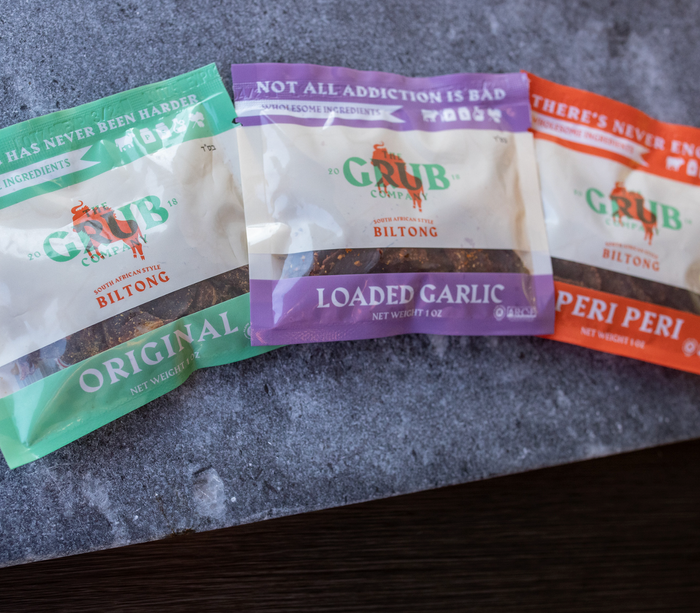
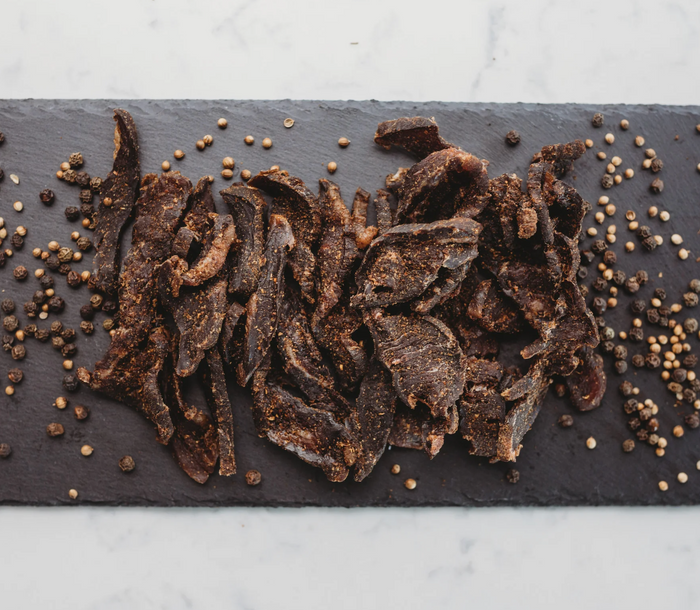
Salty and savory works best against everything fried. Our Sliced Biltong is the easy choice: air-dried beef, already sliced, ready to eat, no refrigeration, and it does not wilt on a table for an evening the way a cut-up vegetable platter does. Original suits everyone. Peri Peri has real heat, so label it or put it in its own bowl. Loaded Garlic is a good middle: savory, not spicy.
If you want something sweeter beside it, Meat Candy is our cooked, glazed jerky, in Hickory Kickory Dock and Baa-Baa BBQ Sheep. It has a glaze, so check the label for anything a guest needs to avoid. Put it in a separate bowl from the biltong; they are different things and guests like choosing.
For a party of 20, one 3-ounce bag per three or four people is a reasonable start for a snack table that sits beside real food. If the biltong is the main event rather than a side, buy more. Our biltong collection has every size.
Add the things that make it a party, not just a dinner
Chanukah has its own rhythm. Build the evening around it and the menu has less to carry.
- Menorah first, food second. Light the candles when most guests have arrived, then eat. People are more patient with the stove when there is a moment to stand around.
- Something for kids to do with their hands. Dreidel for gelt, a table for decorating pareve cookies. Children underfoot are why the snack table matters.
- Donuts last. Sufganiyot are the traditional sweet. Make or buy pareve ones, and put them out after the meal so they are the finish, not the filler.
- Drinks. Wine, seltzer, a pitcher of something non-alcoholic. Keep it simple; the food is already rich.
One honest trade-off: a fully fried menu is heavy. If you serve latkes, donuts and a brisket in oil-rich gravy, nothing on the table is light. Add one fresh thing: a big green salad, shaved fennel and apple, roasted carrots. It costs little and people go back to it.
A sample menu for 20 people
Here is the whole thing laid out so you can copy it.
- On arrival: sliced biltong in three bowls (Original, Peri Peri, Loaded Garlic), Meat Candy in a fourth, olives, pickles, nuts if nobody has an allergy.
- Menorah and blessings.
- Main: brisket in its gravy, roasted chicken thighs for anyone who prefers poultry, green salad.
- Fried: latkes made in batches, applesauce on the side.
- Dessert: pareve sufganiyot, fruit, and gelt for the kids.
Do the brisket and the applesauce the day before. Grate the potatoes only when you are ready to fry; they brown quickly once cut.
Where a kosher snack fits, and where it does not
Biltong is a snack, not a main course. It will not replace the brisket and it should not try. It is the wrong pick if you want something warm, or if you are feeding guests who do not eat dried meat at all. Plan for them separately.
Where it works well is as the thing guests can eat standing up with a drink in hand, and as the item that takes pressure off the host. Our kosher beef jerky collection is the page to start on if you are buying for a crowd. And if you are also thinking about presents rather than just the party, we put together a separate guide on kosher beef jerky as a Chanukah gift. For laying the snacks out nicely, building a biltong charcuterie board shows the arrangement; just leave off anything dairy at a meat meal.
Bottom line
Choose meat or dairy first. Fry latkes in front of guests, make the brisket the day before, and put out a savory snack bowl so nobody is hungry while the stove is busy. Keep everything pareve after the meat, and ask your rabbi about anything your family does differently. That is a Chanukah party you can actually enjoy hosting.
Frequently Asked Questions
What is a good Chanukah menu if I am serving meat?
Latkes, a slow-cooked brisket or roast chicken, applesauce, a green salad, and pareve donuts for dessert. Add a bowl of biltong or jerky for guests to snack on while you finish cooking.
Can I serve dairy and meat at the same Chanukah party?
Not at the same meal. Meat and dairy are kept separate. If you want the dairy custom, serve a dairy meal; if you want brisket, keep dessert and sides pareve. How long to wait between meat and dairy is a matter of family custom, so ask your rabbi if you are unsure.
Are latkes dairy or meat?
Traditional latkes are pareve: potato, onion, egg, flour and oil. They become dairy only if you serve them with sour cream or cook them in butter. At a meat meal, use oil and serve applesauce.
How much food do I need for a Hanukkah party of 20?
About two small latkes per person per round, and plan on seconds. A 4 to 5 pound brisket serves roughly ten, so cook two or add chicken. For the snack table, one 3-ounce bag of biltong per three or four people is a good start when it sits beside a full meal.
Is Grub's biltong certified kosher for a Chanukah party?
Yes. Our biltong and Meat Candy are certified Glatt Kosher. Biltong counts as meat, so keep it off any dairy table. For Passover specifically, we do not claim a Pesach certification, so check the label if that matters to you.
Does biltong need to be refrigerated at a party?
No. It is air-dried and ready to eat, and it sits on a table for an evening without refrigeration. Keep opened bags sealed between rounds and keep it away from heat.
What can I put out for Hanukkah party food that guests can eat without a plate?
Sliced biltong, Meat Candy, olives, pickles and fruit all work. They need no utensils, so guests can eat and keep talking, which helps while the latkes are frying.