Why Biltong vs Beef Jerky Gets Misunderstood
Biltong and beef jerky are not interchangeable terms for dried meat. They come from different continents, different centuries, different preservation mechanisms, and produce a genuinely different product in your hand. The misunderstanding persists because both end up as shelf-stable strips of meat—but conflating them is like calling prosciutto and beef jerky the same thing because neither requires refrigeration.
The origins are completely separate
Biltong traces to Dutch and Afrikaner preservation traditions in 17th–19th century Southern Africa. Beef jerky descends from indigenous Quechua practices in the Americas, later formalized through Spanish colonial foodways under the word charqui. When English speakers started using both terms generically for "dried meat," the distinct identities of each got flattened into a single category that doesn't hold up under scrutiny.
The process is nothing alike
Biltong never sees heat. It air-cures in a ventilated enclosure—a biltong box—at ambient temperature over 4–7 days. Beef jerky is dried with direct heat or smoke at 160–175°F and finishes in as little as 4–6 hours commercially. That difference in timeline and mechanism isn't trivial; it's the entire reason the products diverge. Authentic biltong is also never smoked—it relies purely on air circulation and salt curing. Beef jerky, by contrast, often centers wood smoke (hickory, mesquite, applewood) as both a flavor and preservation agent.
The cure itself is structured differently
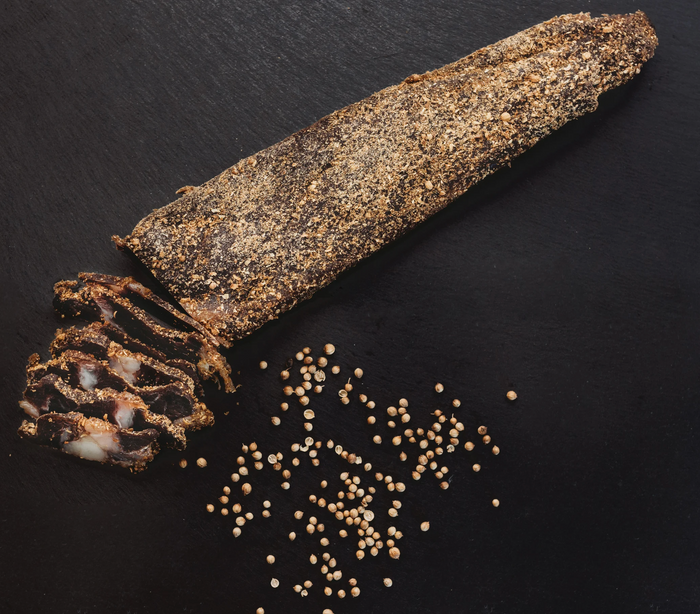
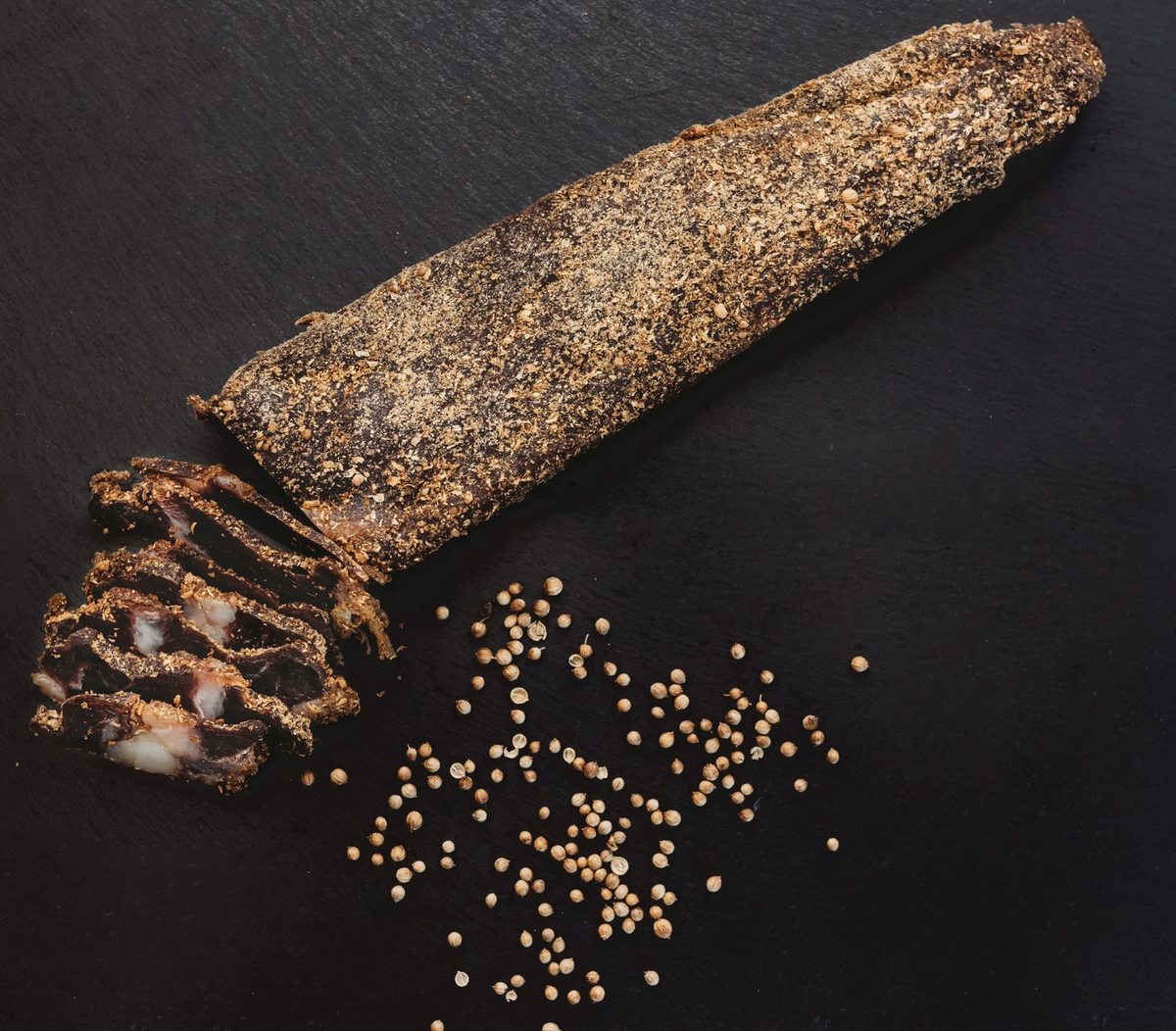
Traditional biltong uses a dry cure of coriander seed, black pepper, salt, and vinegar applied directly to the meat before drying. The vinegar—malt, cider, or wine—functions as a curing agent that contributes acidity and aids preservation. Beef jerky uses a surface marinade built around soy sauce, Worcestershire, or barbecue-style seasonings. Vinegar rarely appears. The salt concentrations also differ: biltong runs approximately 2–3% salt by weight of the meat; beef jerky typically sits at 1.5–2.5%. Biltong's higher salt load is load-bearing—it enables safe preservation during the slower air-drying window.
The texture confusion is real but avoidable
Biltong retains 15–25% residual moisture after air-drying, which produces a tender, chewy bite ranging from soft to firm depending on how long it hangs. Beef jerky dries to 15% moisture or lower, creating the harder, snappier texture most North American consumers associate with the category. When someone buys biltong expecting beef jerky's snap and gets a moist, yielding chew, they often conclude the product is undercooked or inconsistent—when it's actually working exactly as intended.
The core of the misunderstanding is category collapse: two distinct preservation traditions, separated by continents and centuries, got shelved next to each other in the snack aisle and lost their context. Understanding what makes biltong its own category reframes the comparison entirely. If you're evaluating which is right for your palate or your kitchen, the deeper question is how the texture and flavor profiles of each actually compare—because once you know why they differ, the choice becomes obvious.