Biltong vs Beef Jerky: Common Questions Answered
Biltong and beef jerky are both protein-dense dried meats, but they are made differently, taste different, and come from entirely different culinary traditions. The questions buyers most often ask center on how they're made, how they taste, which is healthier, and whether they can be used interchangeably. Here are the eight questions that come up most.
1. How is biltong made differently from beef jerky?
Biltong is cured with vinegar, salt, and spices, then air-dried with no applied heat. Beef jerky is marinated and finished in smoke chambers or convection ovens. The absence of heat in biltong production is the single biggest mechanical difference between the two.
2. Where did biltong come from?
Biltong originated in 17th-century Southern Africa, developed by Dutch and Afrikaner settlers as a no-refrigeration preservation method using indigenous curing techniques. Beef jerky's North American identity is comparatively recent and rooted in commercial dehydration and smoking traditions.
3. How do the textures compare?
Biltong is produced from whole muscle cuts and comes out chewy and dense. Beef jerky is thin-sliced and can range from chewy to brittle depending on how much moisture is driven out during heat treatment. If you prefer a meatier bite, biltong tends to win; if you want a snappy, thin strip, jerky delivers that.
4. Which one has more moisture?
Biltong retains 20–30% residual moisture after curing. Beef jerky is dried down to 15–20% moisture, making it the drier of the two and technically shelf-stable for longer periods under the same storage conditions.
5. How long does each take to make?
Biltong air-drying takes 4–14 days depending on thickness and ambient humidity. Commercial beef jerky heat-drying completes in 4–8 hours in a dehydrator. That time difference is why artisan biltong commands a price premium — it occupies production space far longer.
6. What do they taste like, and how do the spices differ?
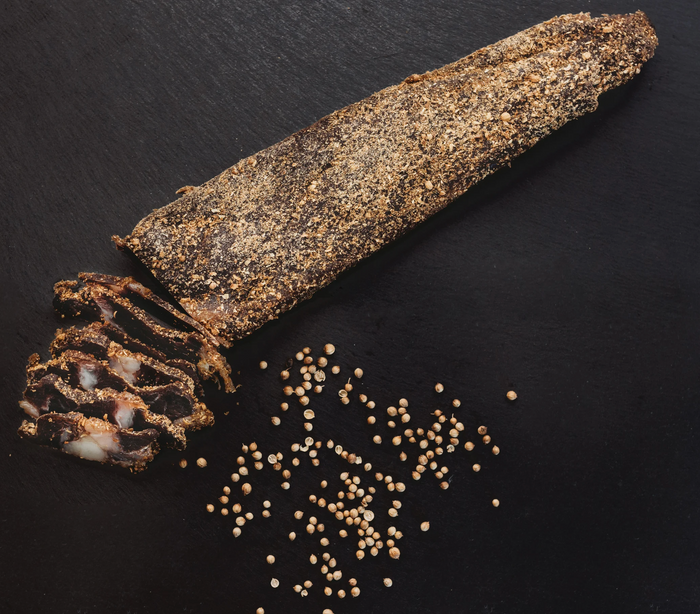
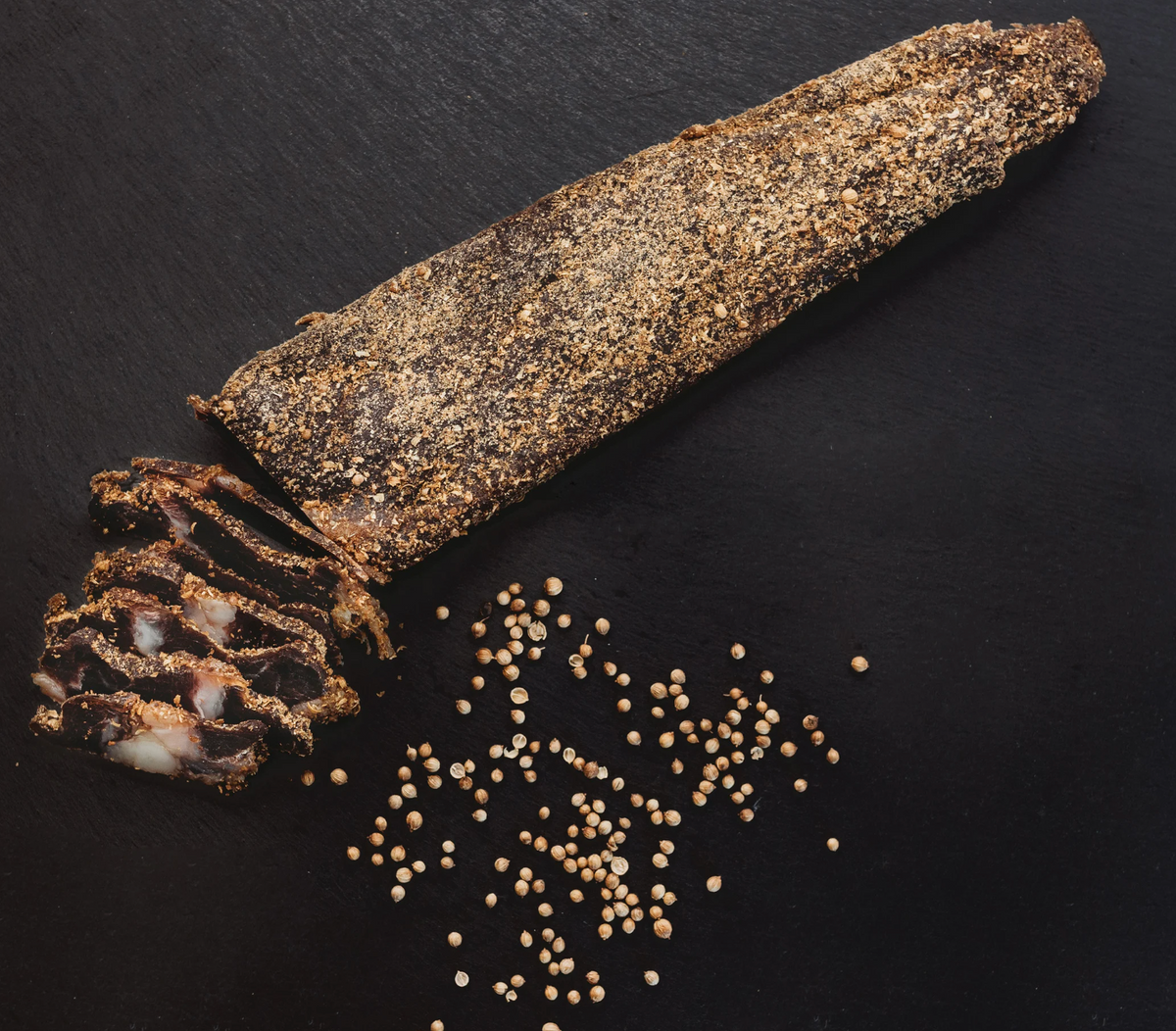
Biltong's traditional flavor profile is built on coriander seeds, black pepper, and vinegar. Beef jerky in North America leans heavily on soy sauce, Worcestershire, garlic, and smoke. The vinegar-coriander base of biltong is earthy and tangy; jerky tends toward savory-sweet or smoky profiles.
7. Are they comparable nutritionally?
Both deliver approximately 30–35 grams of protein per 100 grams of finished product — a direct result of moisture loss concentrating the macronutrients during processing. Where they diverge nutritionally is sodium: soy-based jerky marinades typically drive sodium higher than traditional biltong cures.
8. Can you substitute one for the other in recipes or snacking?
For straight snacking, yes — with the caveat that texture and flavor will shift noticeably. In recipes calling for rehydration or slicing into dishes, biltong's higher residual moisture and denser cut make it the closer analog to fresh cured meat. Jerky's brittle texture and smoke-forward flavor will alter a dish more dramatically when used as a substitute.
If you're deciding which to buy based on how you'll use it, the biltong texture and cut guide breaks down wet vs. dry curing outcomes in detail. For a side-by-side look at sodium and macros across popular dried meat snacks, the dried meat nutrition comparison gives the full breakdown.