Spicy Beef Jerky: How Hot Is Hot, and Where Peri Peri Biltong Fits
Spicy beef jerky has no standard heat scale, so "hot" on a bag can mean anything from a pinch of black pepper to a ghost pepper dare. Check the ingredient list for the chile, expect sweet jerky to hide heat and dry-cured meat to show it, and if you want real but friendly heat, our certified Glatt Kosher Peri Peri biltong is the one we point people to.
We make certified Glatt Kosher biltong and beef jerky, and we get the same question every week: "How spicy is it?" That is a fair question and a hard one. Nobody regulates the word "spicy" on a snack. So here is the straight guide to how heat works in dried beef, how to judge a bag before you buy it, and where our own Peri Peri fits. We will also tell you when it is the wrong pick.
What "spicy" actually means on a bag of jerky
Heat in food comes from capsaicin, the compound in chile peppers. More chile means more capsaicin. Different chiles carry very different amounts. A jalapeño is mild next to a habanero, and a habanero is mild next to a ghost pepper. The Scoville scale is the usual way to compare them, and the gaps between those three are huge.
Here is the catch. That scale measures peppers, not snacks. A jerky maker mixes chile with sugar, soy, vinegar, salt and smoke, and the finished strip tastes nothing like the raw pepper. There is no Scoville number printed on a jerky bag, and no law saying what "hot," "extra hot" or "fire" must mean. Every brand grades on its own curve.
Heat in jerky usually comes from one or more of these:
- Black pepper. A sharp, quick bite. Present in nearly every jerky, and not what most people mean by spicy.
- Ground red pepper or cayenne. Clean, building heat. This is the workhorse of a good spicy jerky.
- Chile flakes. Heat with visible flecks. Uneven, so one slice can be hotter than the next.
- Hot sauce or chile paste. Heat plus acid and sweetness, often in a wet glaze.
- Super-hot chiles. Habanero, ghost pepper and the like. Usually sold as a challenge, and usually labeled as one.
One more thing before you shop. Heat is personal. The same strip can read as gentle to one person and punishing to the next. Tolerance also changes with how often you eat spicy food. Treat any heat rating, ours included, as a rough guide and not a measurement.
How to read a bag before you buy it
You cannot taste a bag in the store, so read it. Three checks take thirty seconds.
1. Find the chile in the ingredients. Look for red pepper, cayenne, chile flakes, habanero or a named hot sauce. If the only pepper listed is black pepper, the front of the bag is selling a feeling, not a fact. Ingredients are listed from most to least by weight, so a chile near the top of the list is a better sign than one at the very end.
2. Look at the sugar. Sweetness softens how heat lands. A jerky with sugar and a chile can taste mild for a few chews and then bite at the end. A jerky with no sugar hits harder and sooner, because nothing is in the way. Neither is better. They just behave differently.
3. Ignore the flame icons. Three flames on one brand is a one on another. Words like "extreme" tell you about the marketing, not the strip.
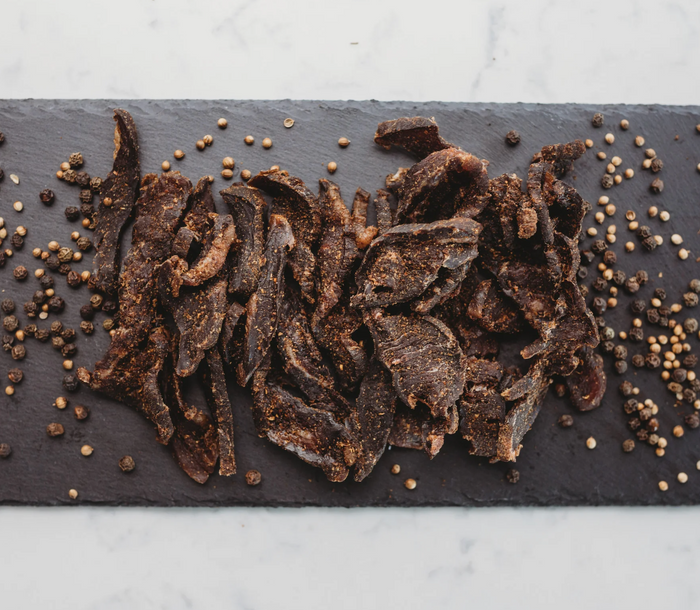
If a brand will not tell you what makes its jerky hot, assume the heat is mostly in the name. The better makers say plainly what goes in. For example, our Peri Peri biltong lists beef, coriander, red pepper, black pepper, salt, garlic, vinegar and brown sugar. You can see where every bit of its heat comes from.
Sweet heat versus dry heat: jerky and biltong are different animals
Most spicy jerky is cooked and sweet. Strips are marinated, usually with sugar, and dried with heat over a few hours. The sweetness is part of the design. It rounds the edges and makes the heat feel friendly. Jerky of this kind tends to read as sweet and smoky first, spicy second.
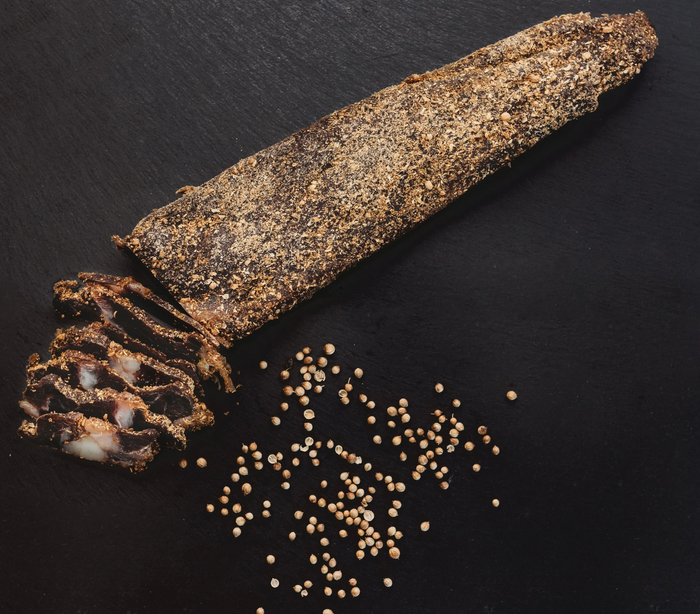
Biltong is made differently. It is air-dried, not cooked, and the cure is built on salt, vinegar and spice rather than sugar and glaze. If you want the full contrast, we wrote it up in Meat Candy vs. Biltong. For heat, the difference is simple. With less sugar in the way, spice in biltong shows up clearly. It is a dry, savory heat that builds instead of hitting all at once.
That is why people who find sweet spicy jerky "not really hot" are sometimes caught off guard by a spiced biltong. The pepper is the same kind of ingredient. The cushion is gone. If you like the idea of how spice shapes a biltong blend, the spice blend behind Peri Peri biltong walks through it.
Our jerky is called Meat Candy, and the name is honest. It is cooked, glazed and sweet. It comes in two flavors: Hickory Kickory Dock, smoky hickory with the sweetness behind it, and Baa-Baa BBQ Sheep, a Korean BBQ flavor that is sweet and savory together. Neither is built around heat. If heat is the whole point for you, Meat Candy is not the right place to look, and we would rather say so now than have you open a bag expecting fire.
Where Peri Peri biltong fits
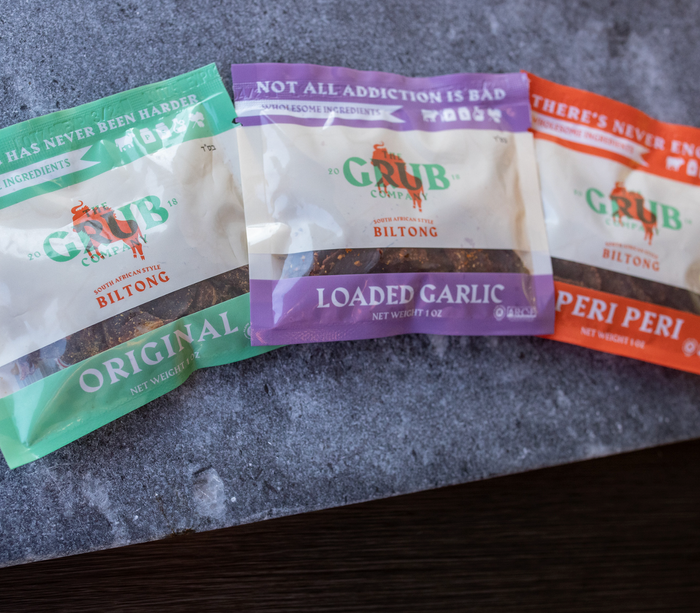
Our Sliced Biltong comes in three flavors: Original, Loaded Garlic and Peri Peri. Original is beef first, then the warm citrus note of coriander. Loaded Garlic is roasted garlic, rounder and sweeter, savory rather than hot. Peri Peri is the same base as Original with real heat building behind it. It is not a whisper.
Here is how we would place it, honestly:
- It is real heat, not token heat. You will notice it. It builds as you eat instead of landing in the first bite.
- It is not a challenge product. It is not made to hurt. If you enjoy spicy food, it should sit comfortably in your range.
- It is not a super-hot snack. If you want a ghost-pepper dare, we do not make one, and you should buy that somewhere else.
- The heat sits on top of beef and coriander. You still taste the meat. That is the point of biltong, and it is why we do not bury it.
We say "not a whisper" on the product page because it divides a room. That is entertaining at home and inconvenient at a kiddush. If you are buying for a table of mixed tastes, bring Original too. If you are buying only for yourself and you like heat, Peri Peri is the one.
Biltong is the wrong pick if you want soft, sweet, chewy jerky with a little kick. That is a different snack, and our Meat Candy is closer to it, with the caveat above about heat. Biltong is also the wrong pick if you are very sensitive to spice. In that case Original or Loaded Garlic will treat you better.
The easiest way to find out where you land is to try before you commit. Our biltong collection has the three flavors in a few bag sizes, including a small one that settles the question for less than a full bag would.
Eating spicy dried beef without regretting it
A few habits make heat more enjoyable.
- Start with one piece. Wait a minute. Capsaicin builds, and the first bite is not the final word.
- Eat it with something. Bread, crackers, rice, a pickle or a crisp apple all soften the load. Fat and starch help.
- Keep a drink handy. Cold water is fine. Something a little sweet and non-dairy can take the edge off faster.
- Do not rub your eyes. Wash your hands after eating spiced meat, particularly if you wear contacts.
If you keep kosher, there is one more thing. The usual fix for burning heat is milk or yogurt. That is a problem after a meat snack, because meat and dairy are kept separate. Wait the interval your family's custom calls for before dairy, and reach for water, bread, rice or something sweet and non-dairy in the meantime. If you are unsure about the waiting time, ask your rabbi.
For storage, biltong does not need refrigeration while it is sealed, which is part of why it works as a travel and desk snack. Once you open a bag, finish it in a reasonable time and keep it closed.
Choosing your heat: a short guide
- You want a gentle kick inside a sweet, smoky strip. Look for a sweet jerky that lists a red pepper or cayenne. Read the ingredients first.
- You want clear, savory, building heat. Peri Peri biltong. Real heat on top of beef and coriander.
- You want the hottest thing available. A super-hot jerky sold as a challenge. Check that it names the chile and that you are ready for it. We do not make one.
- You are buying for a mixed group. Original biltong for everyone, with a bag of Peri Peri for the people who will ask for it.
- You need it kosher. Make sure it carries a clear certification. Our full range is at kosher beef jerky, and all of it is certified Glatt Kosher.
The bottom line
"Spicy" on a jerky bag tells you very little. The ingredient list tells you more, and your own tolerance tells you the rest. Sweet jerky hides its heat, and dry-cured biltong shows it. Peri Peri is real, building heat with the beef still in front: not a dare, and not mild. If that sounds like your kind of spicy, start with a small bag, see how it lands, and go from there.
Frequently Asked Questions
How hot is Grub's Peri Peri biltong?
It has real heat that builds as you eat. We describe it as not a whisper. It is not a super-hot or challenge snack. Heat is personal, so we suggest a small bag first if you are unsure.
Is biltong spicier than beef jerky?
Not by nature. Biltong comes in mild and spicy versions, just as jerky does. The difference is that biltong is usually made with little or no sugar glaze, so the spice is easier to notice than in a sweet jerky with the same amount of chile.
What gives spicy jerky its heat?
Capsaicin, the compound in chile peppers. Makers add it through ground red pepper, cayenne, chile flakes, hot sauce or hotter chiles. Black pepper adds bite but is a different sensation. Check the ingredient list to see what a bag actually uses.
Which of your products are the spicy ones?
Peri Peri is our hot flavor, in Sliced Biltong. Original and Loaded Garlic are savory, not hot. Our Meat Candy jerky, in Hickory Kickory Dock and Baa-Baa BBQ Sheep, is sweet and is not built around heat.
Is your spicy biltong kosher?
Yes. Our biltong and beef jerky are certified Glatt Kosher, including Peri Peri. It is made from grass-fed beef, air-dried in small batches in Florida.
What should I drink or eat to cool down after spicy jerky?
Bread, rice, crackers or something sweet and cold. Milk is the usual remedy but does not suit a meat snack if you keep kosher, so wait the interval your family's custom calls for before dairy, and ask your rabbi if you are unsure.
Do you ship spicy biltong outside the US?
No. We ship within the United States only. US orders over $50 ship free.