Purim Food: Planning the Seudah and What to Send
Purim food comes in two parts: the seudah, the festive meal you sit down to on Purim day, and mishloach manos, the food gifts you send to friends. Plan the seudah around a meat main and a long table, and build each gift from two ready-to-eat foods. We make certified Glatt Kosher biltong and beef jerky, and Purim is the one time of year when everyone we know is cooking and packing at once. Here is how to keep it manageable.
The two jobs, and why they get confused
Purim asks several things of you in one day, and the food ones are easy to blur together.
- The seudah. A festive meal, eaten in the afternoon of Purim day. It is a sit-down meal with family and guests, usually with wine and usually with meat.
- Mishloach manos. Gifts of food sent to friends. The usual custom is at least two different foods, ready to eat, sent to one person. Many people send to far more than one.
- Matanos l'evyonim. Gifts to the poor. This is a separate obligation, and a nice basket does not count toward it. Your rabbi or shul can tell you how to do it properly.
Details such as how much, to whom and in what order vary by family and community. Where this article says "the usual custom," it means the common practice. Where your family does it differently, follow your family, and ask your rabbi about anything you are unsure of.
Planning the seudah
The seudah is long. Guests arrive, the table fills, people drift in and out of the kitchen. Plan for a meal that holds up over several hours, not one that has to land on the table at a single moment.
Start with the main
Most families serve a meat main. Roasts, braised dishes, brisket and chicken all work because they sit well. Pick one and make it the anchor. Everything else exists to support it.
Build the table around dishes that wait
- Something cold to start. A big salad, dips, challah. People should be able to eat the moment they sit down.
- A starch and a vegetable. Roasted potatoes, rice, roasted carrots. Choose things that stay good in a warm oven.
- A dessert that matches the meal. This is a meat meal, so the dessert has to be pareve. Hamantaschen made with a pareve dough and a fruit or chocolate filling are the obvious choice. Check every label, because a filling that looks harmless can contain dairy.
Keep meat and dairy apart, as always. If you serve a meat meal, nothing dairy goes on the table, and the wait between meat and dairy afterward is according to your family's custom.
Put a snack out before the main is ready
This is the step people skip. The seudah usually starts late, the cooking runs behind, and the children have been running around in costume since morning. A bowl of something on the table keeps the mood good while the main finishes.
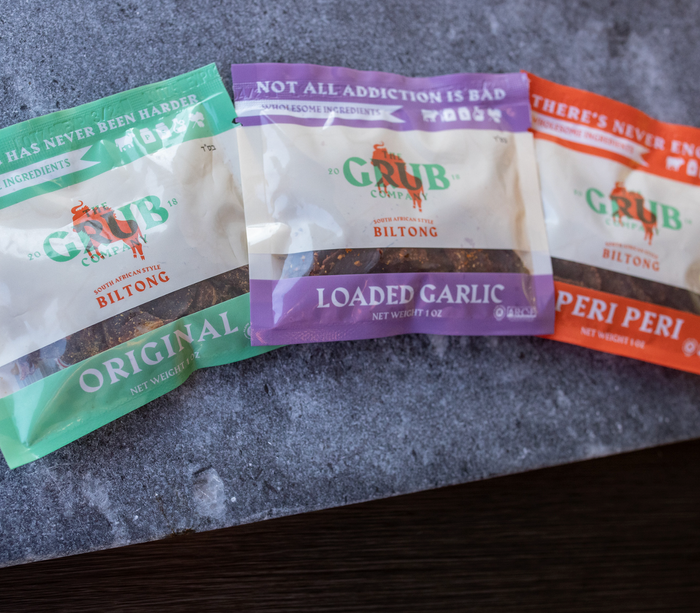
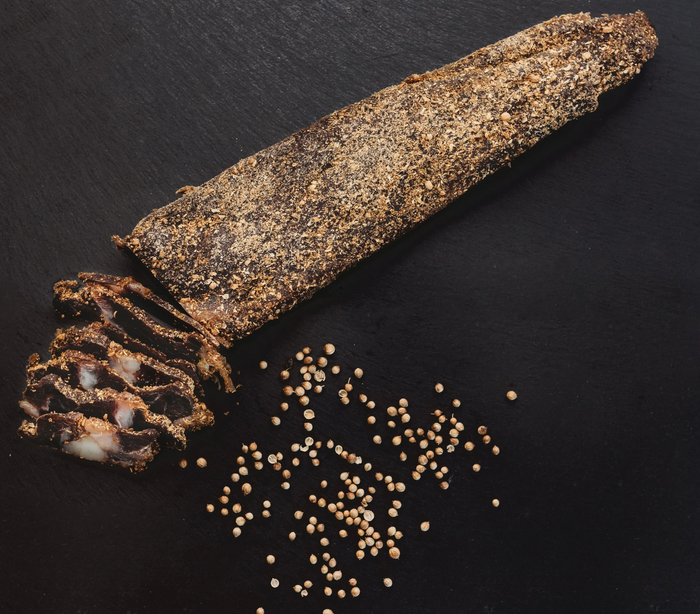
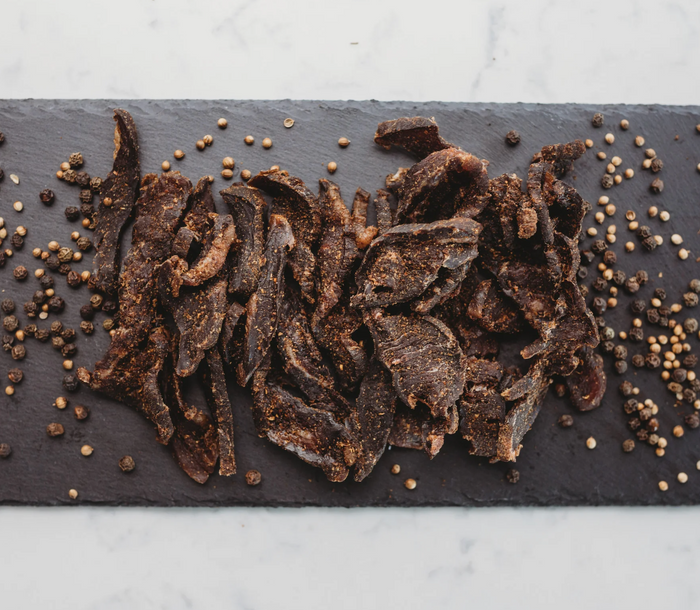
Dried meat is ideal for this. Biltong is air-dried beef, already cured and ready to eat. There is nothing to heat, slice or plate. Open a bag, pour it in a bowl, and it disappears. Our Sliced Biltong Minis are one ounce each in Original, Peri Peri and Loaded Garlic, so you can set out a mix and nobody has to share a bag. For a table of mixed ages, lean on Original. Peri Peri has real heat, which is fun for the adults and a problem for the child who wanted something mild.
A simple biltong salad for the table
If you want something cold and quick to open the meal, this works. It serves six to eight as a starter.
- 2 English cucumbers, sliced thin
- 1 pint cherry tomatoes, halved
- 1/2 red onion, sliced very thin
- 1 bag (3 oz) Original sliced biltong
- 3 tablespoons olive oil
- 2 tablespoons red wine vinegar
- Salt and black pepper to taste, going easy on the salt because the biltong is already seasoned
Toss the cucumbers, tomatoes and onion with the oil and vinegar. Taste. Add the biltong right before serving so it stays chewy rather than going soft. Biltong is ready to eat, so it needs no cooking. Just tear it into pieces as you add it.
Building mishloach manos
A good package is small, easy to carry and easy to eat on the spot. A bad one is a huge basket that the recipient has to figure out what to do with. For the full approach, our guide to building a shalach manos basket for Purim goes through presentation. Here is the short version.
Two foods, one theme
The two-food rule is the floor, not the goal. Pick one theme and let the items follow it. A sweet-and-savory pairing is the easiest to get right: one baked or sweet item, one salty or meaty one. People remember the combination, and it is far easier to eat than a pile of unrelated candy.
Add the savory item
By the afternoon of Purim, most households are drowning in sugar. The package that gets eaten first is usually the one with something that is not sweet. That is where meat snacks fit. Biltong is savory, salty and air-dried. It has no sugar glaze, needs no refrigeration, and a one-ounce bag drops into any basket without crushing anything.
Meat Candy is our jerky and the sweeter end of the shelf. It is cooked and glazed, comes in Hickory Kickory Dock and Baa-Baa BBQ Sheep, and suits the person on your list who likes things sweet. Because it uses a glaze, read the label for ingredients before you give it to anyone with an allergy or dietary restriction. You can see the full range on our kosher beef jerky page, or browse the whole selection on Buy Biltong Online.
How many minis per package
If you are sending a lot of packages, the arithmetic matters. Our piece on biltong minis in Purim baskets covers how many to pack and which flavors to mix. A reasonable default is one Original and one other flavor per package, so the recipient gets a safe choice and a more adventurous one.
Match the package to the person
- Your neighbors with small children. Original biltong only, plus something sweet. Nobody wants to explain to a five-year-old why their mouth is on fire.
- Your rabbi and rebbetzin. They receive dozens of packages. Something easy to eat and not sweet will stand out.
- The friend who loves heat. Give them the Peri Peri and tell them it is hot.
- The relative who is not sure about meat snacks. Meat Candy is the gentler introduction, because it tastes closer to what most people expect from jerky.
Check the certification, always
The whole point of a gift of food is that the recipient can eat it. Send only food with a reliable kosher certification, and if you are not sure about the standard a recipient keeps, ask. Our biltong and jerky are certified Glatt Kosher, so the question is already answered on the bag.
A realistic timeline
People who enjoy Purim have usually done most of the work before the day arrives.
- Two weeks out. Decide the seudah menu and the guest list. Order anything that has to ship, because shipping is where plans fall apart. We ship within the US only, and US orders over $50 ship free.
- One week out. Bake what freezes. Buy wrapping, bags and ribbon. Make your list of recipients.
- A few days out. Assemble the packages. Write a short note for each so the recipient knows who it came from.
- The night before. Set the table, prep the vegetables, and get the main into its pan.
- Purim morning. Deliver packages, then go home and start the seudah.
When biltong is the wrong pick
Dried meat is not right for every package. If the recipient is vegetarian, send something else. If you know they avoid meat snacks for any reason, skip it. And if your recipient keeps a stricter standard of kosher than the one on our bag, ask first. A thoughtful gift that cannot be eaten is just clutter.
It is also not a replacement for the meal. Biltong belongs in the bowl on the table before the seudah and in the basket you carry out the door. It does not belong in place of the main course.
Bottom line
Pick one meat main and make it ahead. Put something savory in a bowl before the guests sit down. Build each package from two ready-to-eat foods, and make sure one of them is not sweet. Everything else is decoration, and decoration is optional.
Frequently Asked Questions
What food is traditional for Purim?
The seudah is a festive meal, and meat and wine are the usual custom. Hamantaschen, the triangular filled cookies, are the best-known Purim baked good. Beyond that, traditions vary by family and community, so follow the one you grew up with.
What is mishloach manos, and what has to be in it?
It is a gift of food sent to a friend on Purim. The usual custom is at least two different foods, ready to eat, sent to one person. Ask your rabbi about the details, such as whether drinks count and how many people to send to.
Can I serve a dairy dessert at a meat seudah?
No. Meat and dairy are kept separate, so a meat meal calls for a pareve dessert. Hamantaschen with a pareve dough and a fruit or chocolate filling are a common choice. Always check the label.
Is biltong a good thing to put in a Purim basket?
Yes, for most recipients. It is savory, ready to eat, needs no refrigeration and balances all the sweets. It is the wrong pick for vegetarians and for anyone who does not eat meat snacks. Our biltong is certified Glatt Kosher.
How much food should I make for a Purim seudah?
It depends on how many people come and how long they stay. Plan generously for the main and the sides, because guests drop in unannounced on Purim. Dishes that keep well in a warm oven handle surprise guests better than anything that has to be served the instant it is done.
Do you ship Purim orders outside the US?
No. We ship within the United States only. Order early, because delivery times add up in the weeks before the holiday. US orders over $50 ship free.
Does biltong need to be refrigerated or cooked?
No. Biltong is air-dried and already cured, so it is ready to eat out of the bag and does not need refrigeration. Never cook it through. Tear it, slice it or eat it as it is.