Gluten Free Snacks: How to Check Jerky and Biltong Labels
The safest gluten free snacks are foods that are one thing, like plain dried meat, eggs, fruit, nuts and cheese, and with jerky and biltong the answer is on the label, not on the front of the bag. We make certified Glatt Kosher biltong and jerky, and we will tell you how to check ours and anyone else's.
"Gluten free" is a promise, and a promise needs proof. Plenty of snacks look safe and are not, and jerky is one of the usual traps because many marinades start with soy sauce. This guide covers which snacks are naturally free of gluten ingredients, where gluten hides in dried meat, how to read a label in a minute, and what we can and cannot tell you about our own bags. Everything we make is certified Glatt Kosher. That is a kosher standard. It is not a gluten claim, and the two should never be confused.
What "gluten free" actually means on a package
Gluten is a group of proteins found in wheat, barley and rye. People avoid it because of celiac disease, a wheat allergy or a sensitivity, and for the first two the stakes are real.
In the US, a "gluten-free" claim on a package is regulated. The FDA allows it only when the food contains less than 20 parts per million of gluten. That means a package that says "gluten-free" has made a specific, checkable claim. A package that says nothing has made no claim at all. "Wheat-free" is not the same thing, because barley and rye can still be present. "Made with no gluten ingredients" is also not the same thing, because it says nothing about cross-contact in the plant.
So there are three different situations:
- Certified or labeled gluten-free. The maker is making the claim. Trust it as far as you trust the maker.
- No gluten ingredients on the list. A good sign, but the list does not cover what else was run on the same equipment.
- A food that is naturally one ingredient. An apple has no gluten. A plain egg has no gluten. The risk is only what gets added later.
If you have celiac disease, ask your doctor how strict you need to be. That is not something a snack maker can decide for you.
Snacks that are naturally free of gluten ingredients
Start with food that has nothing to hide. These work because the food itself does not contain gluten. You only have to watch for coatings, seasonings and shared equipment.
- Fresh fruit and cut vegetables. Nothing added, nothing to check.
- Hard-boiled eggs. High in protein and nothing but egg. They need a fridge, so they are a home snack more than a pocket snack.
- Plain nuts. Check for flavored coatings, and remember nuts are a common allergen at schools and offices.
- Plain cheese and plain yogurt. Flavored and mix-in versions are where cookies, granola and malt show up. If you keep kosher, these are dairy, so keep them separate from meat and wait between meat and dairy according to your family's custom.
- Plain dried meat. Meat itself has no gluten. What matters is what was added to it. That is the rest of this guide.
The pattern is simple. The more steps between the animal or the farm and the bag, the more places a gluten ingredient can enter.
Where gluten hides in jerky
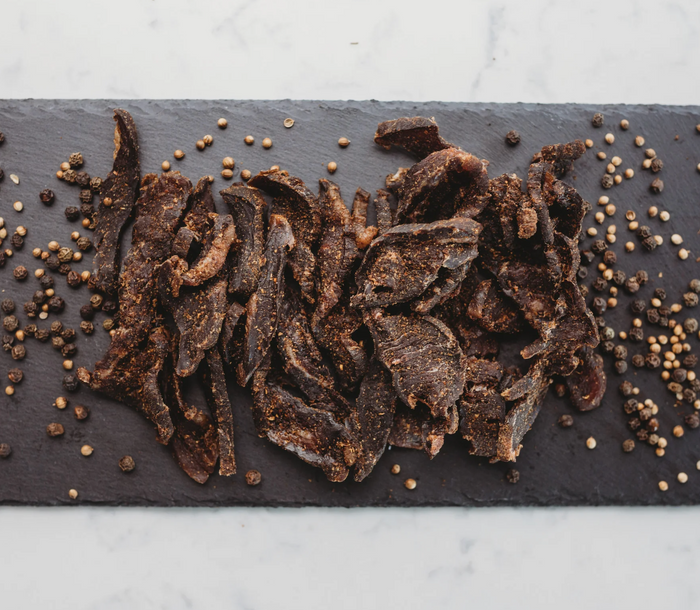
Jerky is made by marinating sliced meat and cooking it until dry. The meat is not the problem. The marinade is. These are the places to look.
- Soy sauce. Most soy sauce is brewed with wheat. It is a standard jerky ingredient and the single most common reason a jerky is not safe for someone avoiding gluten.
- Teriyaki and other glazes. Teriyaki is usually built on soy sauce. Sweet glazes and barbecue sauces can contain it too.
- Worcestershire sauce. Some versions contain malt vinegar, and malt comes from barley.
- Malt vinegar and malt flavoring. Both come from barley. Plain "vinegar" on a label does not tell you which kind it is.
- Hydrolyzed wheat protein, wheat starch and modified food starch. Sometimes used as binders or flavor enhancers. A US label has to name wheat when it is an ingredient, which helps, but barley and rye do not have to be called out the same way.
- "Natural flavors" and "spices." Usually fine, but they are a black box. If you need certainty, ask the maker.
- Cross-contact. A product with a clean ingredient list can still be made on a line that also handles wheat. Look for a gluten-free statement or ask.
That is why we do not tell people that all jerky is safe, and we do not tell them that all jerky is risky. It depends on the marinade, and the only way to know is to read the bag.
Biltong and jerky are not the same label problem
Both are dried beef, but they are made differently, and that changes what you read.
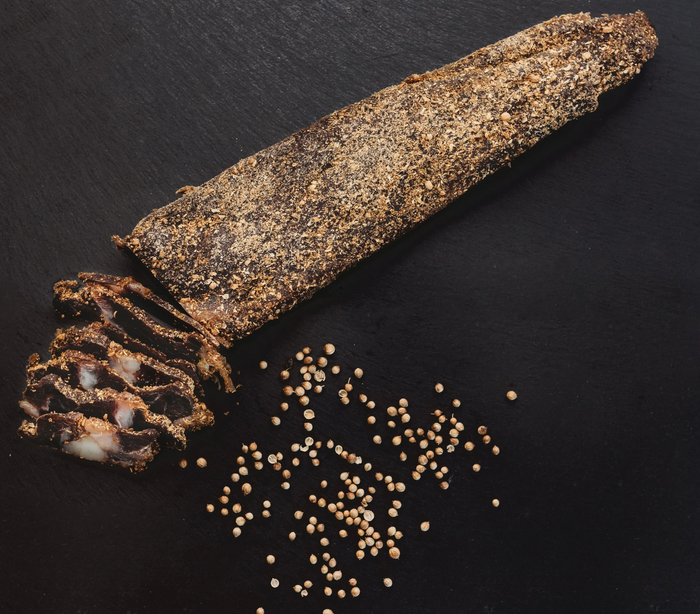
Biltong is air-dried. The meat is cured with salt, vinegar and spices and hung to dry. It is not cooked in a sauce, so there is usually no soy or glaze. The ingredient list tends to be short. Jerky is cooked in a marinade, and the marinade is where gluten tends to hide.
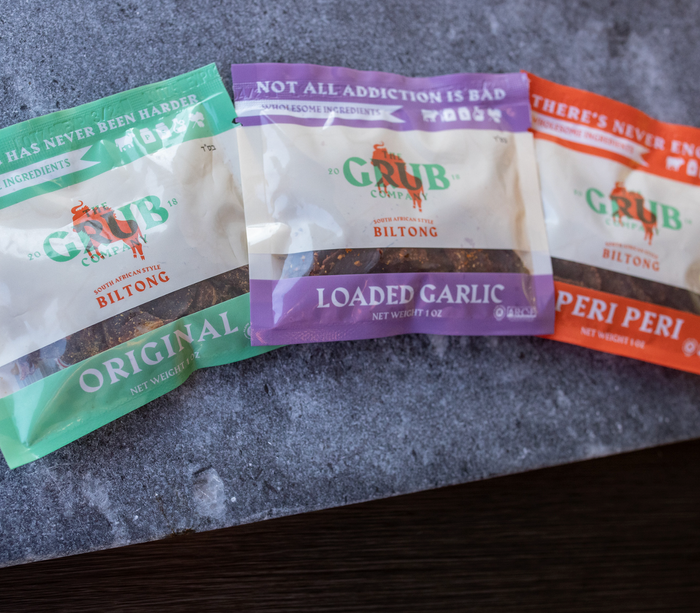
Here is what is on the label for our Sliced Biltong:
- Original: grass-fed kosher beef, coriander, black pepper, salt, garlic, vinegar.
- Peri Peri: grass-fed kosher beef, coriander, red pepper, black pepper, salt, garlic, vinegar, brown sugar.
- Loaded Garlic: grass-fed kosher beef, coriander, garlic, roasted garlic, salt, tomato powder, vinegar.
There is no soy sauce and no wheat on those lists. Our Original biltong lists no sugar in its ingredients: grass-fed kosher beef, coriander, black pepper, salt, garlic and vinegar. We are not going to call any of it gluten-free here, because that is a specific labeled claim and we are not making it in this article. We cannot verify what type of vinegar is behind every batch, or what shares a line, from a web page. If gluten matters to you, check the label on the bag you receive, or email us and ask before you order. A short, clear list is a good starting point. It is not a guarantee.
Our Meat Candy is the other side of the shelf. It is made from real sliced beef, in Hickory Kickory Dock and Baa-Baa BBQ Sheep, and it is cooked and glazed on purpose. Because it uses a glaze, read its label before you buy, and ask us if you need more than the label tells you. We cover this in more detail in Meat Candy FAQ: Kosher Status, Gluten, Sugar, and Storage.
How to check any label in a minute
This works for our bags and everyone else's. You do not need to be a food scientist.
- Look for the words "gluten-free" on the package. If they are there, the maker is making the claim. If not, keep reading.
- Read the ingredient list top to bottom. Look for soy sauce, teriyaki, Worcestershire, malt, wheat, barley, rye and hydrolyzed protein.
- Find the "Contains" line. US labels have to name wheat there. That catches wheat. It does not catch barley or rye.
- Look for a "may contain" or shared-equipment note. Some makers print one. Many do not. Silence is not an answer.
- Ask when the label is not enough. A real maker can tell you what is in the marinade and what runs on the line. If you get a vague reply, treat that as information.
- Check each flavor on its own. The Original and the glazed flavor in the same brand can have very different lists.
For a wider look at other common allergens, read Biltong and Common Food Allergies: What to Check Before You Order.
A kosher label is not a gluten label
People mix these up, and it is worth saying plainly. Kosher certification covers the meat, the ingredients, the equipment and how the food is handled under kosher law. It is about what the food is. It does not measure gluten. A kosher product can contain wheat, and a gluten-free product can be anything.
The reverse is useful, though. If you keep kosher and also avoid gluten, the kosher mark narrows your search, and then the ingredient list does the rest. Our kosher beef jerky collection is where our jerky lives, and each product page lists what is in it. If you want to see every biltong size and flavor in one place, go to Buy Biltong Online.
Where this advice does not fit
Biltong is the wrong pick if you want a snack with a legal, labeled gluten-free claim on the bag and you will not accept anything less. In that case, look for a package that says it, and ask the maker how it tests. We would rather you buy the right bag from someone else than guess with ours.
Jerky is the wrong pick if you cannot get a straight answer on the marinade. If a brand will not tell you what is in the glaze, skip it.
And if you are buying for a child or someone with celiac disease, do not rely on a blog post, ours included. Read the bag in your hand.
Bottom line
Gluten free is a claim, not a vibe. Naturally simple foods are the easiest place to start, plain dried meat has no gluten of its own, and the risk in jerky is the marinade. Read the ingredient list, look for soy sauce, malt and wheat, and ask the maker when the label leaves a gap. We list what is in our biltong, we do not make a gluten-free claim for it, and we are glad to answer questions before you order.
Frequently Asked Questions
Is beef jerky gluten free?
It depends on the marinade. Beef is naturally free of gluten, but many jerky marinades use soy sauce, teriyaki or Worcestershire, which can contain wheat or barley. Only the label can tell you.
Is biltong gluten free?
Biltong is air-dried with salt, vinegar and spices, so the ingredient list is usually short and has no soy sauce. That is not the same as a gluten-free claim. We do not label ours gluten-free, so check the bag, and ask us if you need more detail.
What ingredients should I look for on a jerky label?
Soy sauce, teriyaki, Worcestershire, malt vinegar, malt flavoring, wheat, barley, rye, hydrolyzed wheat protein and wheat starch. Also look for any shared-equipment note.
Does "certified Glatt Kosher" mean a product is gluten free?
No. Kosher certification is about kosher law, not gluten. A kosher product can contain wheat. Use the kosher mark for kashrus and the ingredient list for gluten.
What does "gluten-free" mean on a food label in the US?
It is a regulated claim. The FDA requires that the food contain less than 20 parts per million of gluten. A package with no claim has not made that promise.
Is Meat Candy safe if I avoid gluten?
Meat Candy is cooked and glazed, so read the label on the bag first. If the label does not settle your question, contact us before you order and we will tell you what we know.
What are the safest gluten free snacks for travel?
Whole fruit, plain nuts, hard cheese and packaged foods that carry a labeled gluten-free claim travel well. Dried meat is easy to carry and needs no refrigeration in the sealed bag, but check its label like any other.
Does Grub ship outside the US?
No. We ship within the US only, and US orders over $50 ship free.