Running a Synagogue or Community Care-Package Drive: Food That Survives the Trip
A synagogue, school or community care-package drive succeeds or fails on logistics, not generosity. The food has to survive weeks in transit, the packages have to be consistent, and someone has to know exactly how much to order. This guide is the practical version: what to put in, how to work out quantities, and how to run the drive so it arrives as intended.
Shop the real thing: buy biltong online, Glatt Kosher and made in Florida. US orders over $50 ship free.
Start with the destination, not the shopping list
Before anyone buys anything, the organizer needs three answers from whoever is delivering the packages:
- What they accept. Many organizations that deliver to soldiers, students or communities abroad have a list of allowed items and a list of banned ones. Meat, liquids and anything homemade are the usual restrictions.
- What kashrut standard they need. If the recipients keep kosher, some organizations specify which certifications they accept. Get the list in writing.
- How and when it ships. A drive that collects for three weeks and then sits in a warehouse for another three is a six-week journey. Plan the food for that.
What travels well
| Item | Why it works | Watch for |
|---|---|---|
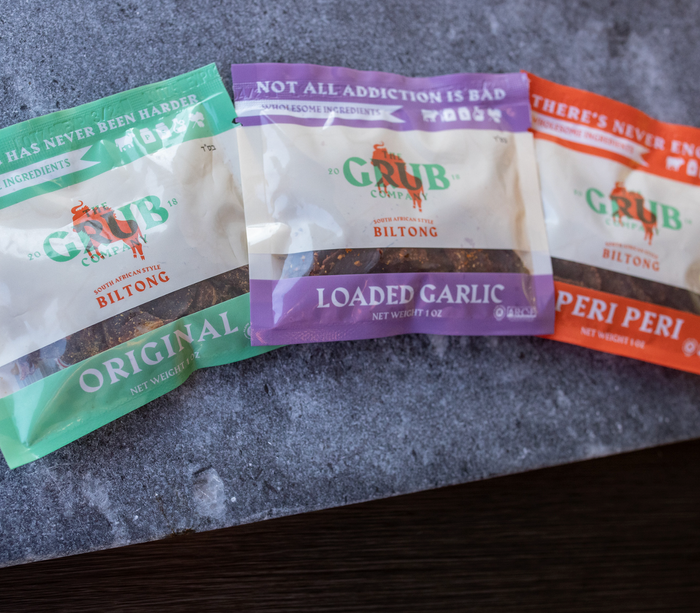
| Biltong, sealed minis | Protein, no fridge, months of shelf life sealed | Meat: never in a dairy package |
| Nuts and trail mix | Dense energy, shelf-stable | Allergies, if the recipient list is unknown |
| Hard candy and gum | Morale, weight is negligible | Chocolate melts in heat |
| Instant coffee, tea, drink mix | Light, universally wanted | Liquids of any kind are often banned |
| Socks, lip balm, wipes | Always used | Nothing |
| A handwritten note | The part people keep | Nothing |
Working out how much biltong to order
The simplest rule for a drive: one 1 oz mini per recipient, per day the package is meant to cover. A package meant to last a week needs seven minis per person.
| Packages | One week each | Two weeks each |
|---|---|---|
| 25 | 175 minis (about 11 lb) | 350 minis (about 22 lb) |
| 50 | 350 minis (about 22 lb) | 700 minis (about 44 lb) |
| 100 | 700 minis (about 44 lb) | 1,400 minis (about 88 lb) |
If biltong is one item among many, halve these numbers. If it is the headline item, keep them.
Why minis, for a drive in particular
- Every package ends up identical. Seven minis is seven minis. Splitting pound bags at a folding table is how some packages end up with twice as much as others.
- Nothing is ever repackaged. Volunteers repacking bulk meat into sandwich bags is the most common way a drive's food spoils. The factory seal and oxygen absorber are the preservation system. Keep them.
- Recipients open one at a time. No half-eaten bag goes stale in a pocket.
Running the packing day
- Build one sample package first and weigh it. Postage and organization limits are usually by weight.
- Keep meat and dairy on separate tables if the recipients keep kosher, and label each package clearly.
- Mix flavors in each package. Roughly half Original, the rest split between Loaded Garlic and Peri Peri. Peri Peri has real heat, and not everyone wants it every day.
- Put the note on top. It is the first thing anyone sees.
- Record the pack date on the box so the recipient knows how fresh the contents are.
Ordering for a drive
Once you are past a few dozen packages, ordering through the retail cart stops making sense. Small makers dry in batches, so a few hundred minis is a production question as much as a stock question. Contact us with the number of packages, the date you are packing, and the certification list your delivery organization gave you. We will plan the batch and tell you honestly whether the date works.
For smaller drives, minis and the sampler pack are in the shop now. Every bag is certified Glatt Kosher.
Try it: Kosher Jerky Care Package Planner. Enter how many people and how long; get the number of minis.