Biltong vs Meat Sticks: Which Snack Does More for You
Biltong and meat sticks are both dried beef you can eat straight from the bag, but they are made differently: biltong is sliced whole-muscle beef that is cured and air-dried, while a meat stick is usually ground, seasoned meat pressed into a tube. If you want certified Glatt Kosher whole-muscle beef with a tender chew, biltong is the better pick.
We make certified Glatt Kosher biltong and beef jerky in Florida, so we hear this question a lot from people standing in front of a snack shelf. A meat stick is the familiar thing. Biltong is the one they have not tried. Here is an honest comparison of the two foods, including the places where a meat stick is the better choice. If kosher certification matters to you, read how Grub's certification works too.
What each one actually is
The easiest way to tell them apart is to look at the meat itself.
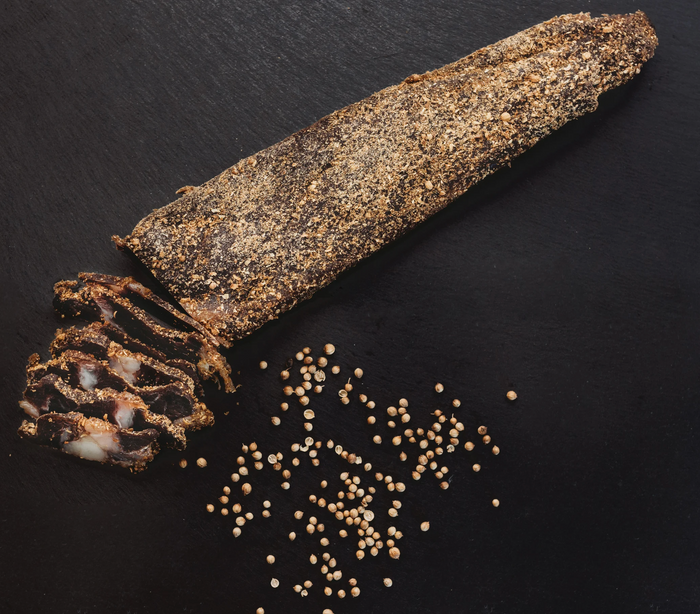
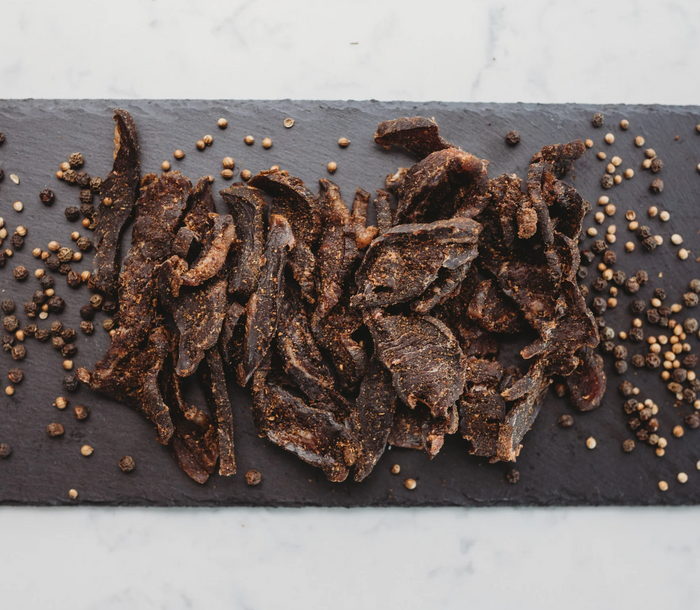
Biltong starts as a whole piece of beef. It is seasoned with salt, vinegar and spices, hung to dry in moving air, and then sliced. You can see the grain of the muscle in every slice. Our Sliced Biltong is grass-fed kosher beef with coriander, black pepper, salt, garlic and vinegar in the Original flavor. Nothing is ground. Nothing is pressed into a shape.
That difference in construction explains almost everything else in this article. Because biltong is a single piece of muscle, the quality of the cut matters a great deal. Because a stick is blended, the maker has more freedom to adjust fat, seasoning and shape. Neither approach is dishonest. They simply put the skill in different places.
A meat stick is a different kind of food. The meat is typically ground or finely chopped, mixed with seasoning, packed into a casing or a mold, and cooked or dried into a firm tube. That is why every stick in the bag looks the same. It is a consistent, portable, uniform product, and that has real value.
Neither one is a lesser food. They are two answers to the same question, which is how to make beef last on a shelf and taste good while it does.
Texture and flavor: where you will feel the difference
This is the biggest difference in your mouth.
- Biltong gives way. It is sliced, so you bite through muscle fibers. It tears and softens as you chew. People who expect jerky are often surprised that it is less leathery.
- A meat stick is dense and uniform. There is no grain to follow. It snaps or bends, and the chew is even from end to end.
- Biltong tastes of beef first. The seasoning is simple, and the vinegar and coriander sit behind the meat. In Original, you get beef and then a warm, citrus-like note from the coriander.
- A meat stick tastes of its seasoning. Because the meat is ground and mixed, the flavor is blended through the whole stick. That makes smoky, sweet and spicy versions easy to do.
If you like to taste the meat, biltong wins. If you like a bold, blended flavor and a tidy shape, a stick wins.
Convenience: the meat stick's strongest argument
Here is the honest trade-off. A meat stick is hard to beat for pure convenience. It is a tube. It fits in a cup holder, a jacket pocket or a lunchbox slot. You can bite it without a mess, and one stick is one portion.
Sliced biltong is also ready to eat, with nothing to cut and no refrigeration, but it comes loose in a bag. You reach in and take a handful. That is easier to share and easier to graze on, and harder to portion. If you want a fixed single portion, our Sliced Biltong Mini's are one-ounce sealed bags in the same three flavors, which solves the portioning problem.
So biltong is the wrong pick if what you want most is a firm, one-handed, one-portion snack that you can eat while driving without thinking about it. For that job, a stick is simply built better.
What to check on the label, whichever you buy
The category is wide, and quality varies. A few things are worth reading before you buy, for either food.
- The first ingredient. It should be beef. If it is a long list of fillers before you reach the meat, you are paying for something else.
- Whole muscle or ground. Biltong is whole muscle by definition. With a stick, ground meat is normal, so look at what the beef is and how it is described.
- Sugar and glaze. Biltong Original lists no sugar in its ingredients. Sweeter products, including our Meat Candy glaze, are a different style, so check the label if you are avoiding sugar.
- Certification. For a kosher household this is the deciding factor, and it applies to every ingredient and every step, not only the meat. Look for a clear statement on the package. Grub's biltong and Meat Candy are certified Glatt Kosher.
- Ingredients you cannot place. If a package lists things you do not recognize, ask the maker what they are for. A good maker will tell you.
Both foods are high in protein. We do not make claims beyond that, and you should be wary of any snack that does.
Which one fits your situation
Here is how we would choose.
- Eating at a desk, or sharing at a table: biltong. A bowl of sliced biltong stays good through an evening, and people take what they want. Our kiddush table guide shows how it works in a crowd.
- Driving or hiking, one hand free: a stick, or a Mini's bag of biltong if you prefer the whole-muscle chew.
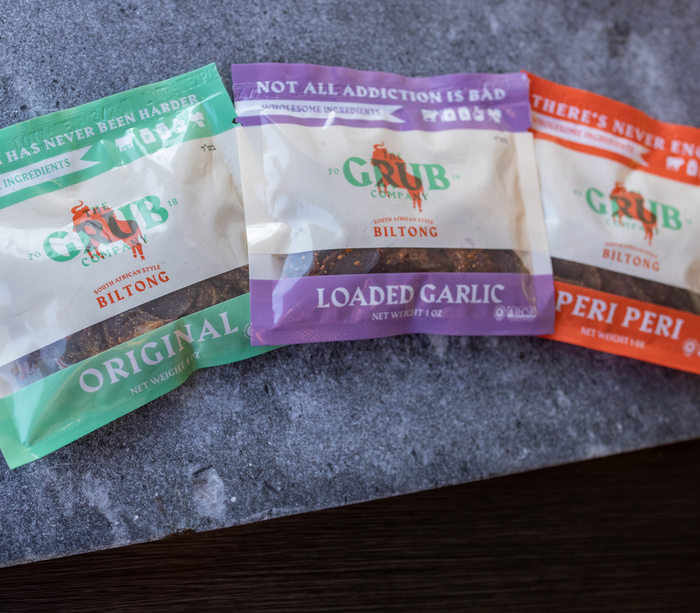
- You have never tried either: start with the Biltong Sampler Pack, which is one mini bag each of Original, Peri Peri and Loaded Garlic. It is the smallest amount that tells you whether you like the texture.
- You want something sweet: neither is the best choice. Meat Candy, our cooked and glazed jerky, is the sweeter end of the shelf.
- You are comparing against jerky as well: our guide to kosher jerky versus kosher beef sticks covers that fork directly.
If you want to see the whole range in one place, our biltong collection has every size and flavor. And if jerky is the thing you are really comparing, the kosher beef jerky collection is the place to look.
Common questions people bring to the shelf
Is one of them "cleaner" than the other?
That word does not mean much on its own, and we avoid it. What you can do is read the ingredient list. Biltong Original is grass-fed kosher beef, coriander, black pepper, salt, garlic and vinegar. A stick can be just as simple or much longer. Compare the actual lists in your hand and not the front of the package.
Which one lasts longer in a bag?
Both are made to be shelf-stable, but we will not quote figures for foods we do not make. For our own, read our guide on how long kosher biltong lasts. For any other product, follow the date and storage notes printed on its package.
What if I want jerky rather than either one?
Jerky is a third thing. It is cooked, marinated and often sweet, where biltong is cured and air-dried. If that is the fork you are on, our comparison of biltong and beef jerky lays out the differences side by side.
Bottom line
A meat stick is a convenient, uniform tube of seasoned meat. Biltong is sliced, air-dried whole-muscle beef with a softer chew and a beef-first flavor. Pick a stick for one-handed convenience. Pick biltong when you want to taste the meat, share a bowl, or buy something with a clear Glatt Kosher certification on the bag. The best snack is the one you will finish, so try a small bag first.
Frequently Asked Questions
Is biltong the same as a meat stick?
No. Biltong is sliced whole-muscle beef that is cured and air-dried. A meat stick is usually ground, seasoned meat formed into a tube. They are both dried beef snacks, but the texture and the way they are made are different.
Which has a better texture, biltong or a meat stick?
It depends on what you like. Biltong tears and softens as you chew because you are biting through muscle fibers. A stick is denser and more uniform. Many people who expect a leathery chew find biltong gentler.
Does biltong need to be refrigerated like some meat sticks?
Biltong is air-dried and ready to eat, and it does not need refrigeration. Keep an opened bag sealed and away from heat. For any other product, follow the storage instructions printed on its package.
Is a meat stick or biltong better for a lunchbox?
A stick is tidier because it is one fixed piece. For biltong, our one-ounce Mini's bags give you a set portion in a sealed pouch, which works well in a lunchbox. Check the label for anything you need to avoid.
Is Grub's biltong certified kosher?
Yes. Our biltong and Meat Candy are certified Glatt Kosher. Biltong is meat, so in a kosher home it is kept off a dairy table. If your family follows a custom on any point, ask your rabbi.
Are biltong and meat sticks high in protein?
Both are high in protein, and that is as far as we go. We do not make performance or health claims. For exact numbers on any product, read its nutrition label.
What flavor of biltong should I try first?
Start with Original. It is the reference point, with beef first and a warm coriander note. Peri Peri has real heat, and Loaded Garlic is savory and rounder. The Sampler Pack lets you try all three.