Biltong vs Beef Jerky vs Alternatives: What's the Difference?
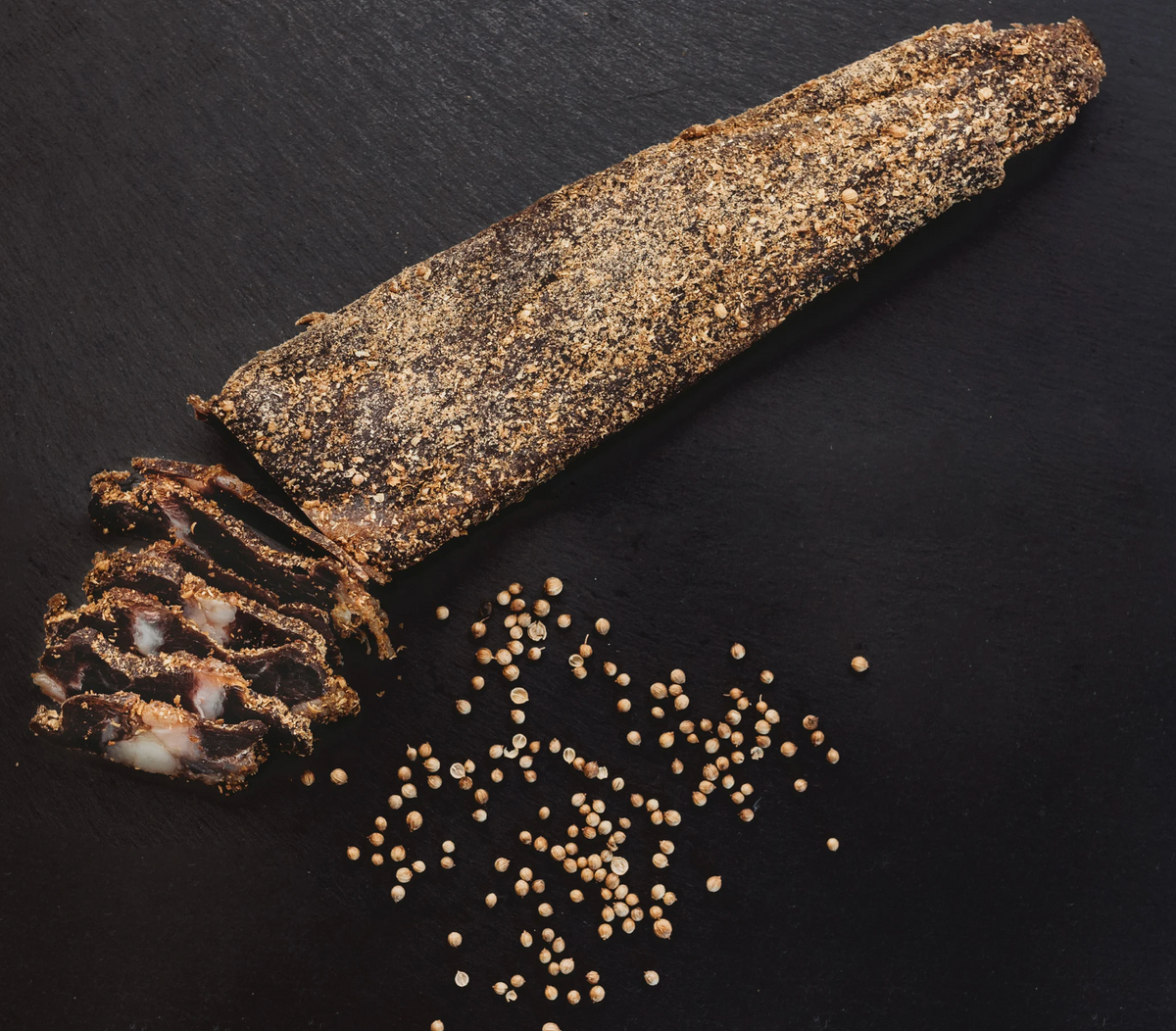
Biltong and beef jerky are both dried cured meats, but they are fundamentally different products at the process level. Biltong is cured with vinegar, salt, and spices, then air-dried without any added heat over 1–2 weeks. Beef jerky is cured with salt and typically sodium nitrite, then heat-dried in a smoker or oven at 160–200°F until moisture drops to roughly 15–20%. That single difference — air-drying versus heat-drying — drives nearly every distinction between them in texture, flavor, moisture, and nutritional profile.
Origins and Preservation Logic
Biltong traces back to South Africa, where Dutch settlers and indigenous communities developed it as a field preservation method. Beef jerky has roots in Native American and Spanish colonial preservation traditions across North America. Both solutions solved the same problem — long-term meat storage without refrigeration — but through divergent techniques shaped by climate, available ingredients, and cultural practice.
Curing Chemistry
The curing agents differ meaningfully. Biltong relies on salt and acetic acid from vinegar to lower pH and inhibit microbial growth, with no mandatory nitrate or nitrite addition. Most commercial beef jerky includes sodium nitrite as a curing agent and antimicrobial preservative, a requirement tied directly to the heat-processing method and the food safety margins it demands. If nitrate-free dried meat matters to you, that distinction is the first thing to verify on a label.
Spice Profile
Traditional biltong is seasoned with coriander, black pepper, and garlic — the vinegar marinade carries those notes into the meat over the long cure window. Beef jerky flavor profiles skew smokier, often because actual smoking or liquid smoke is part of the drying process. Traditional biltong uses no smoke at all.
Texture and Moisture
This is where buyers notice the difference most immediately. Biltong is sliced thicker and retains 30–40% residual moisture, producing a tender, chewy bite. Beef jerky is sliced thin and dried down to 15–20% moisture, resulting in a harder, drier texture that takes noticeably more effort to chew. Neither is superior — they suit different use cases and preferences.
What About Other Alternatives?
The dried-cured meat category is broader than these two. Droëwors (South African dried sausage), bakkwa (Chinese sweetened dried pork), and bresaola (Italian air-cured beef) each occupy distinct points on the spectrum of salt, acid, heat, and moisture. The biltong-jerky comparison is the most commonly drawn because both use whole muscle beef and market to overlapping snack audiences, but the production science separates them clearly.
If you want to go deeper on how the air-drying process affects the final product's nutritional density and shelf life, the biltong production process covers moisture loss rates and fat-to-protein ratios in detail. Buyers comparing sodium content between products will also find the biltong nutrition breakdown useful, particularly the contrast with nitrite-cured commercial jerky.